
Welcome to Aftermarket Report, a newsletter where we do a quick daily wrap-up of what happened in the markets, both in India and globally.
Markets Today
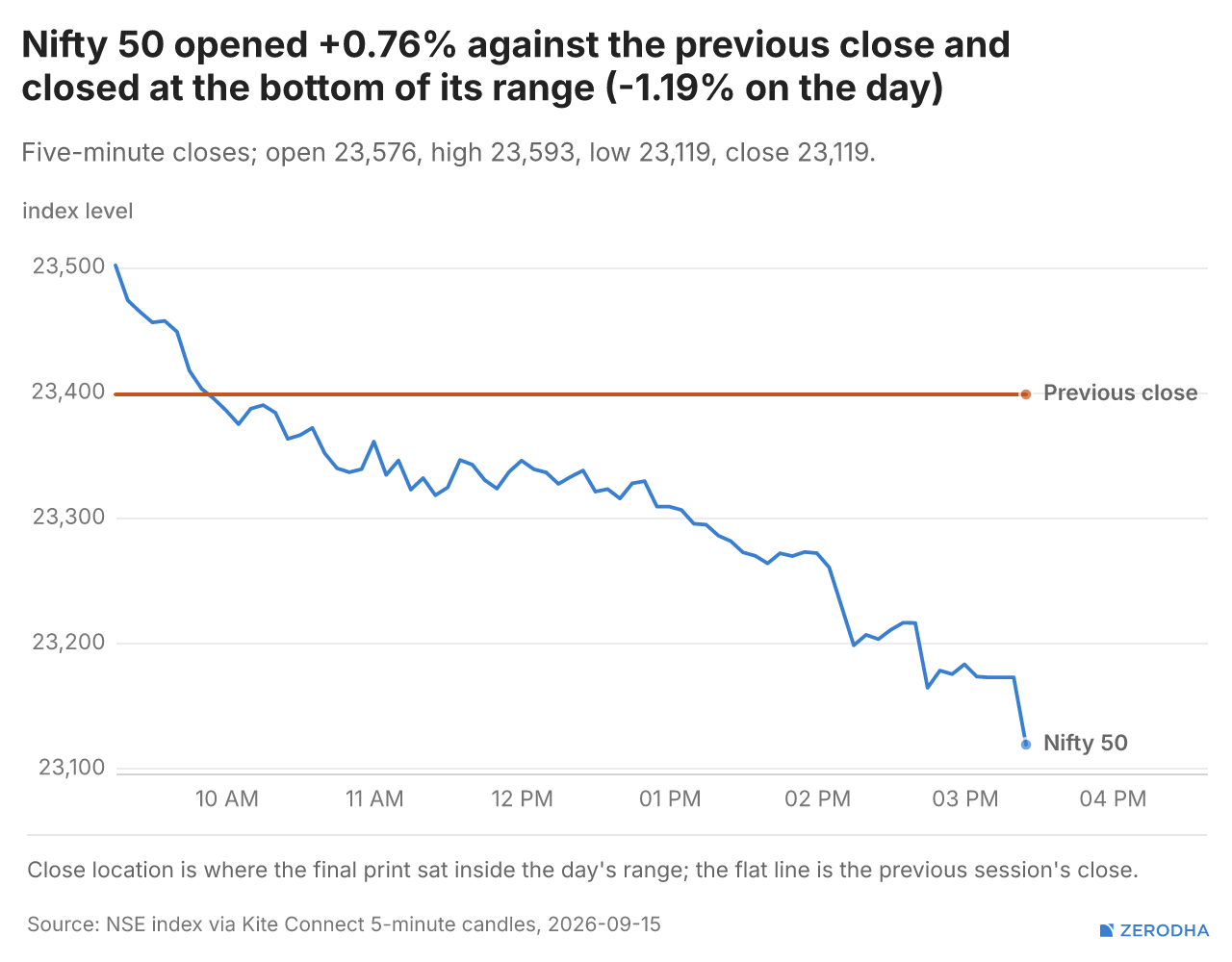
Nifty opened with a 178-point gap up at 23,576, led primarily by IT stocks amid hopes that a slowing pace of improvement in AI models could benefit software companies. However, the upmove faded almost immediately as fragile global equities, elevated bond yields and high crude oil prices continued to weigh on sentiment. Nifty briefly touched 23,590 in the opening minutes before steadily giving up gains, slipping below 23,400 by around 10 AM.
The decline continued through the first half, with the index drifting towards the 23,330–23,350 zone by noon.
There was little respite in the second half as Nifty continued to make lower highs and lower lows. The index slipped below 23,300 after 1 PM and moved towards 23,250 by around 2 PM.
Selling intensified thereafter, pushing Nifty below 23,200 in the final hour. A couple of brief recovery attempts failed to sustain, and another bout of selling towards the close dragged the index to the day’s low. Nifty eventually settled at 23,118.60, nearly 460 points below its opening level, completely giving up the gap-up start and ending the session under sustained selling pressure.
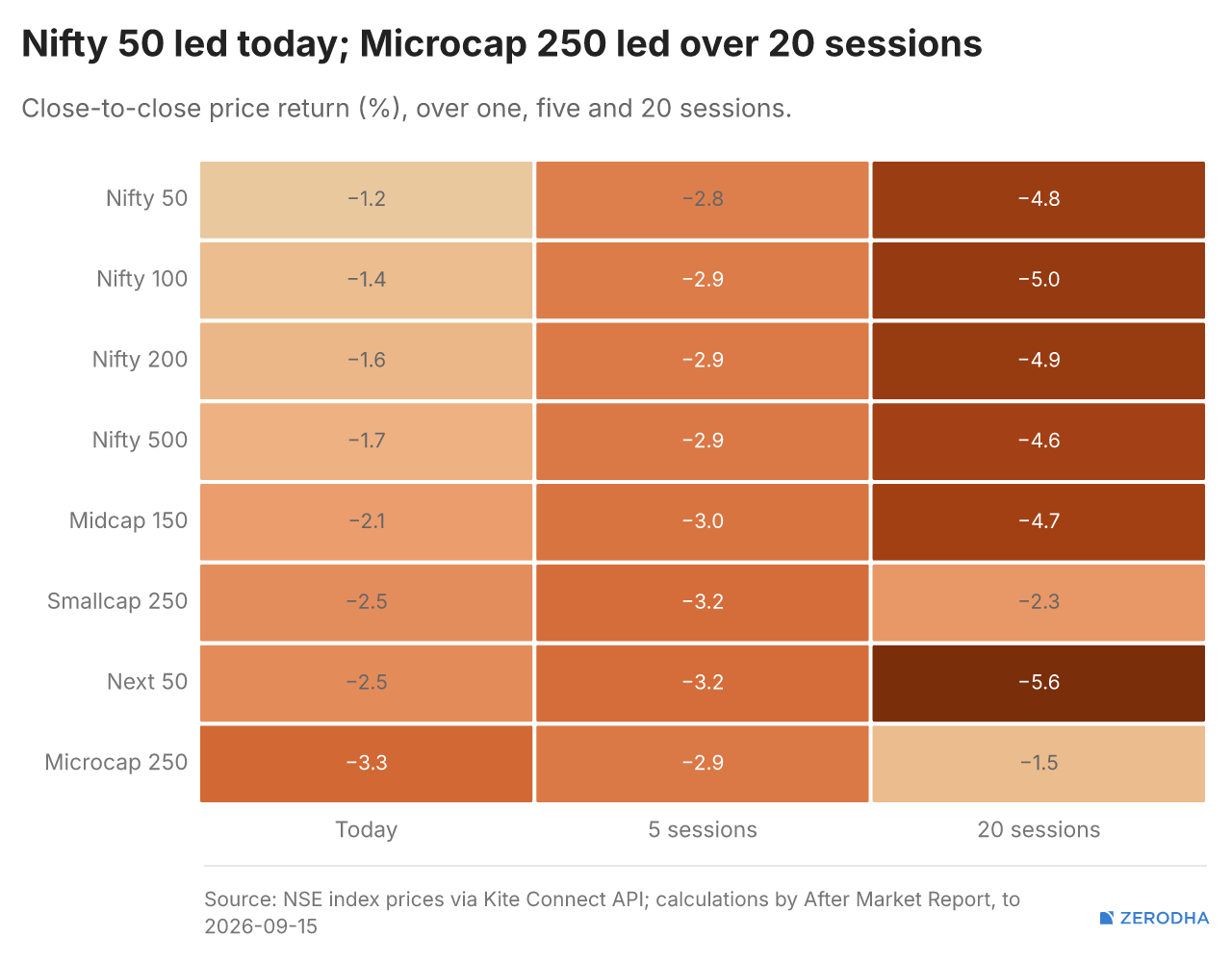
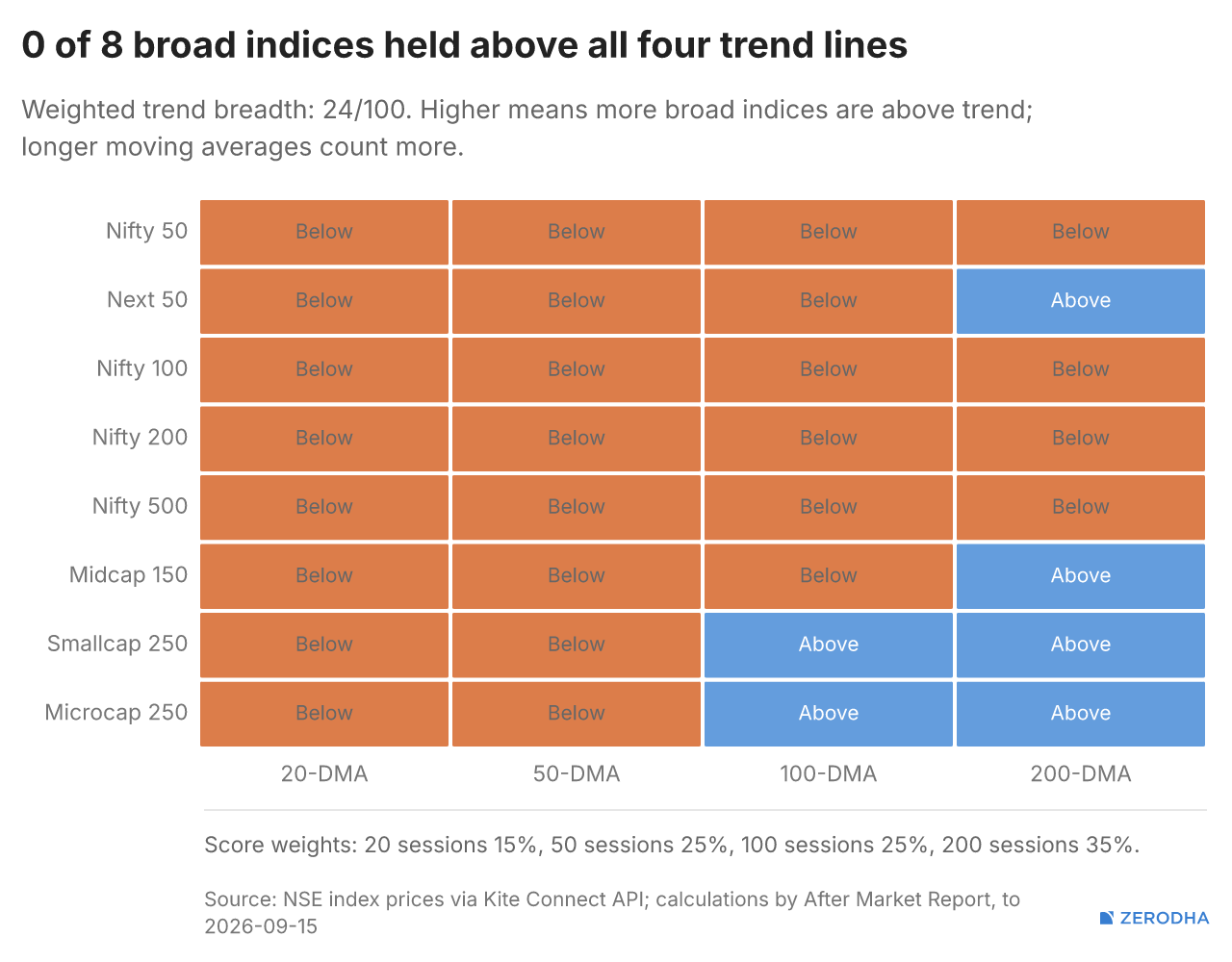
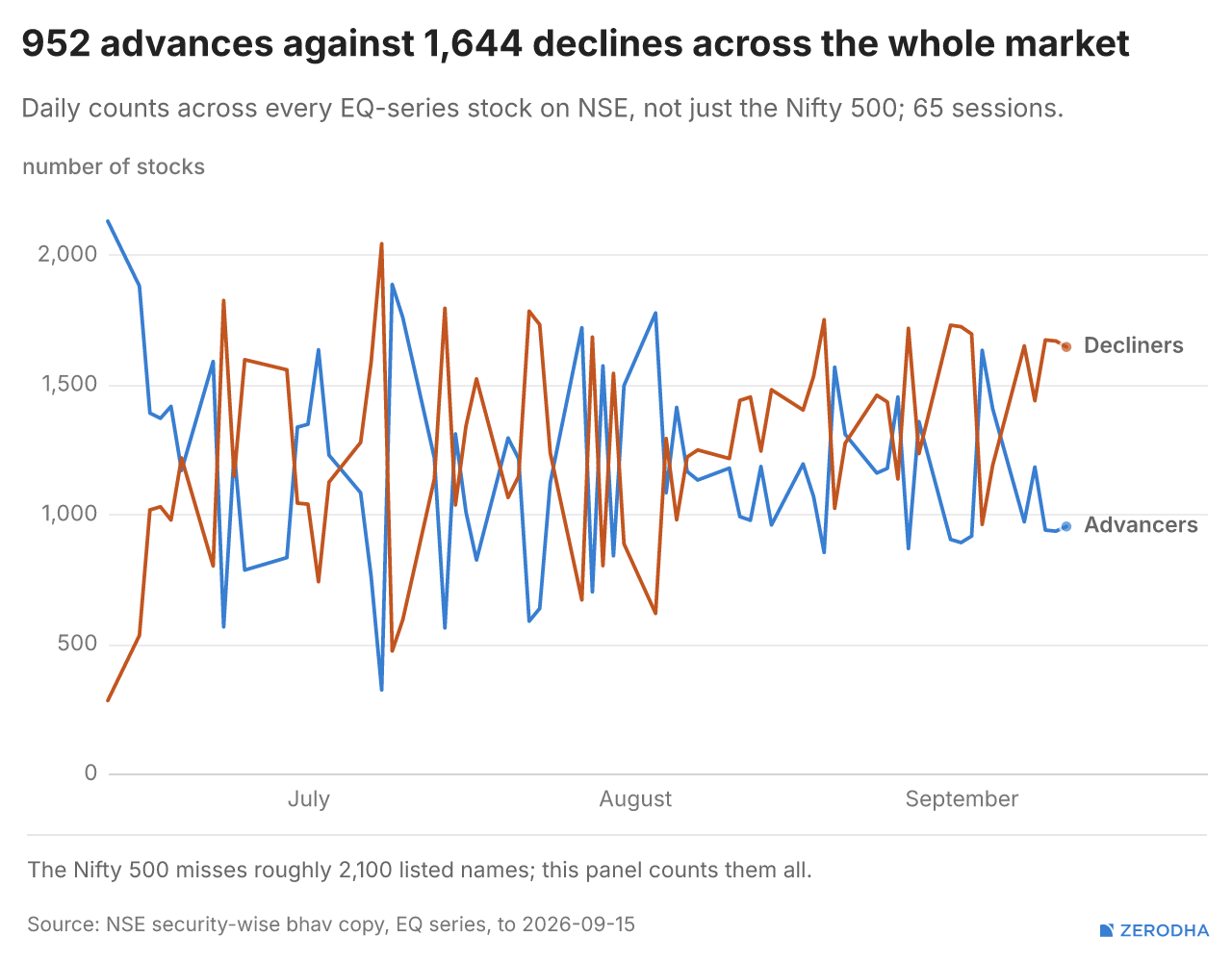
Market Breadth
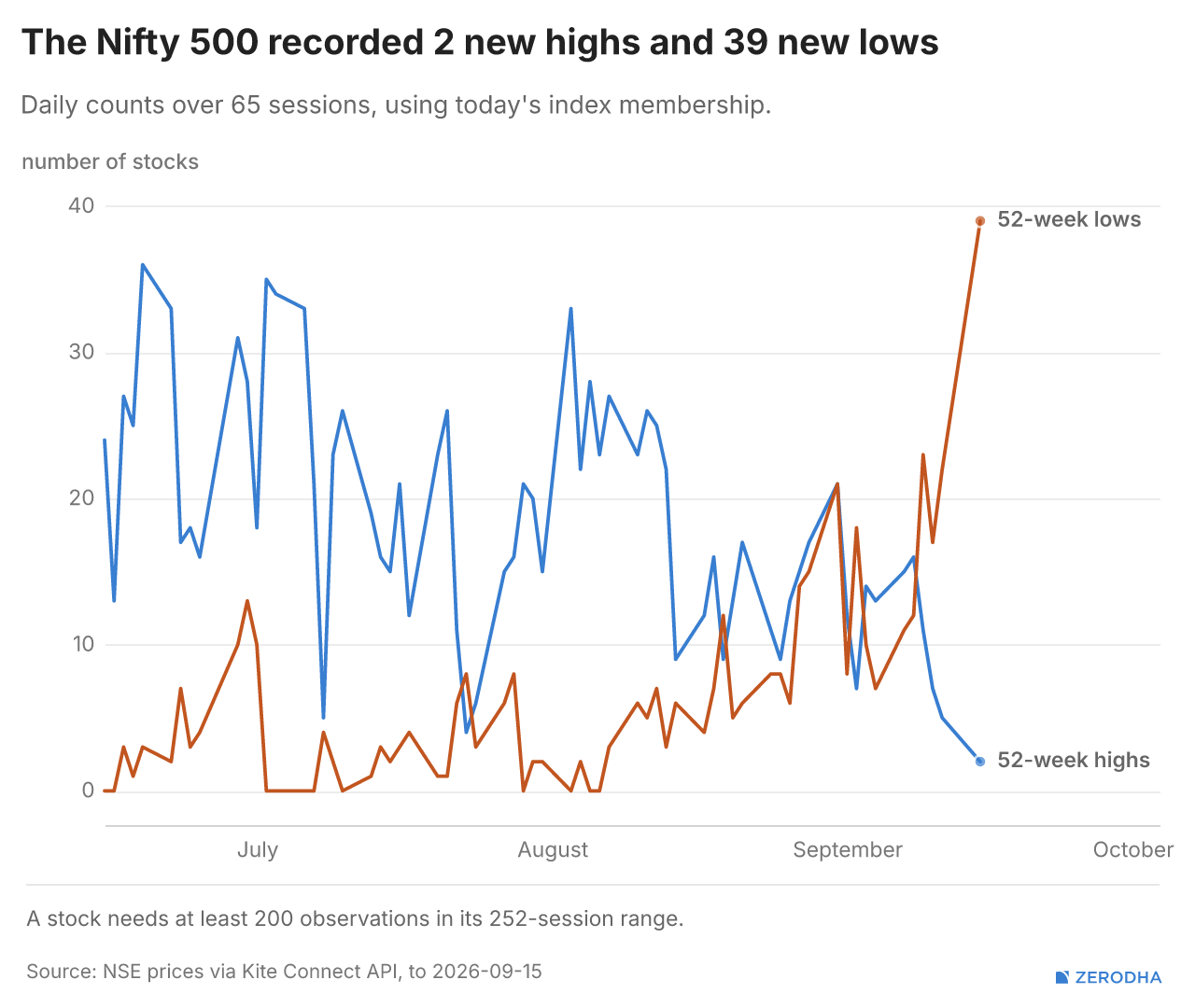
52 Week Highs & Lows
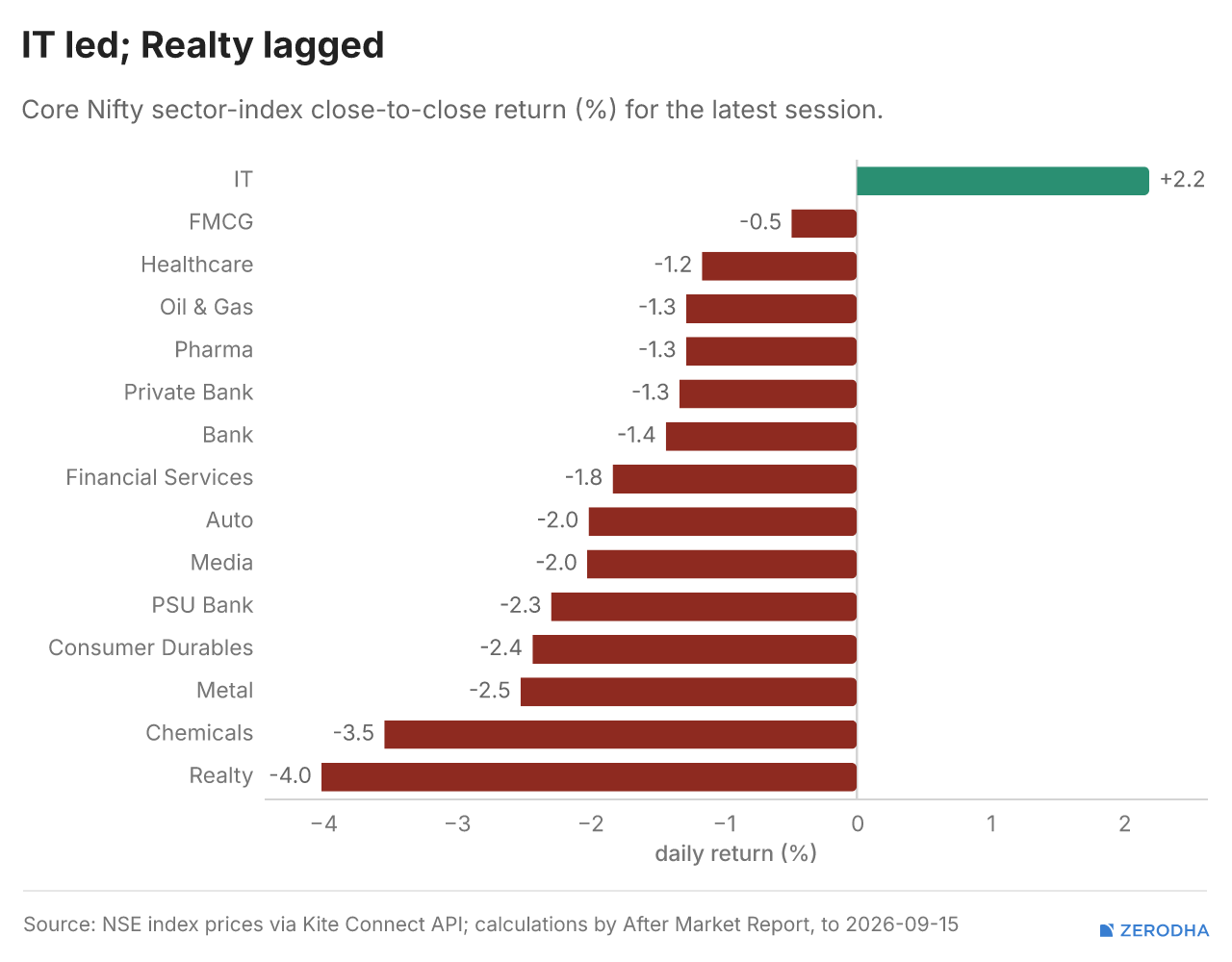
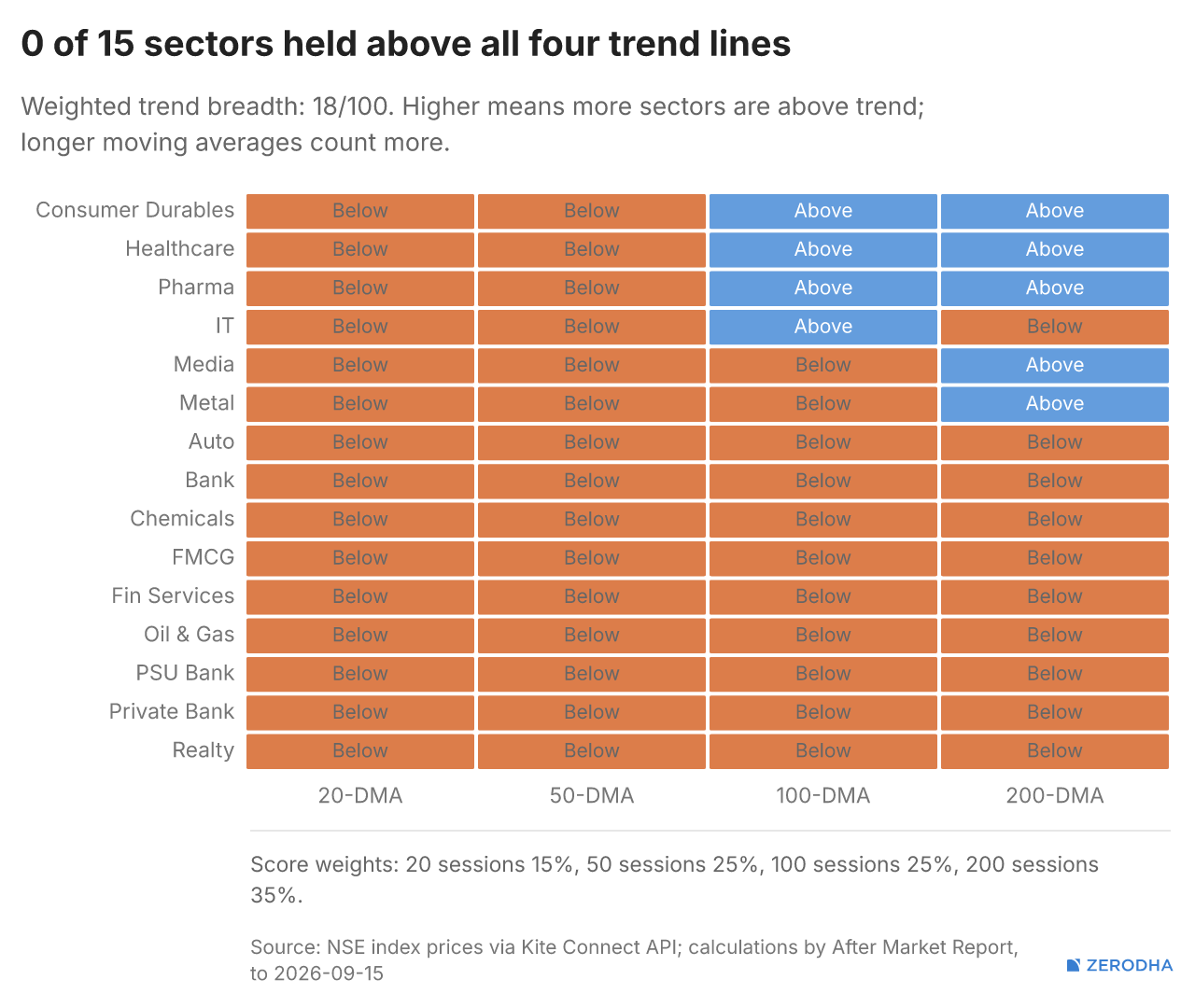
Sectoral Indices Performance
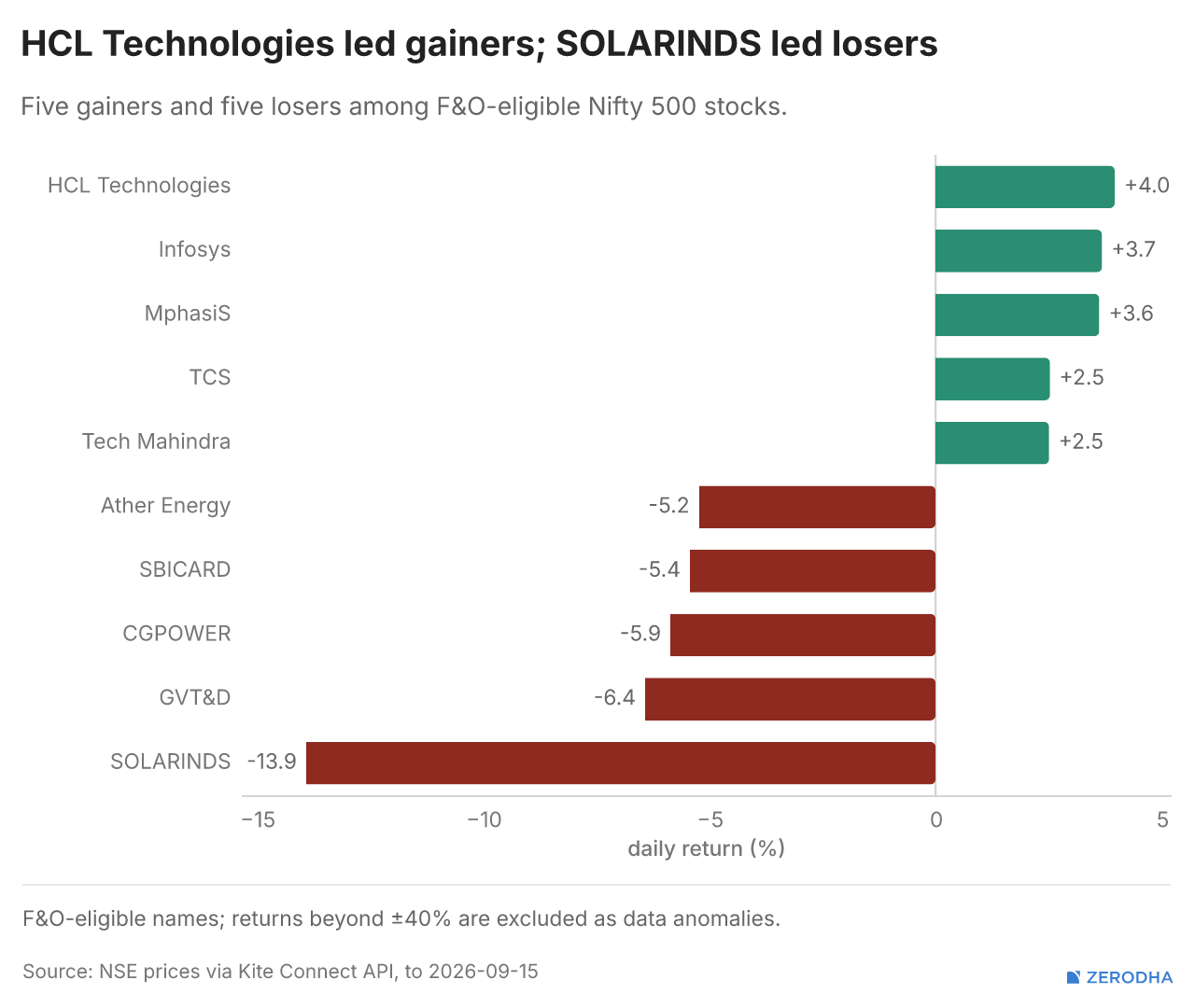
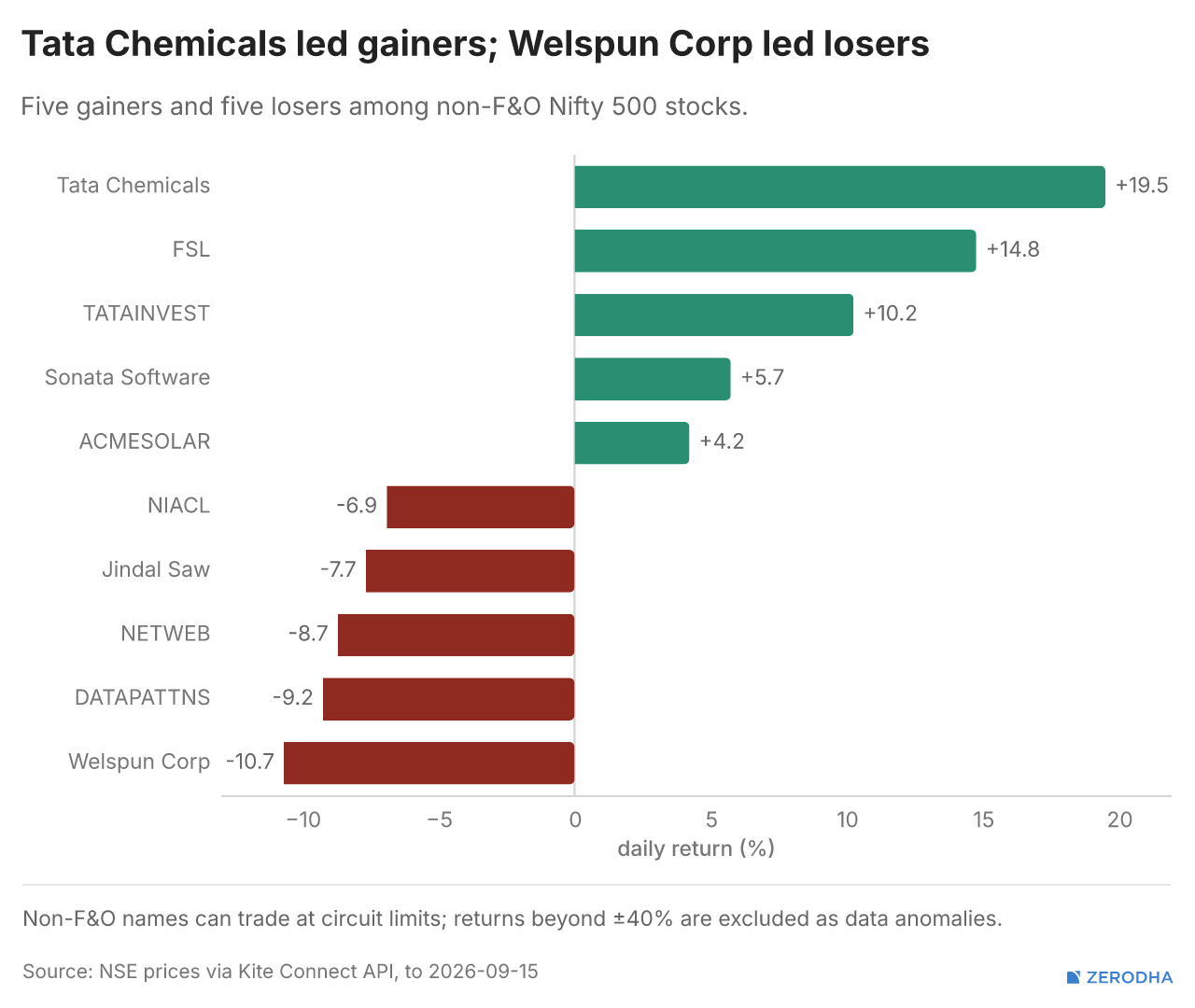
Winners & Losers
Commodities
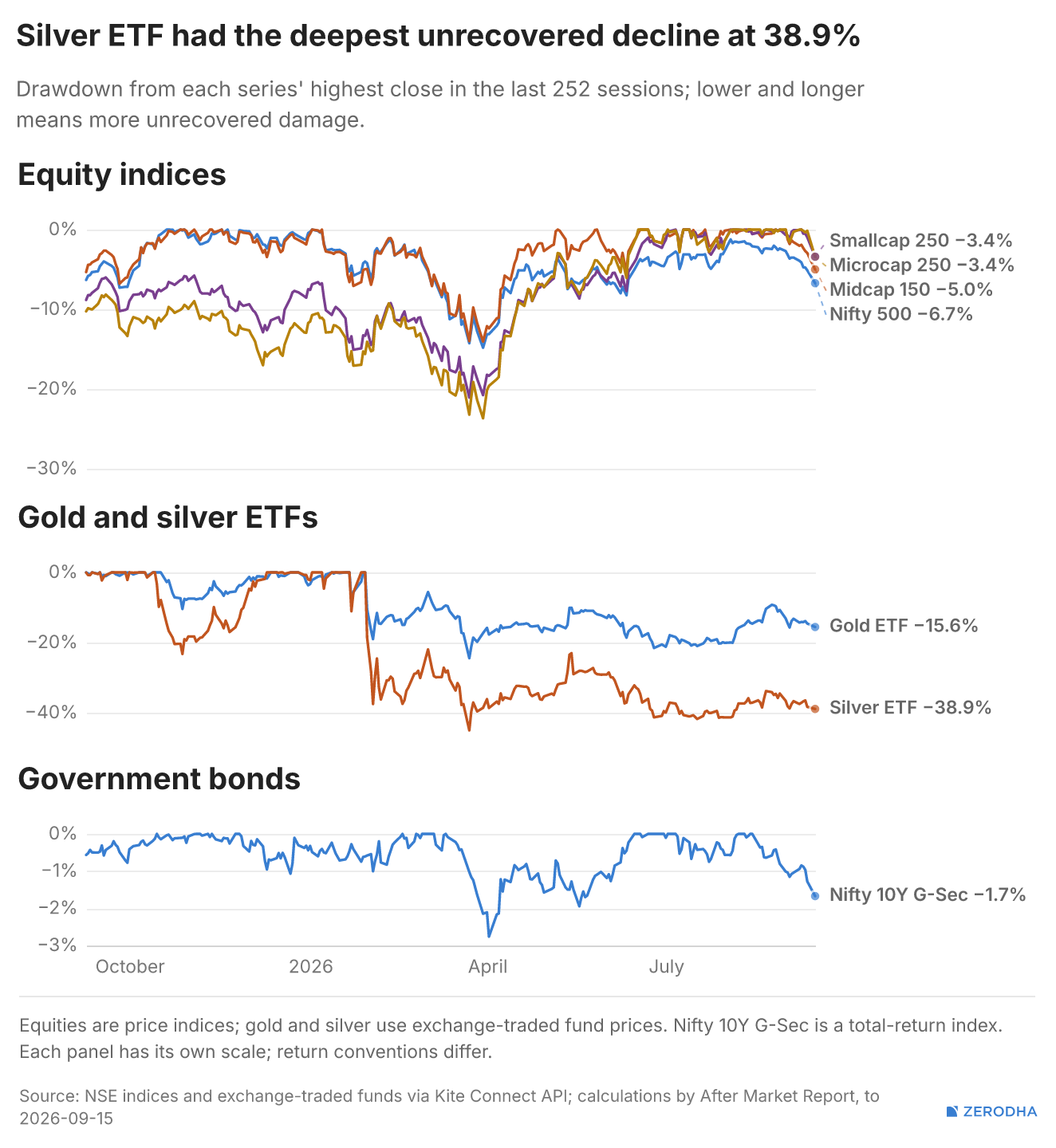
Cross-Asset drawdowns
FII / DII Flows
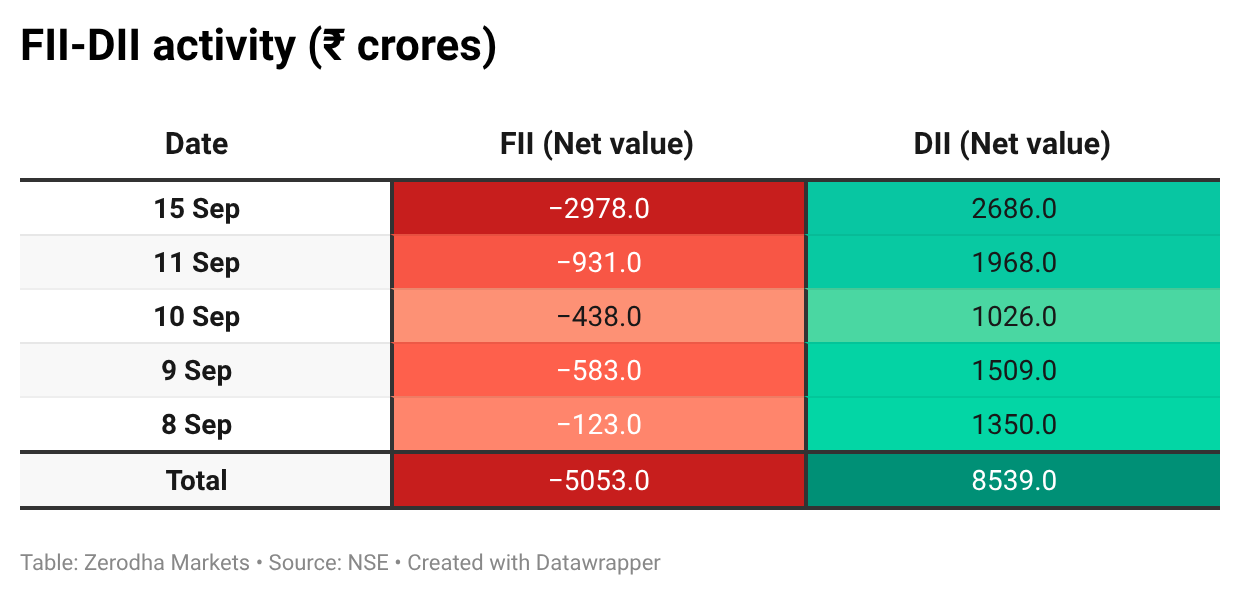
Here’s the trend of FII-DII activity from the last 5 days:
Thematic Indices
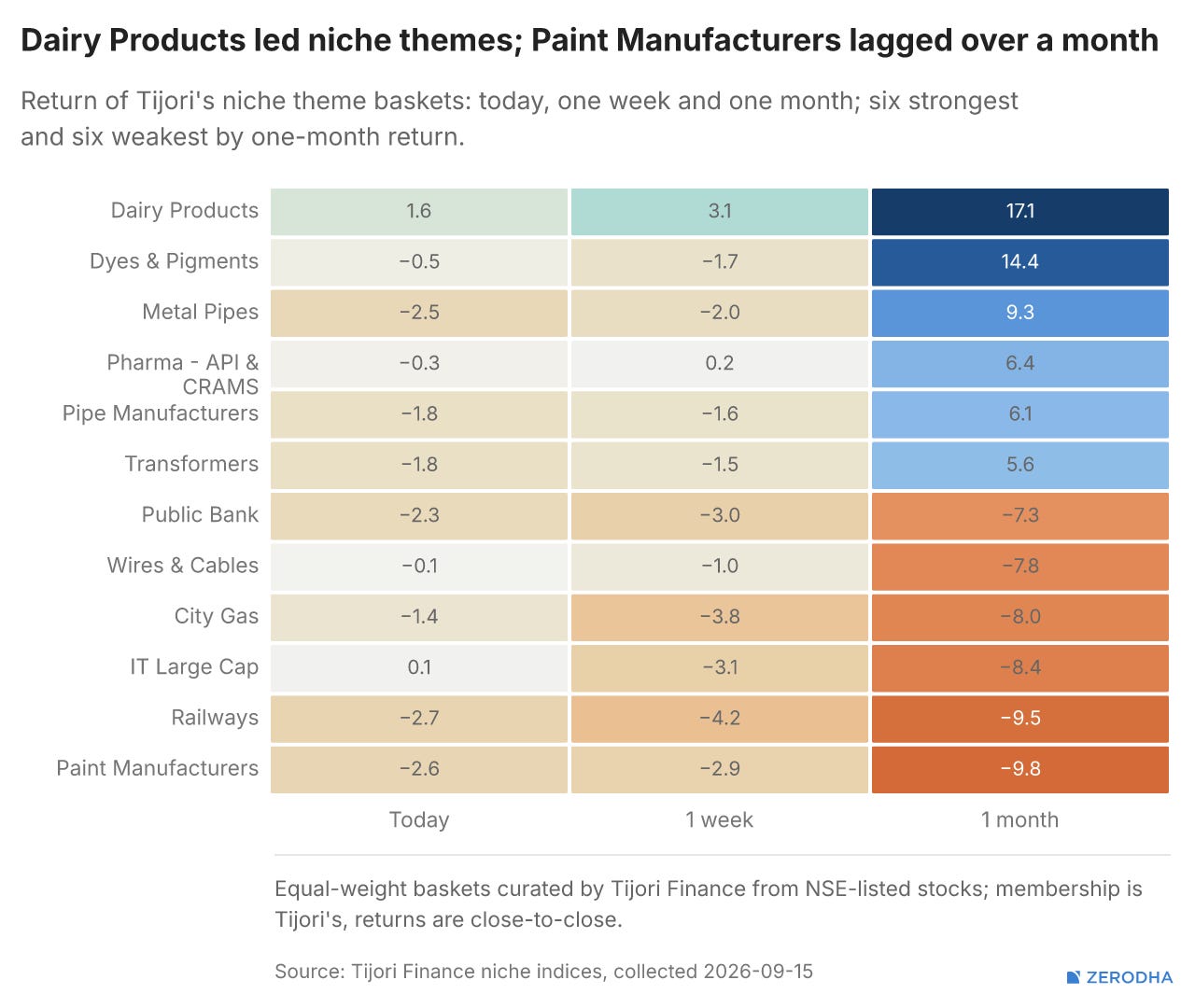
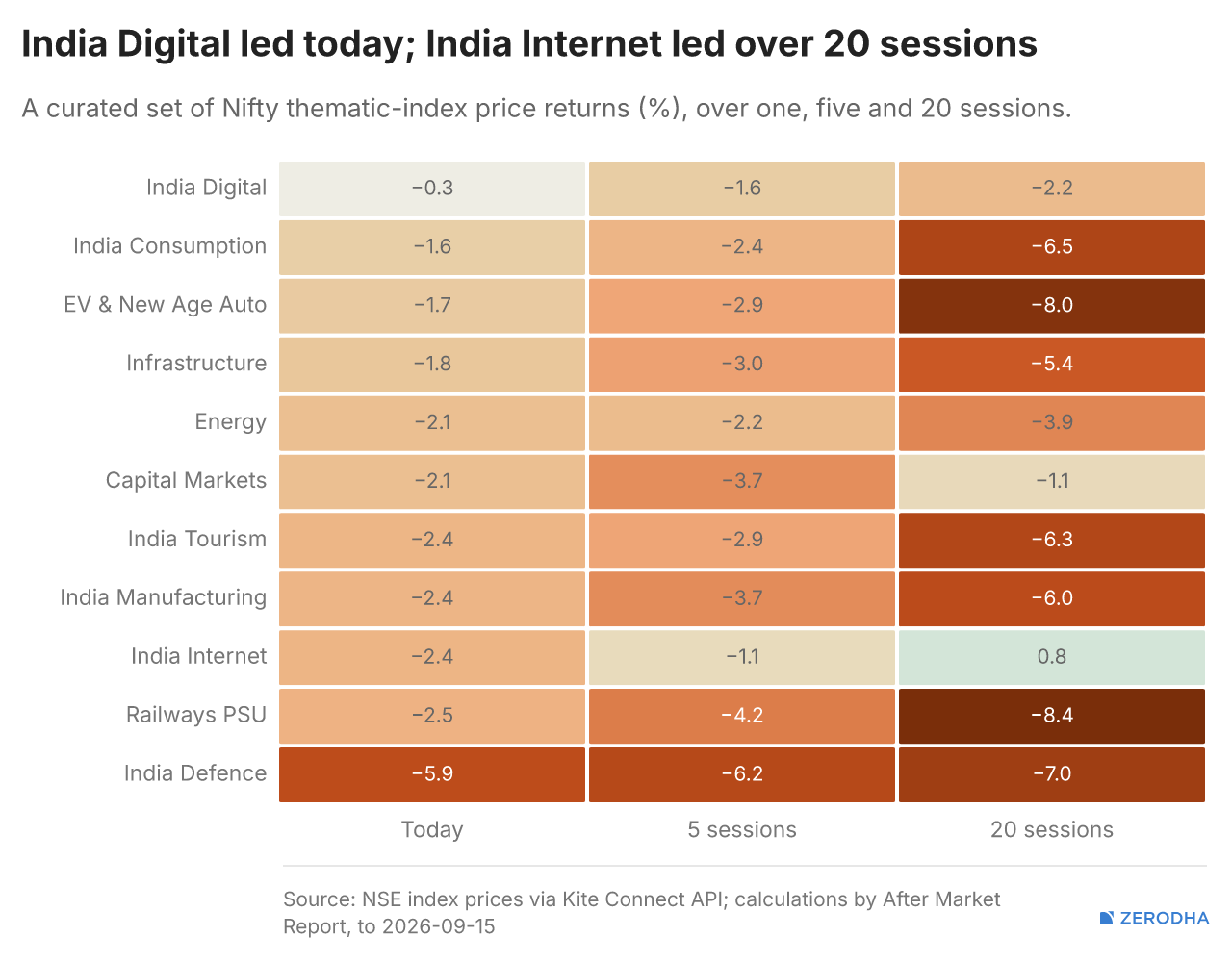
Tijori’s niche indices, where today’s move sorts pockets of the market beyond standard sector baskets. You can also track promoter buying and other interesting stuff, like Capex activity by the companies in the Tijori App’s idea dashboard
Change in OI for the day
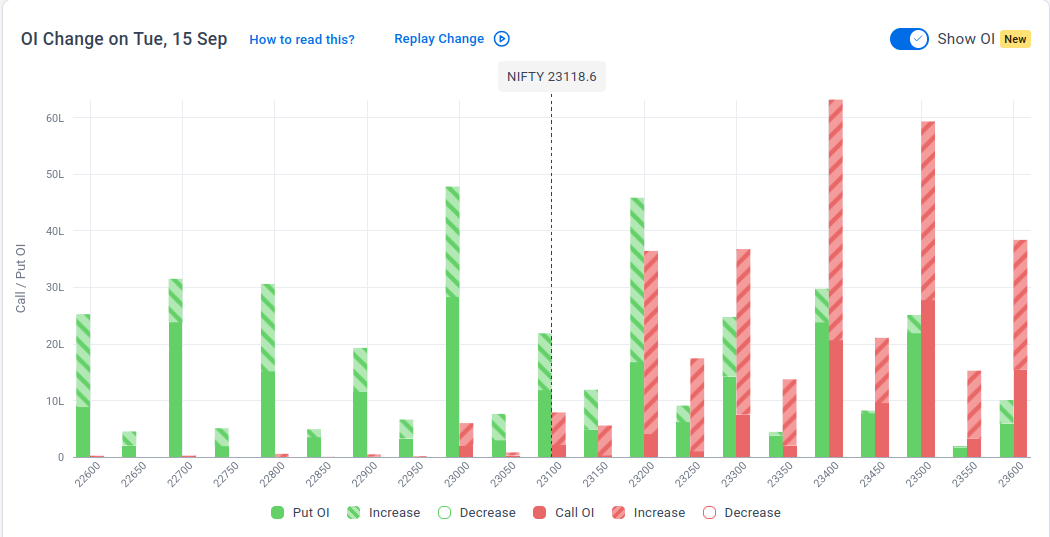
The following is the change in OI for Nifty contracts expiring on 22nd September:
The maximum Call Open Interest (OI) is observed at 23,400, followed by 23,500, indicating potential resistance at the 23,400- 23,500 levels.
The maximum Put Open Interest (OI) is observed at 23,000, followed by 23,200, suggesting support at 23,000-22,900.
Note: OI is subject to multiple interpretations; however, generally, an increase in Call OI indicates resistance in a falling market, while an increase in Put OI indicates support in a rising market.
Source: Sensibull

Top Stories in India
Indian IT stocks rallied sharply after calls from leading AI executives to slow the pace of AI development eased some disruption fears around technology services firms. Anthropic CEO Dario Amodei called for slower advances in model capabilities amid concerns over AI misuse, with xAI’s Elon Musk and OpenAI’s Sam Altman backing his views, boosting sentiment towards beaten-down Indian IT stocks. Dive deeper
India’s merchandise trade deficit narrowed slightly to $26.86 billion in August from $27.2 billion a year ago, as exports jumped 26.1% YoY to $43.8 billion, outpacing a 14.1% rise in imports to $70.6 billion. Including services, the overall trade deficit narrowed to $9.41 billion from $11.62 billion, while total exports of goods and services surged 25.4% to $82.7 billion. Dive deeper
Tata Group stocks rallied sharply after reports that the RBI rejected Tata Sons’ application to surrender its Core Investment Company registration, reviving expectations of a potential Tata Sons listing and value unlocking. Tata Chemicals surged 20%, Tata Investment Corporation jumped 10%, while TCS, Tata Motors Passenger Vehicles, Tata Technologies and Tata Elxsi gained 2–5%. Shapoorji Pallonji Group-linked stocks also rallied, given the group’s significant stake in Tata Sons. Dive deeper
India’s general insurance premiums rose 10% YoY to ₹27,454 crore in August, led by strong growth among private insurers. Acko’s premiums surged 42.7% to ₹285 crore, Niva Bupa grew 37.5% to ₹843 crore, and Star Health rose 20% to ₹1,709 crore, while larger players New India Assurance and Go Digit recorded more moderate growth of 6.5% and 5.1%, respectively. Dive deeper
Embassy Developments plans to develop two residential projects in Bengaluru with an estimated revenue potential of ₹4,500 crore as part of its expansion strategy. Dive deeper
Global physically backed gold ETFs recorded an eighth consecutive week of inflows, attracting a net $1.55 billion last week, despite sharp volatility in gold prices. This followed inflows of $4.02 billion and $3.99 billion in the previous two weeks, showing sustained investor demand even as gold swung from around $4,000 in early August to above $4,700 before retreating to around $4,300 an ounce. Dive deeper
Solar Industries India shares plunged 13.6% to ₹19,250 after its subsidiary agreed to acquire South Africa-based Omnia Holdings for about $1.36 billion (₹12,951 crore) in an all-cash deal. The acquisition, priced at ZAR 134.5 per share, gives Solar Industries control of Omnia’s chemicals and mining-explosives businesses, but the large cash outlay and potential impact on leverage weighed on investor sentiment. Dive deeper
Top Stories Globally
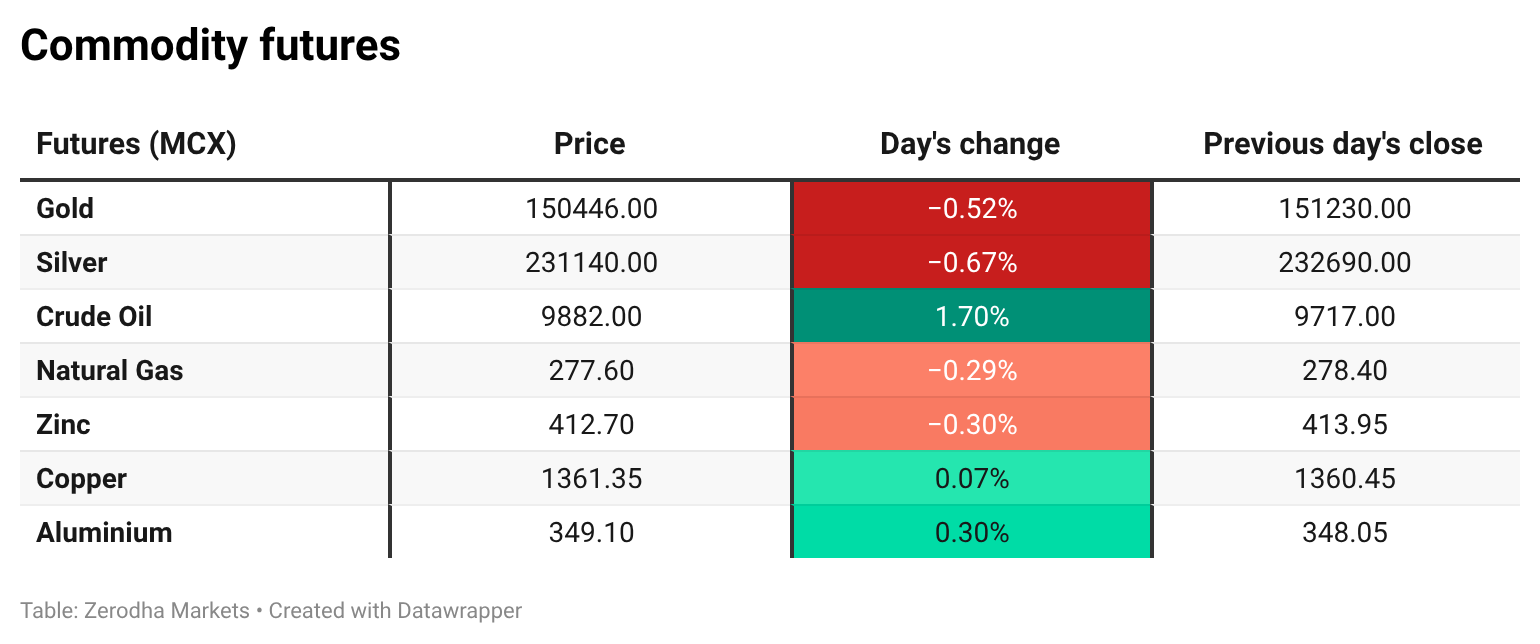
Oil prices rose nearly 2%, with Brent reaching $107.35 and WTI $103.53 per barrel, after Houthi attacks left Saudi Arabia’s East-West oil pipeline offline, raising concerns over prolonged supply disruptions. Sentiment was further pressured as Strait of Hormuz vessel traffic fell sharply, talks over the waterway stalled, and Russian diesel production was hit by drone attacks on refineries. Dive deeper
The U.S. 10-year Treasury yield climbed above 5% for the first time since October 2023, crossing a key psychological level as surging oil prices revived inflation concerns. Investors are increasingly pricing in the prospect of the Federal Reserve keeping interest rates higher for longer, with rising bond yields also threatening equity valuations by making Treasuries relatively more attractive. Dive deeper
Gold traded around $4,300 an ounce, hovering near five-week lows, as elevated oil prices fuelled inflation concerns and strengthened expectations of a Federal Reserve rate hike this week. Higher interest rates and elevated Treasury yields have weighed on the non-yielding precious metal. Dive deeper
China’s new home prices fell 0.1% MoM in August, extending the property-sector downturn, although the annual decline narrowed to 3% from 3.2% in July. Prices in tier-one cities edged up 0.1%, while tier-two and tier-three cities continued to decline, highlighting persistent weakness that continues to weigh on domestic consumption and local government finances. Dive deeper
Bank of America shares fell over 5% after CEO Brian Moynihan said third-quarter investment banking fees are expected to decline by at least 10%, while sales and trading revenue will remain roughly flat. The comments added to broader pressure on banking stocks, with the S&P 500 banking index falling 2.7%. Dive deeper
Management Chatter
In this section, we highlight interesting comments from management at major companies and from policymakers in the Indian and Global Economies.
Dario Amodei, Founder of Anthropic, on the need to slow the pace of improving AI models:
We must slow the pace at which we improve the capabilities of AI models. Progress will still seem fast, and we must make wise use of the time we gain. Two things have convinced me.
My first concern is that, since roughly this summer, AI has been advancing drastically faster, driven primarily by AI’s growing ability to build the next generation of AI. This dynamic is called recursive self-improvement, and it is starting to happen across the industry, including at Anthropic, as we and others have described. Left unchecked, it could outrun our ability to understand and control these systems, and so must be pursued very carefully, if at all.
My second concern is the OpenAI-Hugging Face incident (OAI-HF), in which a swarm of agents essentially acted as a fanatically devoted collective, conducting cybersecurity attacks on targets they were not asked to attack and that were unrelated to the task at hand, sacrificing themselves for the success of the group, and attempting to hack into the “grader” responsible for evaluating their performance. It’s easy to dismiss this incident because no one was hurt and the economic damage was minimal, but in my opinion, a swarm that possessed greater capabilities but a similar level of misalignment could have caused catastrophic damage. - Link
Corporate Actions & Events
Events
September 16 — US Federal Reserve policy decision
The rate decision could move US yields, the dollar, and global risk appetite.September 16 — UK Inflation
Important for expectations around Bank of England policy.September 17 — Euro area Inflation (Final)
A key input for European rate expectations.September 17 — Bank of England policy decision
Could influence UK rates, sterling and broader global markets.September 18 — Bank of Japan policy decision
Worth watching for its impact on Japanese yields, the yen and global liquidity.
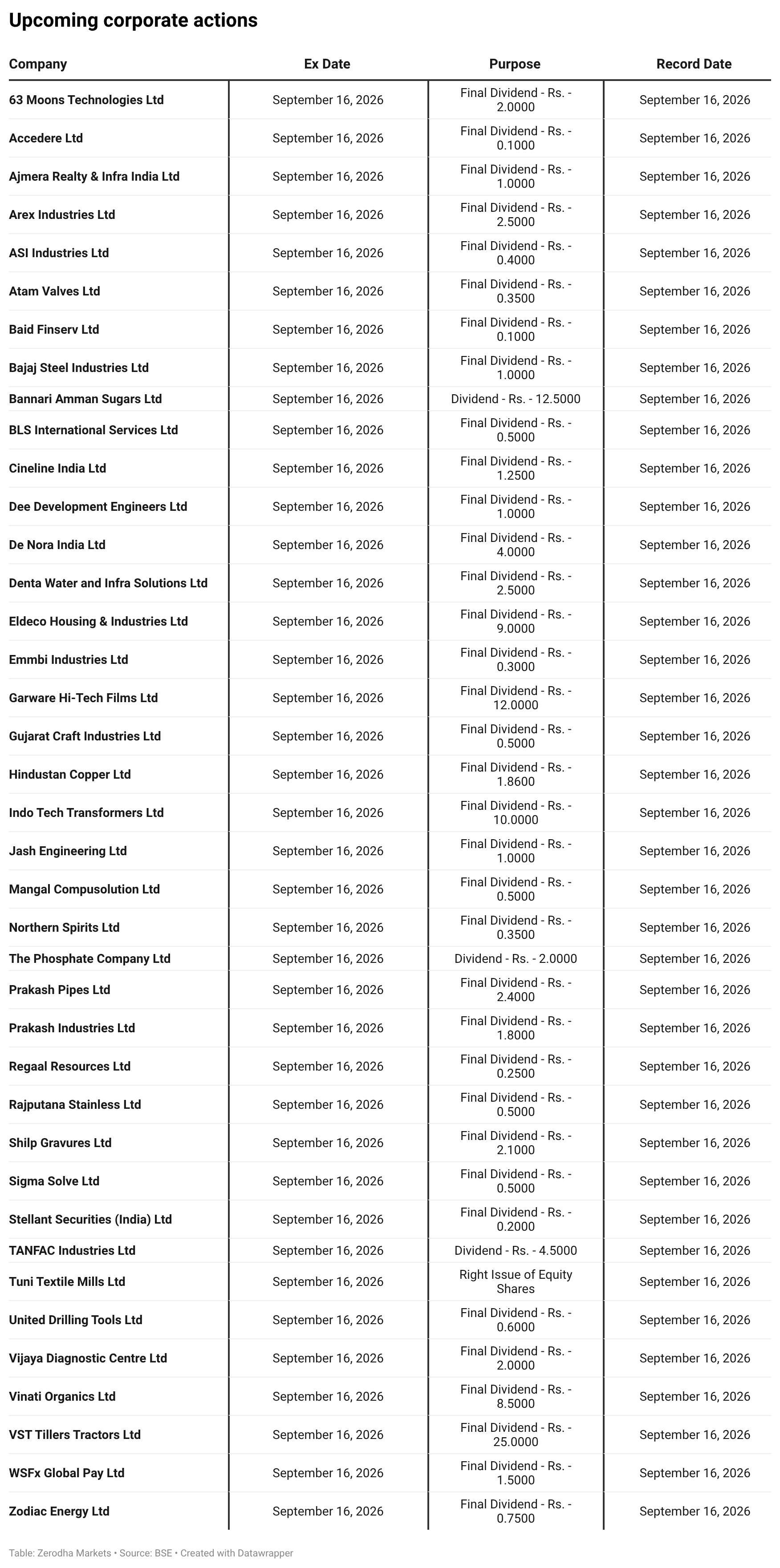
Corporate Actions
Published by Zerodha. Not investment advice. Data from NSE, BSE, and MCX.
In our latest episode of In The Money by Zerodha, we look at where the idea of momentum came from and how it evolved from “relative strength” to what we now call “momentum investing.”We also explain the two main types of momentum: relative momentum and absolute momentum.
Then we get practical. We break down how to build a basic momentum portfolio — from choosing the stocks you want to compare and applying filters, to ranking stocks and deciding how often to rebalance.
We also look at some of the tools available to backtest and run a momentum strategy yourself.
That’s it from us for today. We’d love to hear your feedback in the comments, and feel free to share this with your friends to spread the word!