

Welcome to Aftermarket Report, a newsletter where we do a quick daily wrap-up of what happened in the markets, both in India and globally.
In our latest episode of In The Money by Zerodha video series, we move from concepts into practical implementation by using real backtest data to build a position sizing framework that can actually survive real market conditions.
The episode closes by explaining why option buying requires separate backtests due to different payoff structures and decay dynamics. The core idea is simple: position sizing is about survival first, returns later.
Market Overview
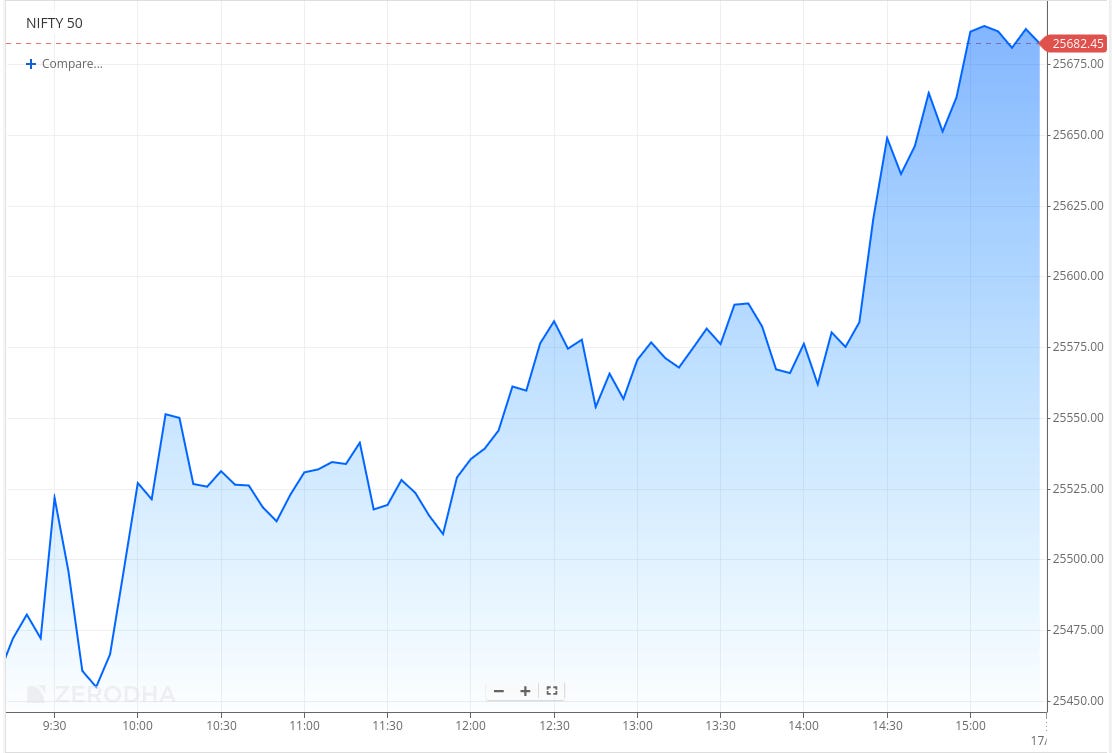
Nifty opened with a 47-point gap-down at 25,424, extending last week’s weakness. However, after a brief dip in the opening ticks toward the 25,370-380 zone, the index stabilised quickly and began grinding higher through the morning session. Nifty traded with a steady positive bias, gradually reclaiming the 25,500 mark and moving into the 25,520–25,550 range by late morning, as selling pressure eased and dip-buying emerged.
In the second half, momentum strengthened further, with Nifty pushing higher in phases and crossing 25,570 post 1 PM. The rally accelerated sharply after 2:30 PM, with the index breaking above 25,650 and extending gains to almost 25,700 in the final hour. Nifty eventually closed near the day’s highs at 25,682.75, ending firmly in the green and marking a strong reversal from the weak start, driven by sustained buying and a decisive late-session upmove.
Looking ahead, markets are likely to remain sensitive to global risk appetite and domestic cues.
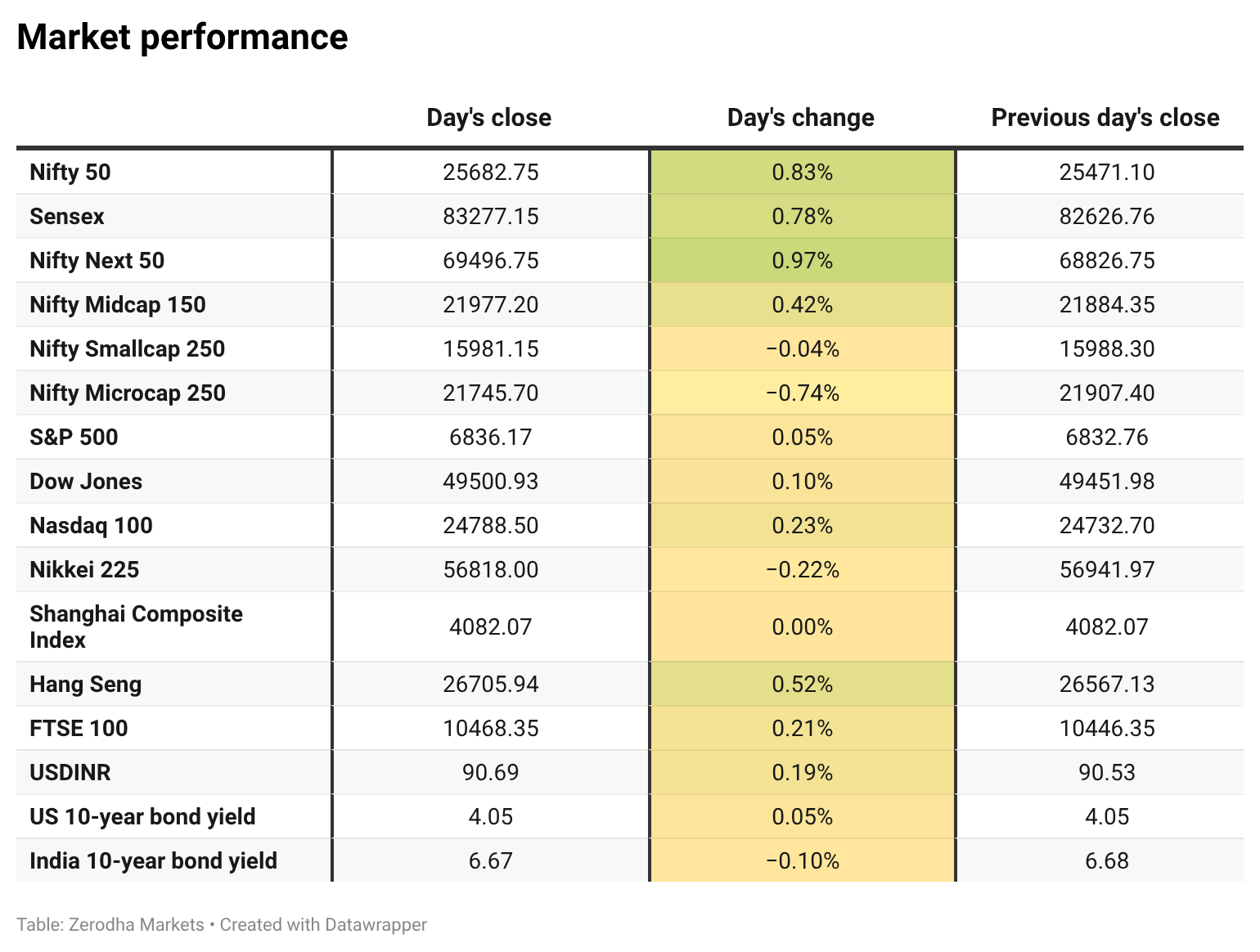
Broader Market Performance:
The broader market had a weak session today. Of the 3,265 stocks that traded on the NSE, 1,342 advanced, 1,826 declined, and 97 remained unchanged.
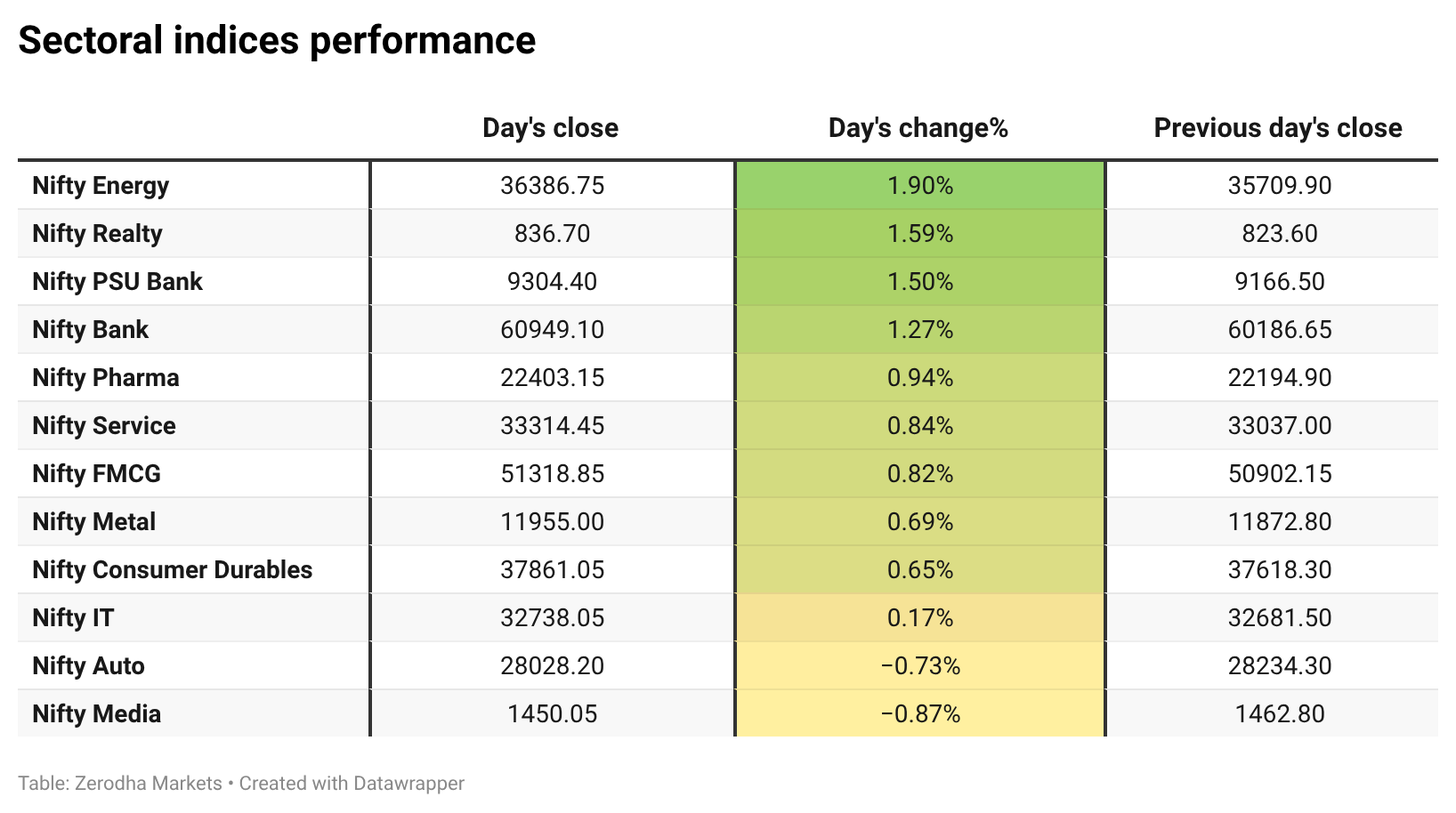
Sectoral Performance:
Sectoral breadth was largely positive today, with Nifty Energy leading the gains, up 1.90%, while Nifty Media was the top loser, down 0.87%. Overall, 10 sectors closed in green, and 2 sectors ended in red.
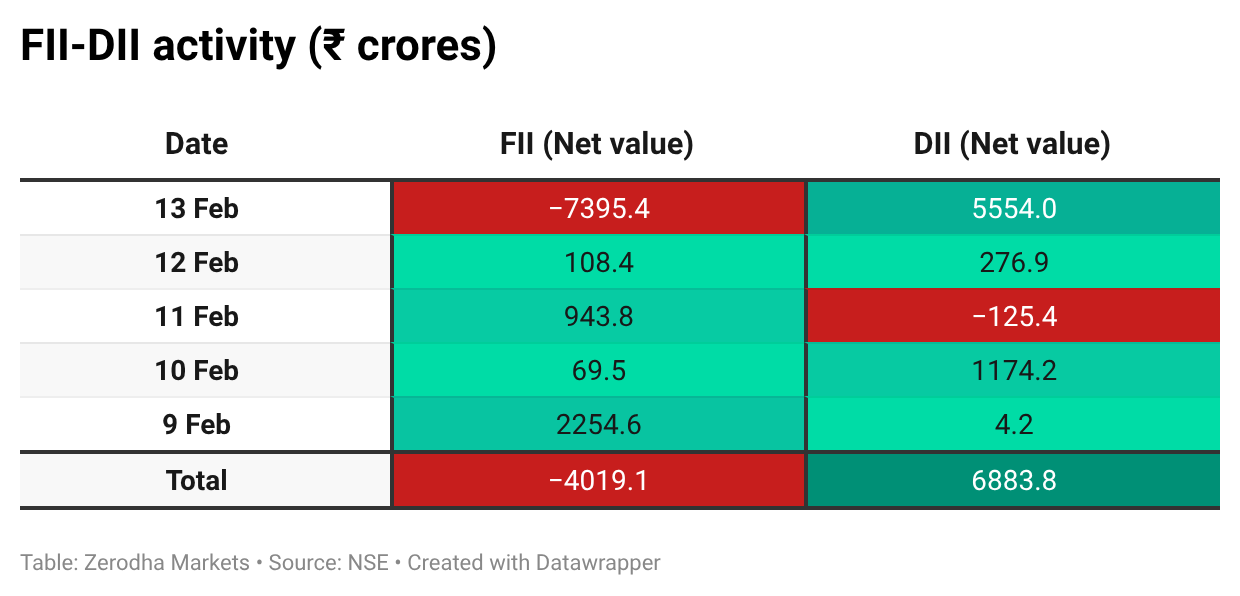
Here’s the trend of FII-DII activity from the last 5 days:
Change in OI for the day
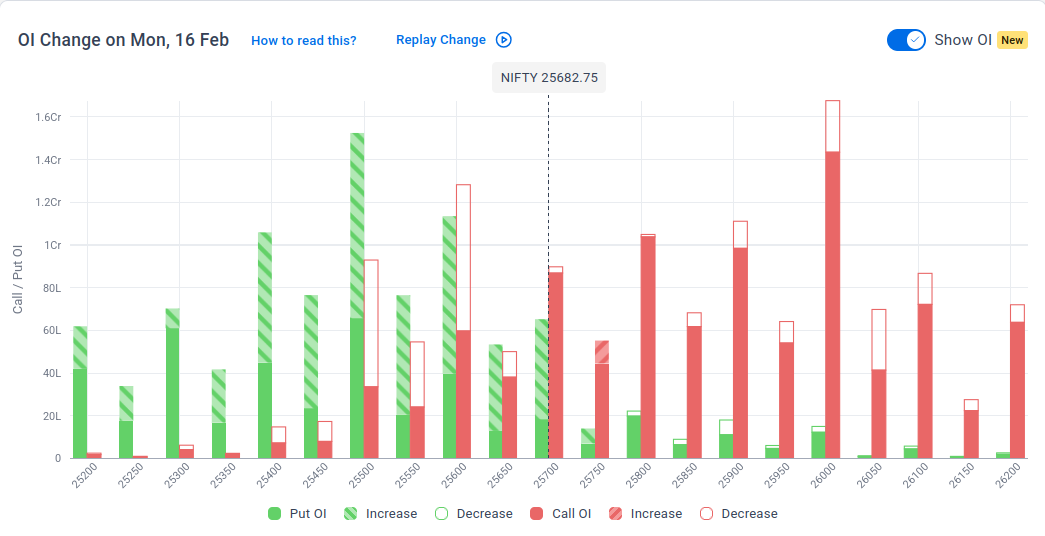
The following is the change in OI for Nifty contracts expiring on 17th February:
The maximum Call Open Interest (OI) is observed at 26,000, followed by 25,800 & 25,900, indicating potential resistance at the 25,800 -25,900 levels.
The maximum Put Open Interest (OI) is observed at 25,500, followed by 25,600, suggesting support at 25,600-25,500.
Note: OI is subject to multiple interpretations; however, generally, an increase in Call OI indicates resistance in a falling market, while an increase in Put OI indicates support in a rising market.
Source: Sensibull
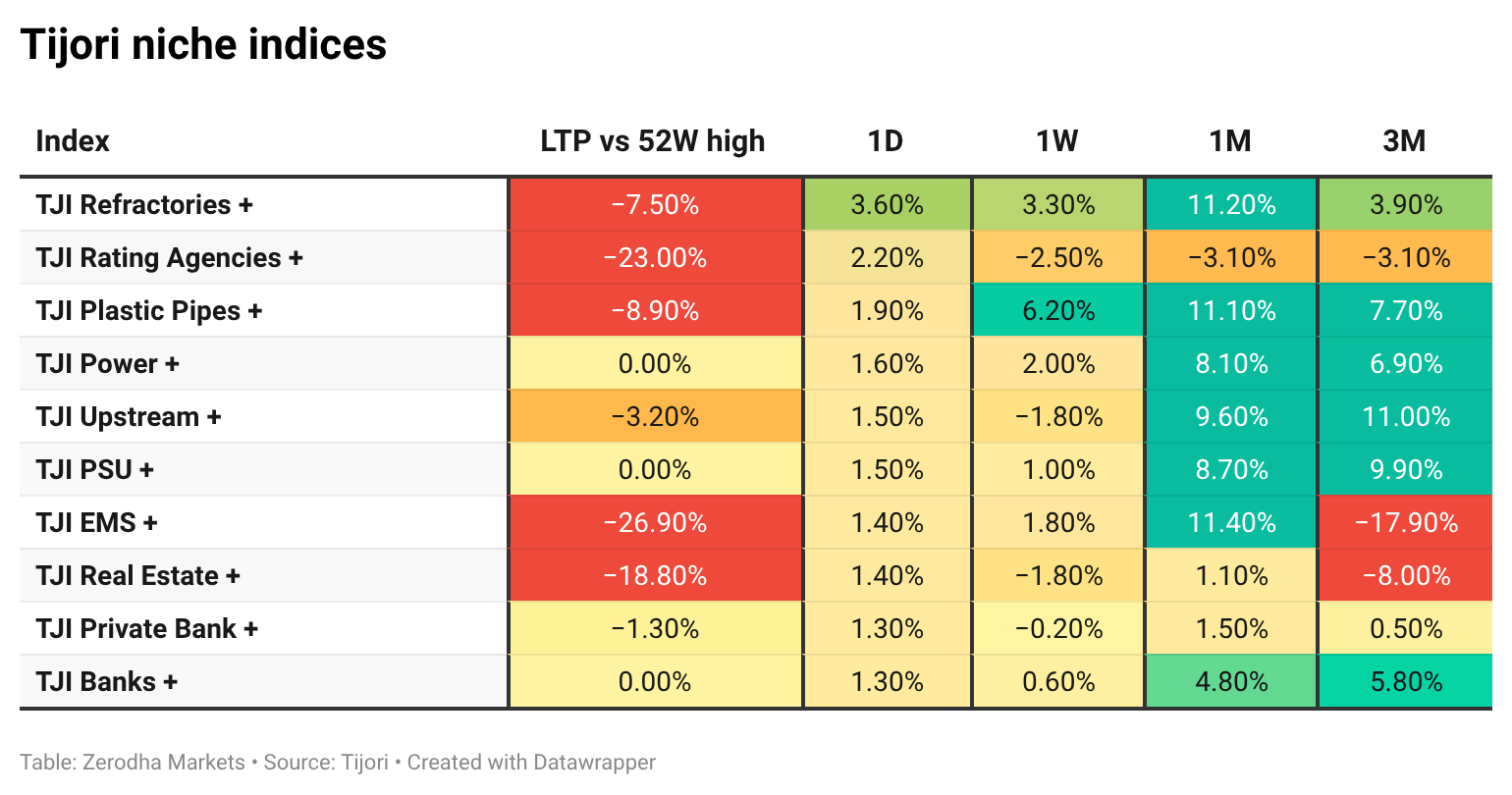
Tijori is an investment research platform that has constructed niche indices for various themes and sub-sectors. They help you understand the market performance of narrow slices of the market. You can also track the Promoter buying and other interesting stuff, like Capex activity by the companies in the Tijori App’s idea dashboard
What’s happening in India
India’s merchandise trade deficit widened sharply to $34.7 billion in January 2026 from $25.4 billion a year ago, as imports jumped 19.2% YoY to $71.24 billion while exports rose just 0.6% to $36.5 billion. The US remained India’s top export market, while China continued as the biggest source of imports, with FYTD imports from China up nearly 14% to $108.18 billion. Dive deeper
WPI inflation rose to a 10-month high of 1.81% in January from 0.83% in December, led by firmer core and manufactured product prices. Food inflation turned positive at 1.41%, while manufactured products inflation climbed to 2.86%. Dive deeper
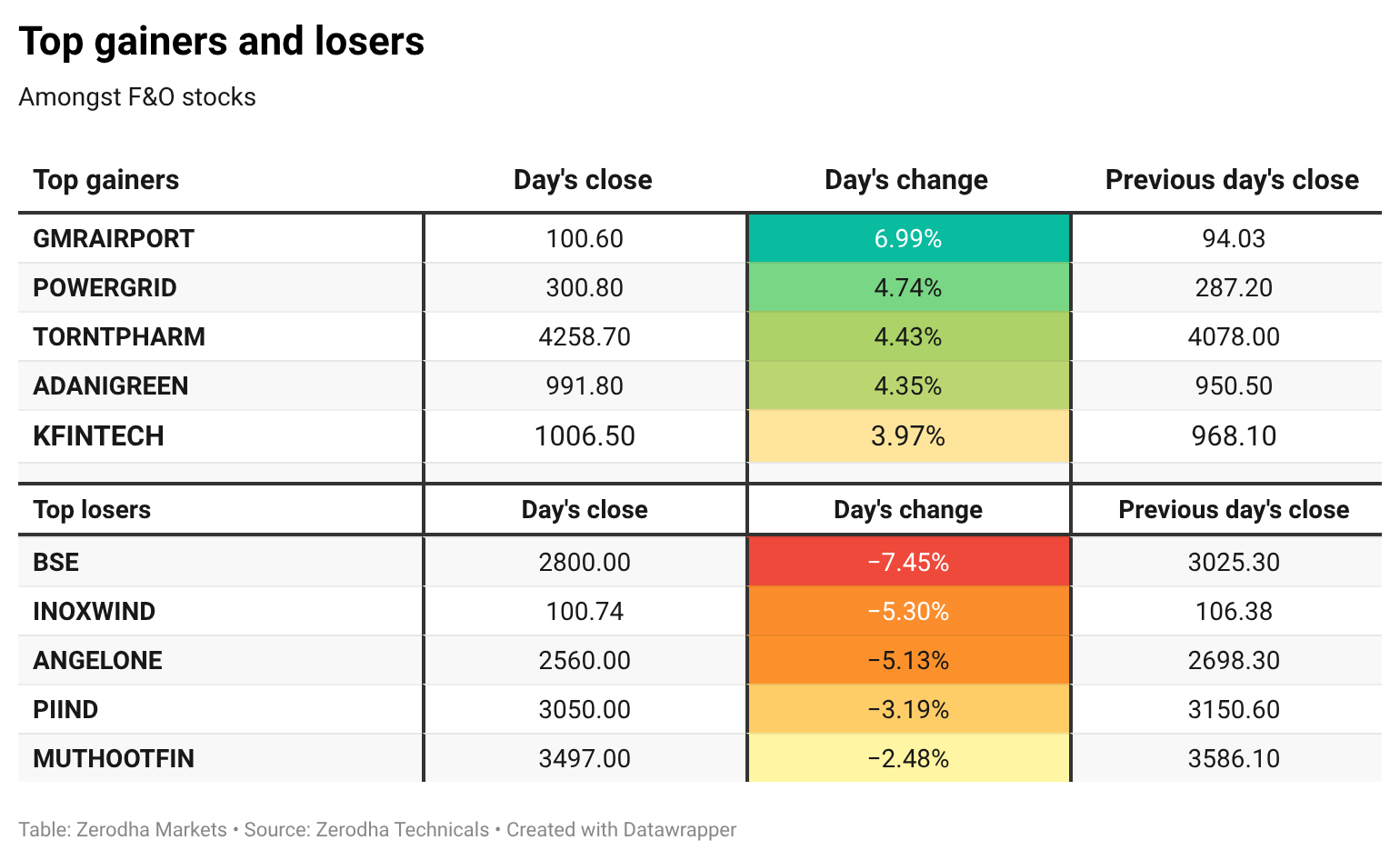
Shares of BSE and other capital market firms fell 2–10% after the Reserve Bank of India tightened norms for bank lending to stock brokers and market intermediaries. The revised rules include higher collateral requirements for bank guarantees and a ban on lending for brokers’ proprietary trading. Dive deeper
The Indian rupee slipped toward 90.7 per dollar, weighed by importer hedging, weak domestic equities, and continued foreign outflows. Dive deeper
India’s government bonds traded in a narrow range as a drop in US Treasury yields offered support, but expectations of heavy upcoming local debt supply capped gains. Dive deeper
Natco Pharma jumped over 11% after announcing it will launch a generic Semaglutide injection in India next month following CDSCO approval. The move positions Natco among Indian drugmakers entering the fast-growing GLP-1 diabetes market. Dive deeper
Torrent Power will acquire L&T’s 1,400 MW Nabha Power plant for about $760 million, increasing its capacity to 6.4 GW. The deal strengthens its thermal portfolio amid rising electricity demand. Dive deeper
NALCO signed an MoU with NLC India to deepen collaboration on its 1,080 MW thermal captive power project and expand renewable energy development. Dive deeper
The government is considering a three-tier framework under Press Note 3 to streamline approvals for investments from neighbouring countries, including China, while balancing security concerns and capital needs. Dive deeper
Five listed Indian REITs distributed over ₹2,450 crore in Q3 FY26 to unitholders, reflecting steady income generation and investor returns from commercial property portfolios. Dive deeper
India has become ChatGPT’s second-largest market after the US, with 100 million weekly active users, underscoring rapid AI adoption in the country. Dive deeper
What’s happening globally
WTI crude edged down to $62.7 per barrel, extending recent declines as markets monitored renewed US–Iran talks and broader geopolitical tensions. Dive deeper
Gold eased to around $5,020 per ounce as investors booked profits after a recent rally driven by softer US inflation data that boosted rate cut expectations. Dive deeper
Copper fell nearly 1% to around $5.75 per pound, extending recent losses amid thin trading during China’s Lunar New Year holidays. Dive deeper
Eurozone industrial production fell 1.4% month-on-month in December, marking the sharpest contraction since April and reversing recent gains amid weaker capital goods output. Dive deeper
Switzerland’s GDP rose 0.2% quarter-on-quarter in Q4, rebounding from the previous contraction amid easing tariff pressures after a revised US trade deal. Dive deeper
Japan’s GDP grew 0.1% quarter-on-quarter in Q4, rebounding from the prior contraction but below expectations, as modest gains in investment were offset by weak consumption and flat net trade. Dive deeper
Volkswagen plans to cut costs by 20% across all brands by 2028 under a broad savings program aimed at restoring sustainable returns. Dive deeper
Management chatter
In this section, we highlight interesting comments made by the management of major companies and policymakers from the Indian and Global Economies.
Vineet Nayar, Former CEO of HCL Technologies, on Indian IT companies:
“From an employment point of view, I think it is very important for us to understand that Indian companies, including Indian IT companies, are going to be profit-driven and therefore if you believe that they are going to create employment you must be dreaming. Therefore, the question is how do we create employment in this environment, and that employment comes from mass scale startups, which is what this government has already doing.” - Link
Fernando Fernandez, Chief Executive Officer, Unilever, on premiumization and the Indian market:
“When it comes to our growth priorities, they involve honing in and doubling down on our biggest growth opportunities, across categories with more beauty, more well-being, more personal care across geographies with the US and India as clear anchor markets for Unilever, and across segments and channels focusing on premiumising the portfolio and further increasing our exposure to e-commerce.”
“In India, it’s improving both in terms of economic backgrounds and the fundamentals of the business. Particularly, the strengthening of our brand equities and brand superiority scores in India is improving across the board.”“Our execution, particularly in rural areas and traditional trade, independent trade, is also improving.” - Link
Puneet Chandok, President – Microsoft India & South Asia, on the impact of AI:
“Will AI steal jobs? I don’t think AI will steal jobs. It will dissect jobs. It will unbundle jobs.”
“All our jobs are bundles of tasks. AI will unbundle those tasks and force us to rebundle our skills.”
“We are moving from an inefficiency economy to an outcome economy.” - Link
🧑🏻💻Have you checked out The Chatter?
Every week, we listen to the big Indian earnings calls—Reliance, HDFC Bank, and even smaller logistics firms—and copy the full transcripts. We then remove the fluff and keep only the sentences that could move a share price: a surprise price hike, a cut-back on factory spending, a warning about weak monsoon sales, or a hint from management on RBI liquidity. We add a quick, one-line explainer and a timestamp so you can trace the quote back to the call. The whole thing lands in your inbox as one sharp page of facts you can read in three minutes—no 40-page decks, no jargon, just the hard stuff that matters for your trades and your macro view.
Go check out The Chatter here.
So, we’re now on Reddit!
We love engaging with the perspectives of readers like you. So we asked ourselves - why not make a proper free-for-all forum where people can engage with us and each other? And what’s a better, nerdier place to do that than Reddit?
So, do join us on the subreddit, chat all things markets and finance, tell us what you like about our content, and where we can improve! Here’s the link — alternatively, you can search r/marketsbyzerodha on Reddit.
See you there!
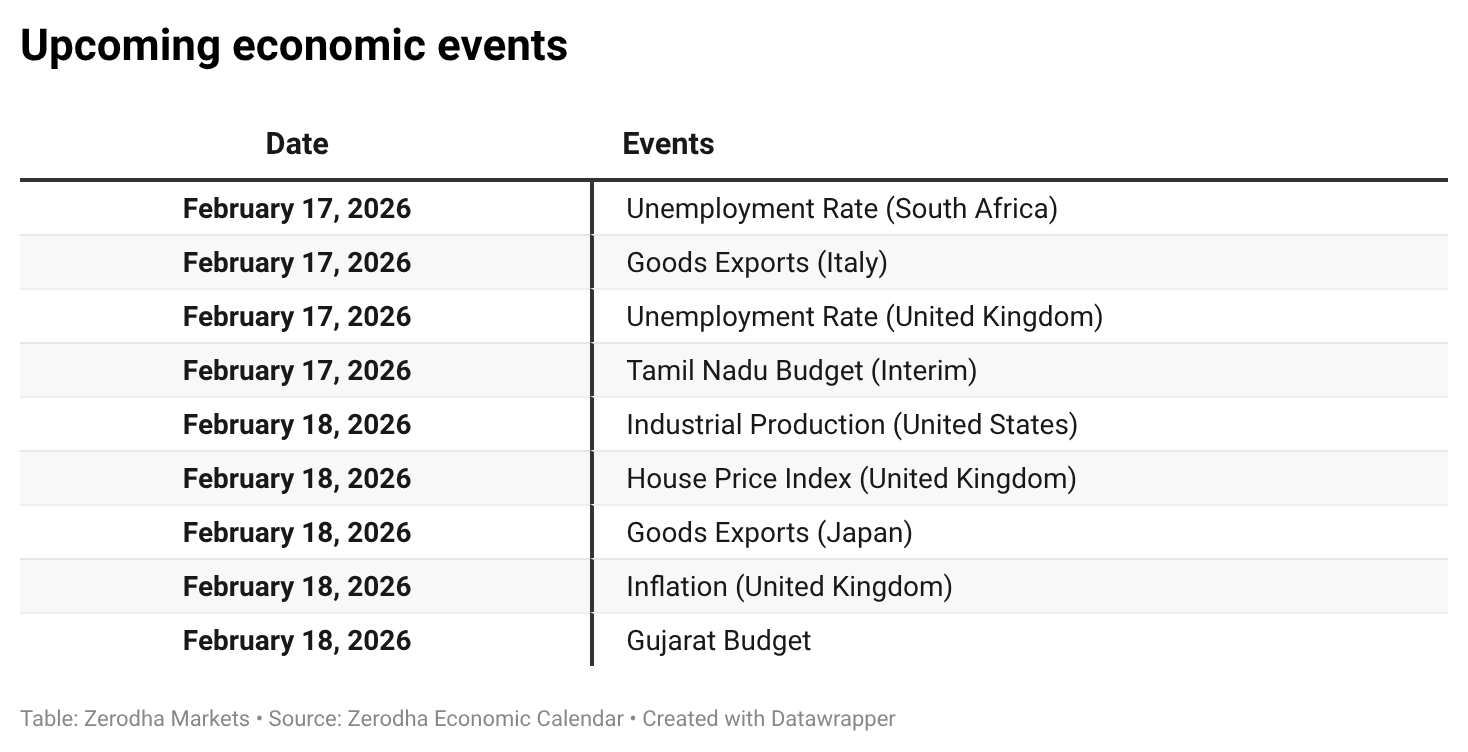
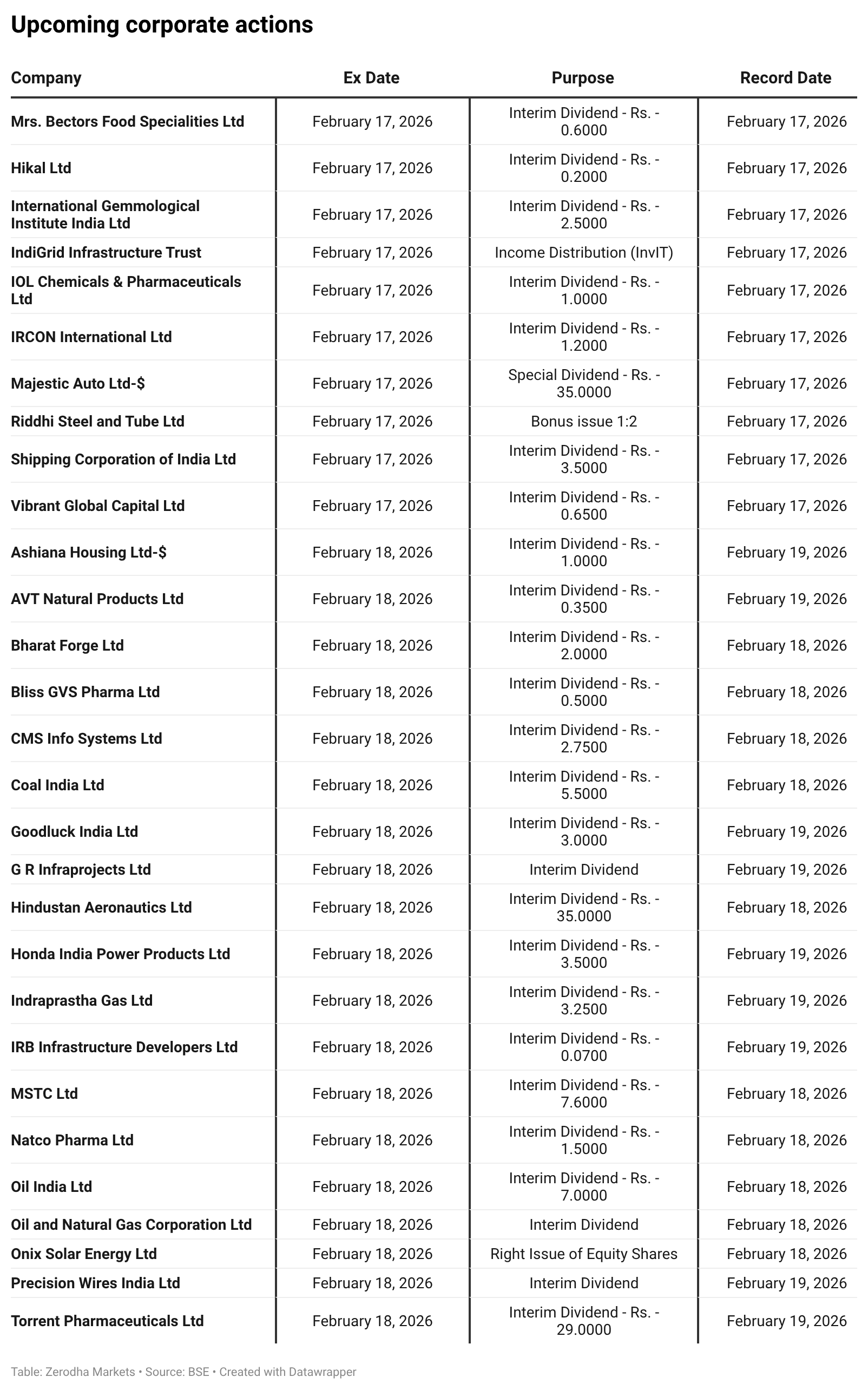
Calendars
In the coming days, we have the following significant events and corporate actions:
That’s it from us for today. We’d love to hear your feedback in the comments, and feel free to share this with your friends to spread the word!