
Welcome to Aftermarket Report, a newsletter where we do a quick daily wrap-up of what happened in the markets, both in India and globally.
What data points and transformations do you want to see?
We’re trying out a new format for the Aftermarket Report, with much more comprehensive coverage of the data that shapes the trading day.
Beyond the headline indices, we’re now tracking market breadth, new highs and lows, sector and thematic performance, delivery data, F&O positioning, global markets, commodities, flows, and more. We’re also looking at ways to transform this raw data into insights that are actually useful for traders and investors.
The idea is simple: bring different datasets together in one place to give you a clearer picture of what’s happening beneath the surface of the market.
This is still a work in progress, and we’d love your feedback. What data points are we missing? What transformations, ratios, comparisons, or indicators would you find useful? Also tell us what worked, what didn’t, and what felt unnecessary.
Your feedback will help shape the Aftermarket Report from here.
Markets Today
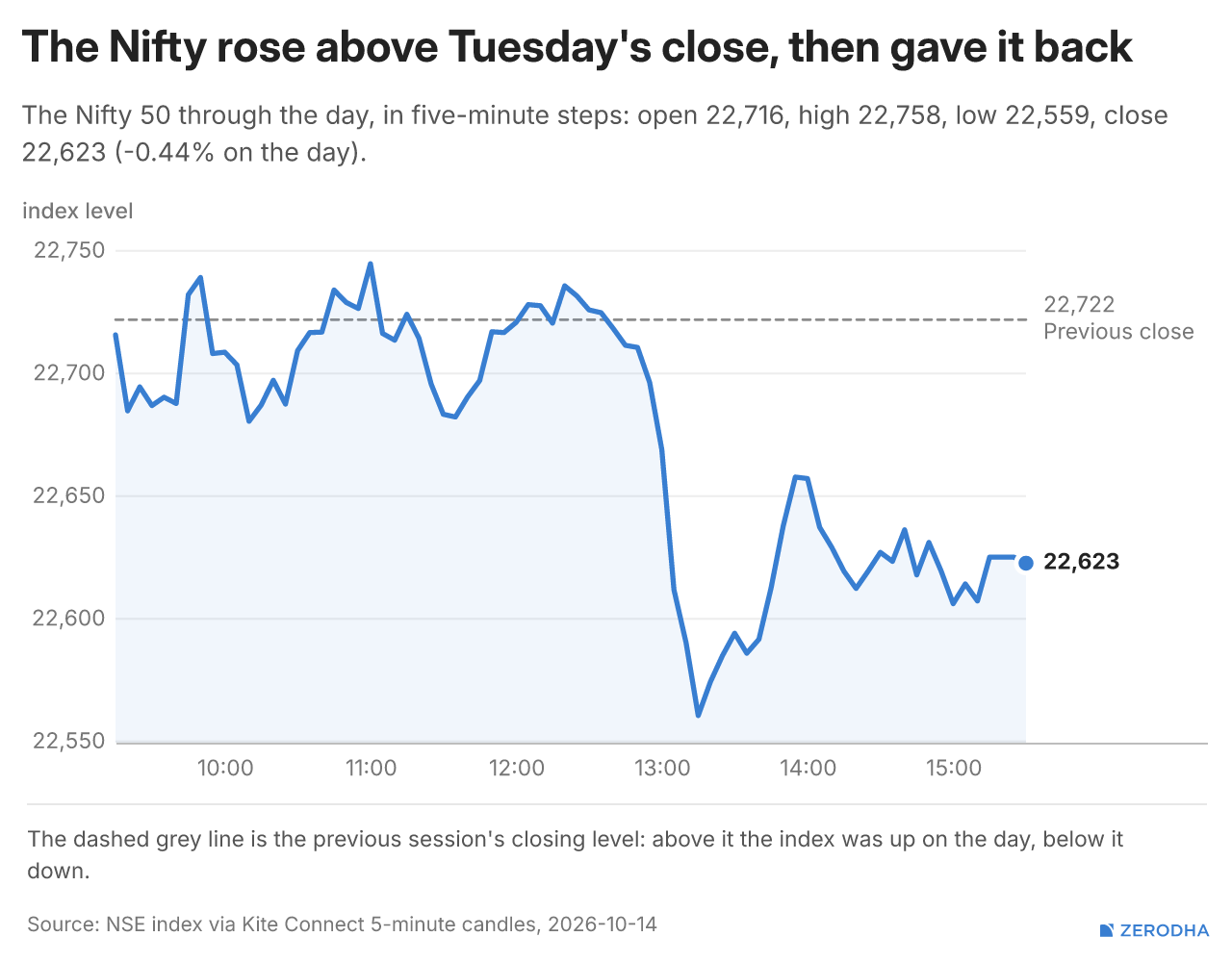
Nifty opened flat at 22,716, tracking slightly weaker global markets and a 2% surge in oil prices overnight. The index witnessed a volatile start, briefly climbing towards 22,750 before slipping below 22,700 within the opening half hour. Despite a few recovery attempts, Nifty struggled to sustain higher levels and remained largely range-bound between 22,680 and 22,750 through the first hour.
Buying interest picked up around 10:30 AM, pushing the index back again towards 22,745, but the recovery proved short-lived. After another attempt to move higher around noon, selling pressure gradually intensified, dragging Nifty below 22,700 by 12:45 PM.
The second half saw a sharp increase in volatility, with Nifty plunging nearly 150 points around 1 PM to touch an intraday low near 22,560 by 1:15 PM. However, buying emerged from the lows, helping the index recover towards 22,650 by 1:45 PM.
The recovery failed to sustain, with Nifty slipping back below 22,625 and oscillating between 22,600 and 22,630 through much of the final hour. A brief recovery attempt towards the close also failed to gather momentum. Nifty eventually closed at 22,622.70, around 90 points below its opening level, giving up the previous session’s gains as selling pressure in the second half weighed on market sentiment.
Fear & Greed Index
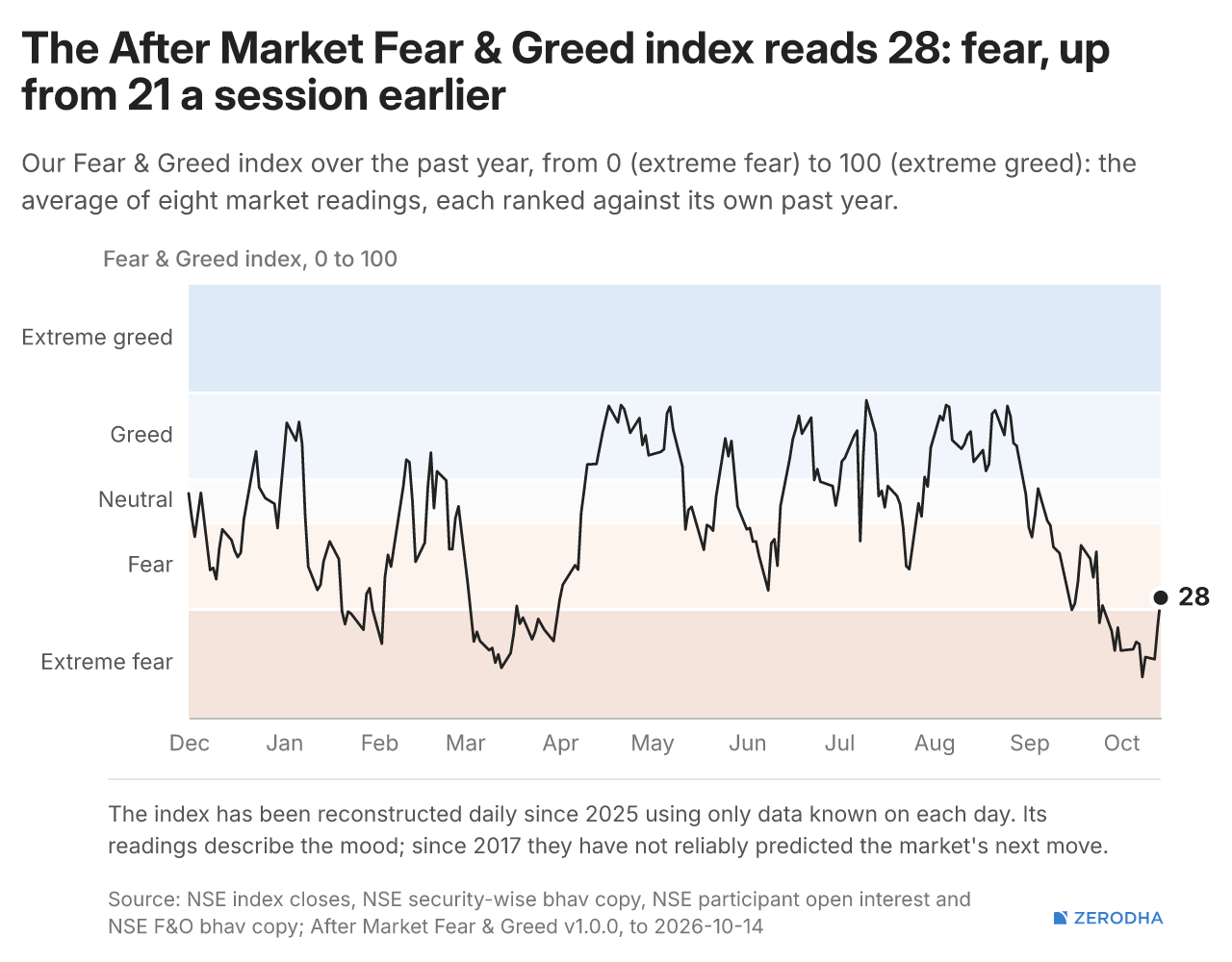
The Fear & Greed Index improved from 21 to 28, moving out of extreme fear into the fear zone. Risk appetite improved, although weak market trends, elevated volatility and bearish foreign investor positioning continue to weigh on sentiment.
Market Breadth
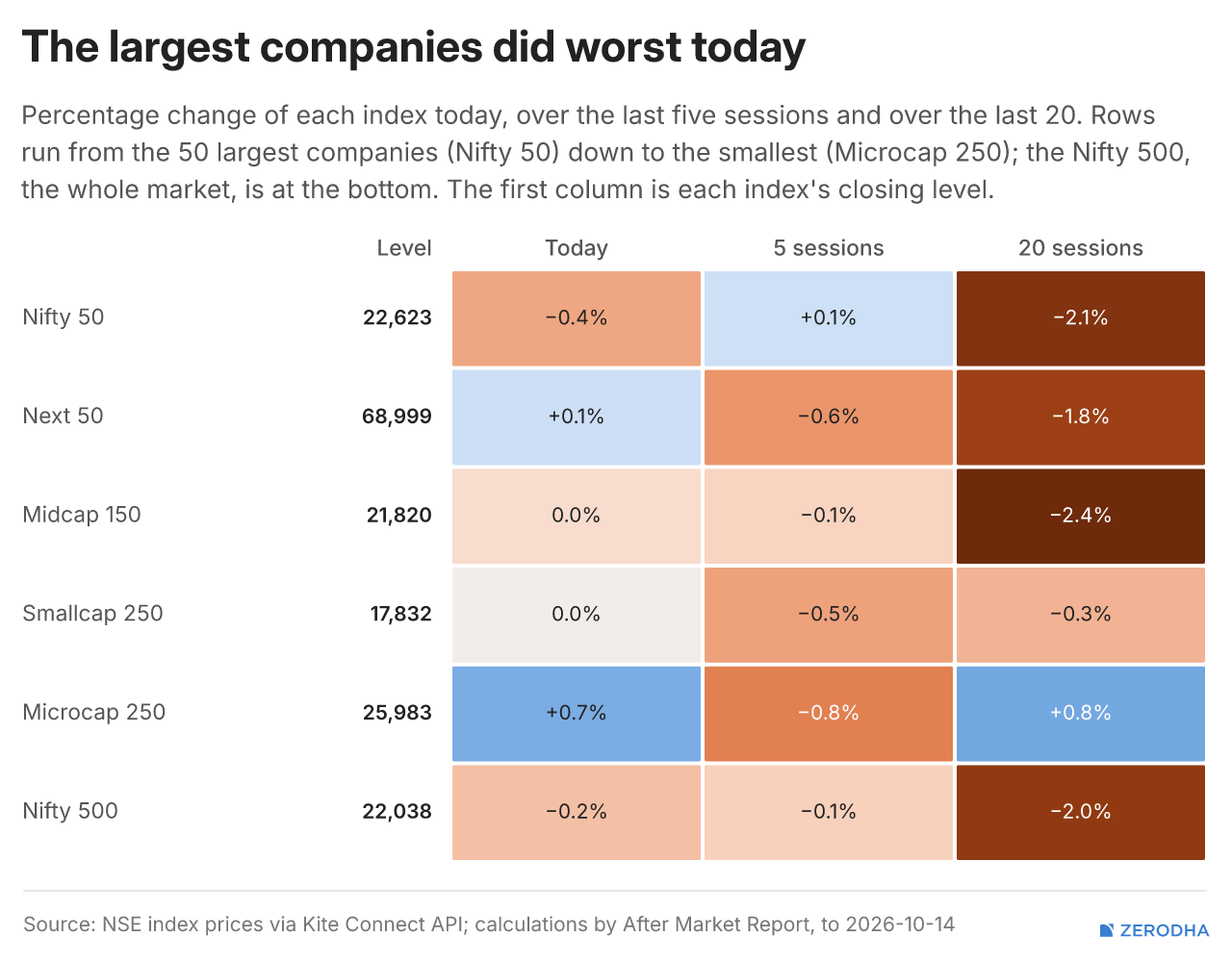
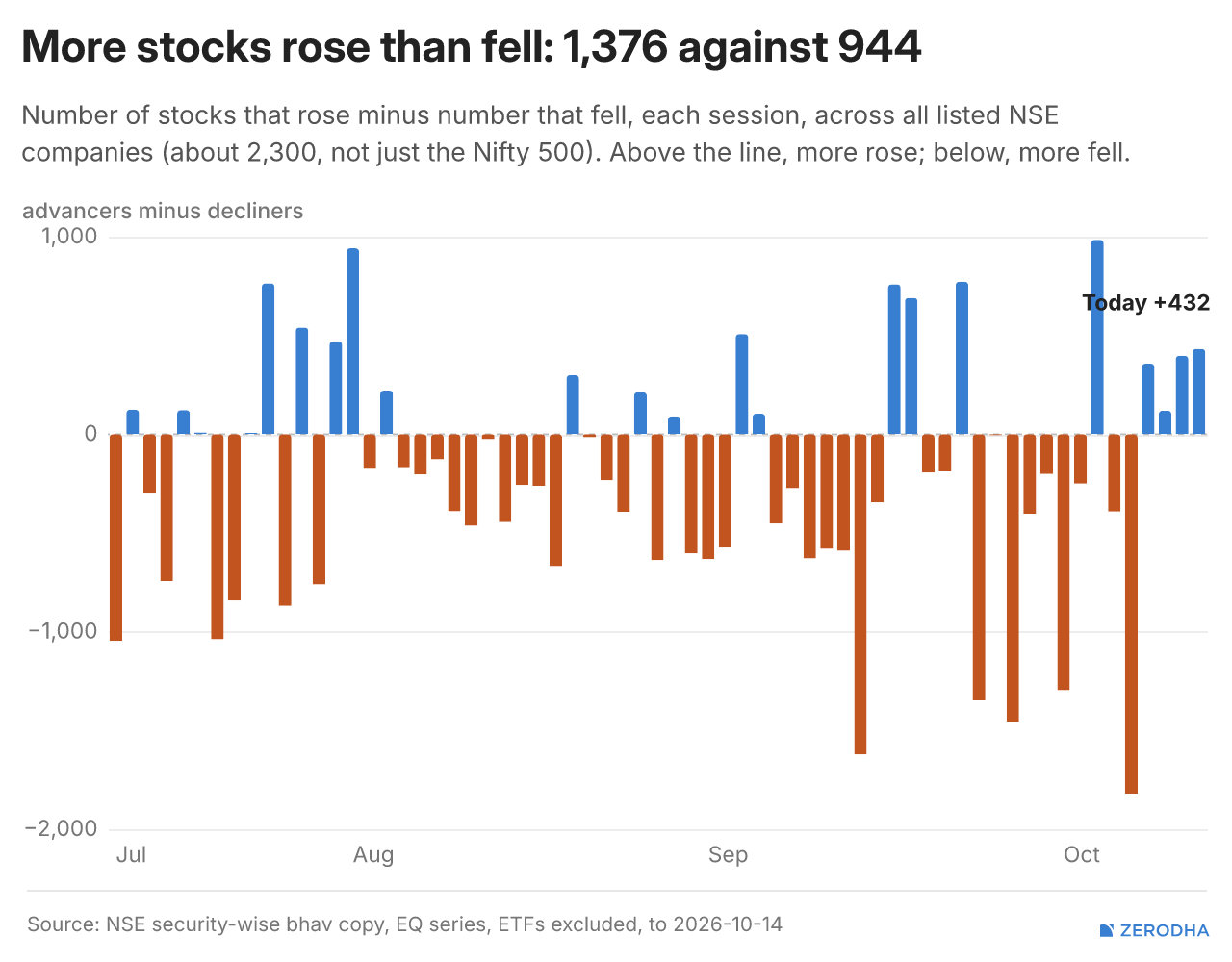
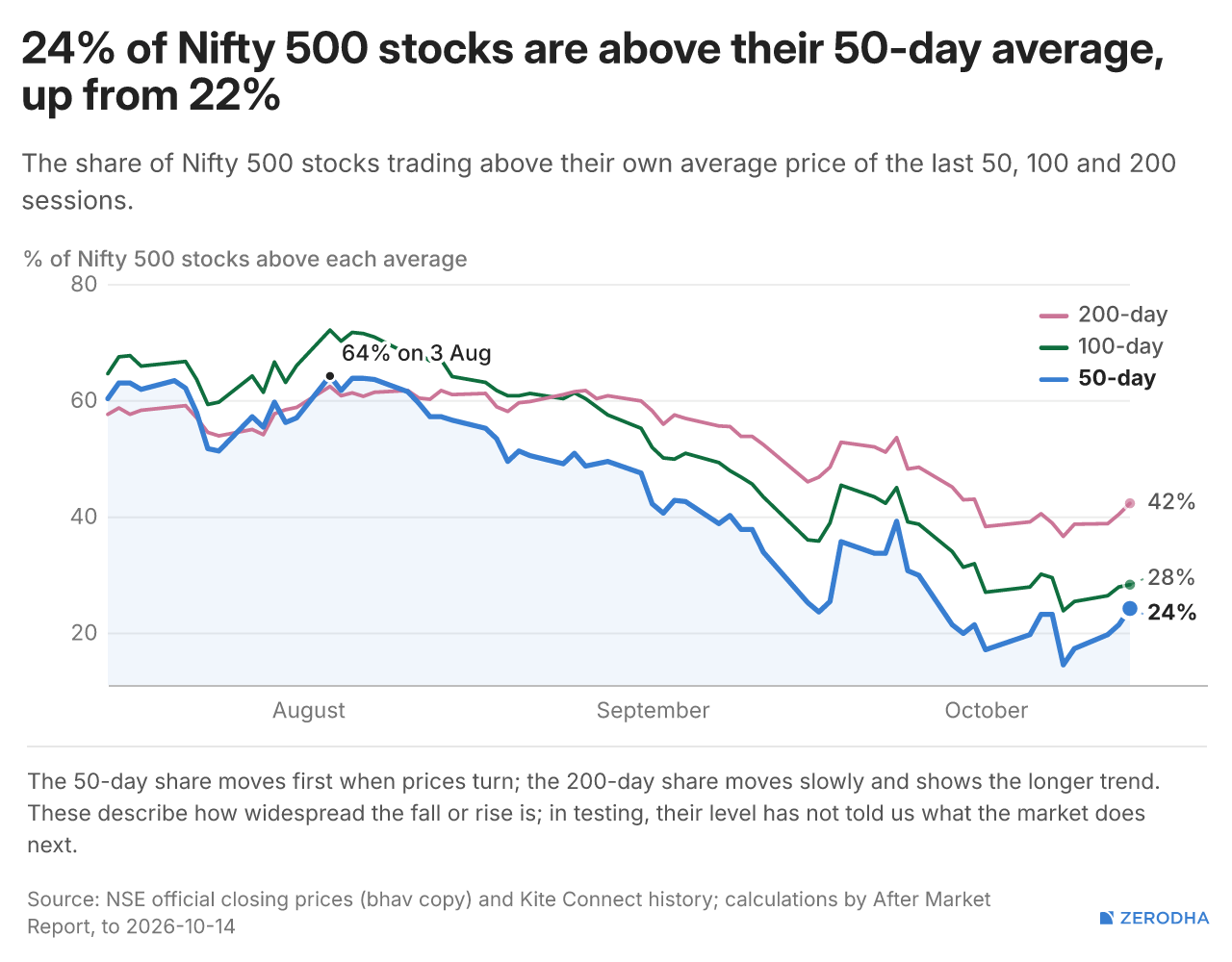
Market breadth remained positive despite Nifty’s decline, with 1,376 advancers against 944 decliners. The average Nifty 500 stock gained 0.24% even as the index fell 0.24%, while the share of stocks above their 50-day average improved to 24.3%.
52 Week Highs & Lows
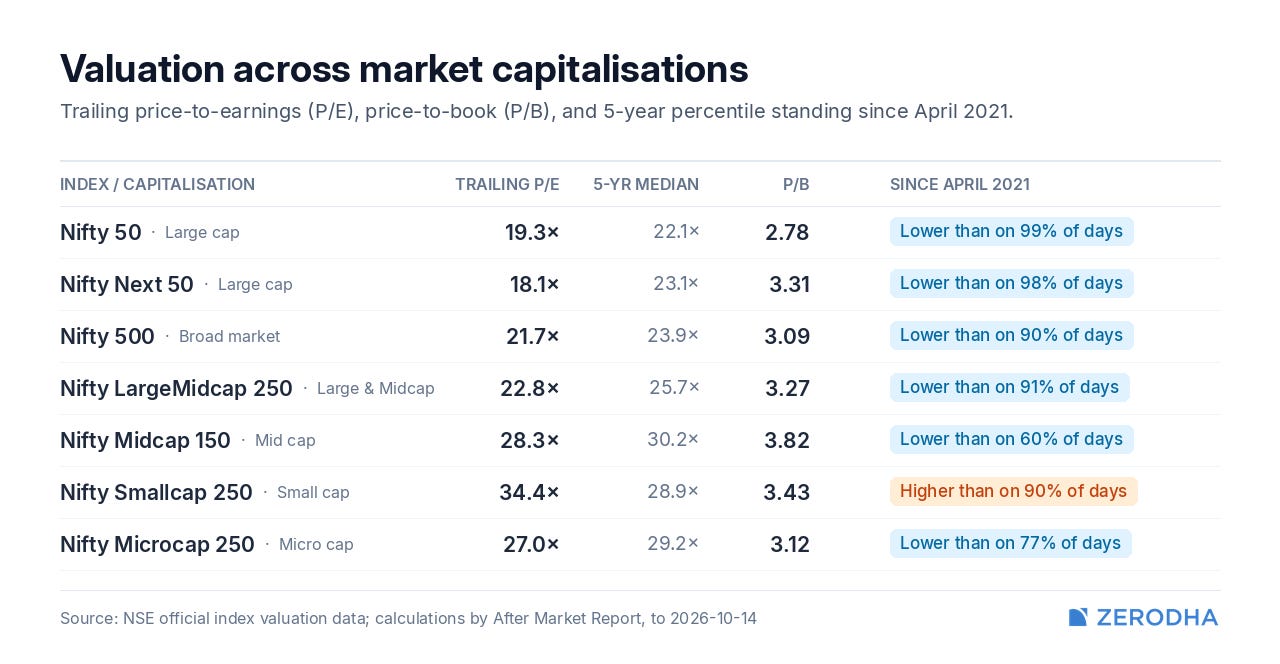
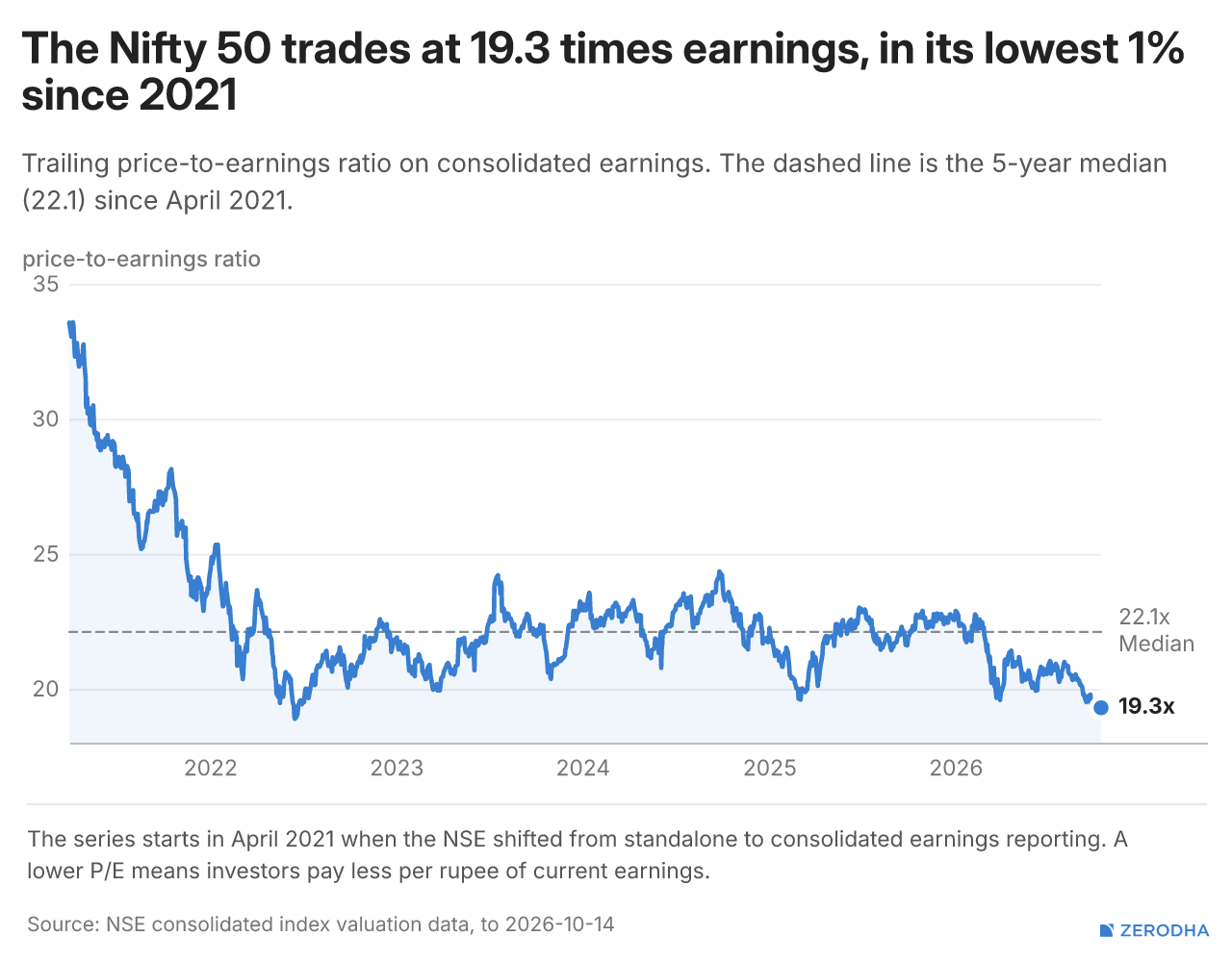
Valuation Check
Sectoral Indices Performance
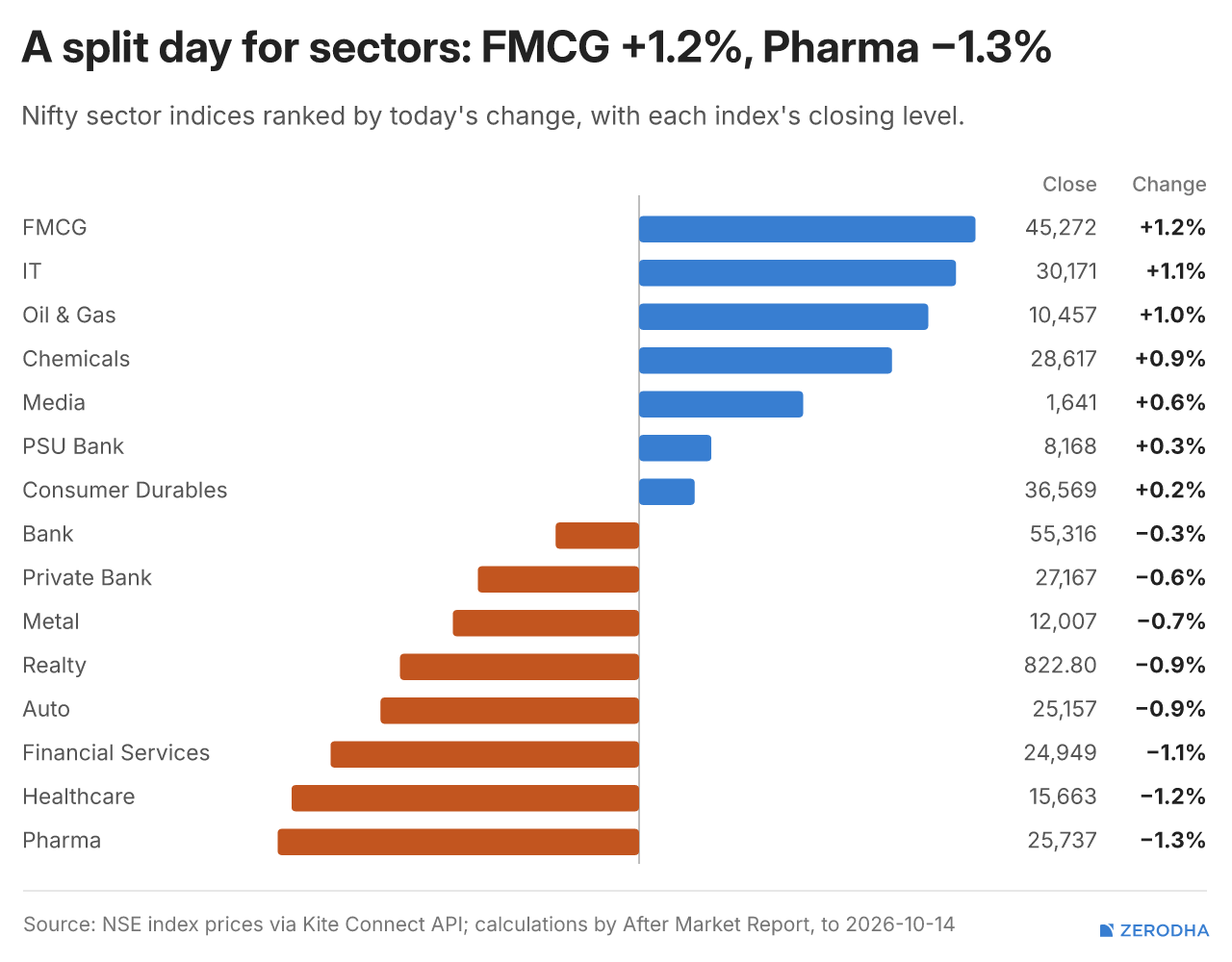
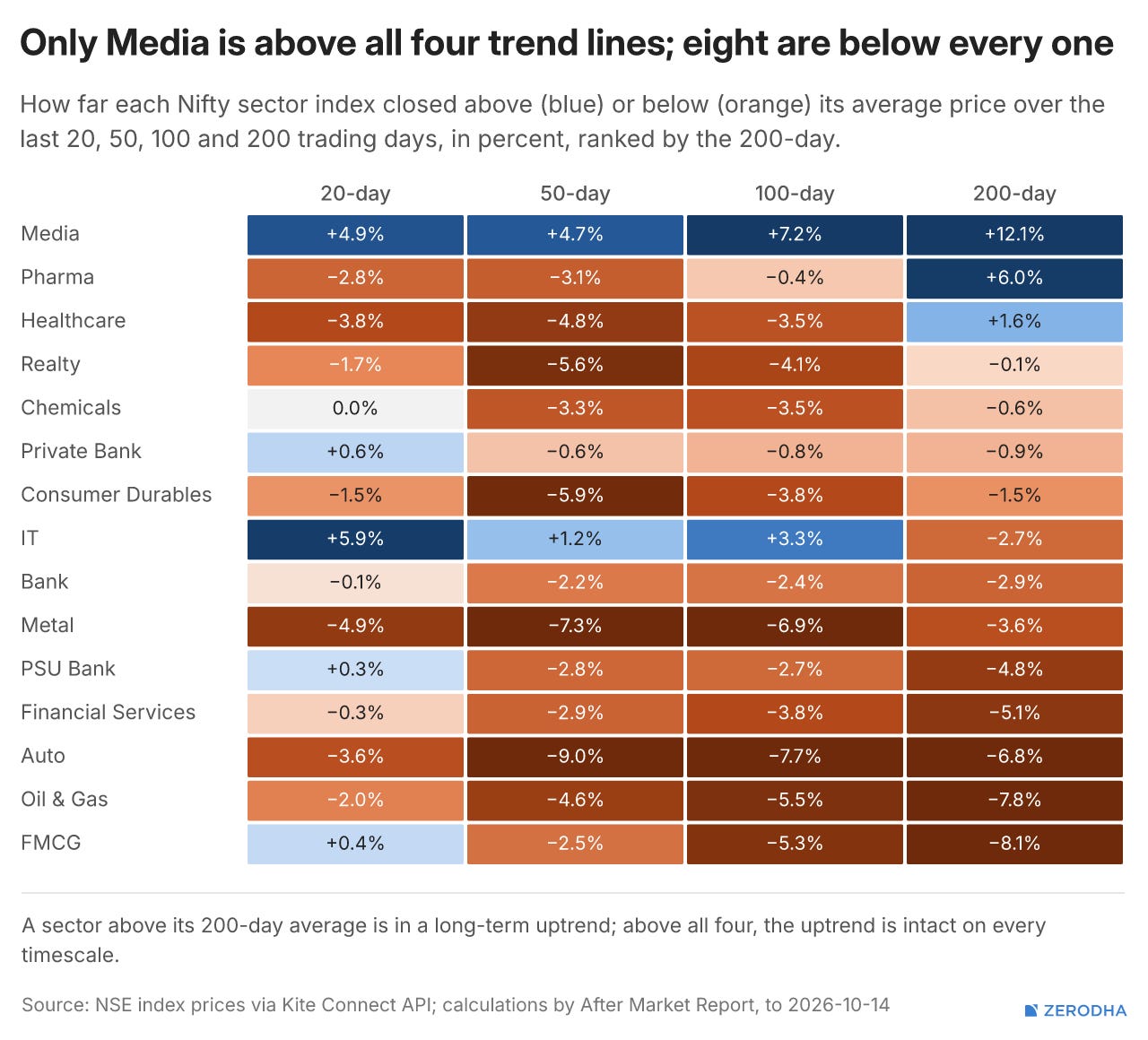
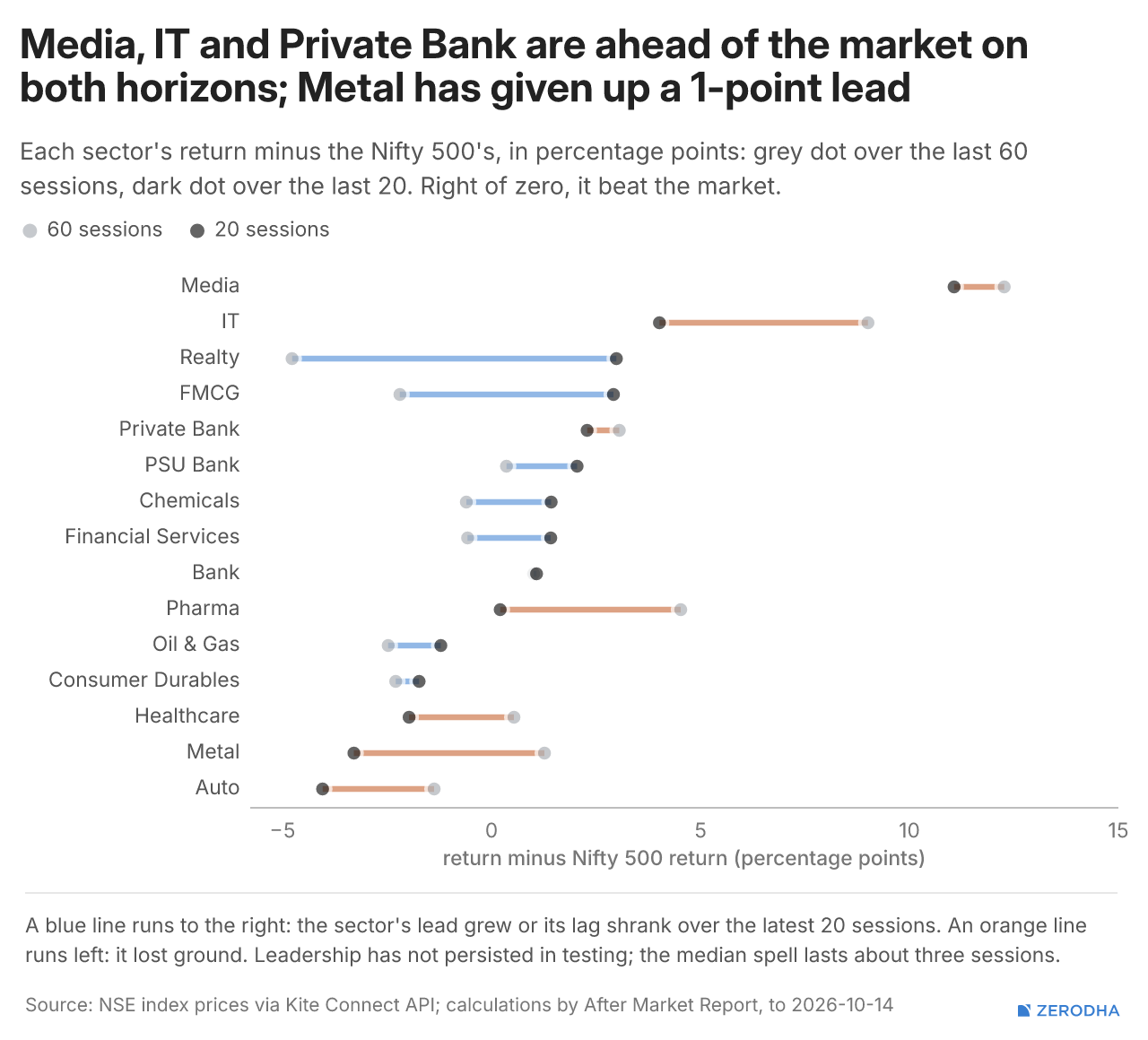
FMCG led with a 1.21% gain, while Pharma fell 1.30%, with seven of 15 sectors advancing. Media, IT and Private Banks remain the relative leaders over 20 and 60 sessions, although Media is the only sector trading above all four key moving averages.
Winners & Losers
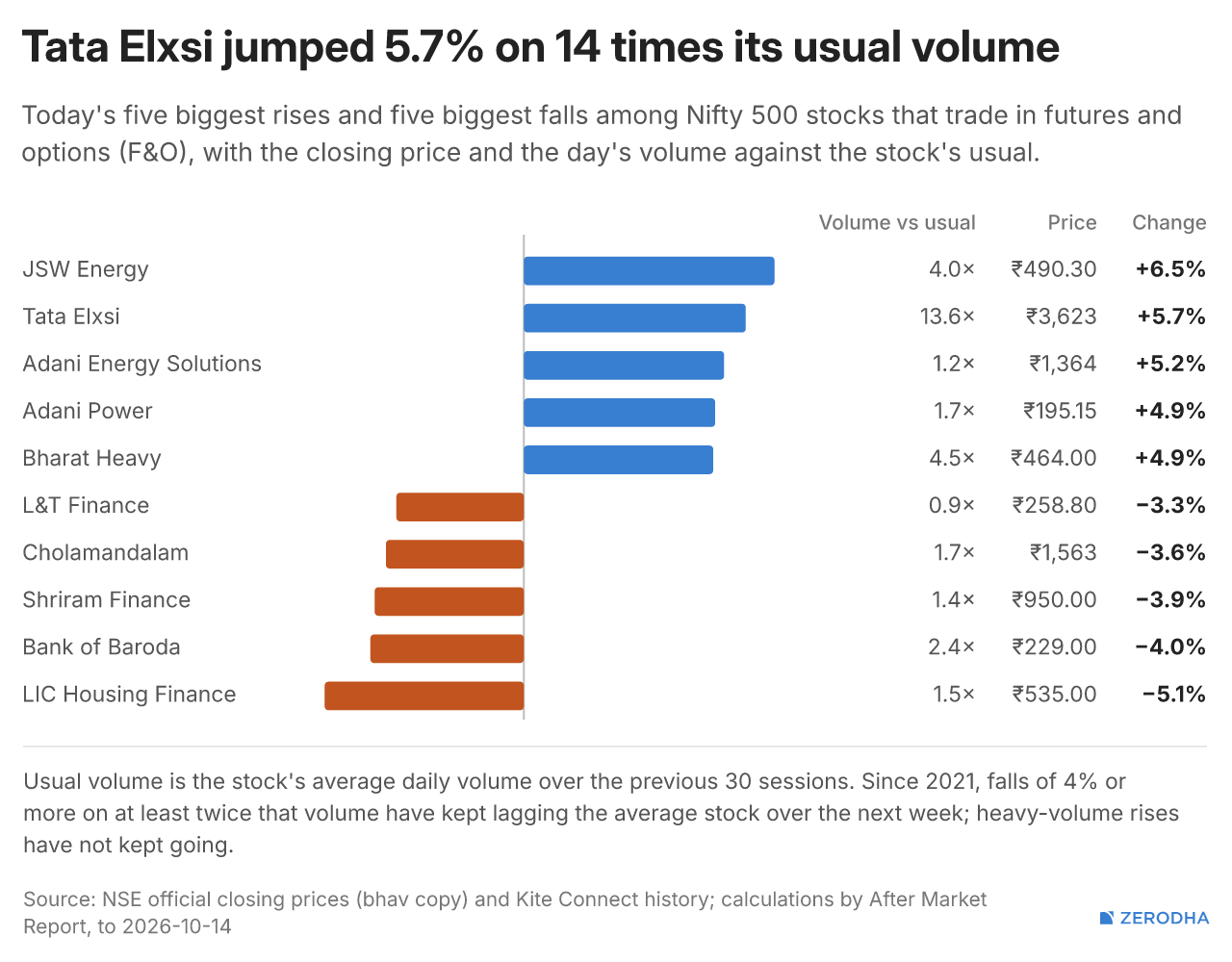
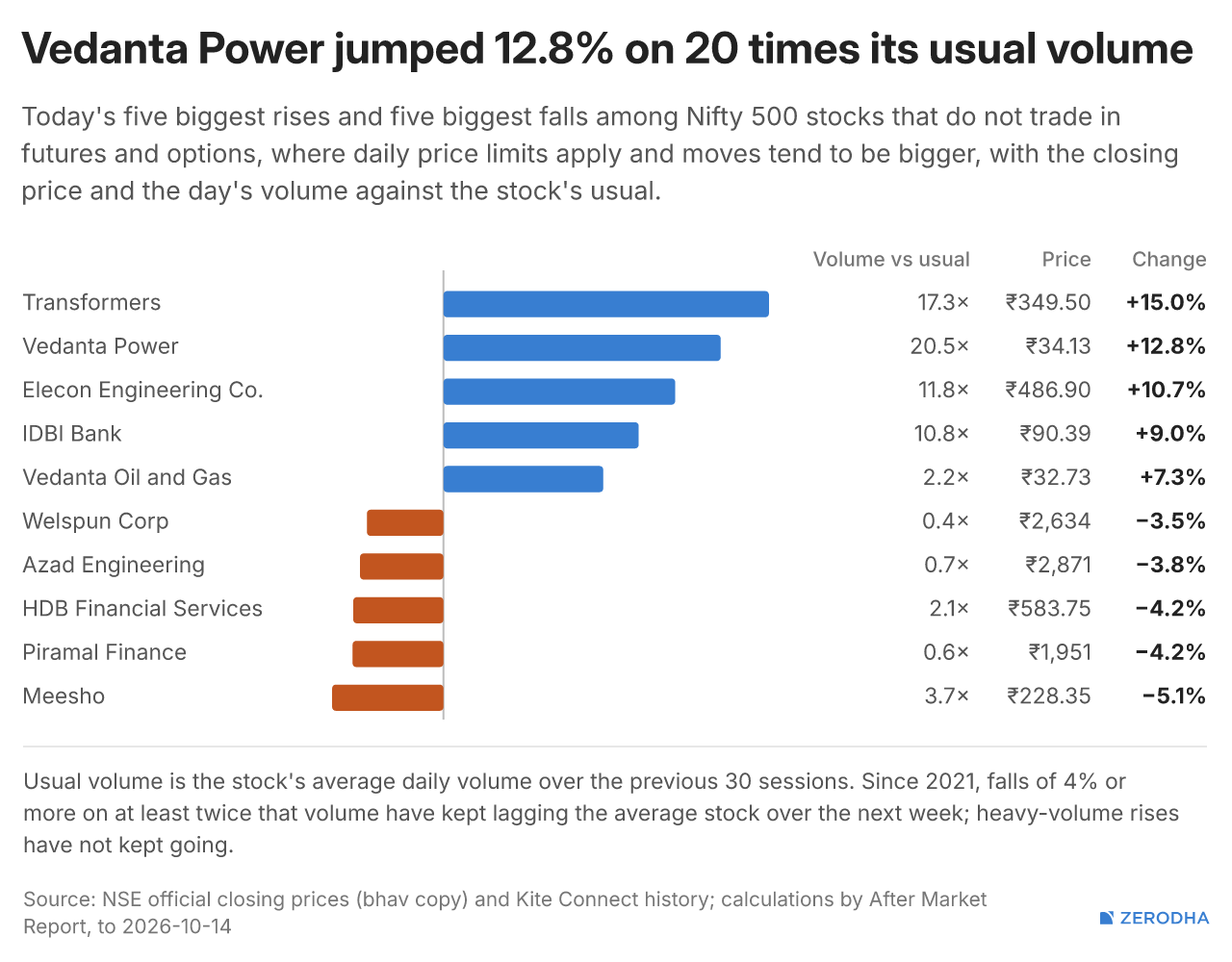
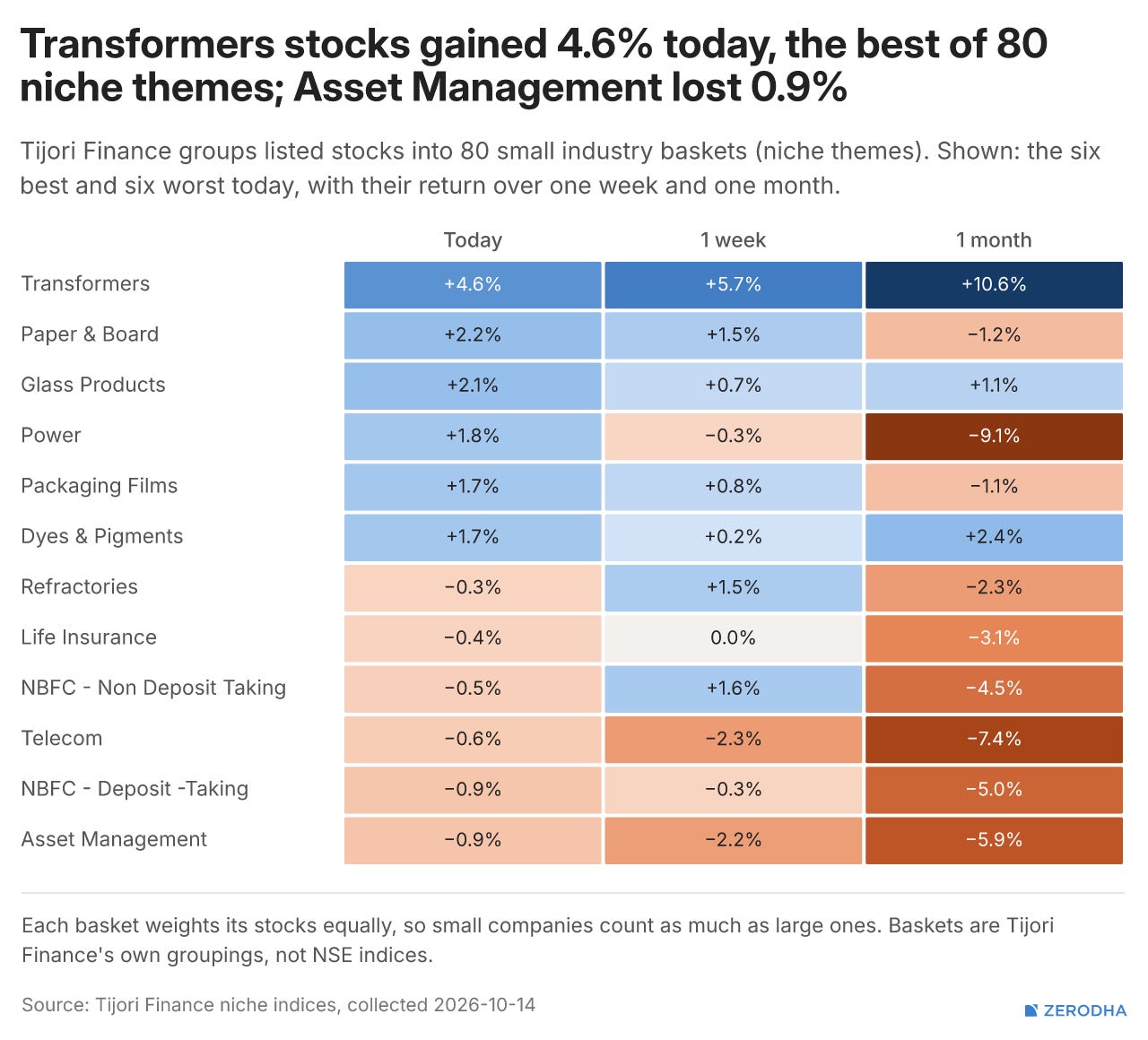
Transformers and Rectifiers surged 14.97% on 17× usual volume, while Vedanta Power gained 12.75% on 20× volume. BHEL hit a fresh 52-week high, while LIC Housing Finance led F&O losers with a 5.14% decline.
Delivery Data
Global Markets
Commodities
Institutional Flows & Participant Positioning
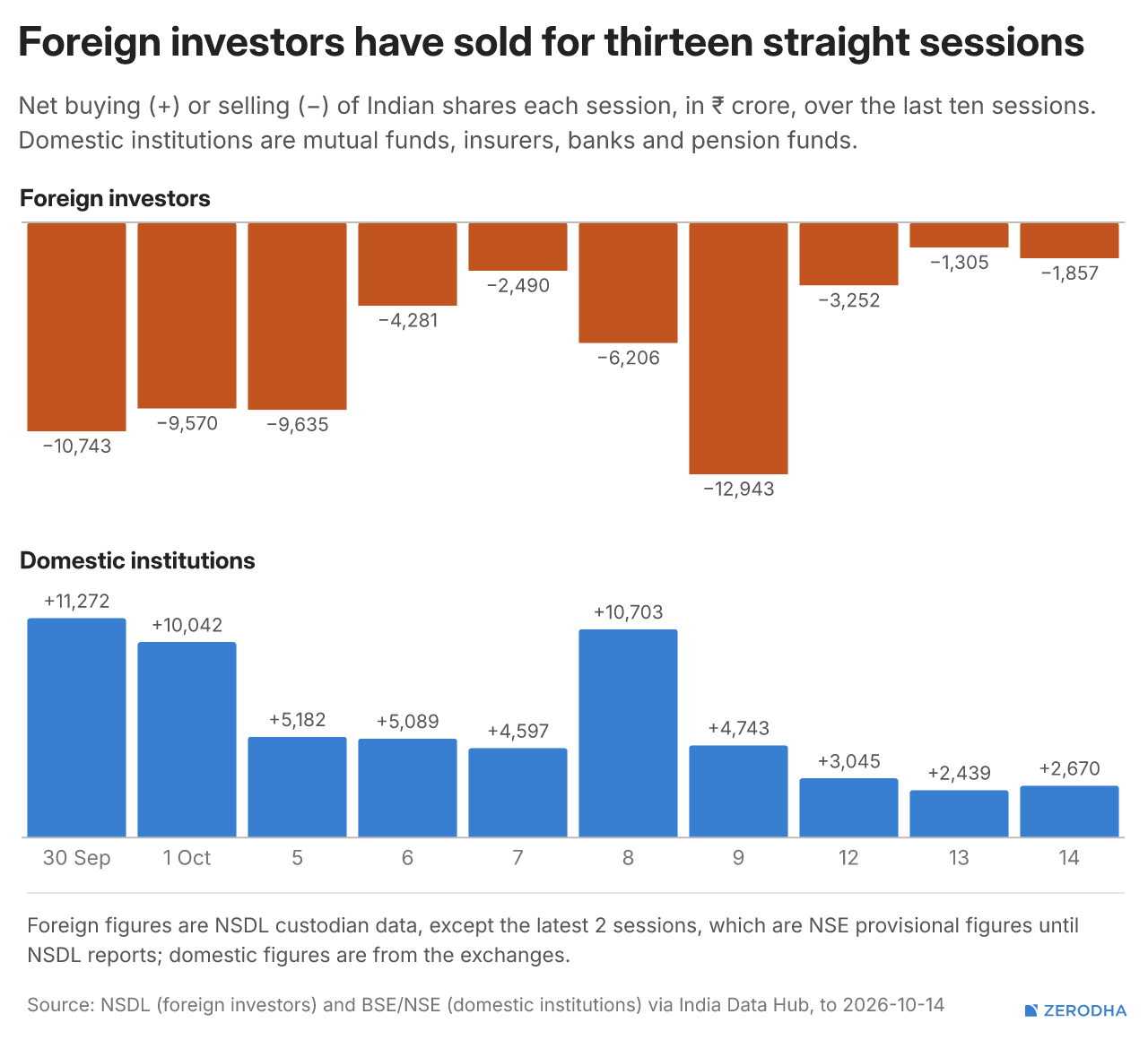
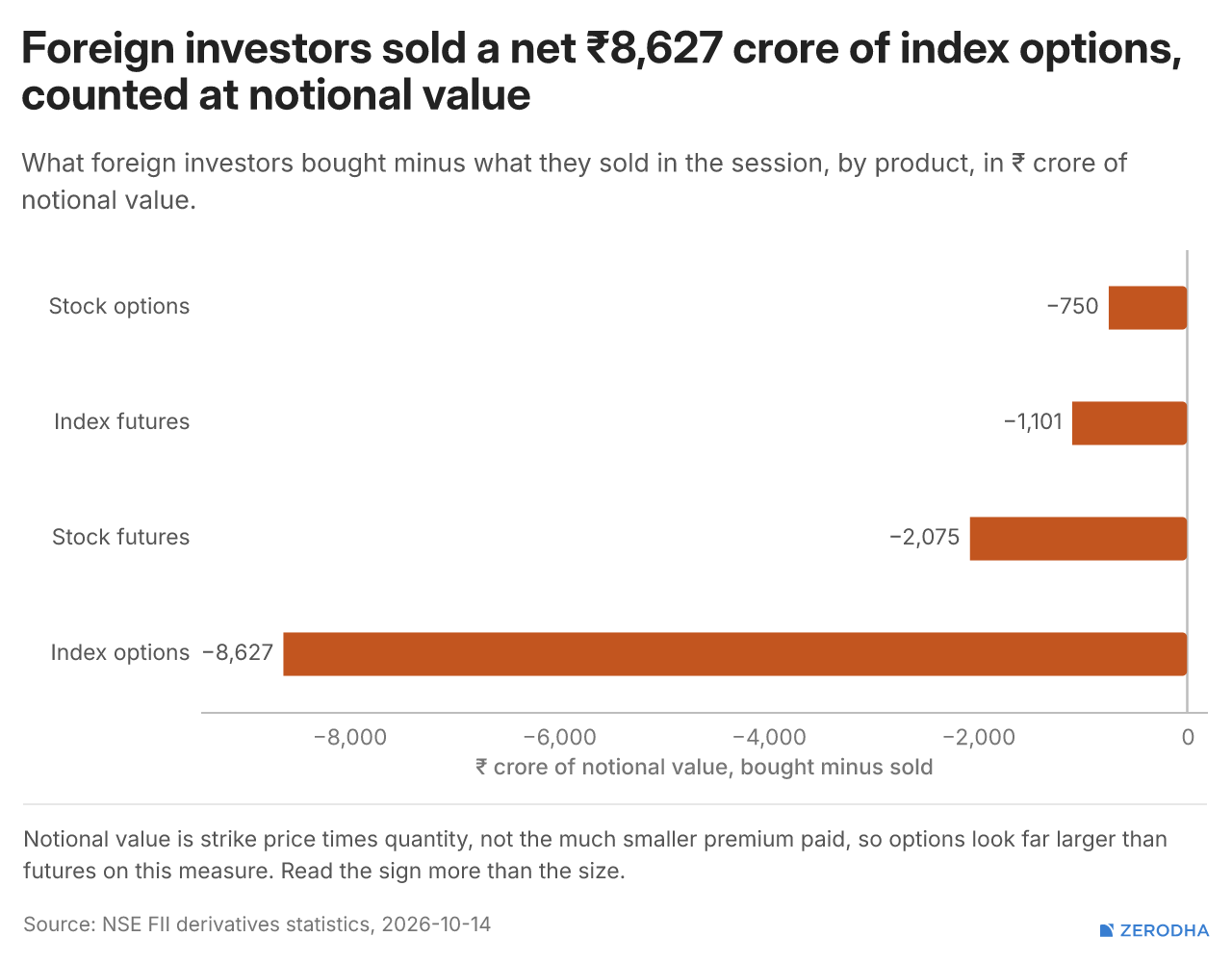
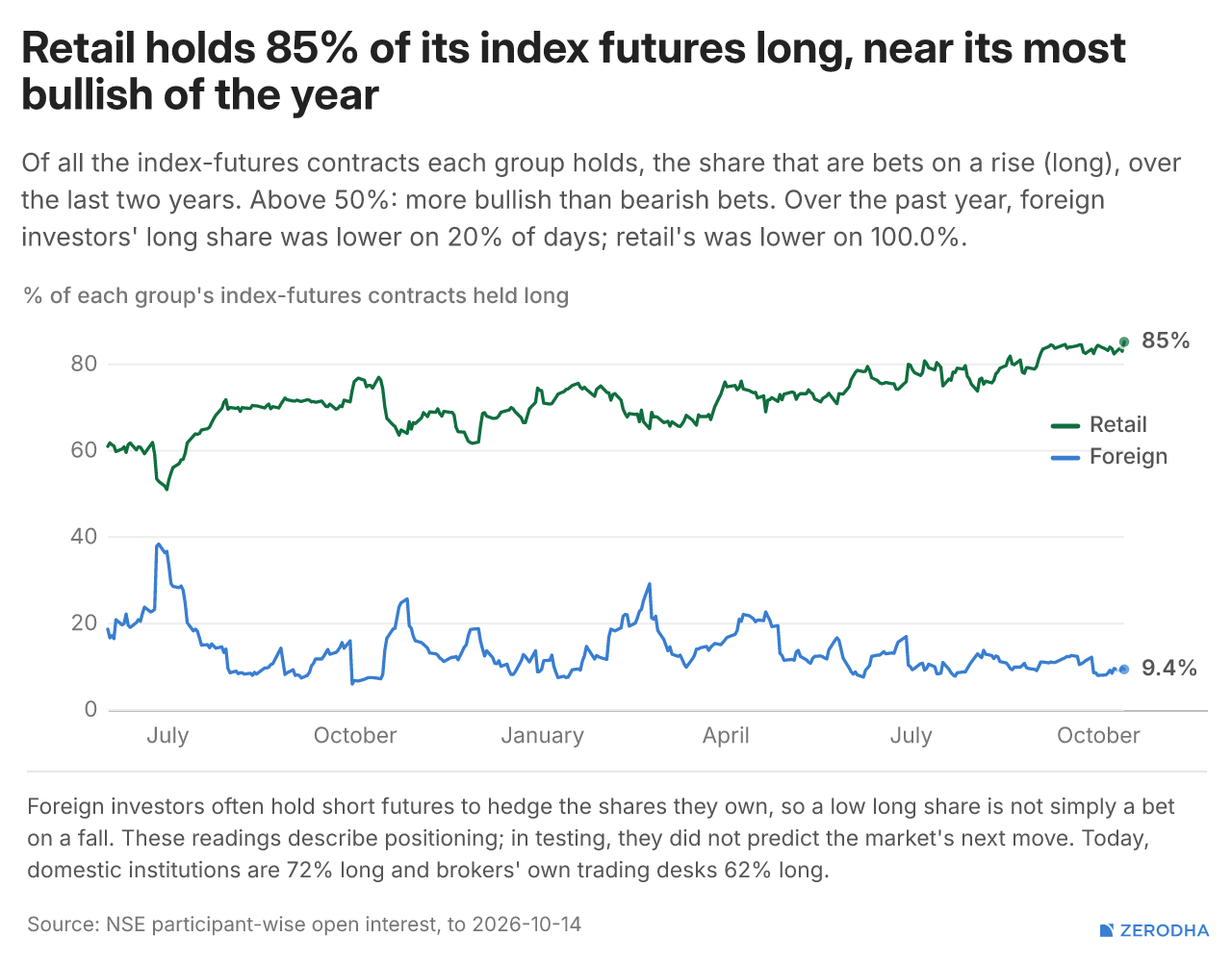
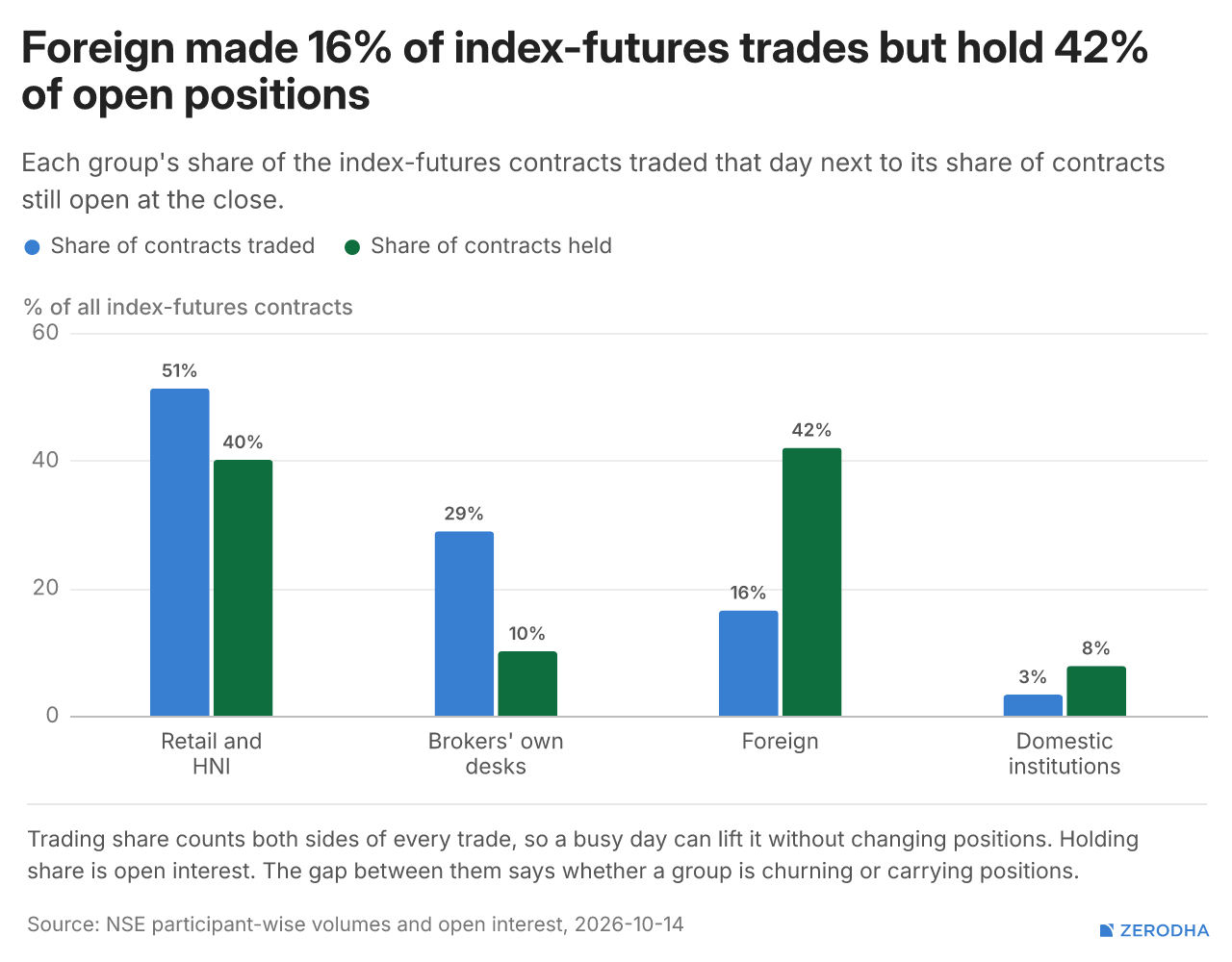
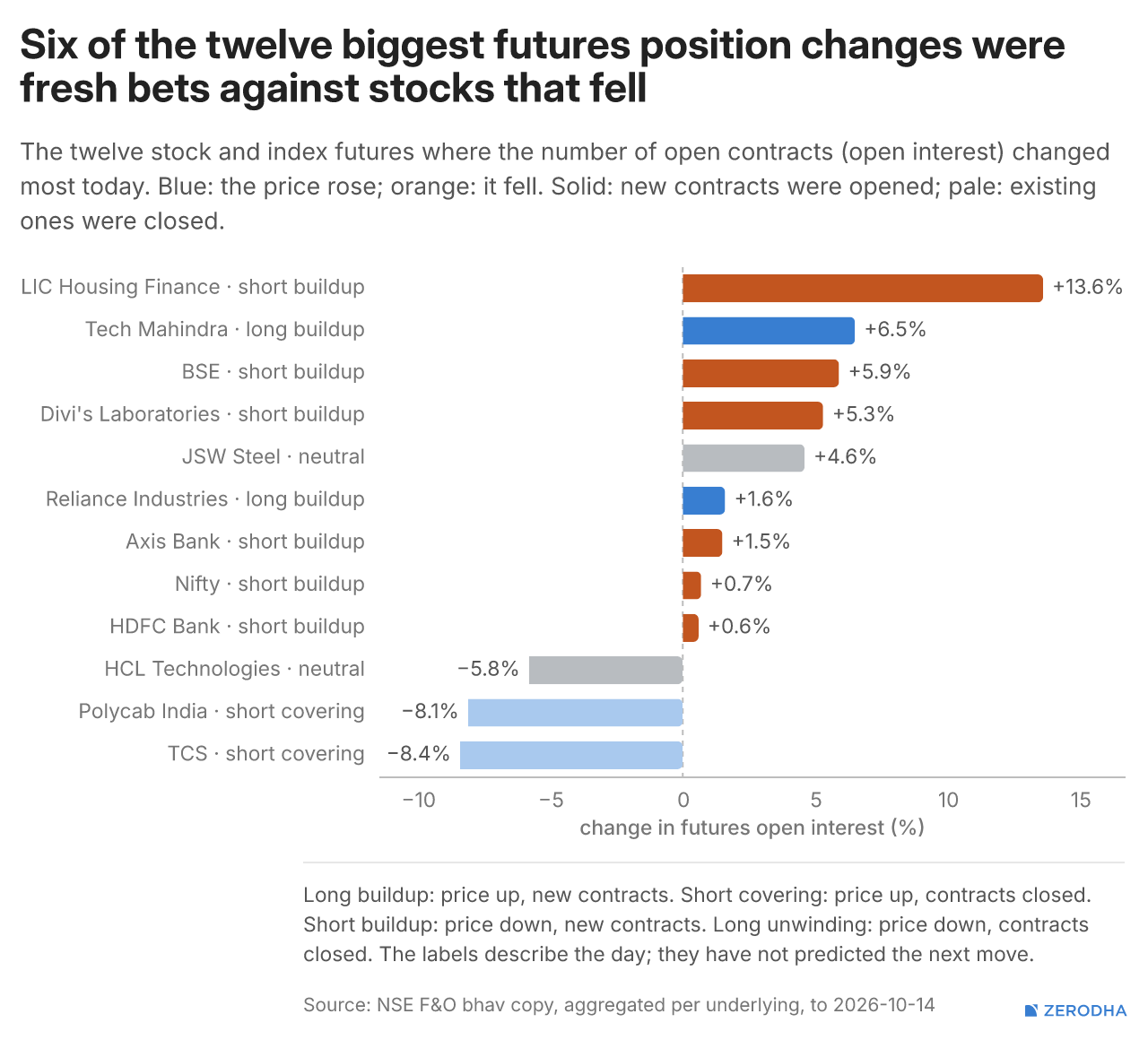
The put-call ratio fell from 1.27 to 0.91, reflecting weaker put positioning relative to calls, while implied volatility rose from 12.6% to 13.1%. FIIs remain heavily bearish with just 9.4% of index-futures positions long, against 85% for retail and HNIs; six of the 12 largest stock-futures OI moves were short buildups.
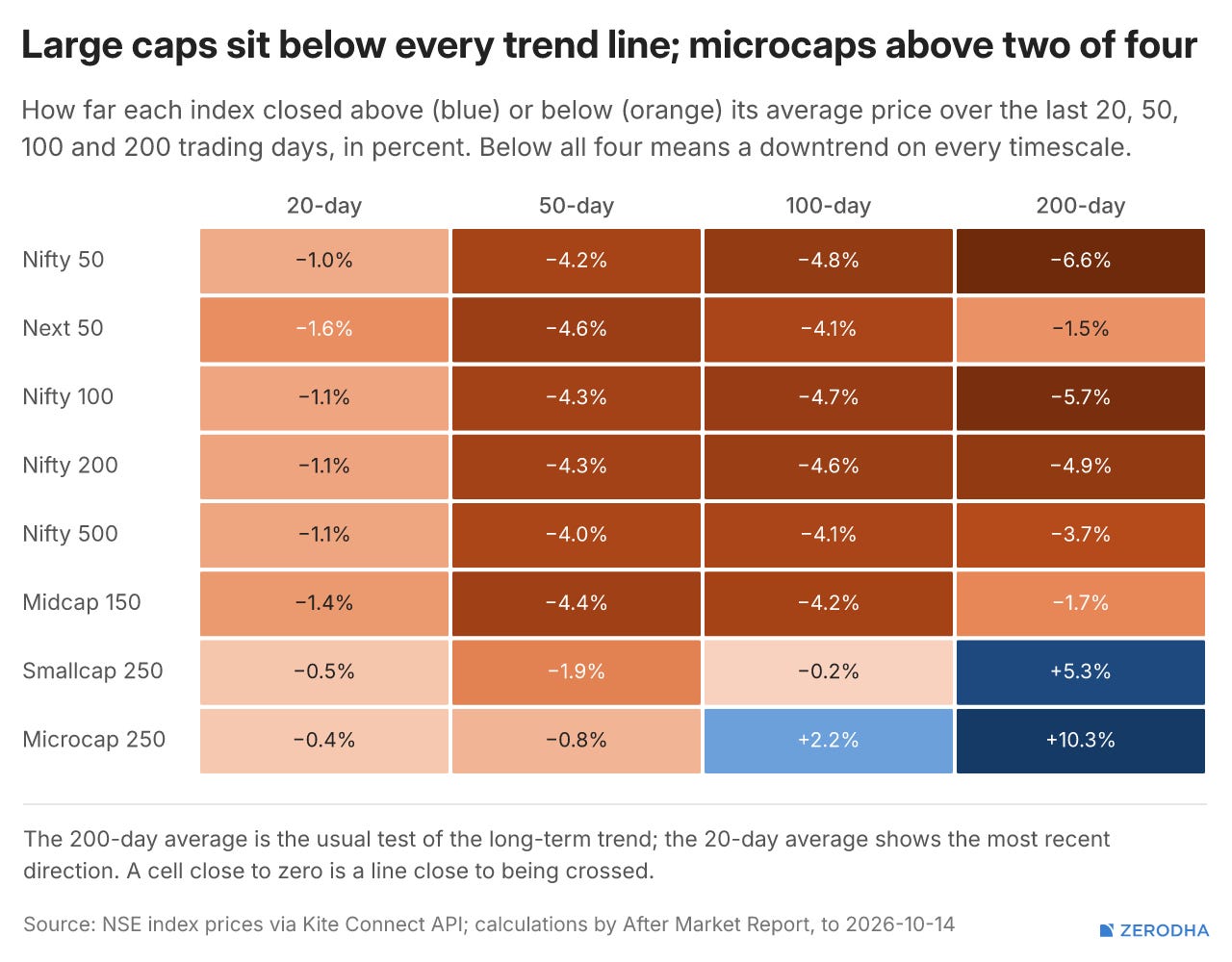
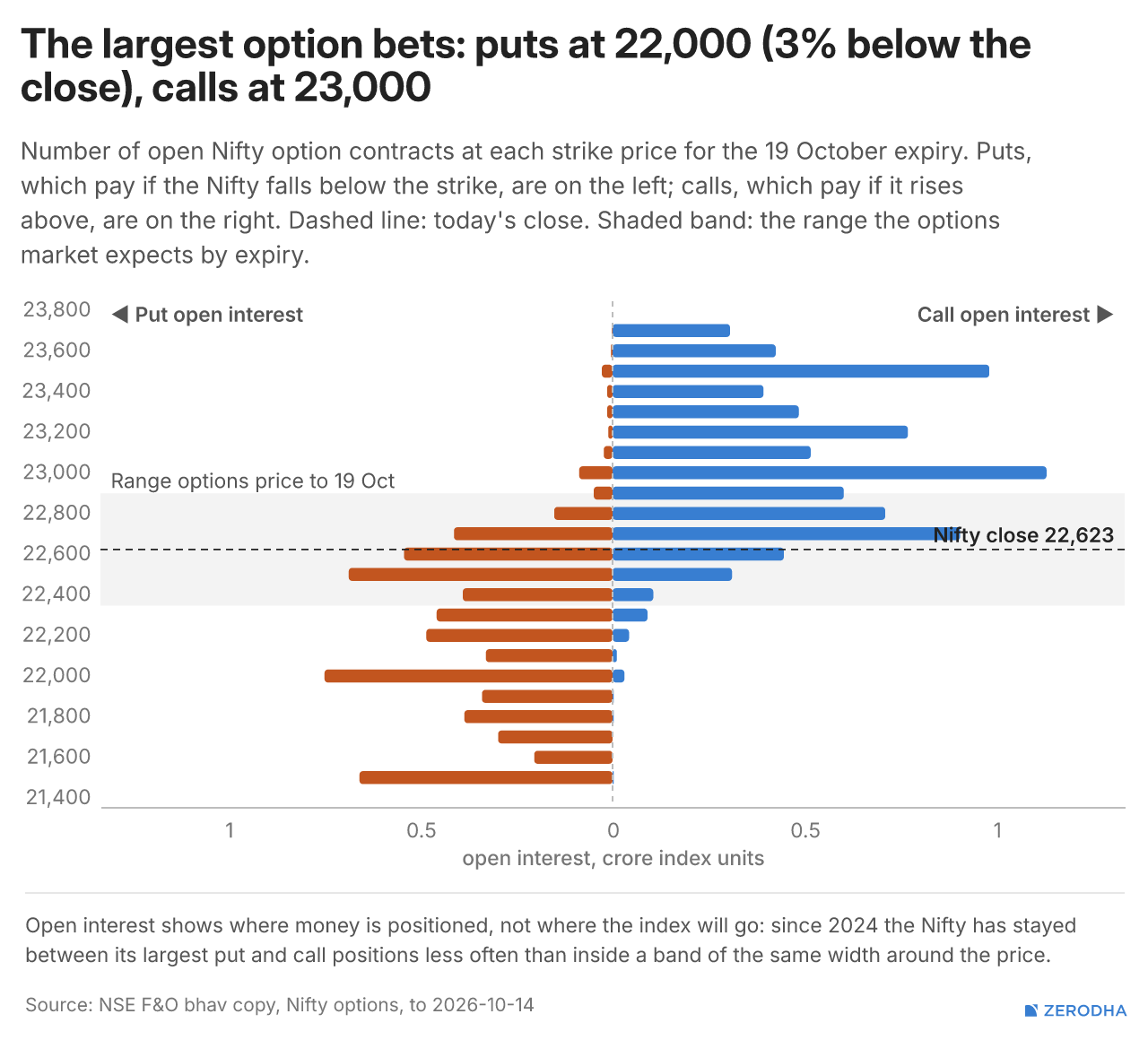
Options imply a 22,337–22,888 range into October 19 expiry, with the heaviest put OI at 22,000 and call OI at 23,000. The 20-day moving average at 22,858 remains the first major trend hurdle.
Thematic Indices
Tijori’s niche indices, where today’s move sorts pockets of the market beyond standard sector baskets. You can also track promoter buying and other interesting stuff, like Capex activity by the companies in the Tijori App’s idea dashboard
F&O Corner

Top Stories in India
Fairfax Financial will acquire a 60.72% stake in IDBI Bank for ₹52,878 crore ($5.6 billion), valuing the lender at around ₹87,100 crore. The transaction represents one of India’s largest banking deals, with the government and LIC retaining a combined 34% stake. Dive deeper
India’s WPI inflation rose to 11.39% in September from 9.92% in August, driven by higher food, fuel and manufactured goods prices. Fuel and power inflation climbed to 25.85%, while crude petroleum and natural gas inflation surged to 57.32%. Dive deeper
Canara Bank reported an 8.4% YoY rise in Q2 FY27 net profit to ₹5,175 crore, while operating profit grew 2% to ₹8,758 crore. Global advances increased 19.5% to ₹13.75 lakh crore, while deposits rose 13.1% to ₹16.97 lakh crore. Dive deeper
Biocon signed a global patent settlement and licensing agreement with Genentech for Pebrilzo, its biosimilar version of the breast cancer drug Perjeta. The agreement resolves pending patent disputes across multiple markets, including the US and Canada. Dive deeper
BHEL’s Q2 FY27 consolidated net profit more than doubled YoY to ₹821 crore, while total income rose 24% to ₹9,553 crore. Growth was supported by higher revenue from its power and industry businesses. Dive deeper
Tata Technologies reported a 4% YoY rise in Q2 FY27 net profit to ₹171 crore, while revenue jumped 28% to ₹1,699 crore. Its services business grew 34% to ₹1,356 crore, supported by demand from automotive and manufacturing clients. Dive deeper
Top Stories Globally
US annual inflation accelerated to 3.7% in September from 3.4% in August, exceeding expectations of 3.6%. Higher energy prices drove the increase, with gasoline prices rising 34.2% YoY and fuel oil prices jumping 74.2%. Dive deeper
Crude oil traded around $95 per barrel as improving shipments through the Strait of Hormuz and higher Saudi production helped offset concerns over renewed attacks in the Middle East. Dive deeper
Japan will invest up to $21 billion in two semiconductor factories in New York, operated by GlobalFoundries and jointly owned by US and Japanese interests. The investment forms part of Japan’s broader $550 billion investment commitment to the US. Dive deeper
China’s exports surged 36.3% YoY in September, beating expectations of 25.5% growth, while imports rose 31%. Strong demand for semiconductors and green technology products helped widen the country’s trade surplus. Dive deeper
Iron ore futures fell toward CNY 670 per tonne, hitting four-year lows, as increased blast furnace maintenance in China weakened demand while rising inventories in Australia and Brazil added to supply pressure. Dive deeper
The dollar index rose as much as 0.5% to 102.72, its highest since April 2025, as stronger-than-expected US inflation reinforced expectations of further Federal Reserve tightening. Dive deeper
Management Chatter
In this section, we highlight interesting comments from management at major companies and from policymakers in the Indian and Global Economies.
Brajesh Kumar Singh, MD and CEO, on recent IRDAI regulatory shifts & RBI’s stricter cash reserve requirements:
“Regarding regulatory shifts, proposed insurance distribution commission caps will impact our bancassurance earnings by around ₹150 crore in life insurance, with total fee income reduction across mutual funds and wealth distribution capped at roughly ₹200 crore. Additionally, maintaining average CRR balances at 99% impacts margins by approximately ₹8 crore per month.” - Link
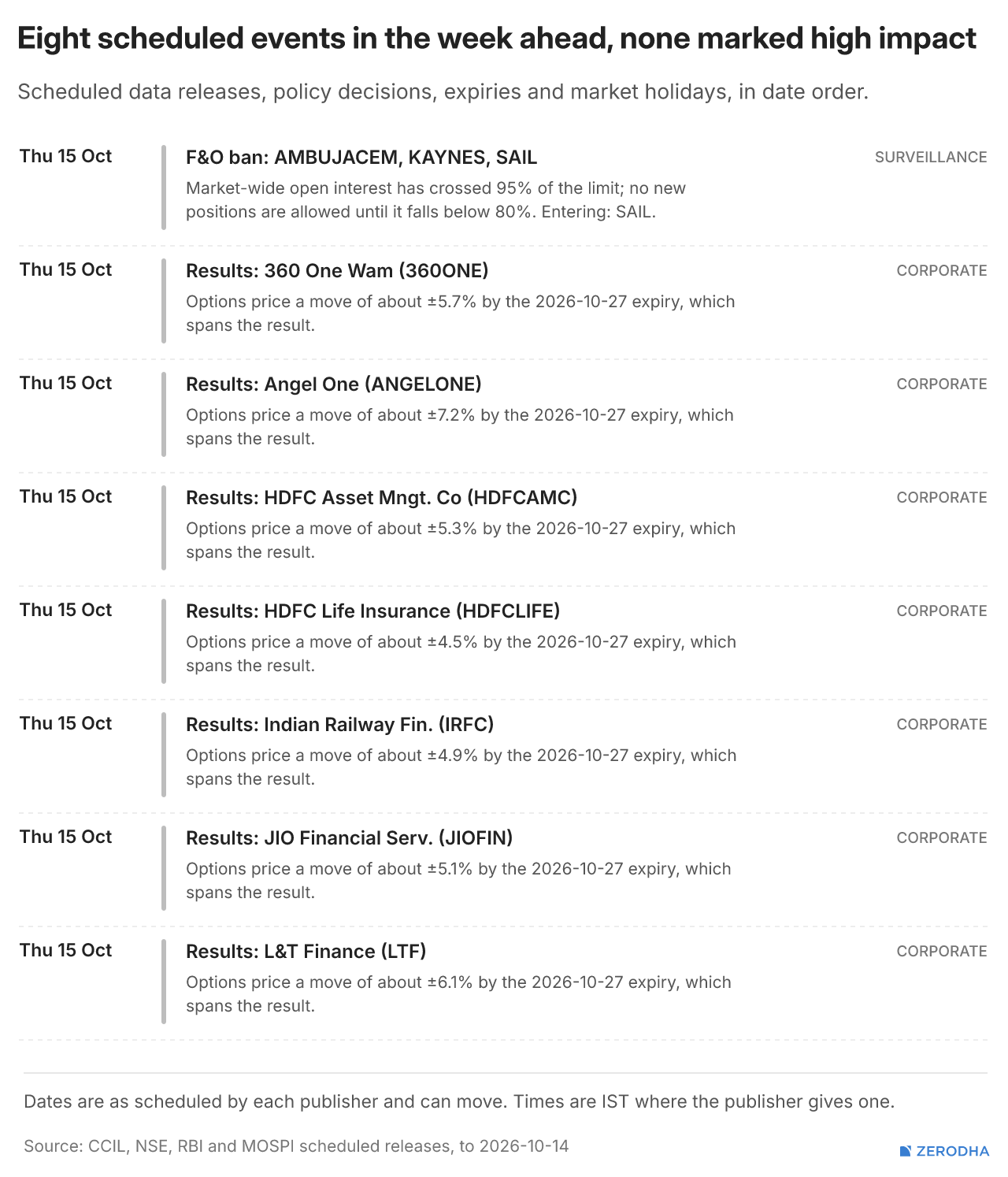
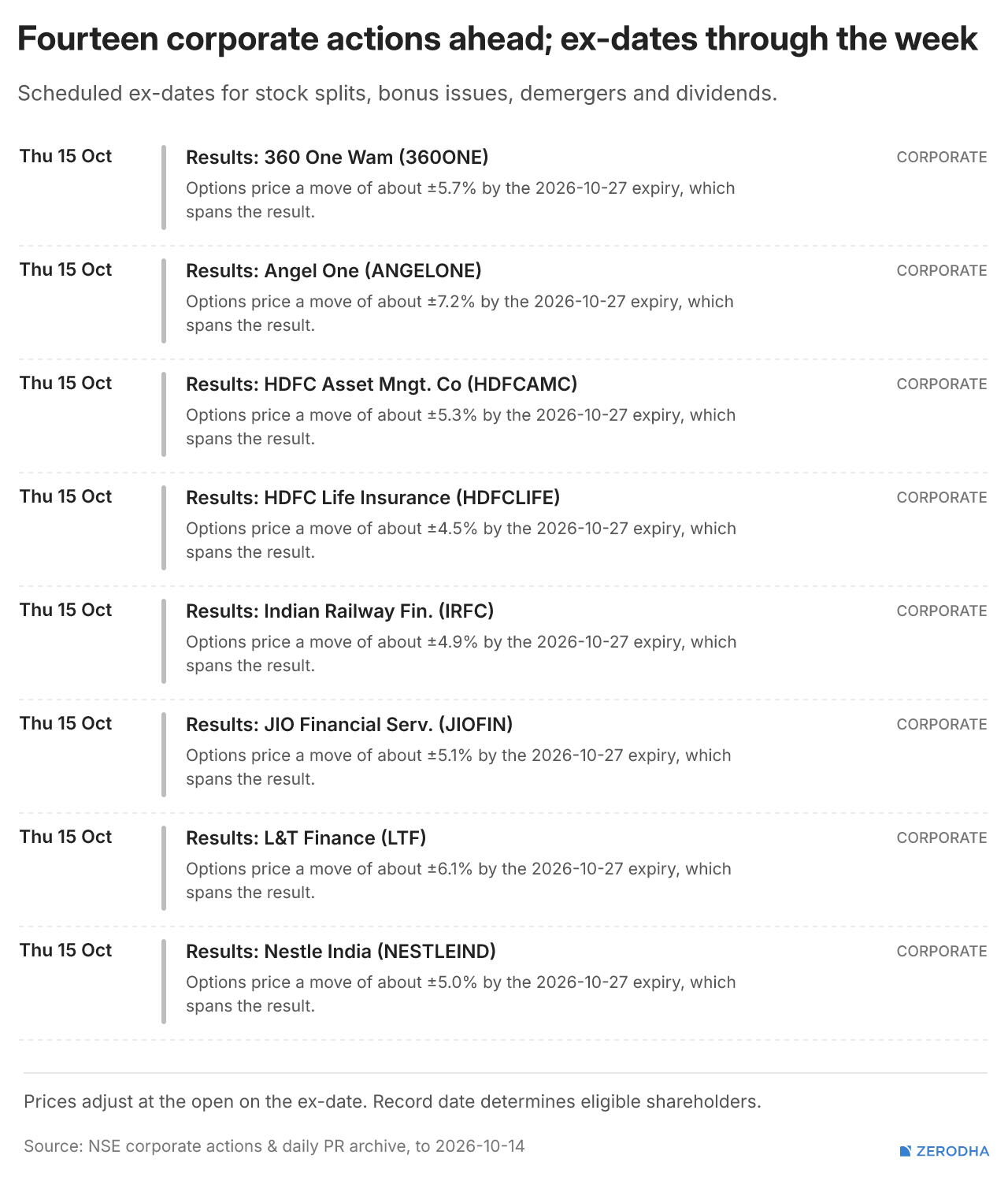
The week ahead & Corporate Actions
Corporate Actions
Published by Zerodha. Not investment advice. Data from NSE, BSE, and MCX.
In our latest episode of In The Money by Zerodha, we explore the story of Paul Tudor Jones, the legendary macro trader known for his approach to risk management and his role during the 1987 stock market crash.
From an early career setback in cotton trading to the lessons he took away from Silver Thursday, we look at the experiences that shaped his trading philosophy.
How did Jones approach risk? What did he learn from his early losses? And what can his career teach us about surviving the markets over the long run?
That’s it from us for today. We’d love to hear your feedback in the comments, and feel free to share this with your friends to spread the word!