

Welcome to Aftermarket Report, a newsletter where we do a quick daily wrap-up of what happened in the markets, both in India and globally.
What data points and transformations do you want to see?
We’re trying out a new format for the Aftermarket Report, with much more comprehensive coverage of the data that shapes the trading day.
Beyond the headline indices, we’re now tracking market breadth, new highs and lows, sector and thematic performance, delivery data, F&O positioning, global markets, commodities, flows, and more. We’re also looking at ways to transform this raw data into insights that are actually useful for traders and investors.
The idea is simple: bring different datasets together in one place to give you a clearer picture of what’s happening beneath the surface of the market.
This is still a work in progress, and we’d love your feedback. What data points are we missing? What transformations, ratios, comparisons, or indicators would you find useful? Also tell us what worked, what didn’t, and what felt unnecessary.
Your feedback will help shape the Aftermarket Report from here.
Markets Today
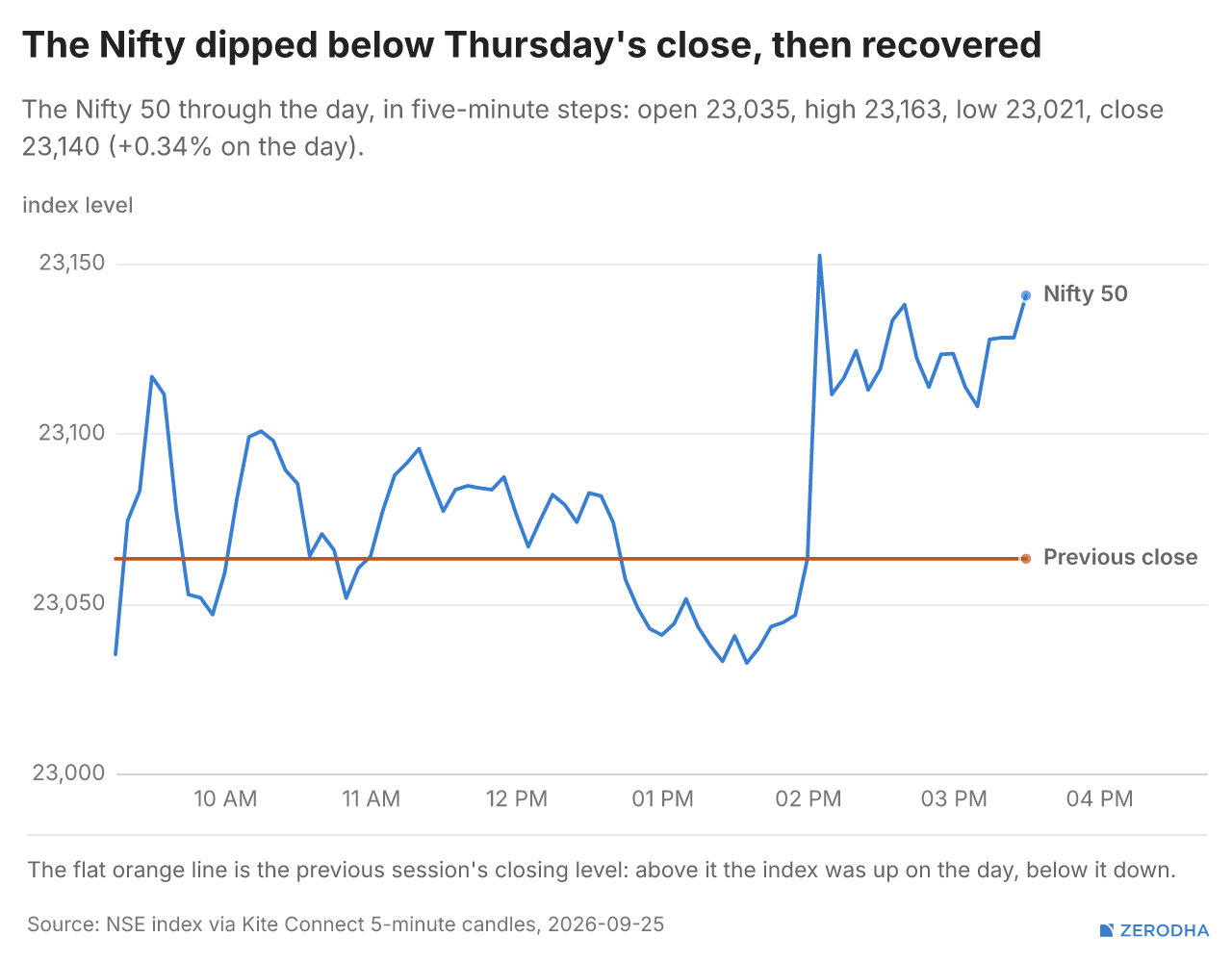
Nifty opened with a small 28-point gap down at 23,035, following mixed global cues and continued weakness in domestic market sentiment. The index recovered sharply immediately after the open, climbing above 23,110, but the move quickly reversed as Nifty slipped towards 23,050. Another recovery attempt took the index back towards 23,100 around 10 AM, but gains again proved difficult to sustain.
Nifty remained volatile through the rest of the first half, largely oscillating between 23,050 and 23,100, before settling around the 23,060-23,080 zone by noon.
Weakness picked up after 12:30 PM, with Nifty gradually sliding to an intraday low near 23,020 around 1:30 PM. However, the trend changed sharply after 2 PM, when a sudden bout of buying pushed the index above 23,150. Nifty gave up some of those gains immediately but remained firmly above 23,100 through the rest of the session.
The index then consolidated in the 23,110–23,130 range before a final push higher in the closing minutes. Nifty eventually settled at 23,140.50, around 105 points above its opening level, recovering strongly from the day’s lows after a volatile session.
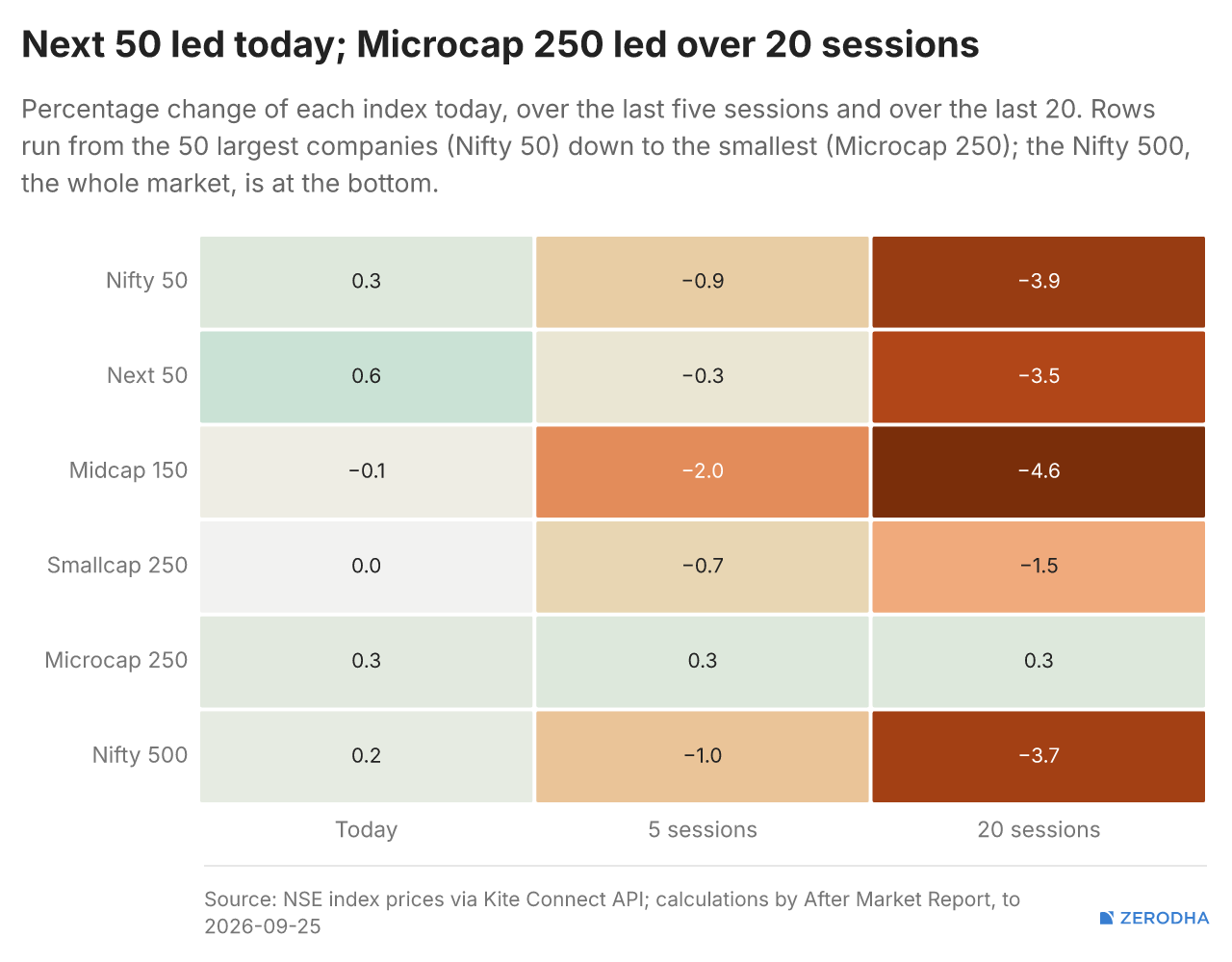
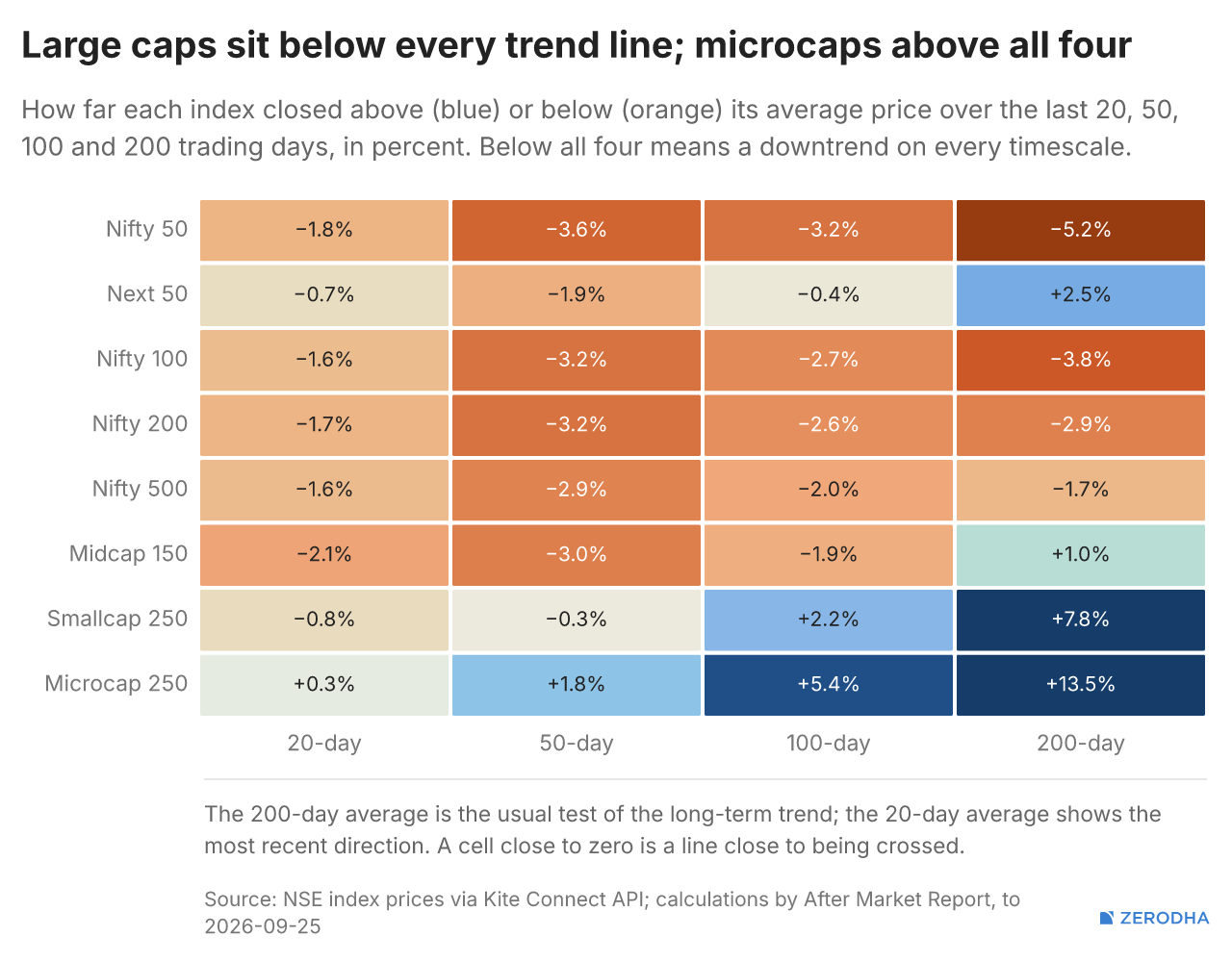
Fear & Greed Index
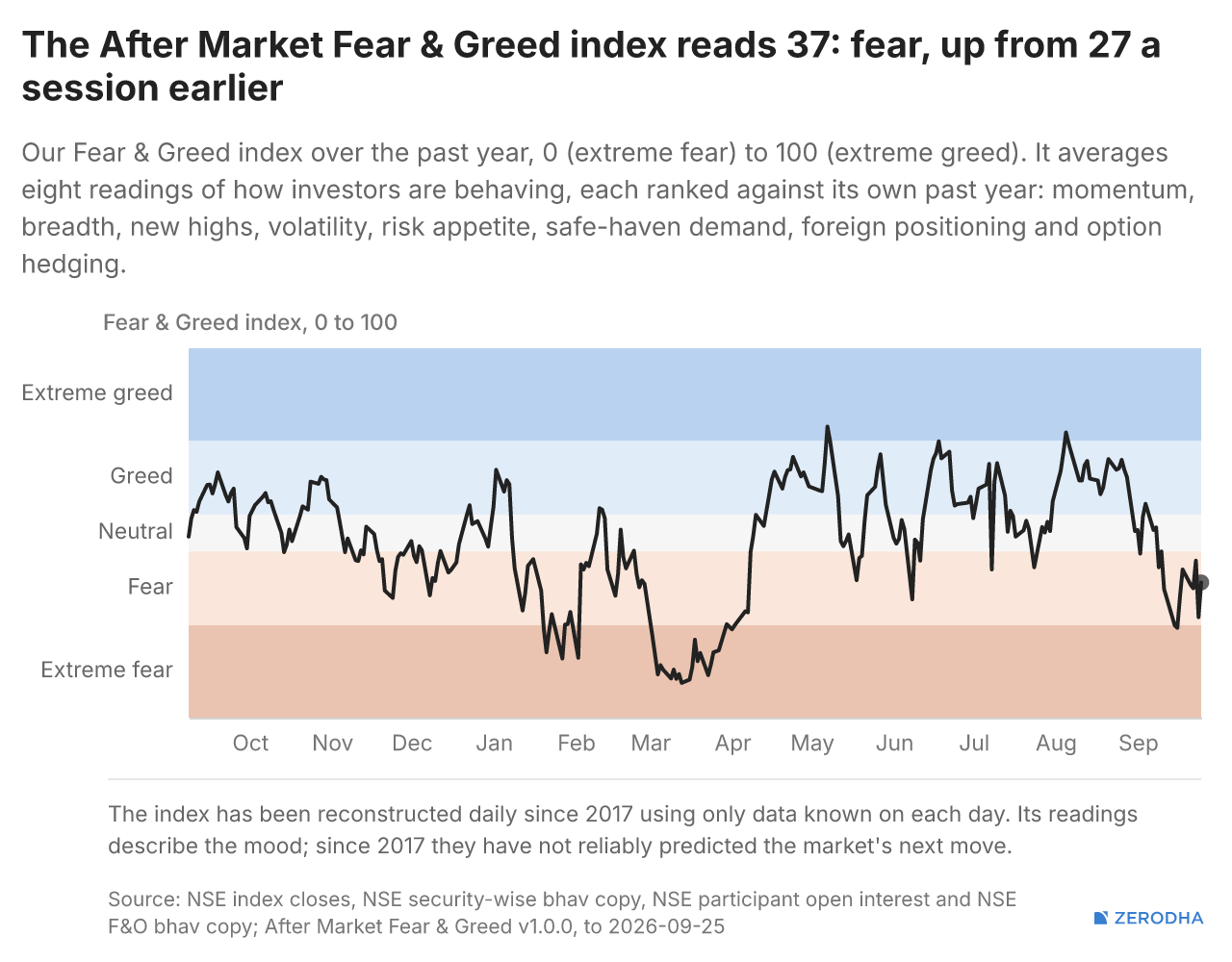
The Fear & Greed Index improved from 27 to 37 but remained in the fear zone. Cheaper downside hedging helped sentiment, while weak trend and defensive stocks outperforming continued to weigh.
Market Breadth
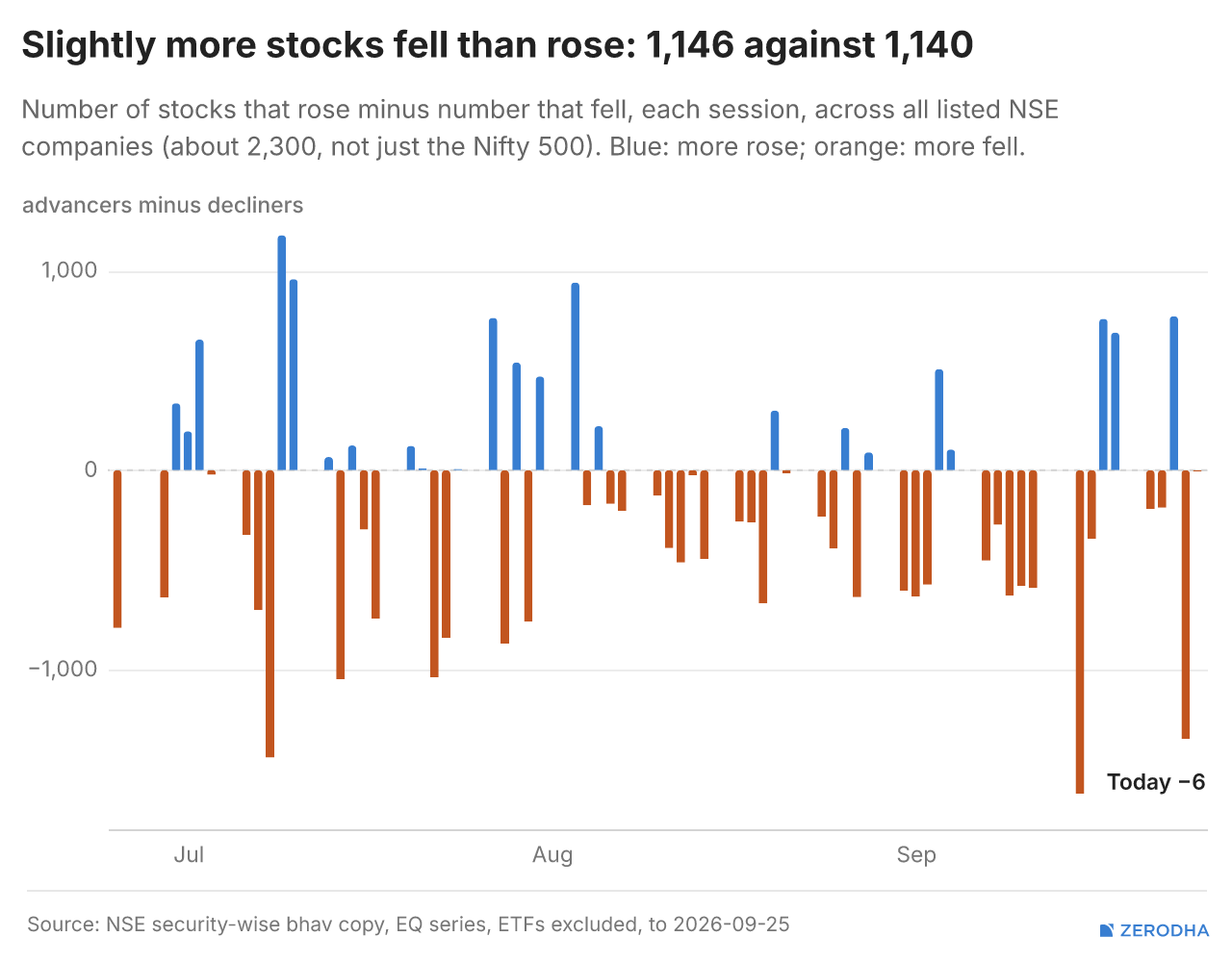
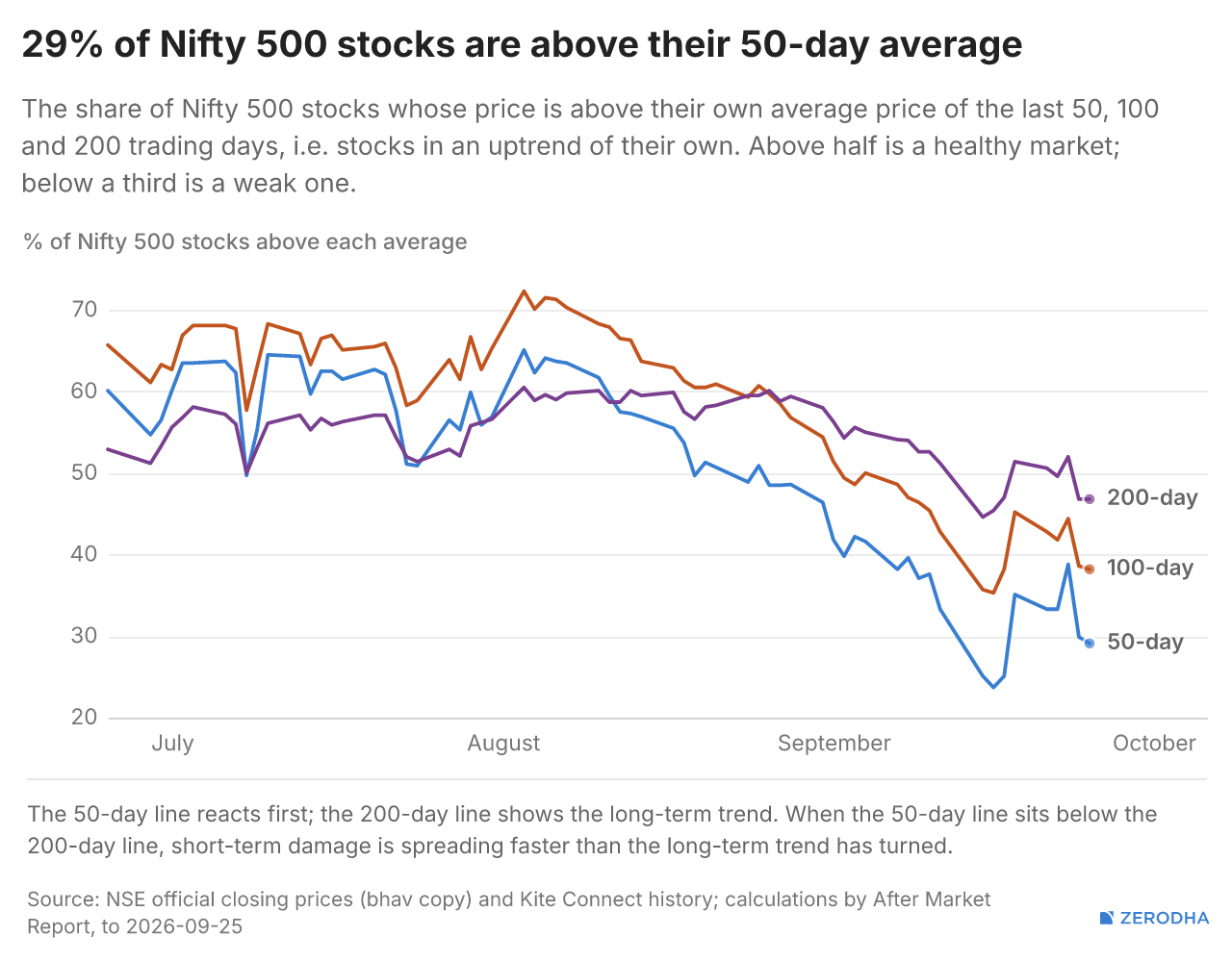
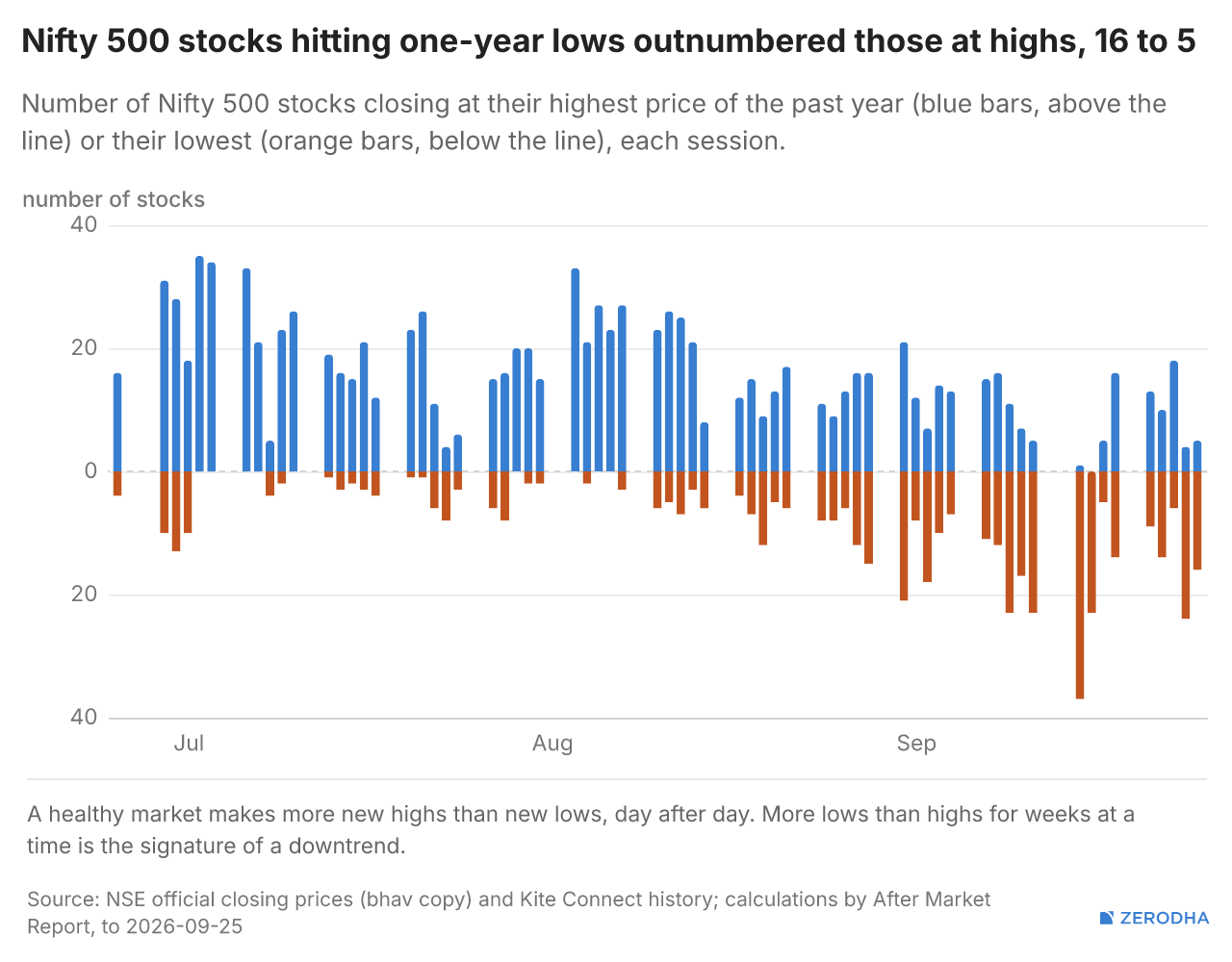
Breadth was almost evenly split at 1,140 advancers versus 1,146 decliners, while only 29.1% of Nifty 500 stocks were above their 50-day average. New 52-week lows outnumbered highs 16 to 5.
52 Week Highs & Lows
Sectoral Indices Performance
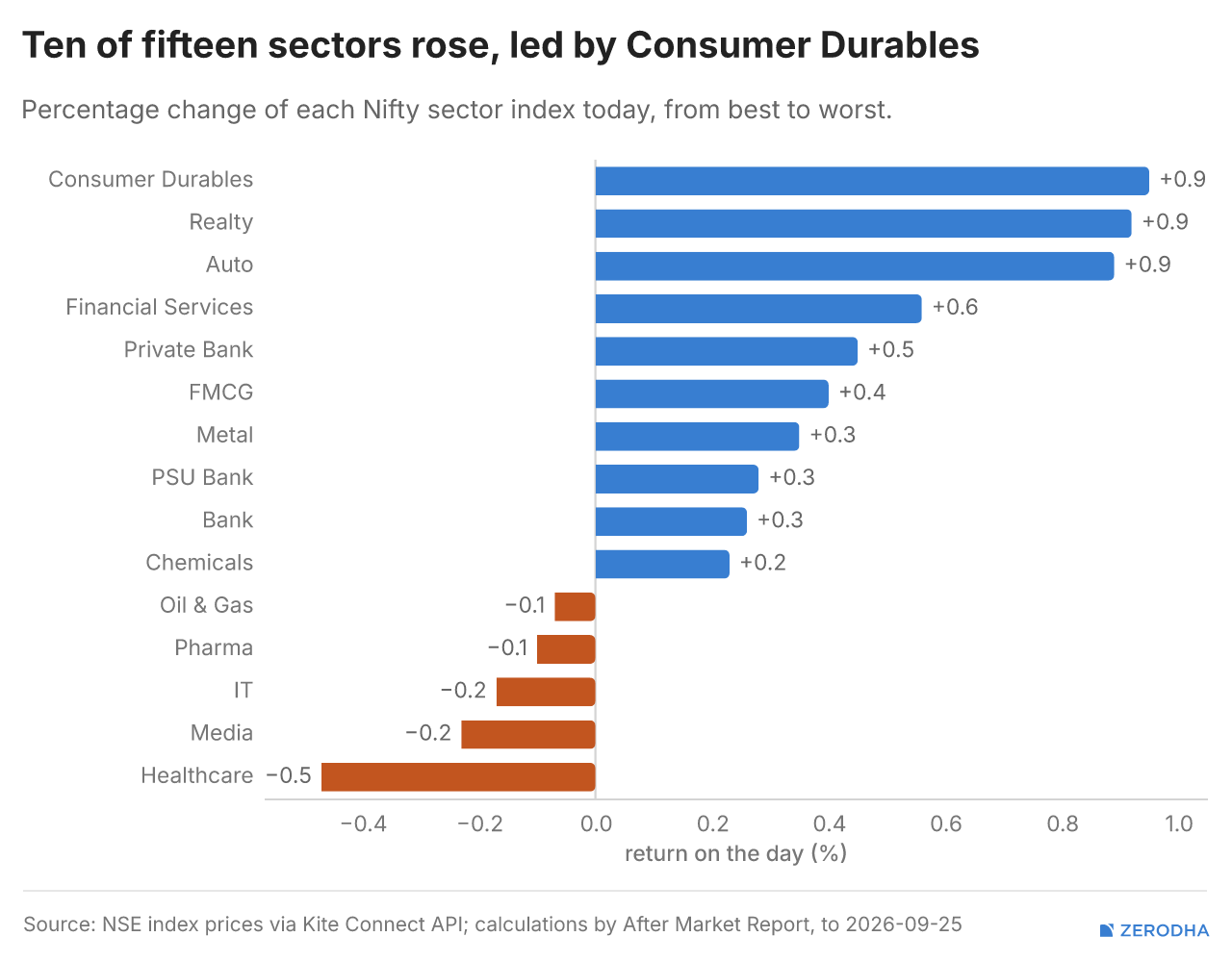
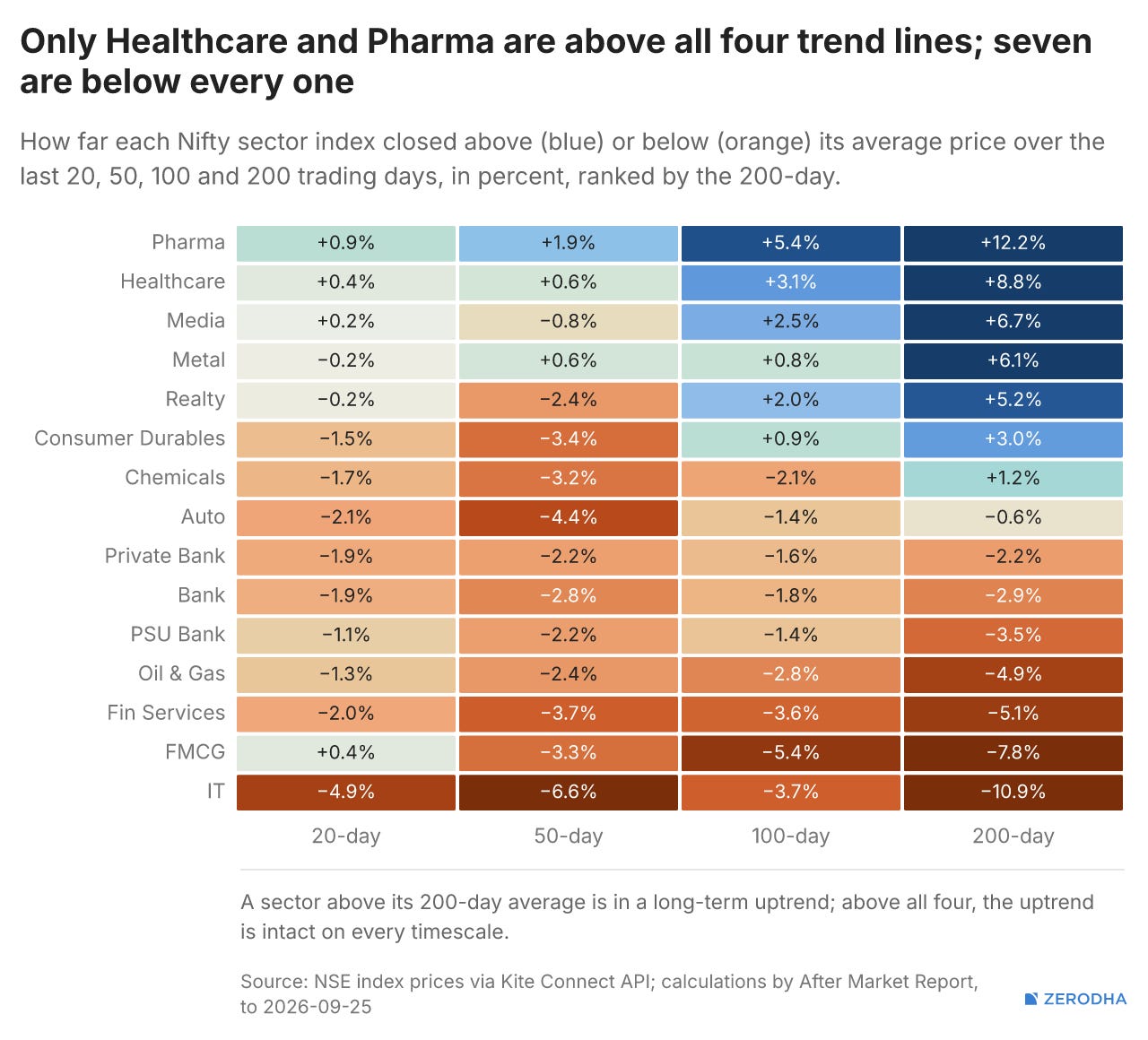
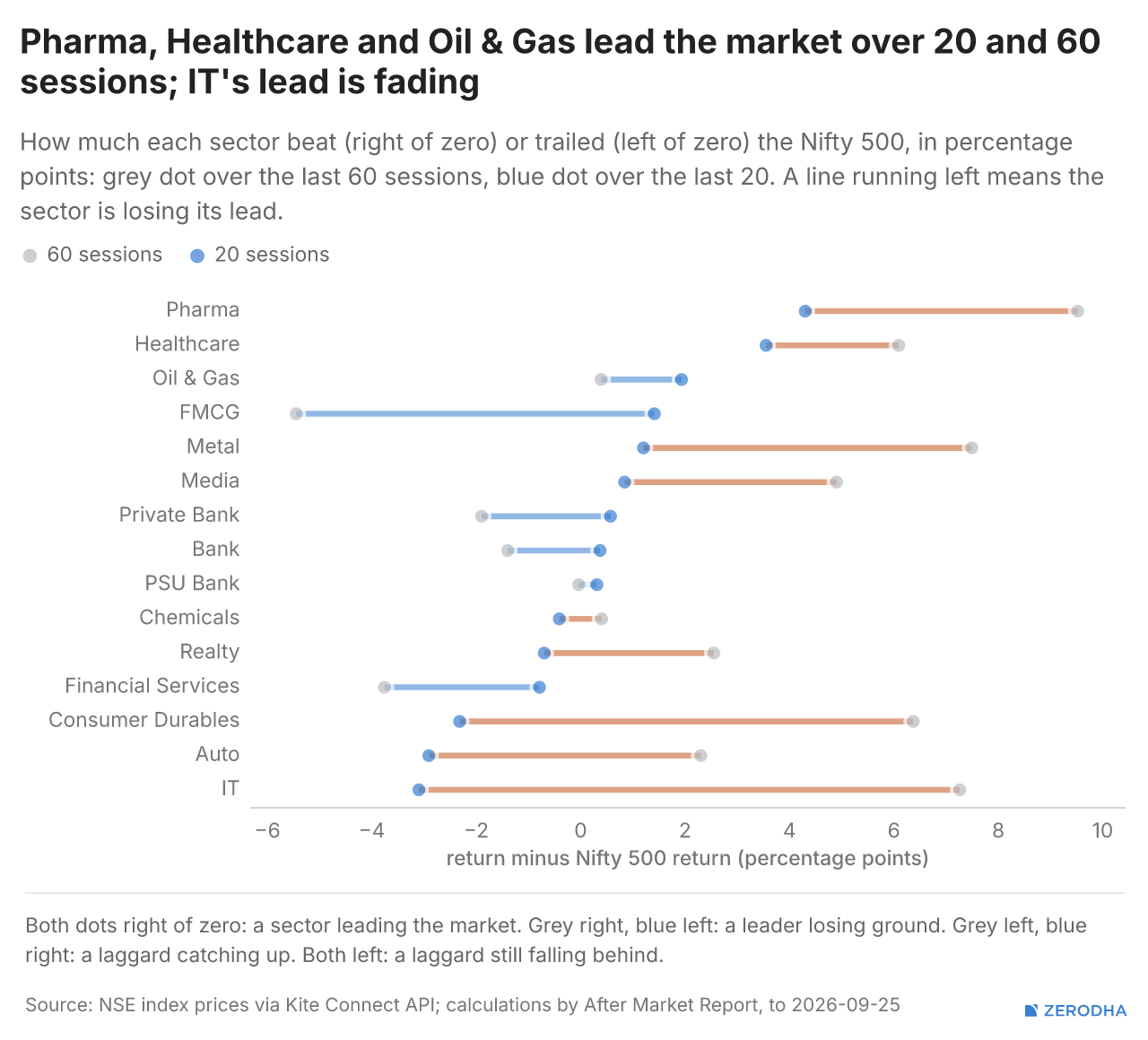
Consumer Durables (+0.95%) led as 10 of 15 sectors gained, while Healthcare (-0.47%) lagged. Pharma and Healthcare remain the strongest longer-term sectors, while FMCG and PSU Banks are improving over the shorter horizon.
Winners & Losers
Delivery Data
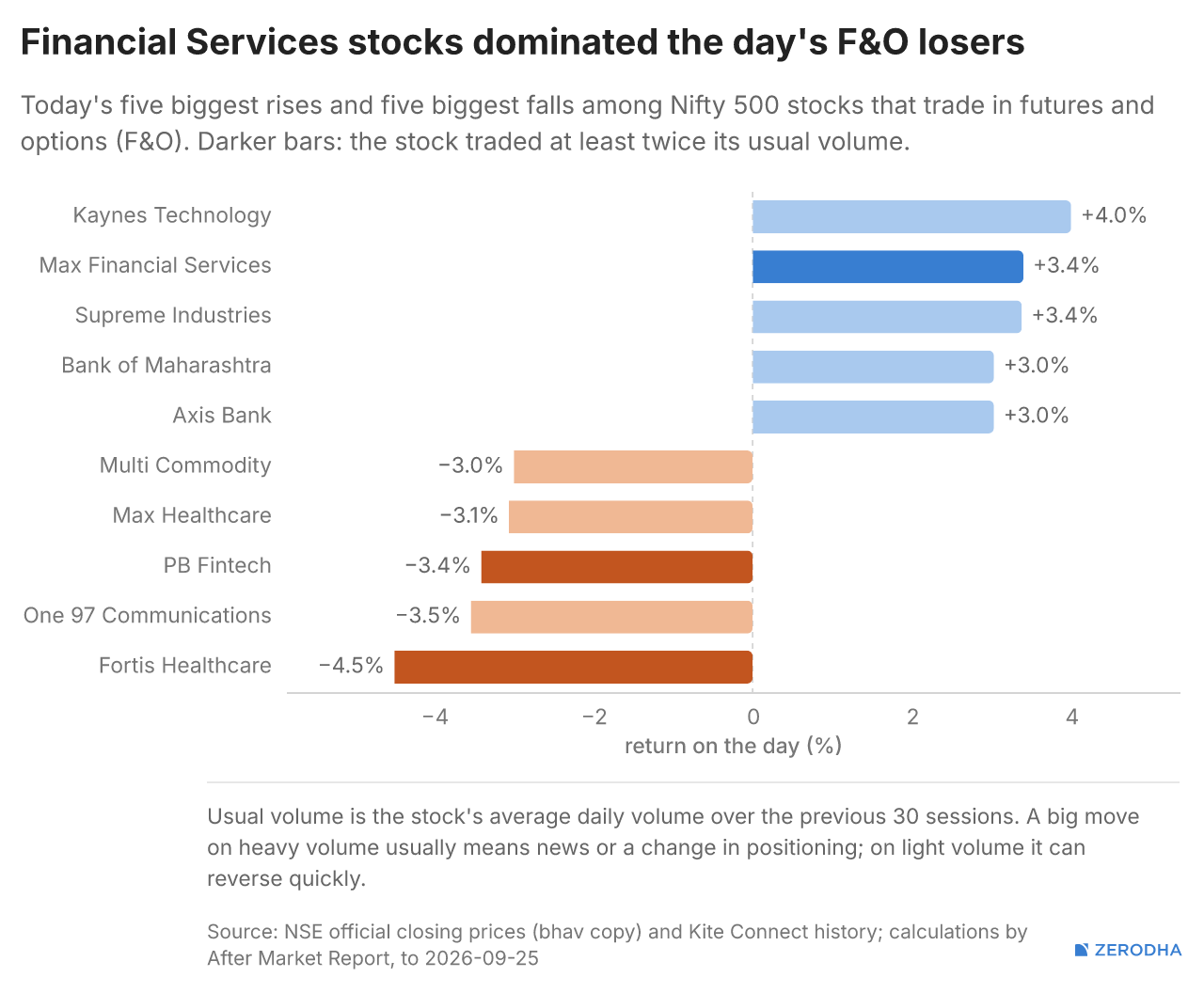
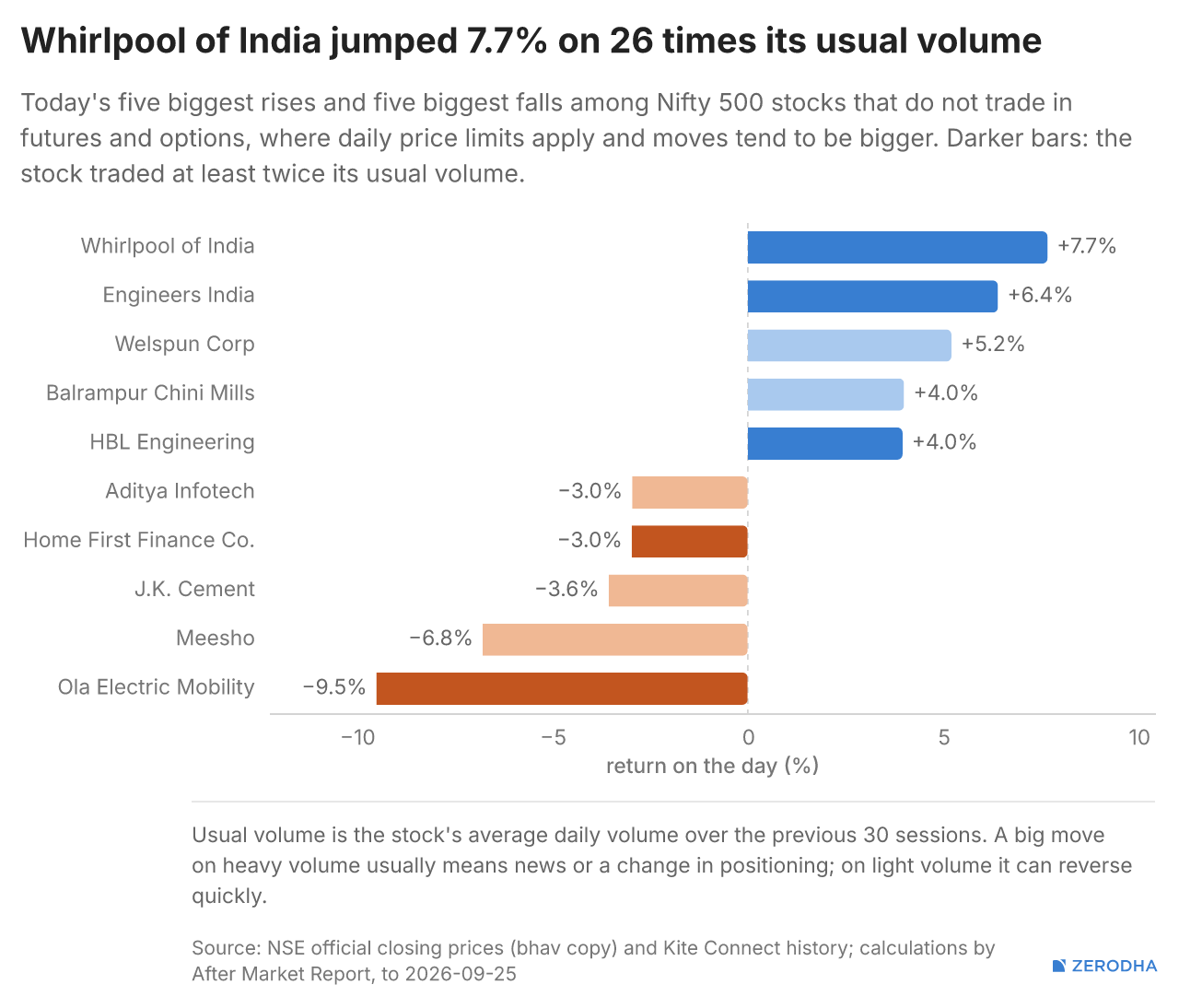
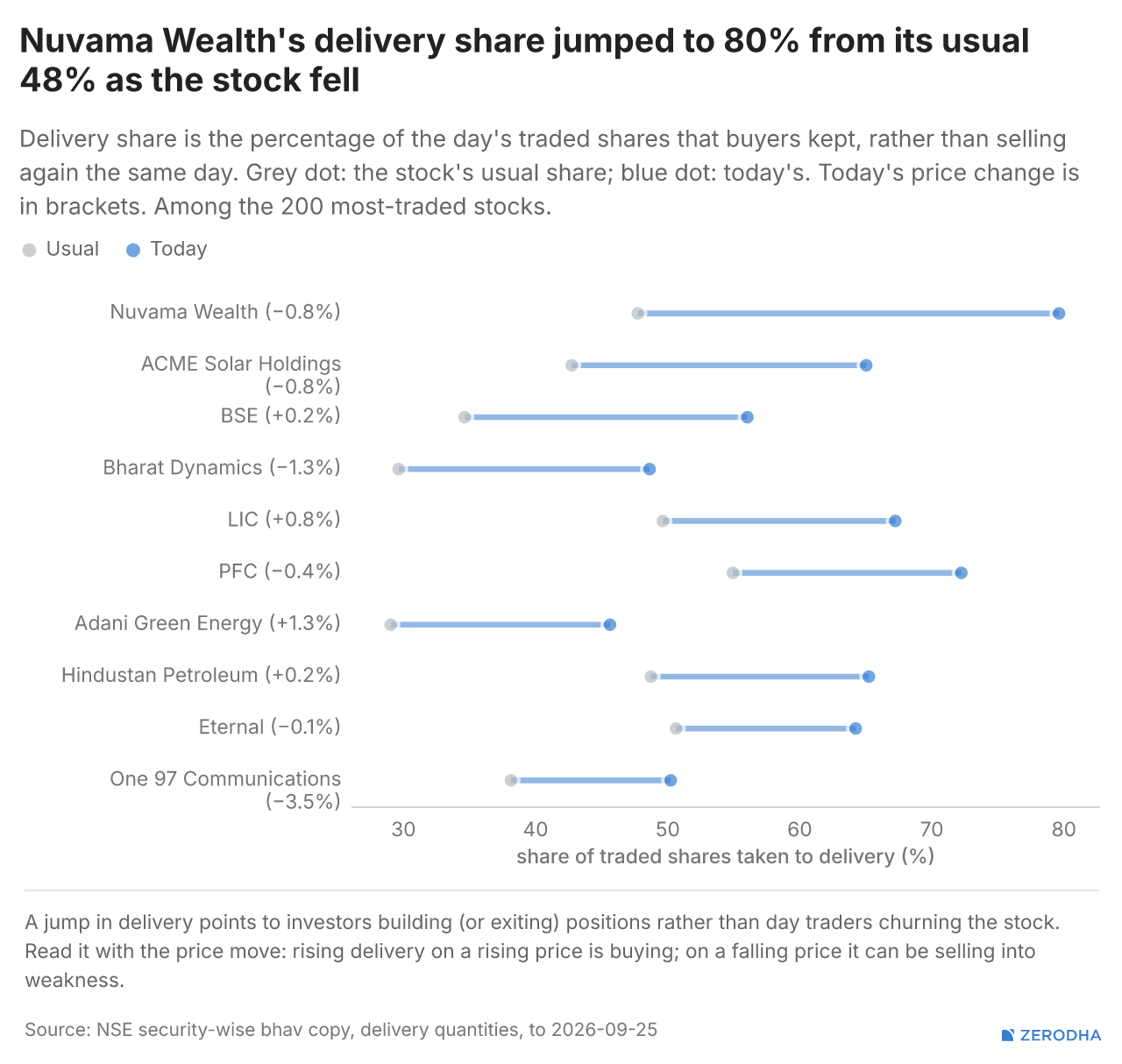
Whirlpool jumped 7.67% on 26× usual volume, while Engineers India gained 6.40%. Nuvama Wealth recorded the sharpest delivery spike, while 360 One Wam saw the biggest rise in implied volatility.
SLB Borrowing
Global Markets
Commodities
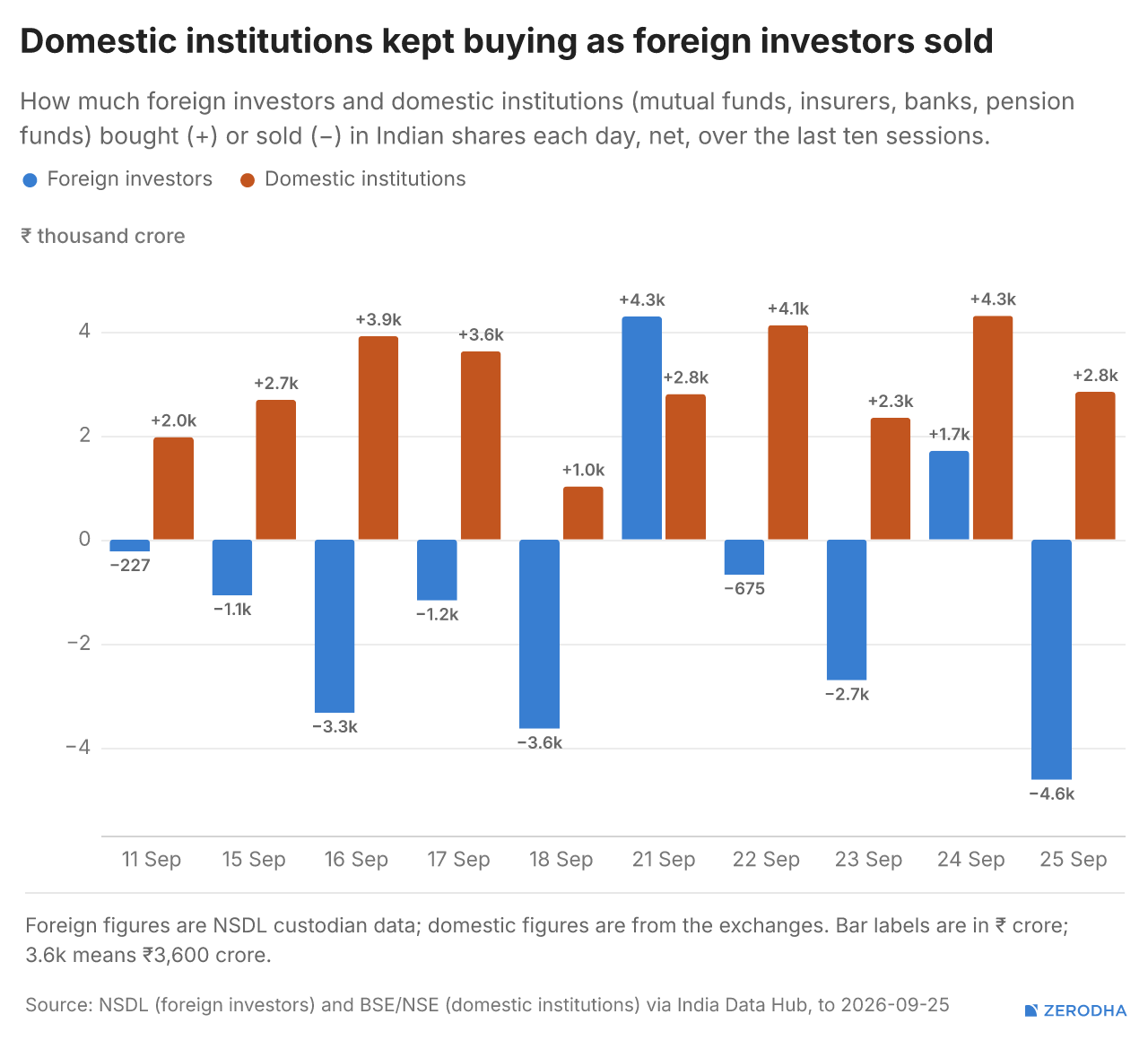
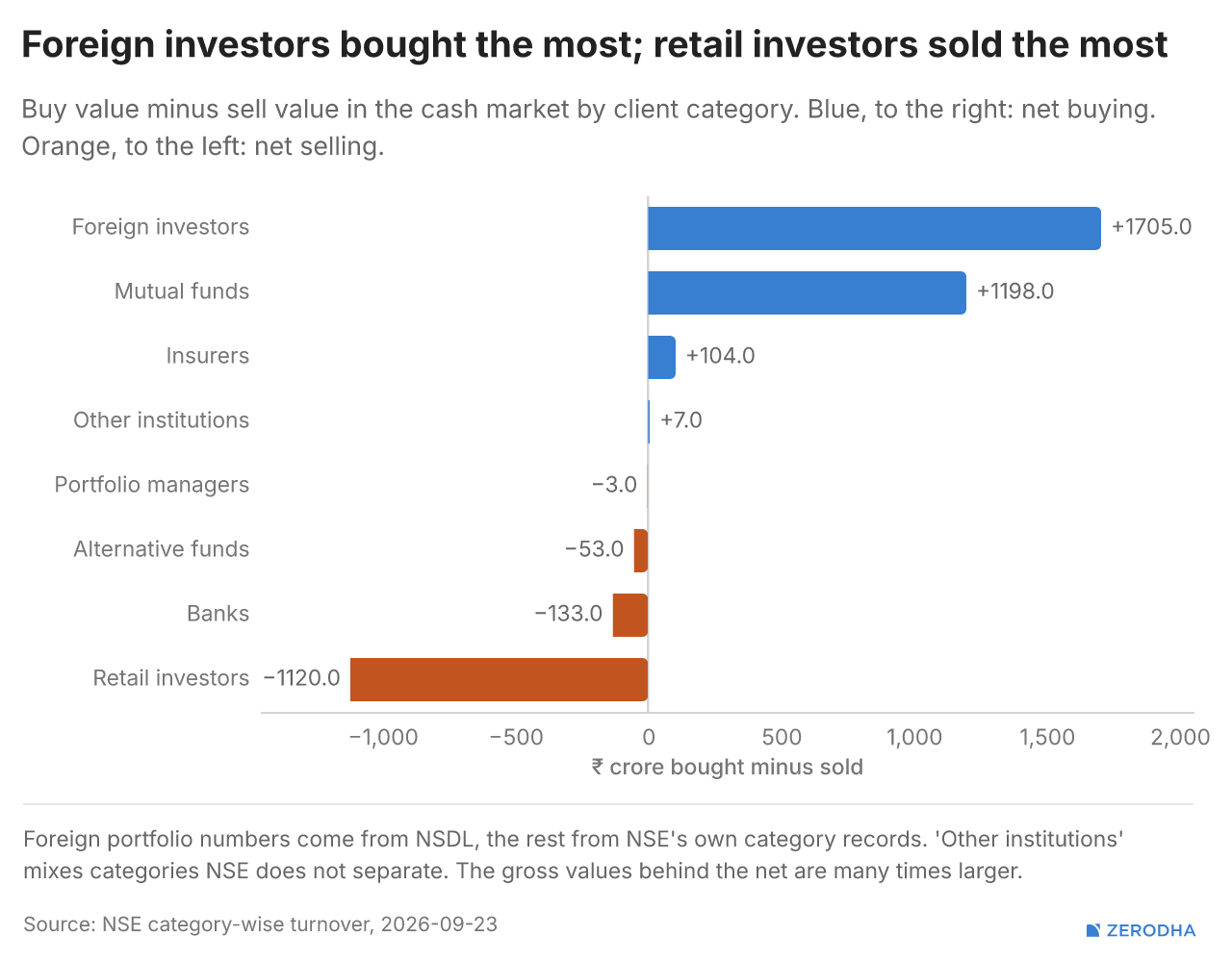
Institutional Flows & Participant Positioning
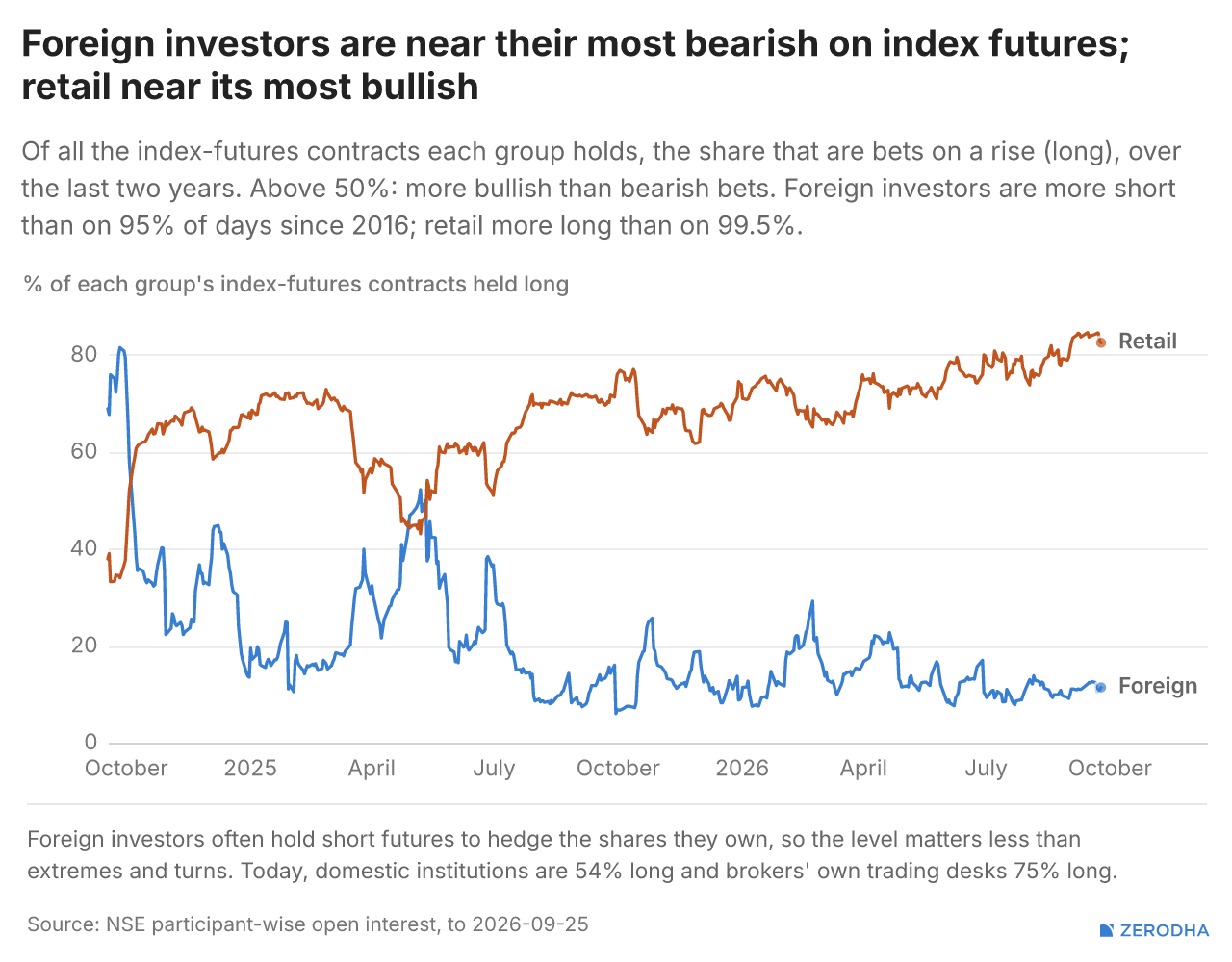
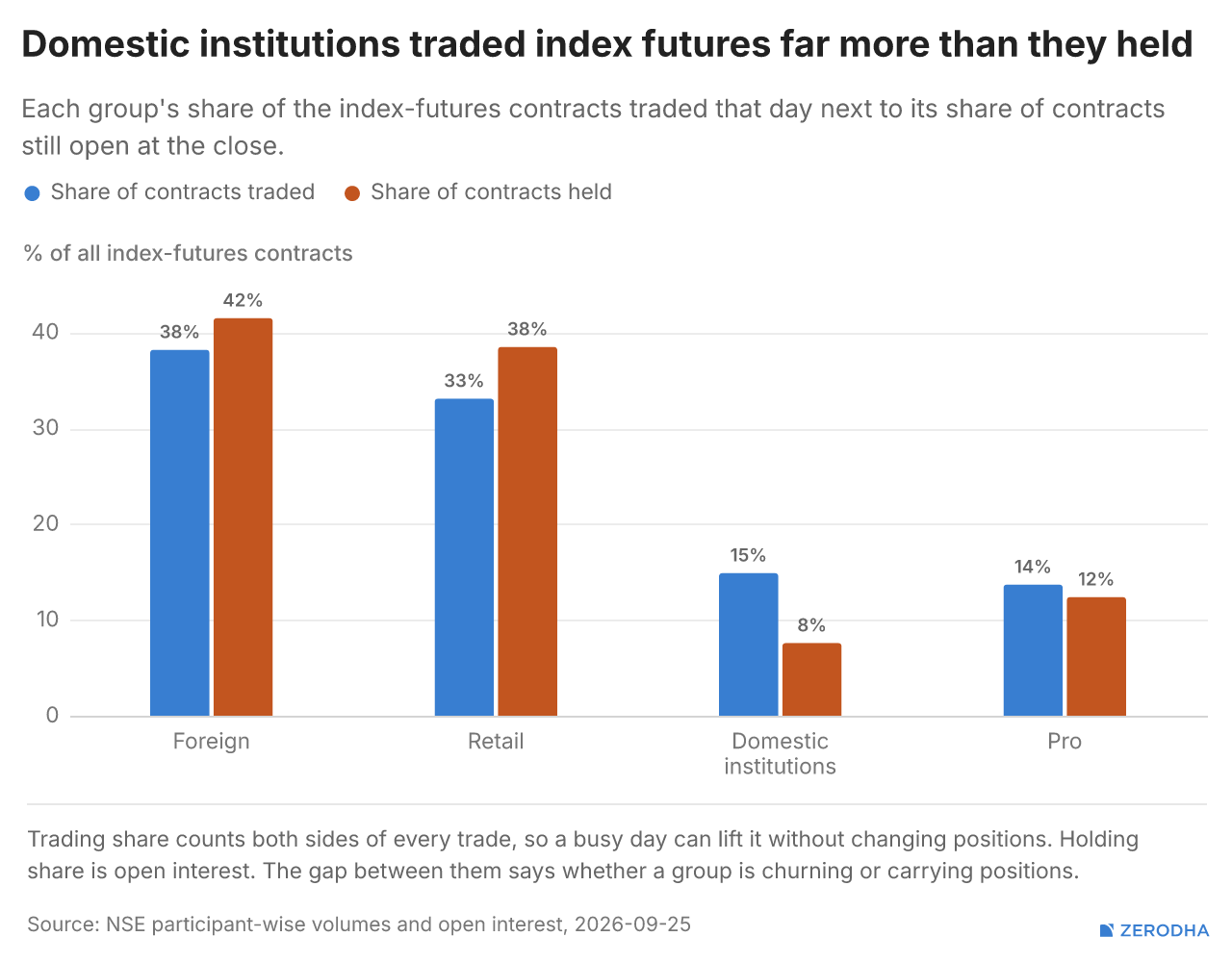
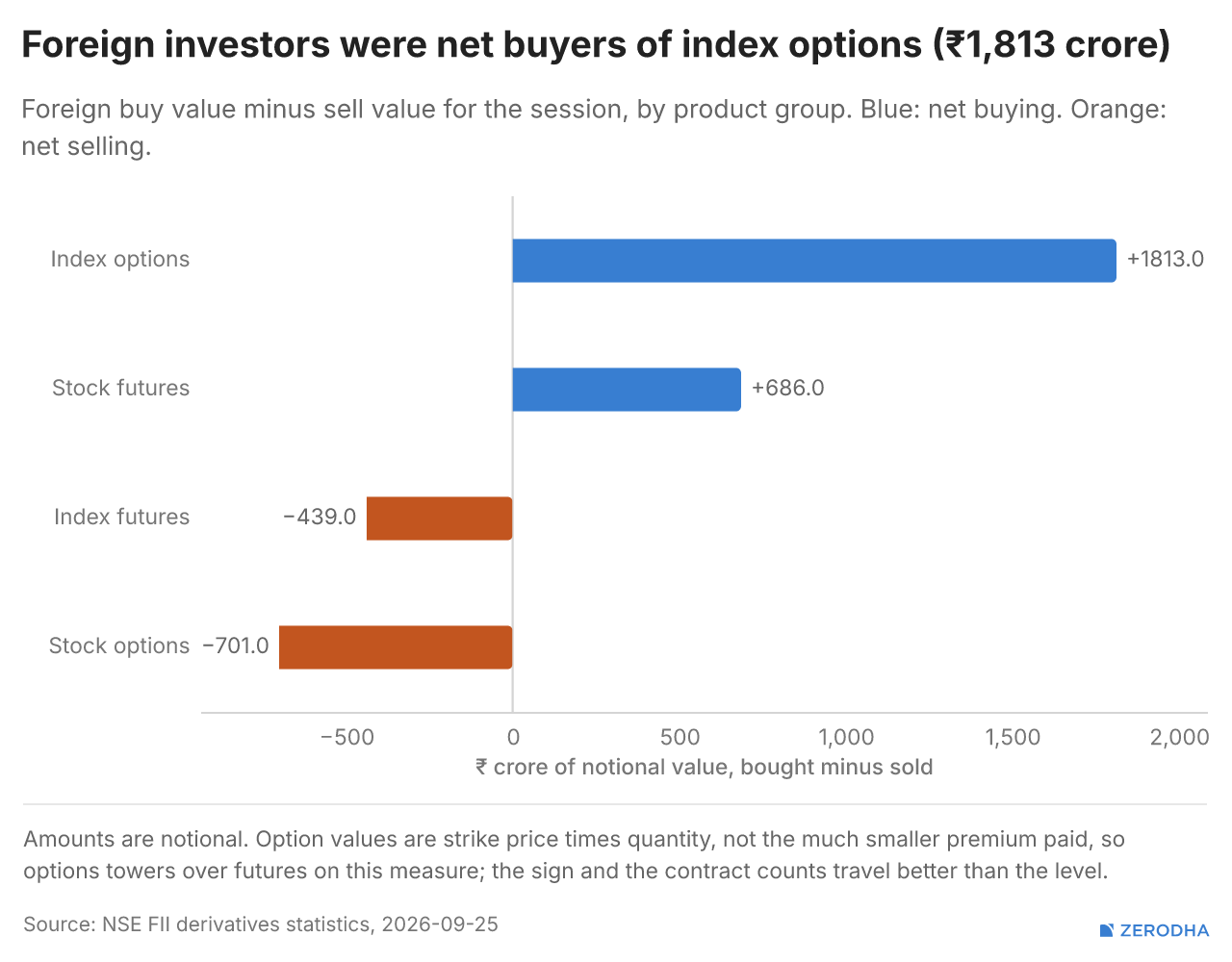
FIIs remain heavily short with just 11.4% of index-futures positions long, while 53% of futures positions have rolled to the next month.
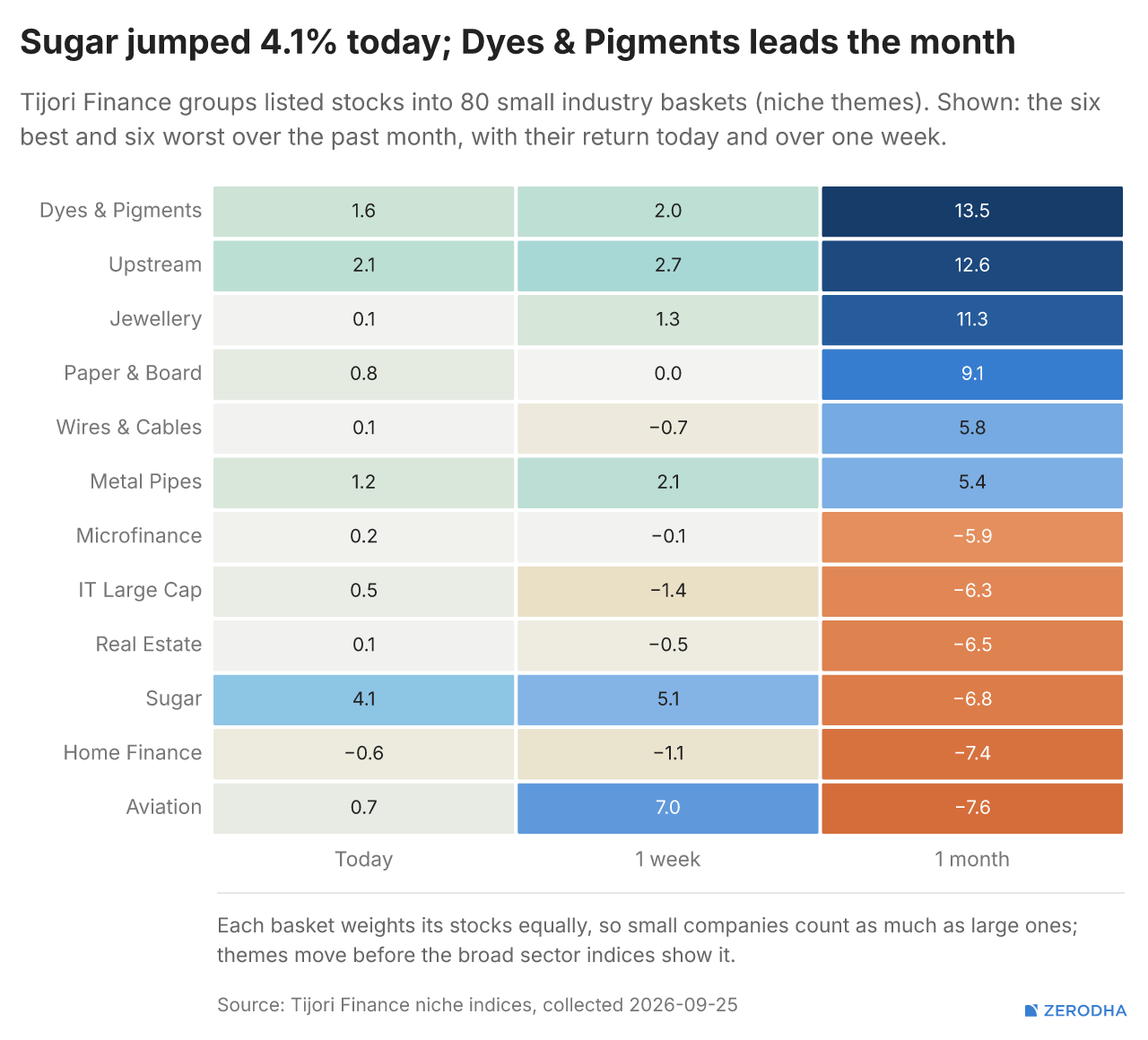
Thematic Indices
Tijori’s niche indices, where today’s move sorts pockets of the market beyond standard sector baskets. You can also track promoter buying and other interesting stuff, like Capex activity by the companies in the Tijori App’s idea dashboard
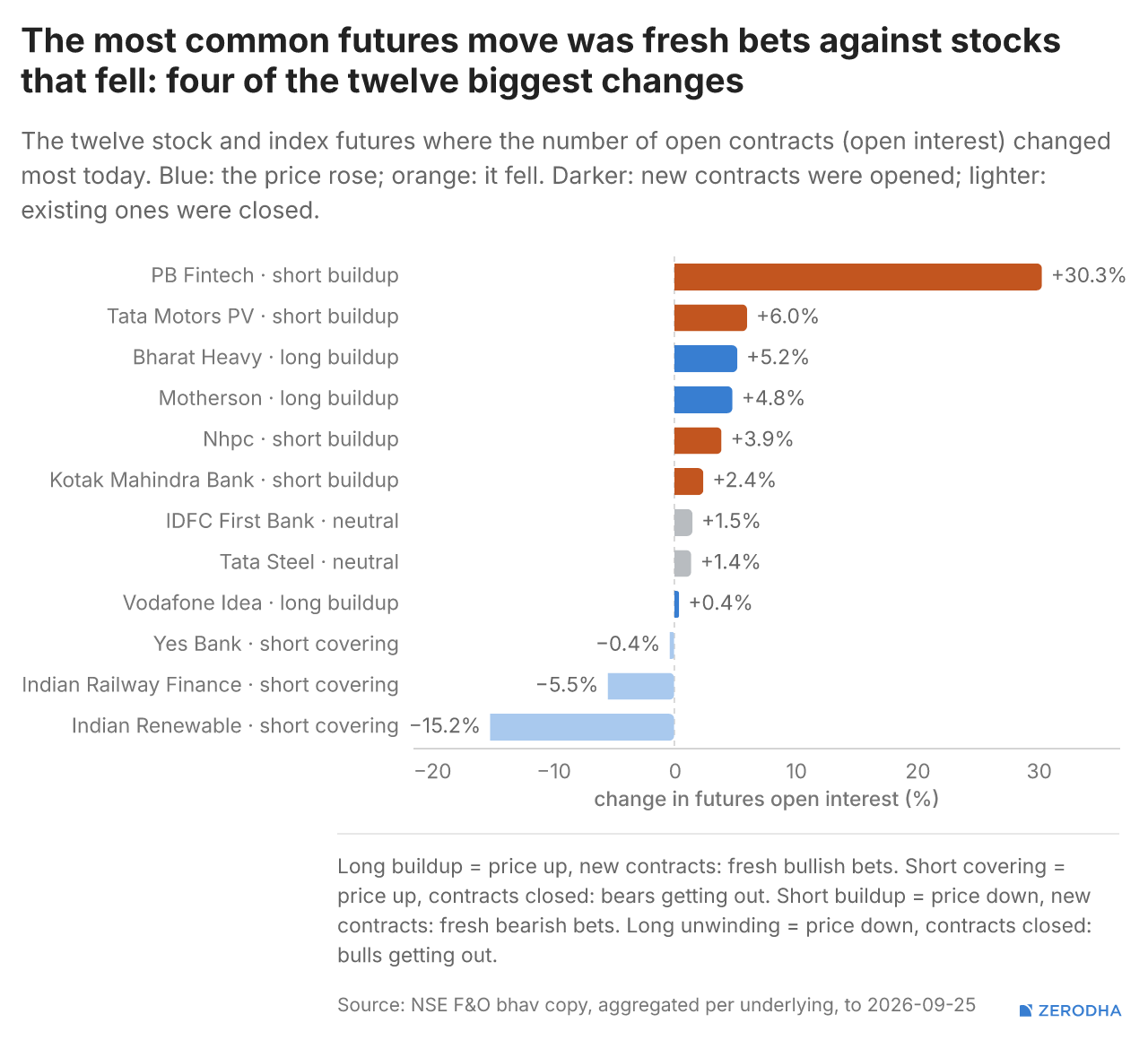
F&O Corner
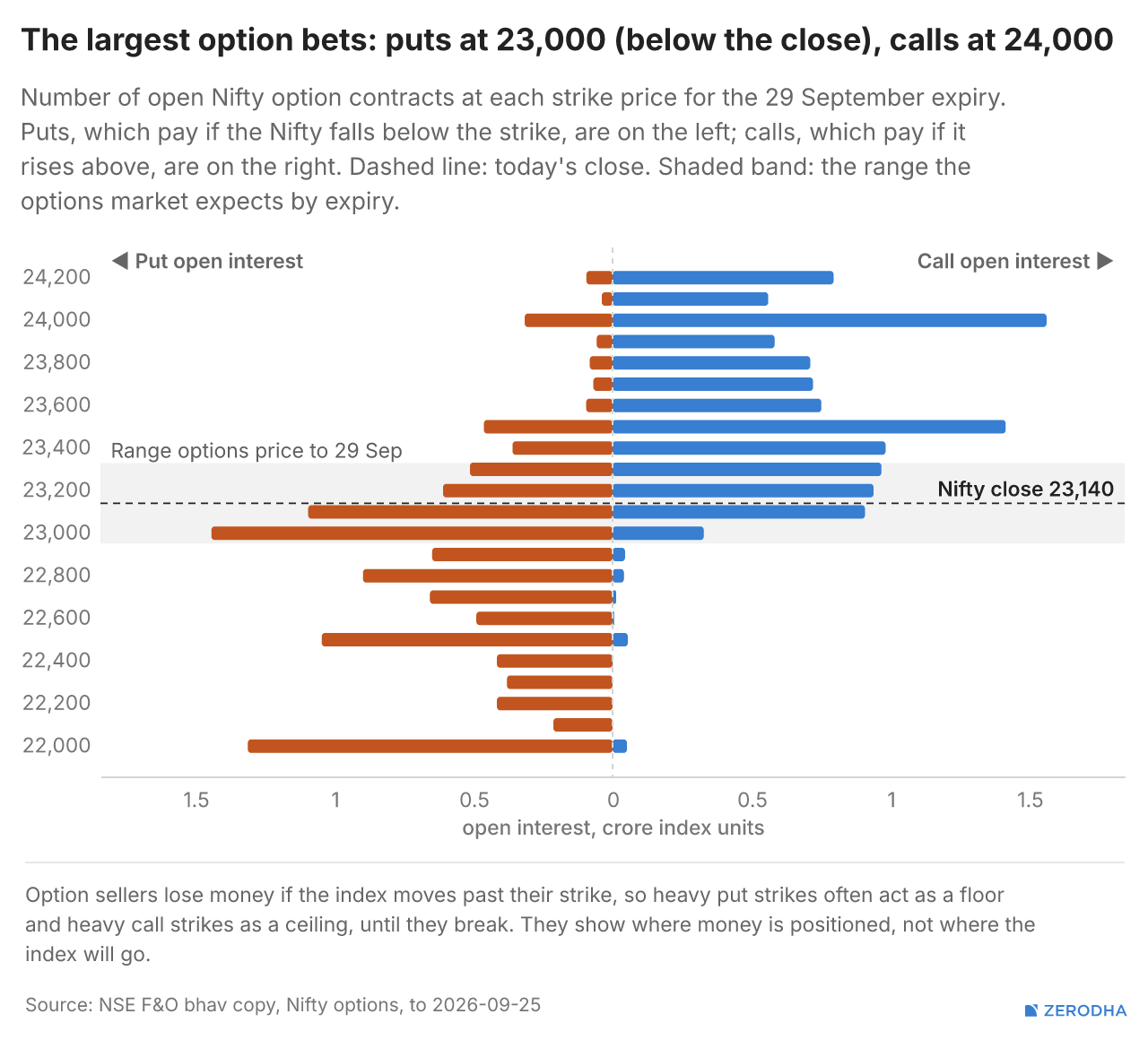
Options price a roughly 189-point move either way into September 29 expiry, while PCR rose from 0.81 to 0.97 as put writers became busier.
Options imply a 23,000–23,378 range, with the heaviest put OI at 23,000 and call OI at 24,000. The 23,000 put level is particularly important as it sits inside the options-implied range.

Top Stories in India
Indian government bonds weakened, with a sixth straight weekly loss, as the US Treasury sell-off and a large domestic debt auction weighed on sentiment. The benchmark 10-year yield touched 7.1391%, a four-month high, before closing around 7.10%. Dive deeper
India’s forex reserves fell $14.88 billion to $765.9 billion in the week ended September 18, following a $4.92 billion decline in the previous week. Foreign currency assets accounted for most of the fall, dropping $14.82 billion to $630.98 billion. Dive deeper
The Centre plans to borrow ₹7.86 lakh crore in H2 FY27, including ₹15,000 crore through sovereign green bonds. Full-year market borrowing has been cut by ₹1.20 lakh crore to ₹15.995 lakh crore, from the budgeted ₹17.20 lakh crore. Dive deeper
Biocon received UK MHRA approval for a new fill-finish unit for Semglee (insulin glargine) at its Malaysia insulin facility. The same production line had received EMA approval in July. Dive deeper
Natco Pharma’s board approved a rights issue of up to ₹1,279.35 crore. The company plans to issue up to 1.71 crore shares at ₹750 apiece. Dive deeper
Nykaa has partnered with L’Oréal’s venture capital arm BOLD to co-invest in high-growth Indian beauty and personal-care startups. The partnership expands Nykaa’s involvement in the beauty ecosystem beyond retail and distribution. Dive deeper
Top Stories Globally
Crude fell to around $93 per barrel, snapping a two-day rally, on reports that the US and Iran are discussing a phased deal that could reopen the Strait of Hormuz and lift the US blockade on Iranian ports. Qatar is reportedly mediating talks on the sidelines of the UN General Assembly. Dive deeper
Google is preparing to launch its first prototype satellite to test AI hardware in orbit under Project Suncatcher. The project is exploring whether near-constant solar power in low Earth orbit could eventually support large-scale AI computing infrastructure in space. Dive deeper
US equity funds recorded their first inflows in five weeks, attracting a net $37.6 billion, the largest weekly inflow since June 17. Renewed optimism around AI and easing oil prices helped revive investor demand. Dive deeper
Long-term US Treasury yields surged to multi-decade highs amid concerns over energy-driven inflation, resilient growth and government spending. The 30-year yield reached 5.48%, its highest since 2004, while the 10-year yield touched 5.20%. Dive deeper
Management Chatter
In this section, we highlight interesting comments from management at major companies and from policymakers in the Indian and Global Economies.
Finance Minister Nirmala Sitharaman on the proposed Merchant Discount Rate (MDR):
"This is not a tax, this is not a cess, this is not even a surcharge. And the collection is not coming to the Consolidated Fund of India."
The charge would be shared among multiple participants in the payment ecosystem to help maintain technology infrastructure and support improvements and innovation in digital payments.
“This is not at all anything to do with the government.” - Link
Tata Motors MD Shailesh Chandra on commodity-linked inflation & hit on margin:
“The greater worry is the uncertainty. Whether this is all that was supposed to happen or whether a part of the commodity side will keep being uncertain and be under pressure,” he told reporters ahead of a new car launch.
“It is not possible to pass on these increases to the market at the speed at which costs have increased ... which creates immense margin pressure,” - Link
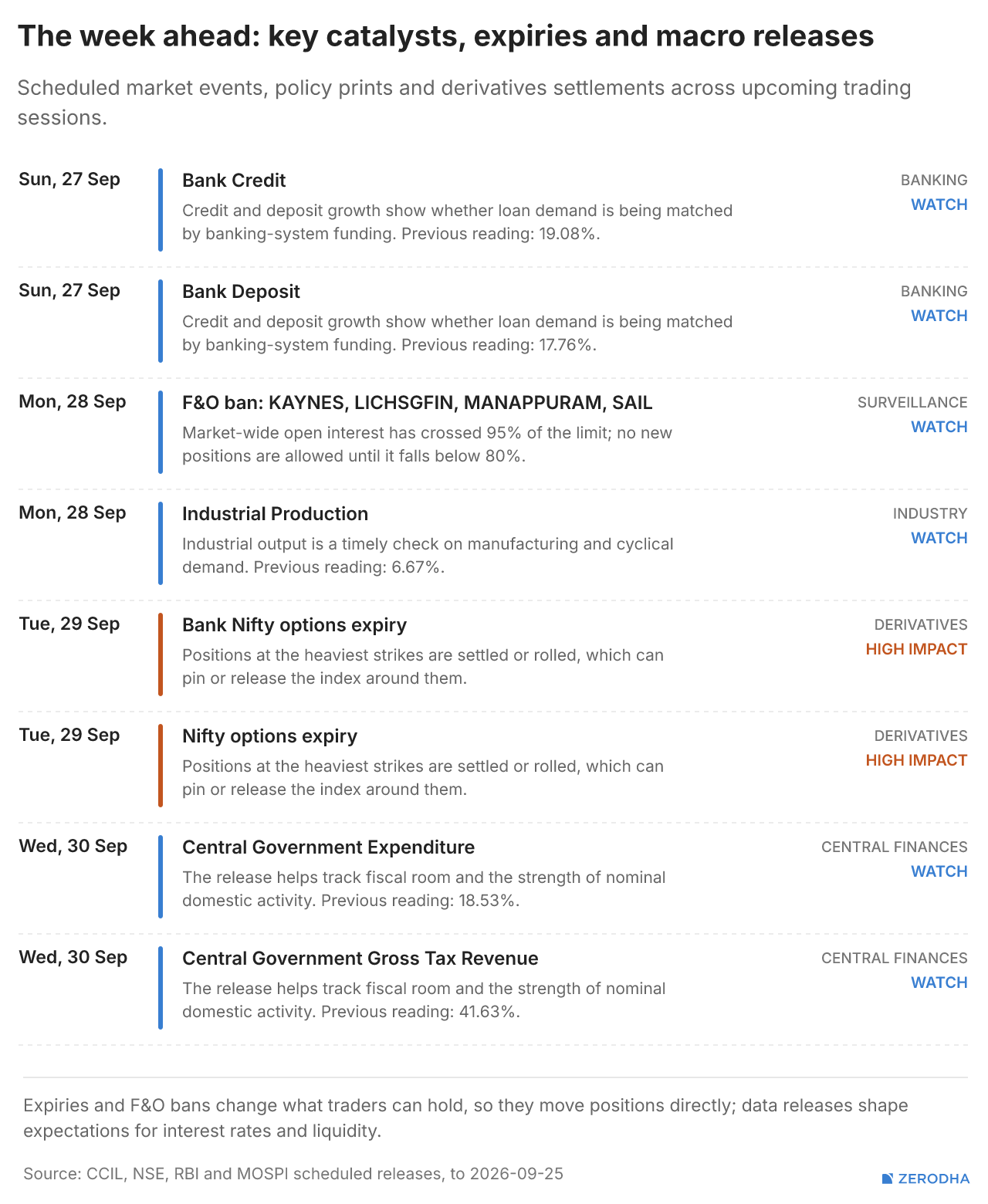
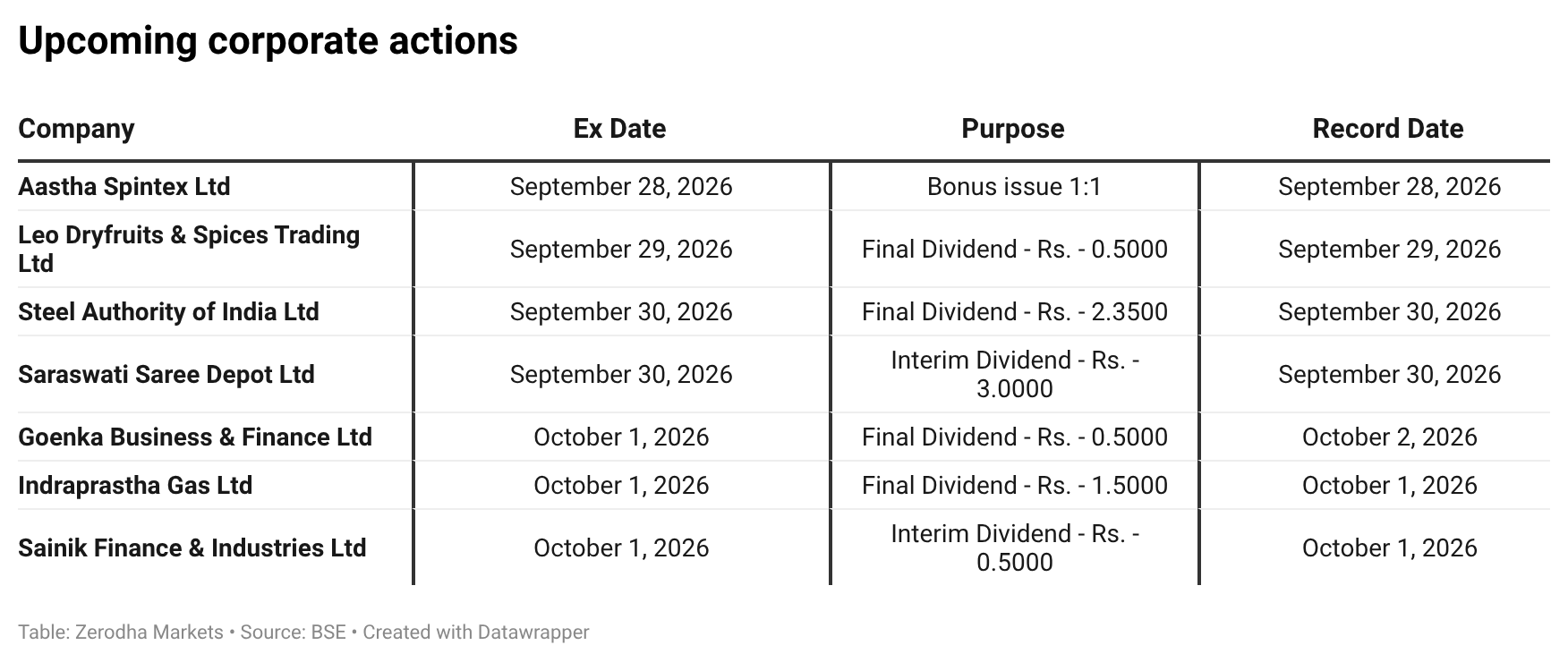
The week ahead & Corporate Actions
Corporate Actions
Published by Zerodha. Not investment advice. Data from NSE, BSE, and MCX.
In our latest episode of In The Money by Zerodha, we look at Simons’ early life, his time at MIT and Harvard, his work as a codebreaker, and how he eventually got interested in trading.
We then follow the shift from instinct-driven trading to quantitative and systematic strategies, and look at the people, data, and technology that helped build Renaissance.
We also look at how Medallion traded, why the fund became increasingly secretive, and why it eventually stopped taking outside money. Along the way, we explore some of the ideas behind quantitative trading and the people who helped shape Simons’ approach.
This is the first episode of Market Legends, a new series where we look at some of the traders, investors, and fund managers who shaped the world of markets, how they thought, how they built their edge, and what we can learn from their stories.
That’s it from us for today. We’d love to hear your feedback in the comments, and feel free to share this with your friends to spread the word!