

Welcome to Aftermarket Report, a newsletter where we do a quick daily wrap-up of what happened in the markets, both in India and globally.
In our latest episode of In The Money by Zerodha video series, we focus on how API usage in trading is evolving from a flexible system to a more structured and regulated framework.
As we approach April 2026, traders need to rethink how they build, deploy, and manage their automated strategies. API trading has long enabled a shift from manual execution to rule-based systems, but with new requirements like static IPs, order tagging, and compliance layers, the way traders interact with broker systems is changing significantly.
Instead of reacting to scattered updates, this episode breaks down the regulations in a clear and practical way. We cover where these rules come from, what exactly changes from April 1st, 2026, and how different setups like solo traders, family accounts, and third-party tools are impacted.
Market Overview
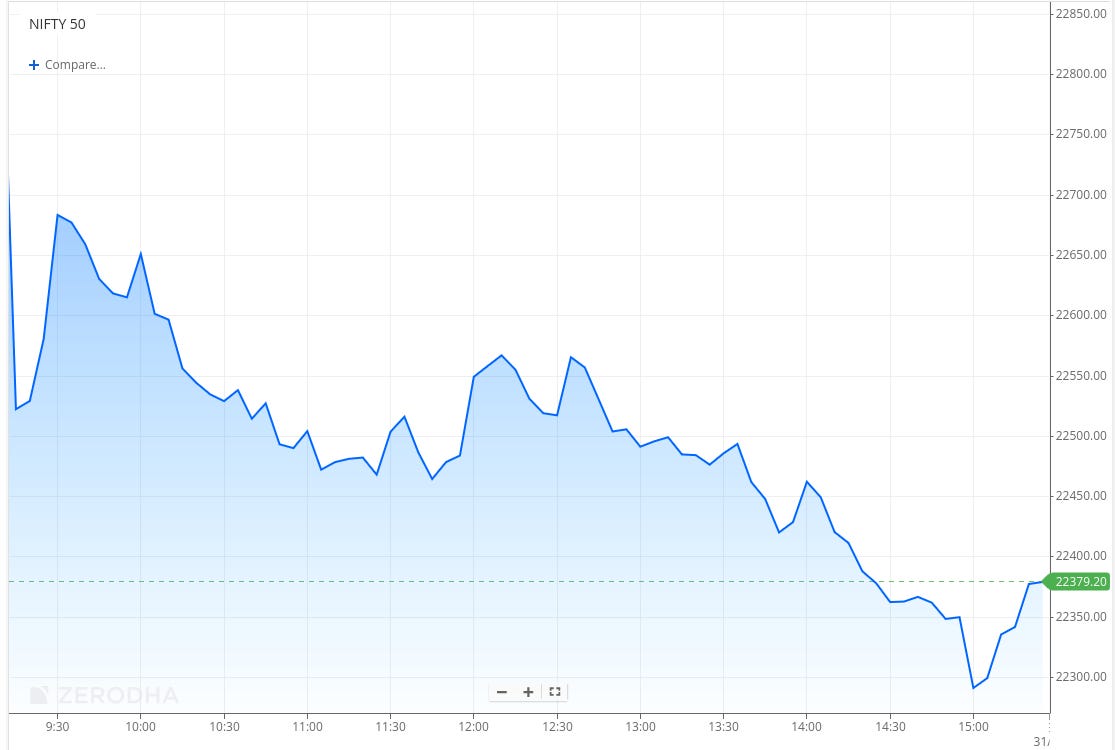
Nifty opened with a big 270-point gap-down at 22,550, tracking weak global cues and the RBI capping banks’ net open forex positions (NOP-INR) at $100 million, effective April 10, 2026, which led to pressure on banking stocks. The index attempted a brief recovery in the opening minutes, moving toward the 22,650–22,700 zone, but selling pressure quickly resumed as Nifty drifted lower, slipping below 22,500 and continuing to trend down toward the 22,450–22,470 range. The intermittent pullback till 22,600 around 12:30 PM failed to sustain, keeping the index under pressure.
In the second half, selling remained steady and intensified further, with the index breaking below 22,350 and sliding steadily toward the 22,280–22,300 zone by 3 PM.
Over the last 30 minutes, Nifty bounced off intraday lows, recovering toward the 22,350–22,370 range. Despite this late pullback, the index eventually closed at 22,331.40, marking a weak session dominated by a gap-down start and persistent selling through the day.
Looking ahead, markets are likely to remain sensitive to global geopolitical developments, risk appetite, the Rupee’s weakness, and key domestic cues.
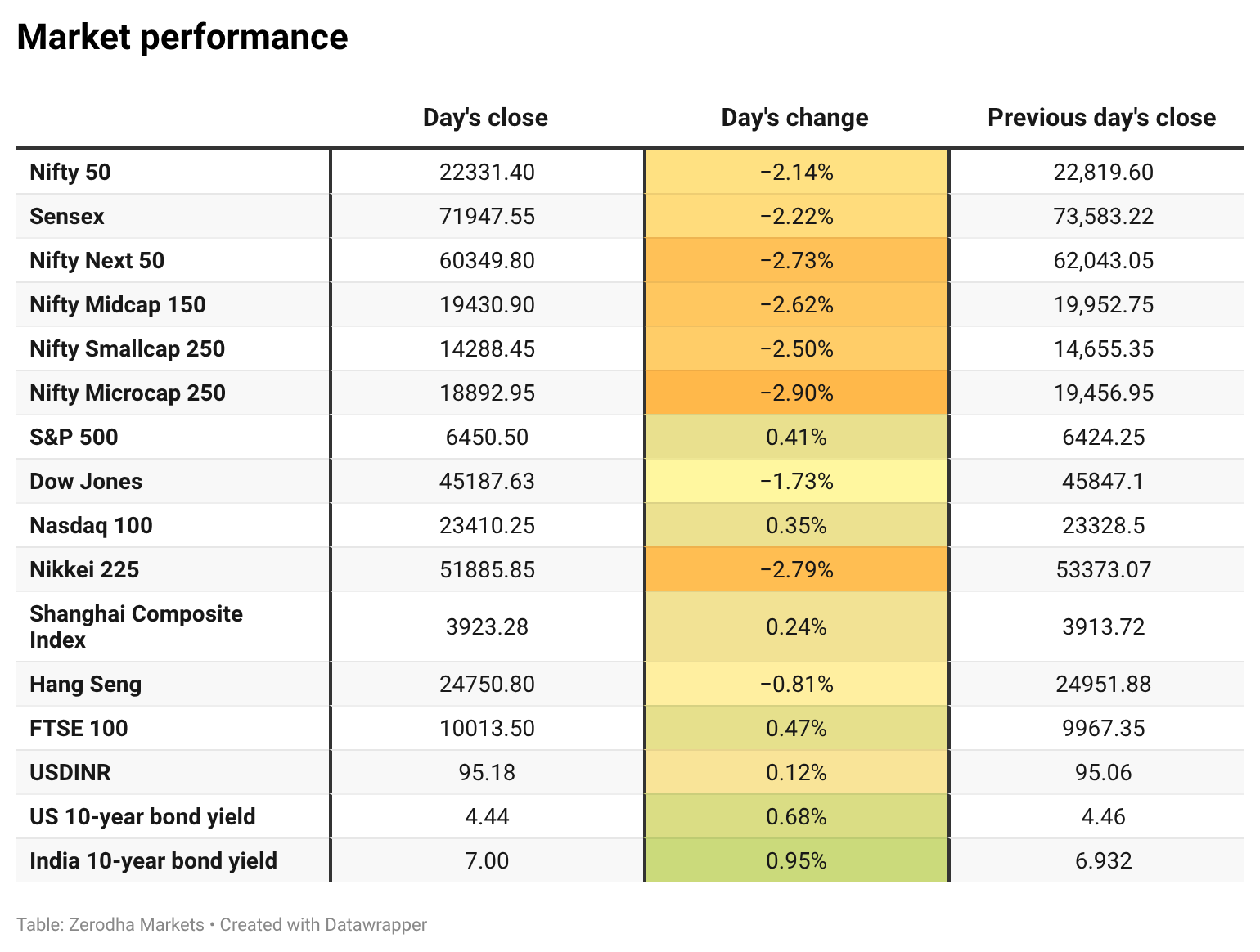
Broader Market Performance:
The broader market had an extremely weak session today. Of the 3,411 stocks that traded on the NSE, 570 advanced, 2,764 declined, and 77 remained unchanged.
Sectoral Performance:
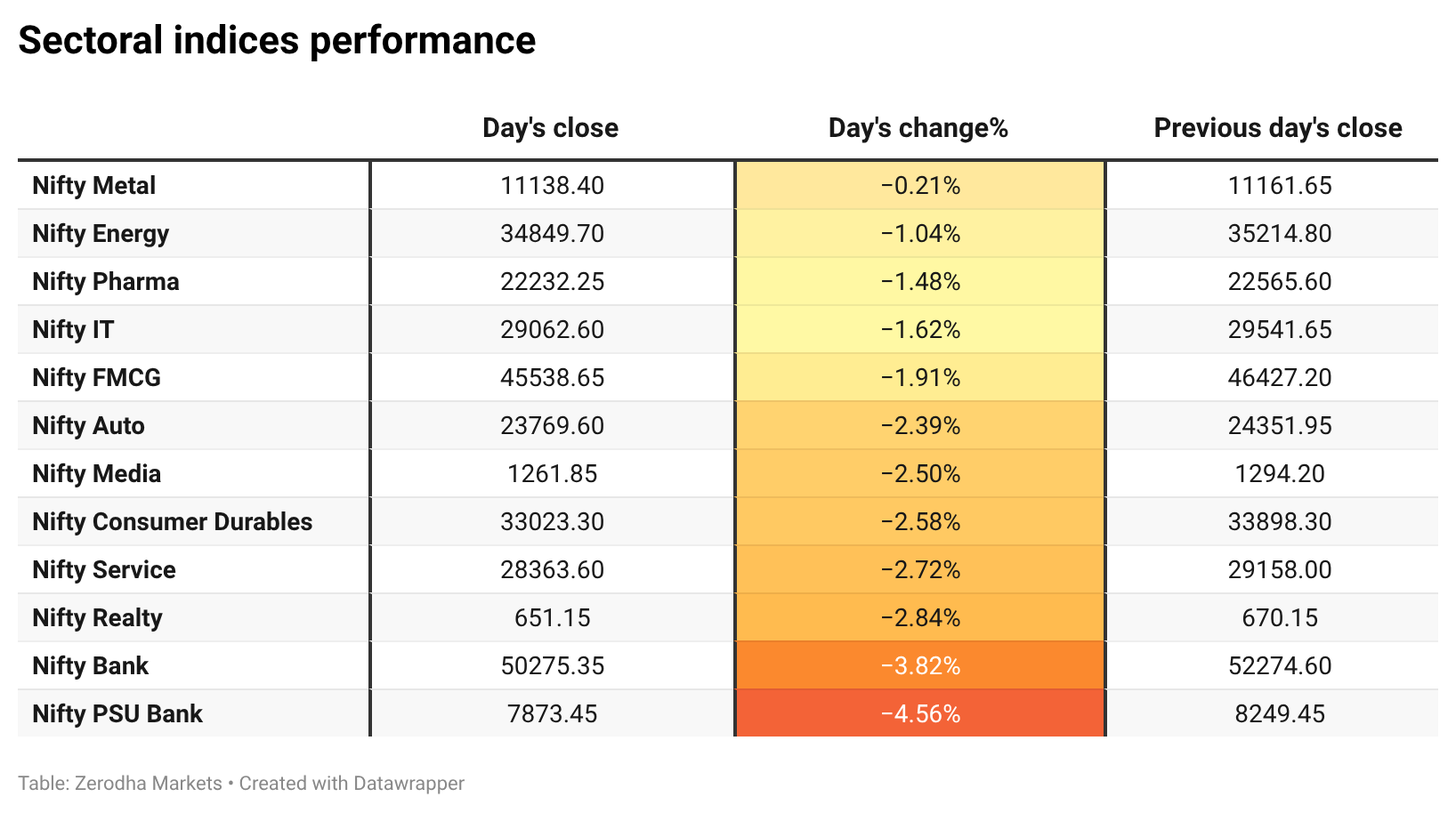
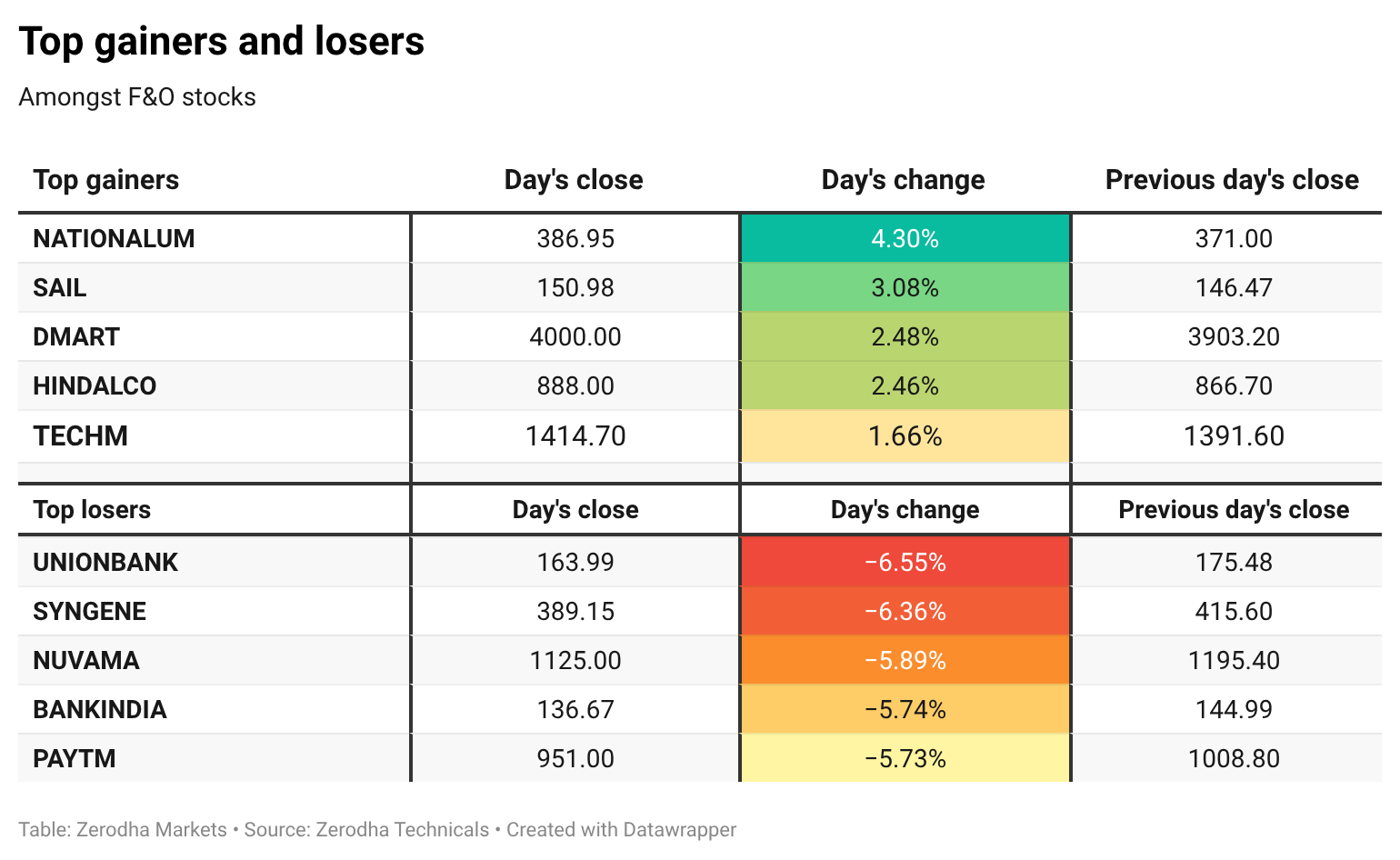
Sectoral performance was weak across the board, with no sectors closing in the green. Nifty Metal was the least negative, down 0.21%, while Nifty PSU Bank was the top loser, falling sharply by 4.56%.
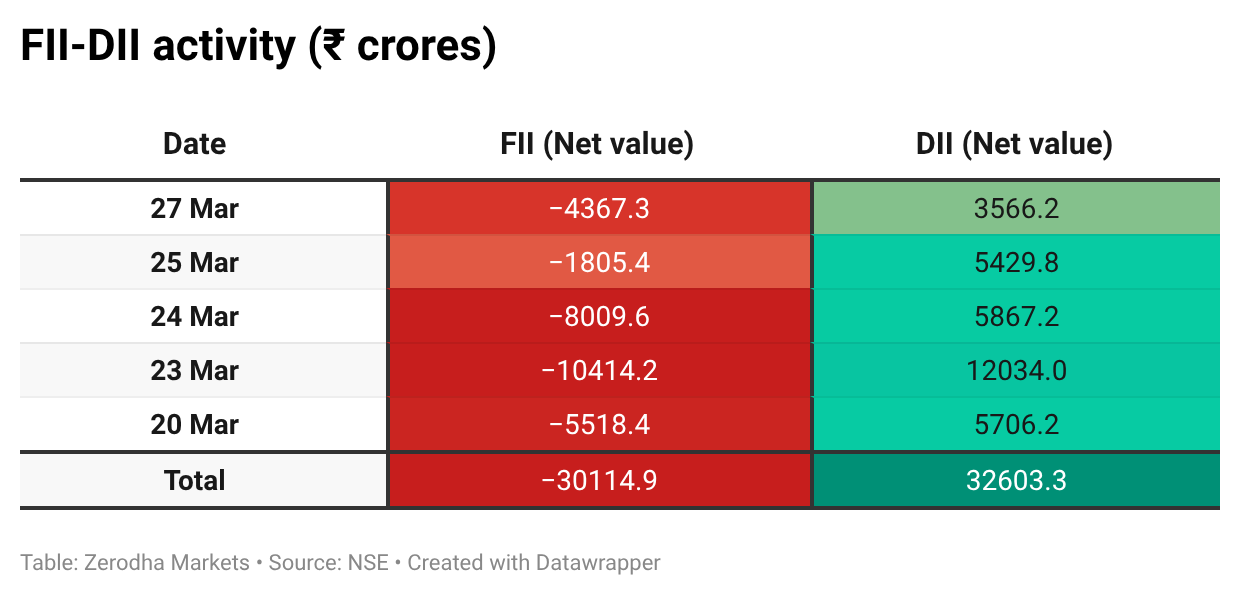
Here’s the trend of FII-DII activity from the last 5 days:
Change in OI for the day
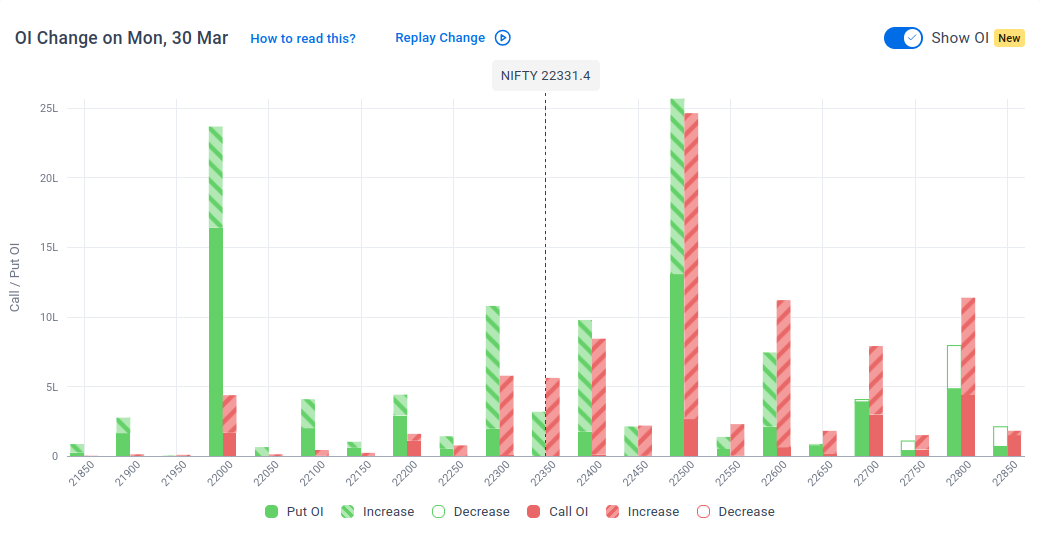
The following is the change in OI for Nifty contracts expiring on 7th April:
The maximum Call Open Interest (OI) is observed at 22,500, followed by 22,800 & 22,600, indicating potential resistance at the 22,700 -22,800 levels.
The maximum Put Open Interest (OI) is observed at 22,500, followed by 22,000, suggesting support at 22,100-22,000.
Note: OI is subject to multiple interpretations; however, generally, an increase in Call OI indicates resistance in a falling market, while an increase in Put OI indicates support in a rising market.
Source: Sensibull
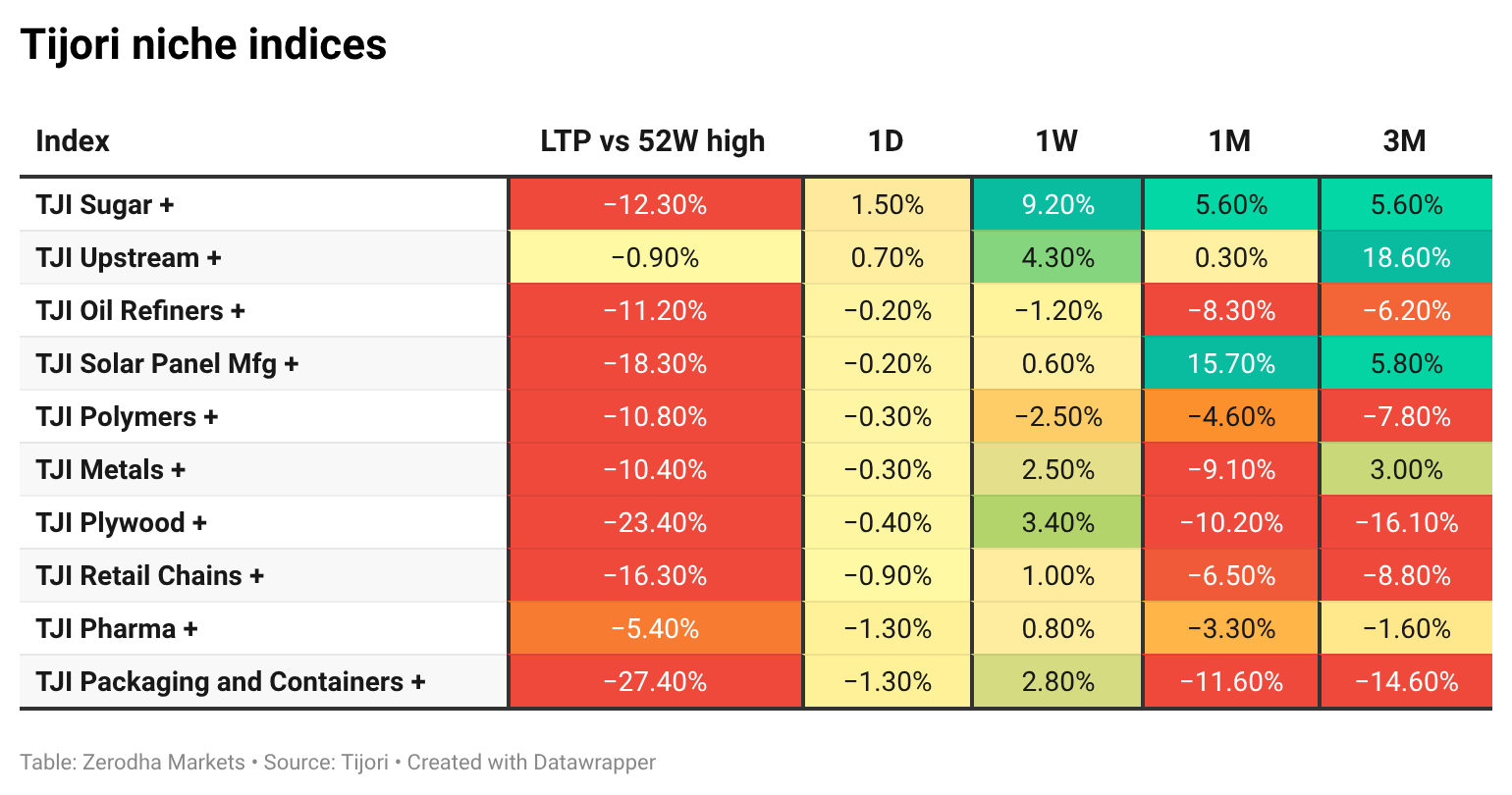
Tijori is an investment research platform that has constructed niche indices for various themes and sub-sectors. They help you understand the market performance of narrow slices of the market. You can also track the Promoter buying and other interesting stuff, like Capex activity by the companies in the Tijori App’s idea dashboard
What’s happening in India
Bank Nifty fell by nearly 4% after the RBI directed banks to cap their net open rupee positions in the foreign exchange market at $100 million by the end of each business day by April 10. Dive deeper
The rupee erased early gains and hit a record low of 95.22 intraday, pressured by rising oil prices, geopolitical tensions, and a strong dollar. Despite initial support from RBI measures, the currency fell sharply, down 160 paise from its opening level. Dive deeper
Indian bond yields surged, with the 10-year yield crossing 7% for the first time since July 2024, as fears of a prolonged Middle East conflict pressured fiscal outlook and rates. Dive deeper
India’s fiscal deficit reached 80.4% of the FY26 target at ₹12.53 lakh crore by February, lower than last year’s ₹13.46 lakh crore for the same period. Dive deeper
BHEL announced that it has secured a ₹13,500 crore order from NTPC for the main plant package of the 2,400 MW Telangana Stage-II thermal power project. Dive deeper
Industrial output growth improved to 5.2% in February from 4.8%, led by stronger manufacturing growth at 6%, despite slower mining and power output. Dive deeper
Shares of Hindalco, NALCO, and Vedanta were strong on a weak trading session as aluminium prices surged toward four-year highs after Iran-linked attacks hit Middle East smelters. Dive deeper
Jubilant FoodWorks said that it will not renew its franchise agreement to develop and operate Dunkin’ stores in India once the current pact expires at the end of 2026. Dive deeper
Coal India’s unit CMPDI listed at a 7% discount and ended the day down about 10.5%, reflecting weak investor sentiment. Dive deeper
What’s happening globally
WTI crude moved toward $100 per barrel amid escalating Middle East tensions, though gains were capped by hopes of a potential US-Iran deal. Dive deeper
Gold remained volatile around $4,600 per ounce as ongoing conflict kept safe-haven demand elevated. Dive deeper
Trump said the US is in talks with a “more reasonable regime” in Iran but warned of major strikes if the Strait of Hormuz is not reopened. Dive deeper
South Korean stocks fell nearly 3%, while the won hit a 17-year low amid fears of a widening Middle East conflict. Dive deeper
Germany’s inflation rose to 2.7% YoY in March, the highest since January 2024, driven by a sharp rebound in energy prices. Dive deeper
Management chatter
In this section, we highlight interesting comments from the management of major companies and policymakers in the Indian and Global Economies.
Uday Kotak, Founder of Kotak Mahindra Bank, on policymakers’ unconventional steps to protect the currency:
The Middle East situation is now in uncharted territory. That leads to unconventional policy actions. A move on sharp reduction of Indian banks’ open FX positions in a short period seems to be in that category. Reminds me of Bimal Jalan's playbook as RBI Governor in 1998 when the ₹ was depreciating sharply post Asian crisis. If things get worse geo-politically, is there an opportunity for a new version of the FCNR( B) scheme? - Link
🧑🏻💻Have you checked out The Chatter?
Every week, we listen to the big Indian earnings calls—Reliance, HDFC Bank, and even smaller logistics firms—and copy the full transcripts. We then remove the fluff and keep only the sentences that could move a share price: a surprise price hike, a cut-back on factory spending, a warning about weak monsoon sales, or a hint from management on RBI liquidity. We add a quick, one-line explainer and a timestamp so you can trace the quote back to the call. The whole thing lands in your inbox as one sharp page of facts you can read in three minutes—no 40-page decks, no jargon, just the hard stuff that matters for your trades and your macro view.
Go check out The Chatter here.
So, we’re now on Reddit!
We love engaging with the perspectives of readers like you. So we asked ourselves - why not make a proper free-for-all forum where people can engage with us and each other? And what’s a better, nerdier place to do that than Reddit?
So, do join us on the subreddit, chat all things markets and finance, tell us what you like about our content, and where we can improve! Here’s the link — alternatively, you can search r/marketsbyzerodha on Reddit.
See you there!
Calendars
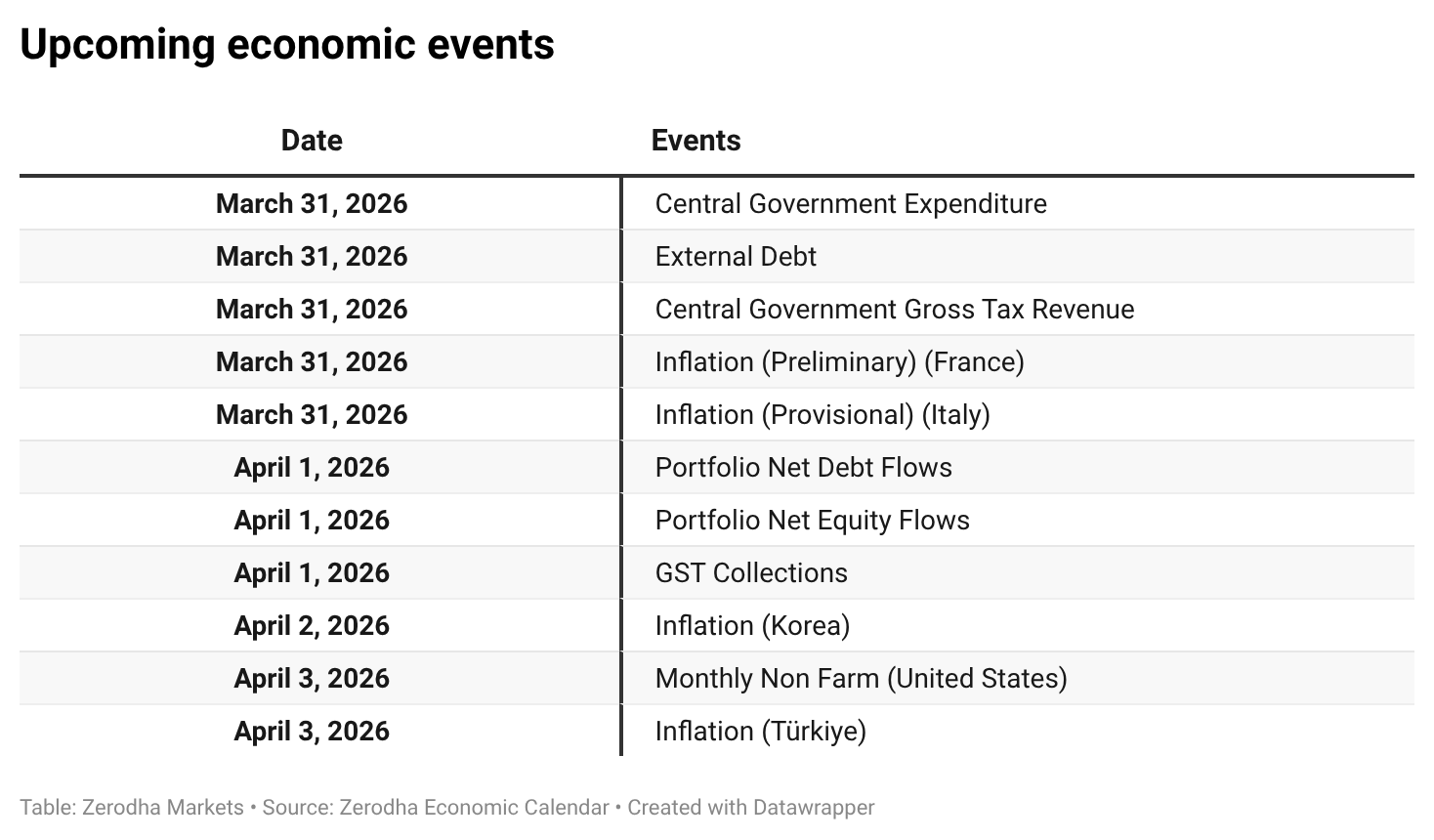
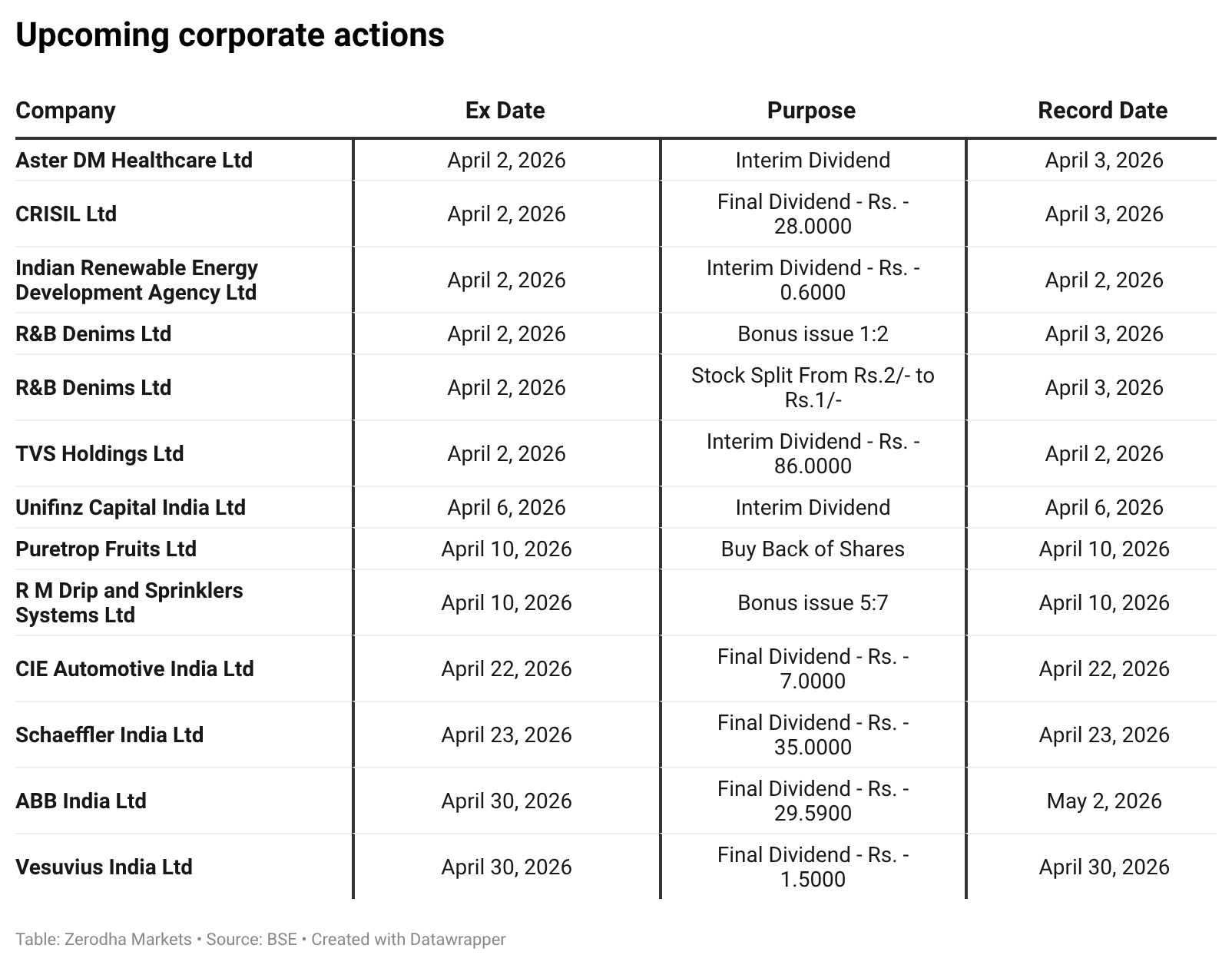
In the coming days, we have the following significant events and corporate actions:
That’s it from us for today. We’d love to hear your feedback in the comments, and feel free to share this with your friends to spread the word!