
Welcome to Aftermarket Report, a newsletter where we do a quick daily wrap-up of what happened in the markets, both in India and globally.
In our latest episode of In The Money by Zerodha, we test a popular options strategy on NIFTY: selling a straddle or strangle 45 days before expiry.
Using over seven years of data, we compare 45 DTE straddles with 30 and 16 delta strangles, and then see what happens when we add a VIX filter. The results show why collecting more premium can matter, and how higher volatility can change the performance of the strategy.
But the backtest also highlights the risks, especially gap risk, drawdowns, and the danger of using too much leverage. So, how does the 45 DTE strategy actually hold up in India? Let’s look at the data.
Markets Today
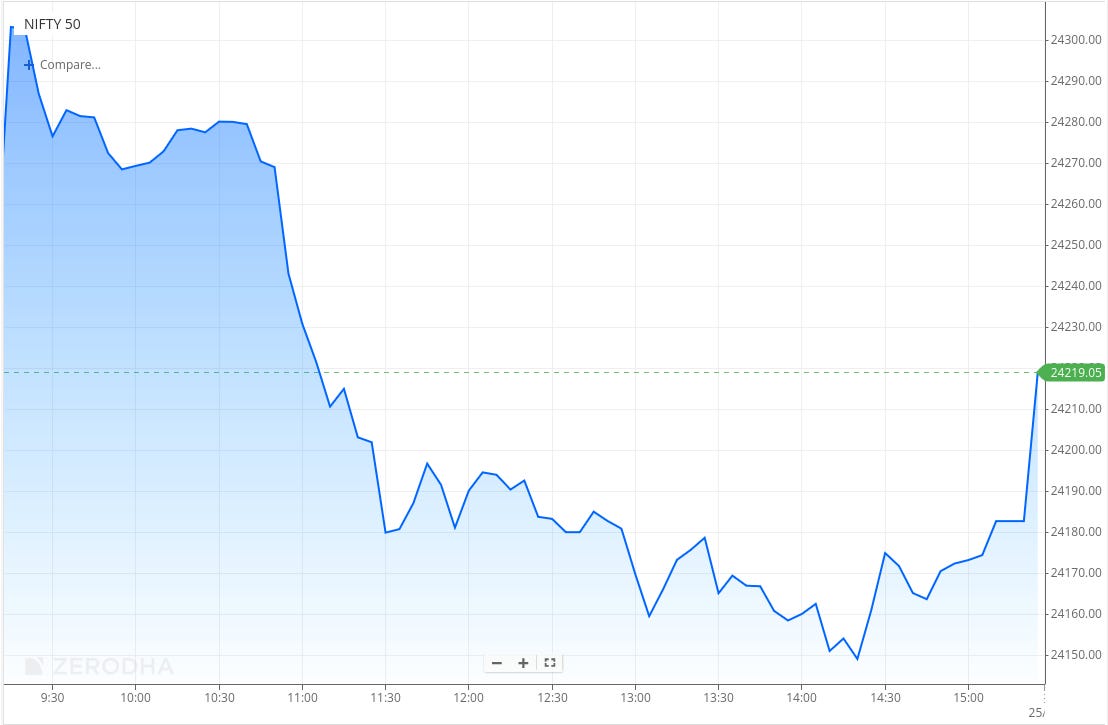
Nifty opened with a 33-point gap up at 24,285, tracking mixed global cues. The index briefly moved above 24,300 in the opening minutes, but the early gains faded quickly as Nifty slipped towards 24,275. It remained relatively stable through the first hour, largely oscillating between 24,270 and 24,285, before selling pressure intensified after 10:45 AM.
The index fell sharply below 24,250 and then 24,220, eventually reaching the 24,180 zone by around 11:30 AM. A few recovery attempts to cross 24,200 followed, but they failed to sustain, leaving Nifty near 24,180-24,190 by the end of the first half.
In the second half, weakness persisted as the index gradually drifted lower, slipping below 24,170 after 1 PM and touching an intraday low near 24,145 around 2:15 PM. Nifty attempted a modest recovery thereafter in the last hour, climbing back towards 24,175-24,180. A sharp move during the closing auction helped recover some of the losses, with Nifty eventually settling at 24,219.05, around 65 points below its opening level but nearly 75 points above the day's low.
Sectoral Indices Performance
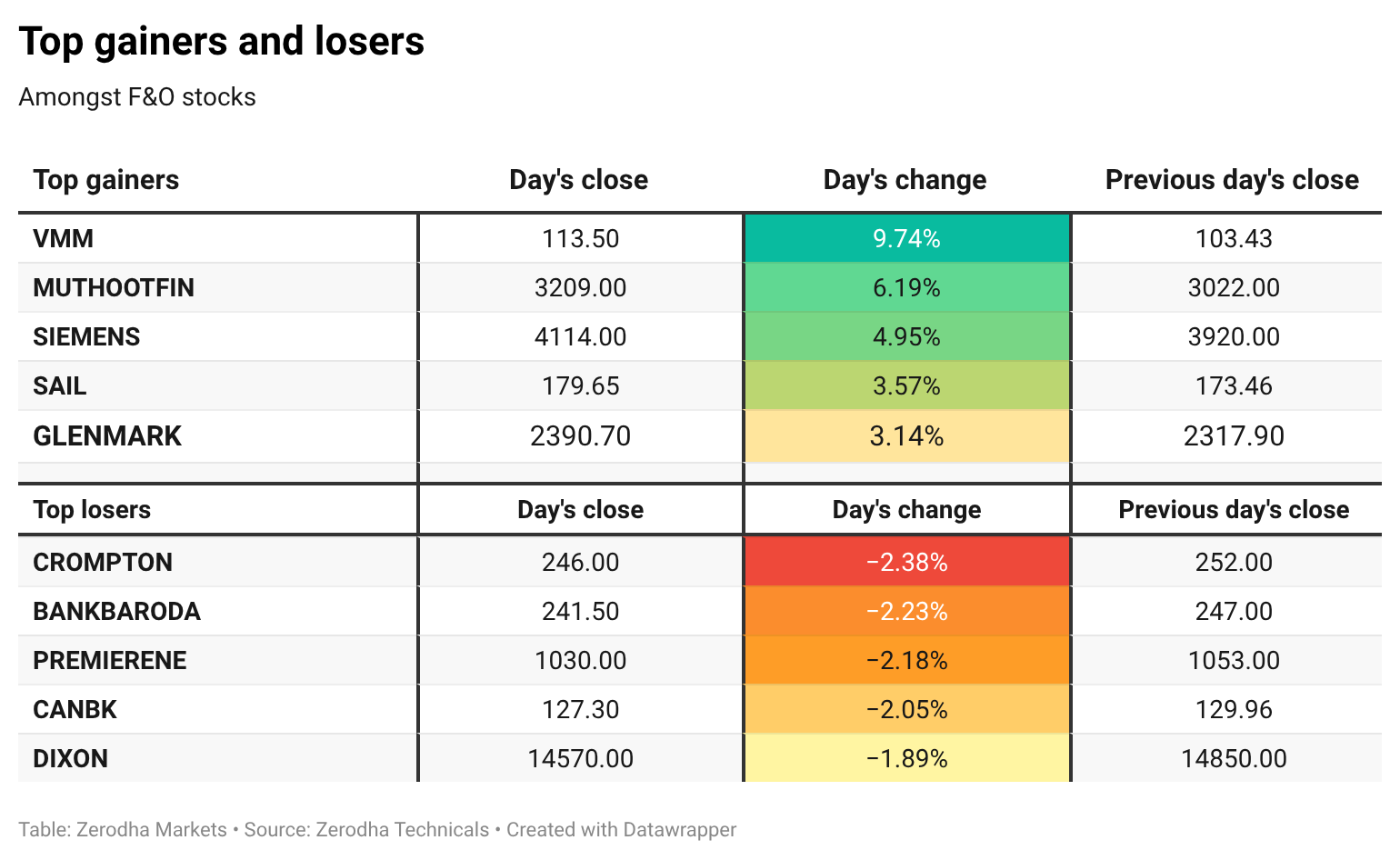
Winners & Losers
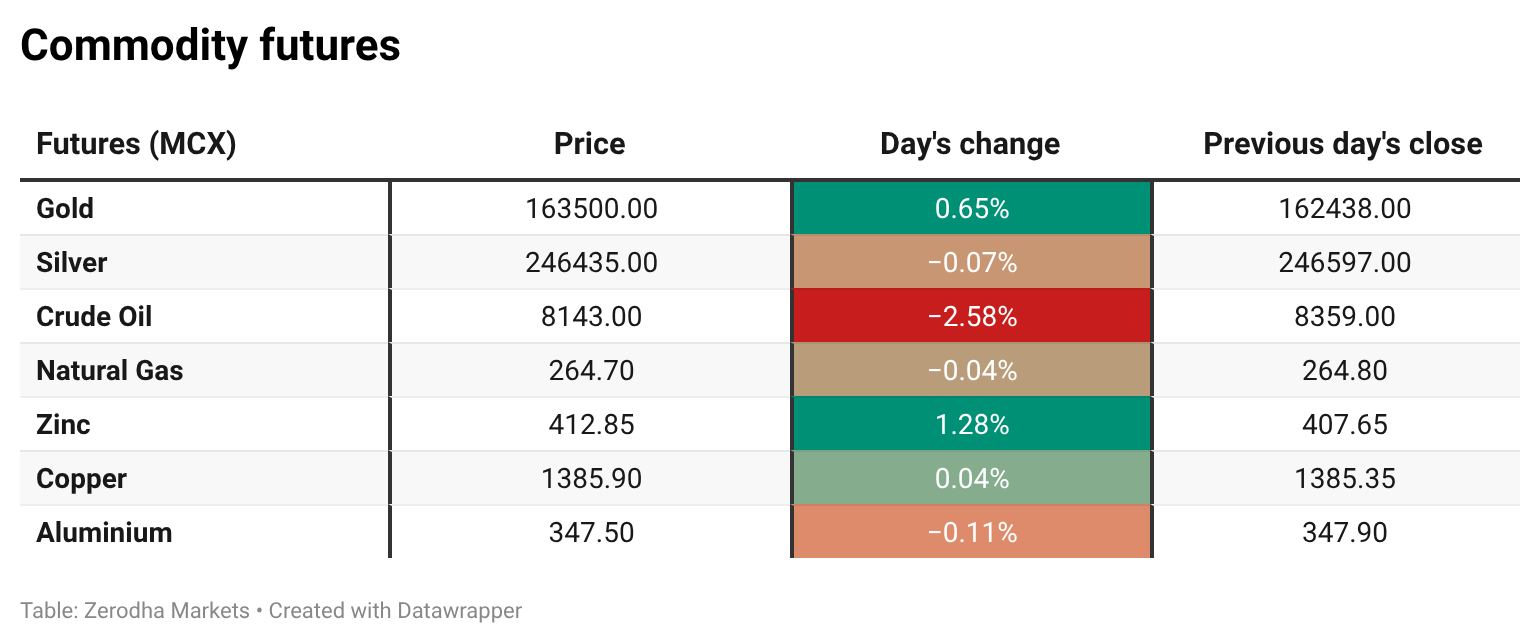
Commodities
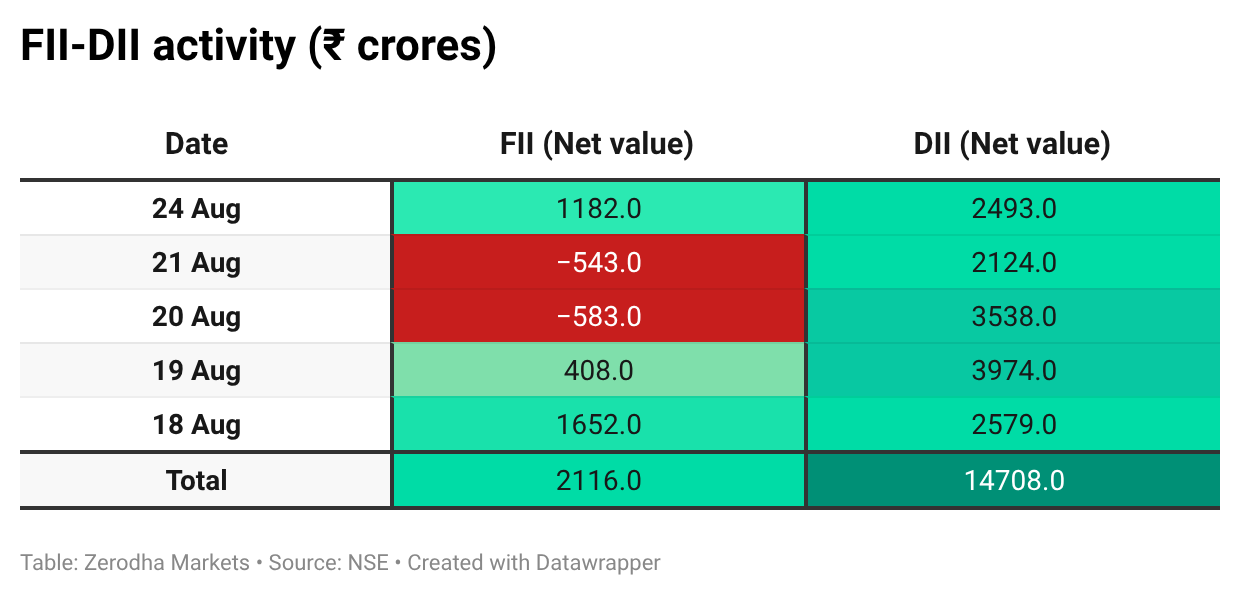
FII / DII Flows
Here’s the trend of FII-DII activity from the last 5 days:
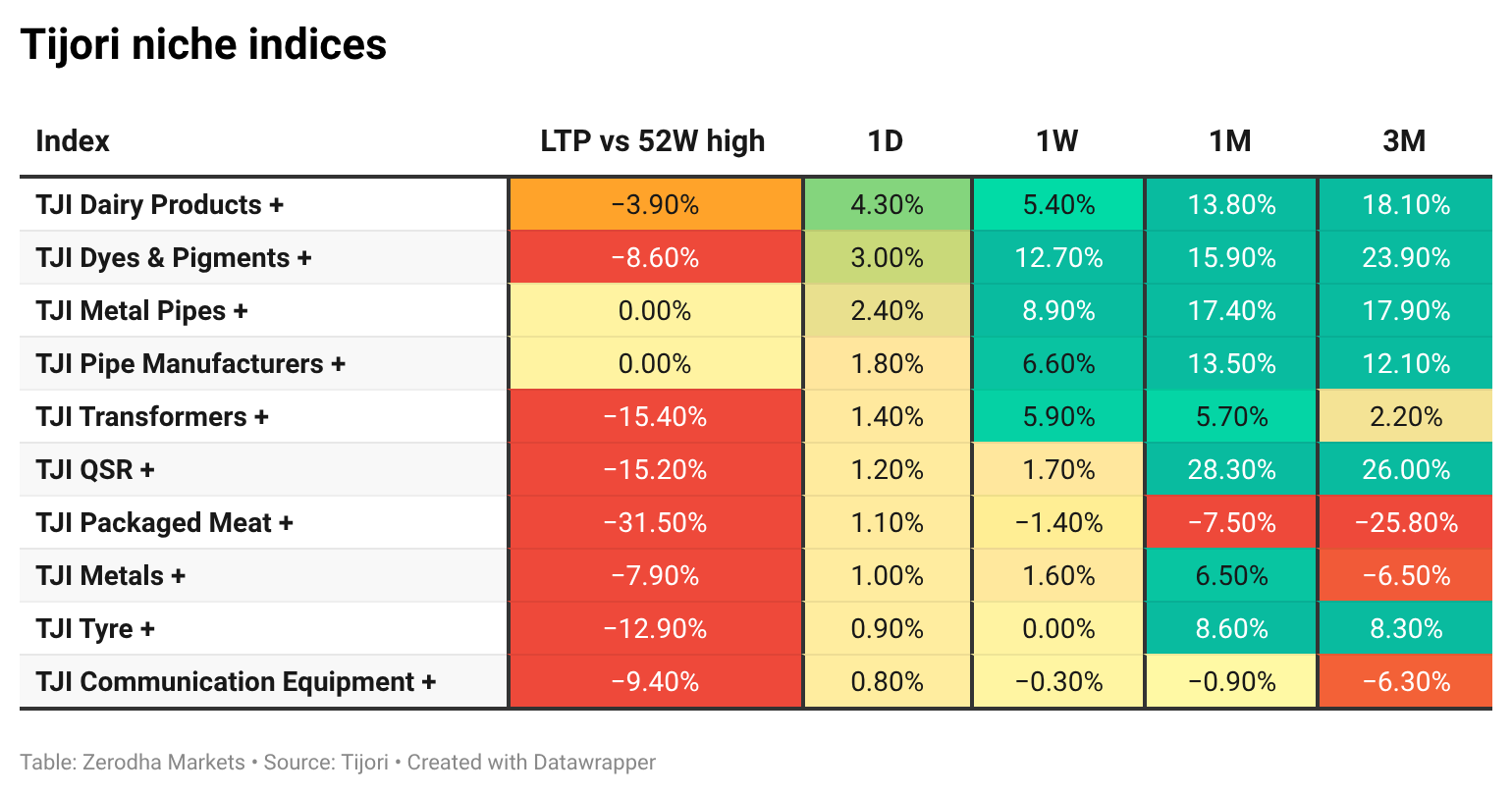
Thematic Indices
Tijori’s niche indices, where today’s move sorts pockets of the market beyond standard sector baskets. You can also track promoter buying and other interesting stuff, like Capex activity by the companies in the Tijori App’s idea dashboard
Change in OI for the day
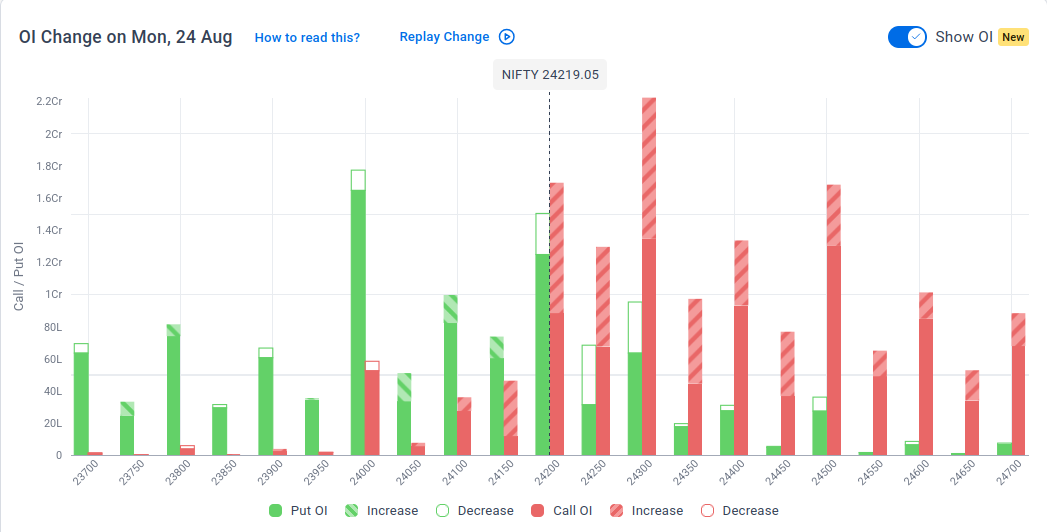
The following is the change in OI for Nifty contracts expiring on 25th August:
The maximum Call Open Interest (OI) is observed at 24,300, followed by 24,200 & 24,500, indicating potential resistance at the 24,300- 24,400 levels.
The maximum Put Open Interest (OI) is observed at 24,000, followed by 24,200, suggesting support at 24,100-24,000.
Note: OI is subject to multiple interpretations; however, generally, an increase in Call OI indicates resistance in a falling market, while an increase in Put OI indicates support in a rising market.
Source: Sensibull

Top Stories in India
India’s monsoon situation has improved significantly, with the cumulative rainfall deficit narrowing from 35% in mid-June to 12.6% by August 19, according to Macquarie. Kharif sowing has also recovered sharply, with total acreage just 2% below last year as of August 14, compared with a 21% shortfall in late June, easing concerns over widespread crop disruption despite rainfall distribution remaining a key risk. Dive deeper
Indian Government has lifted its years-long ban on wheat exports, allowing overseas shipments of wheat, including durum varieties, as well as flour and other wheat products. The move could help ease global supply pressures at a time when escalating Russia-Ukraine attacks are disrupting Black Sea grain shipments and have pushed global wheat prices to a two-year high. Dive deeper
Indian Hotels Company (IHCL) will merge associate company Oriental Hotels through an all-stock transaction, with shareholders receiving 25 IHCL shares for every 117 Oriental Hotels shares. The merger, targeted for completion in the second half of FY28, will bring Oriental Hotels’ portfolio of seven hotels with 825 rooms directly under IHCL. Dive deeper
India’s equity capital market is on track for its best month on record, with nearly $10 billion of deals priced in August, despite weakness in the broader stock market. Activity has been led by the government’s $3.2 billion LIC share sale and Manipal Health’s roughly $960 million IPO, alongside block deals and institutional placements. Strong domestic mutual fund and insurer liquidity, retail participation and returning foreign investors have helped the market absorb the surge in new equity supply. Dive deeper
Lalithaa Jewellery Mart made a strong stock market debut, listing at ₹265 per share on the NSE, a nearly 32% premium to its ₹201 IPO price, after the issue was subscribed 62.97 times. The stock, however, gave up some of its listing gains and ended its debut session at around ₹248, still roughly 23% above the issue price. Dive deeper
Tata Capital has signed an MoU with Japan’s Resona Bank to explore business-matching and financing opportunities in India, particularly for Japanese companies looking to enter or expand in the country. The partnership follows Resona Bank’s $20 million investment in Tata Capital Growth Fund III, further strengthening ties between the two financial institutions. Dive deeper
Top Stories Globally
Brent crude fell to around $93 per barrel as investors booked profits after last week’s sharp rally and awaited details of tougher U.S. sanctions on Iran. Treasury Secretary Scott Bessent has described the measures as the “toughest” sanctions in history, with the potential to further disrupt Iranian oil exports and Middle Eastern energy supplies, keeping geopolitical risks elevated despite the pullback in prices. Dive deeper
Gold rose nearly 1% to above $4,650 per ounce, its highest level in more than three months, supported by a weaker U.S. dollar. Bullion extended momentum after gaining over 5% last week following the U.S. Treasury’s expanded bond-buyback plan, while investors now await U.S. inflation data and Fed Chair Kevin Warsh’s comments for clues on the interest-rate outlook. Dive deeper
The U.S. dollar hovered near three-month lows near 98.8, as the Treasury’s decision to double long-dated bond buybacks to at least $4 billion per operation raised concerns over debt and policy credibility. Traders are also awaiting details of fresh U.S. sanctions on Iran and key policy speeches from the Federal Reserve and Bank of Japan later this week. Dive deeper
Alibaba shares fell as much as 10% in Hong Kong after the company completed a $10.2 billion share placement to fund its AI expansion and infrastructure investments. The shares were issued at HK$112.70 apiece, an 8.4% discount to Friday’s close, raising concerns over dilution and returns from heavy AI spending. The deal is the largest-ever primary follow-on offering by a Hong Kong-listed company. Dive deeper
Nvidia AI server prices are reportedly set to rise by more than 15% in many cases for systems shipped from early 2027, as soaring memory chip costs push up hardware expenses. The increases will affect systems using flagship Vera Rubin and Grace Blackwell chips, with major data-centre customers including Microsoft, Google and Oracle being notified by server manufacturers. Nvidia has not publicly confirmed the reported increases. Dive deeper
Canada will impose “dollar-for-dollar” retaliatory tariffs on U.S. goods from September 8, targeting sectors including steel, dairy, electronics, appliances and agricultural equipment. Dive deeper
Management Chatter
In this section, we highlight interesting comments from management at major companies and from policymakers in the Indian and Global Economies.
Kumar Rajagopalan, ED and CEO, Retailers’ Association of India on recovery in demand momentum from retailers driven by need-based purchases:
“July gave us two confirmations at once: topline growth held up, and genuine store-level demand, which had softened through the summer, came back with it. That matters heading into the festive season, because big-ticket purchases are the ones festive buying tends to unlock. The base retailers are working from this year is stronger than it was in April or May. Retailers are entering the festive season with with optimism, anticipating stronger consumer demand” - Link
Management of Man Infra says rising construction costs are one reason it believes developers will ultimately have to pass higher costs on to customers:
Due to the war situation, marble prices have increased, tile prices have increased, and steel prices have increased. Every raw material is increasing by 18% to 15%. Where will the margins come from? The increase will be added to the price. Sooner or later, every developer will have to adopt this approach unless the developer does not wish to make good money.
Therefore, I do not see prices reversing from here. I see prices either moving upward or stabilizing at their current levels.” - Link
Corporate Actions & Events
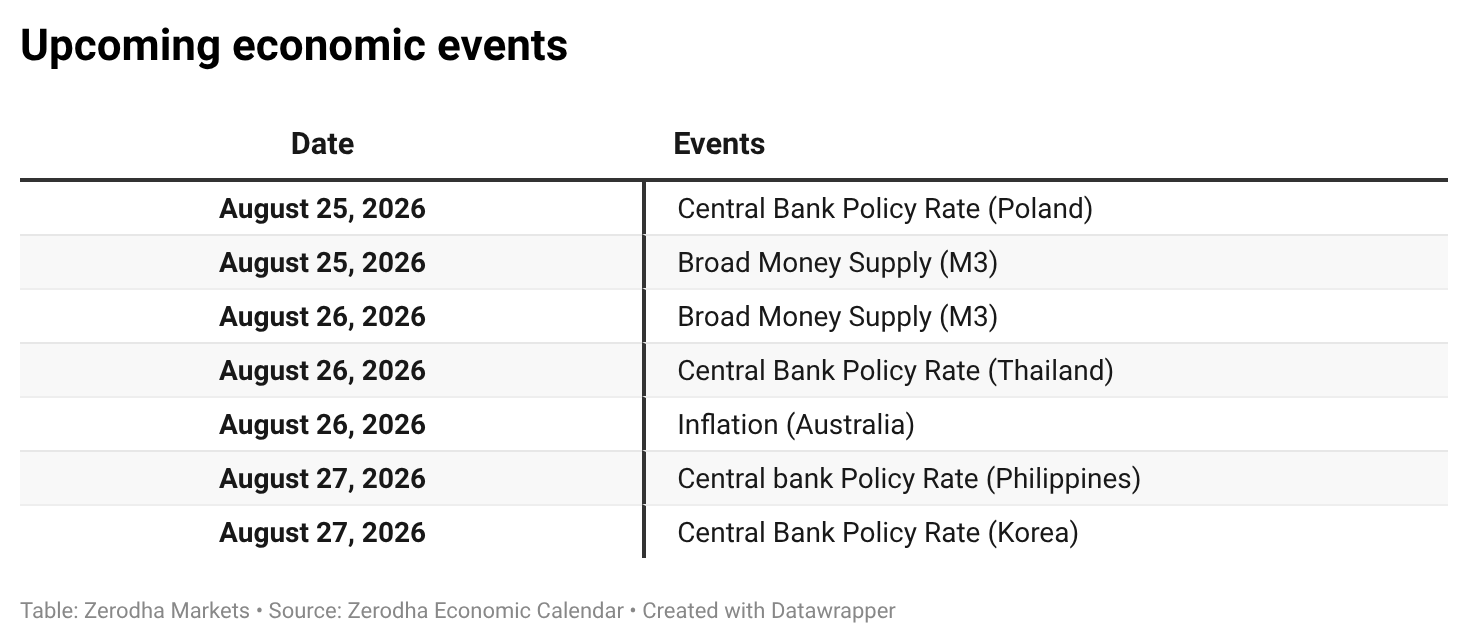
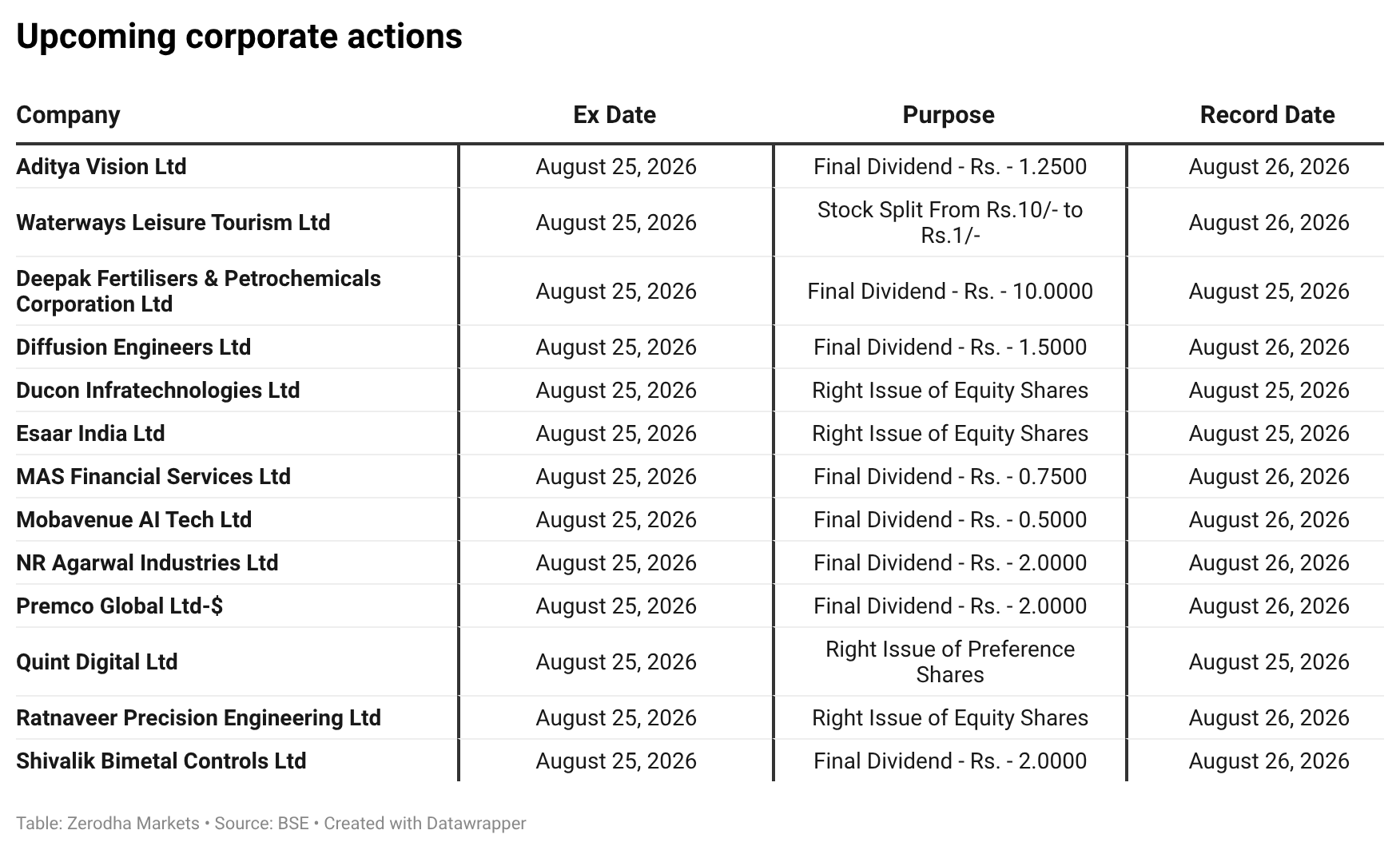
Corporate Actions
Published by Zerodha. Not investment advice. Data from NSE, BSE, and MCX.
That’s it from us for today. We’d love to hear your feedback in the comments, and feel free to share this with your friends to spread the word!