
Welcome to Aftermarket Report, a newsletter where we do a quick daily wrap-up of what happened in the markets, both in India and globally.
In our latest episode of In The Money by Zerodha, we go back to where it all begins: the IPO. Starting with a personal story of a Reliance Power allotment in 2008, we break down how the IPO process really works, from the DRHP and book building to ASBA, while explaining why retail investors are often at a structural disadvantage. Along the way, we unpack concepts like the winner’s curse and how IPOs often serve as exit liquidity for existing investors.
Looking at data from over 400 main board IPOs since 2020, we find that while nearly seven out of ten IPOs delivered listing gains, the picture changes dramatically for those buying after listing. Some of the biggest IPO disappointments have erased 70–99% of investor wealth.
The key takeaway: don’t treat IPOs like lottery tickets; evaluate them as businesses, not just opportunities to sell to someone else after the initial hype.
Markets Today
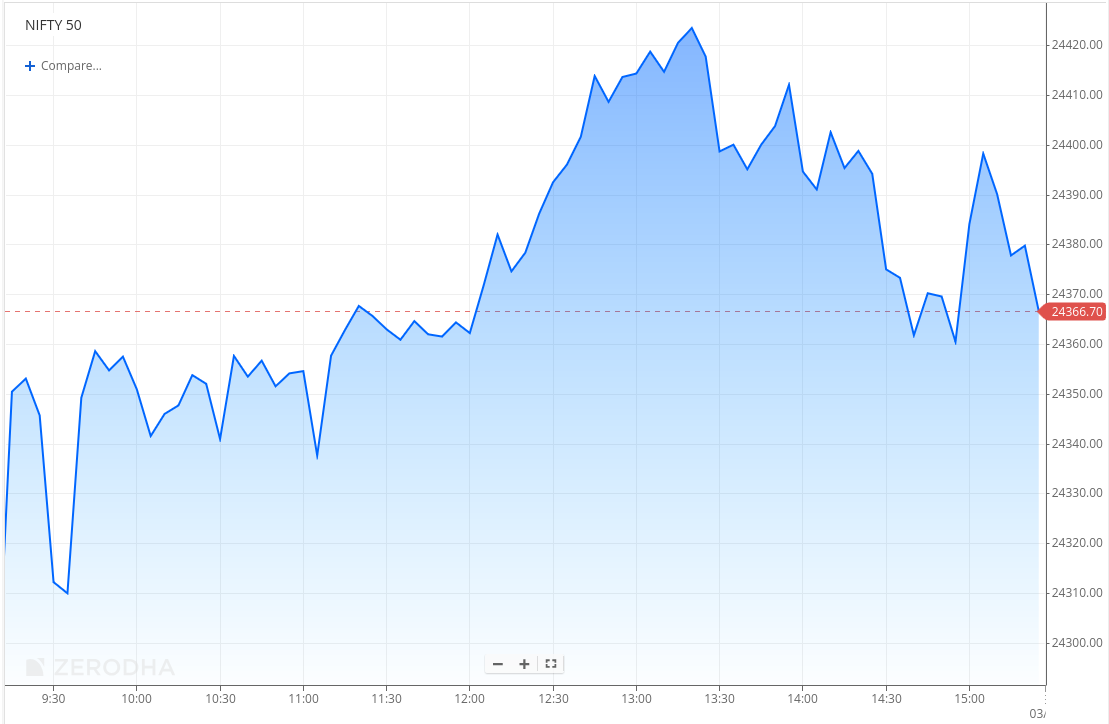
Nifty opened with a 44-point gap-up at 24,361, tracking positive global cues as AI-related chip stocks staged a sharp rebound overnight. After an initial dip towards 24,300 in the opening minutes, the index recovered quickly and traded in a narrow range around 24,340–24,360 through the first hour.
Buying momentum picked up towards late morning, helping Nifty gradually move higher and end the first half near 24,370. In the second half, the rally gathered pace as the index climbed steadily, crossing the 24,400 mark and touching an intraday high near 24,430 around 1:30 PM.
However, profit booking emerged thereafter, pulling the index lower through the final two hours of trade. Despite a brief rebound till 24,400 around 3 PM, the gains could not be sustained, and Nifty eventually closed at 24,383.60, giving up some of its intraday gains but still ending marginally above its opening level.
Sectoral Indices Performance
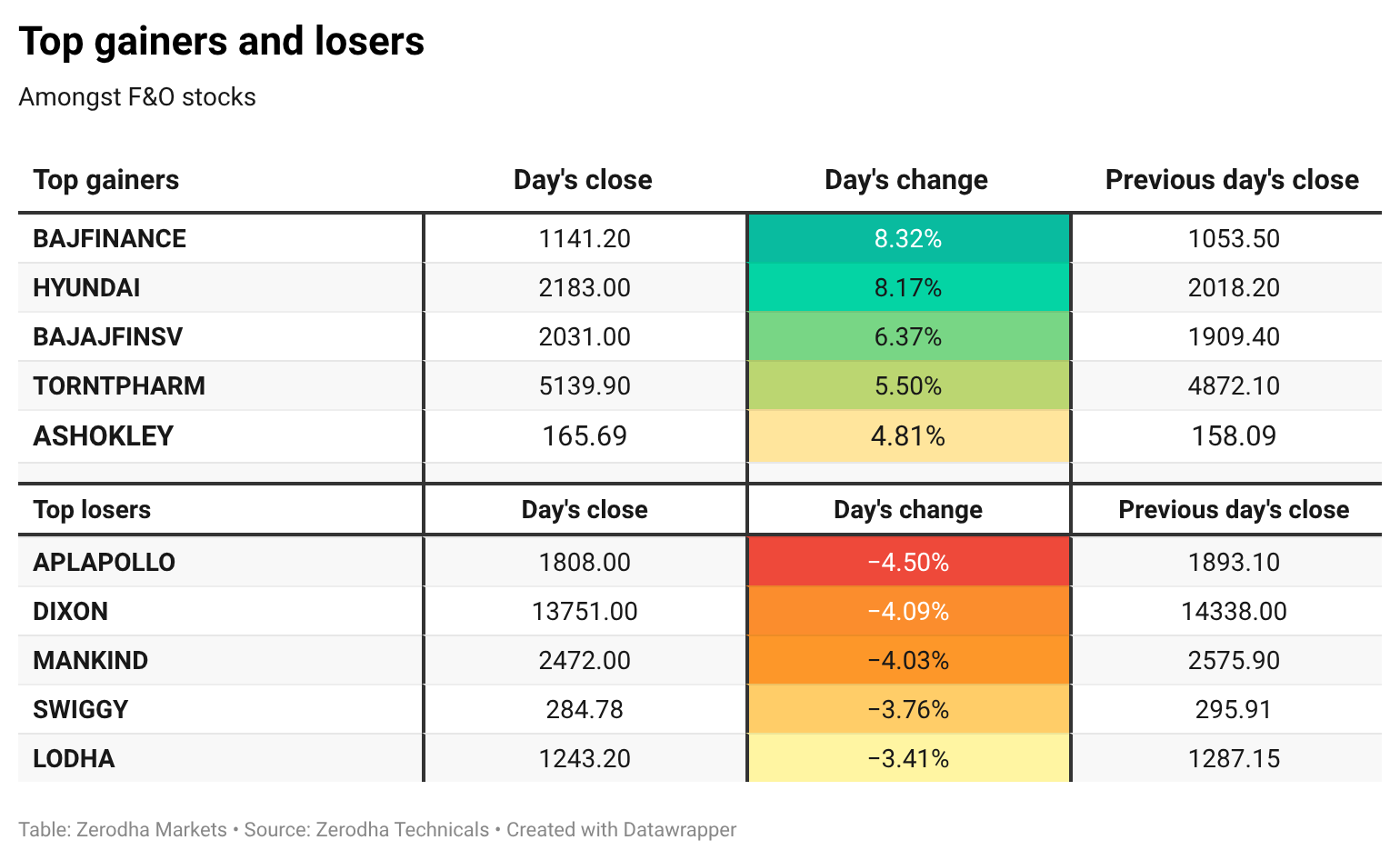
Winners & Losers
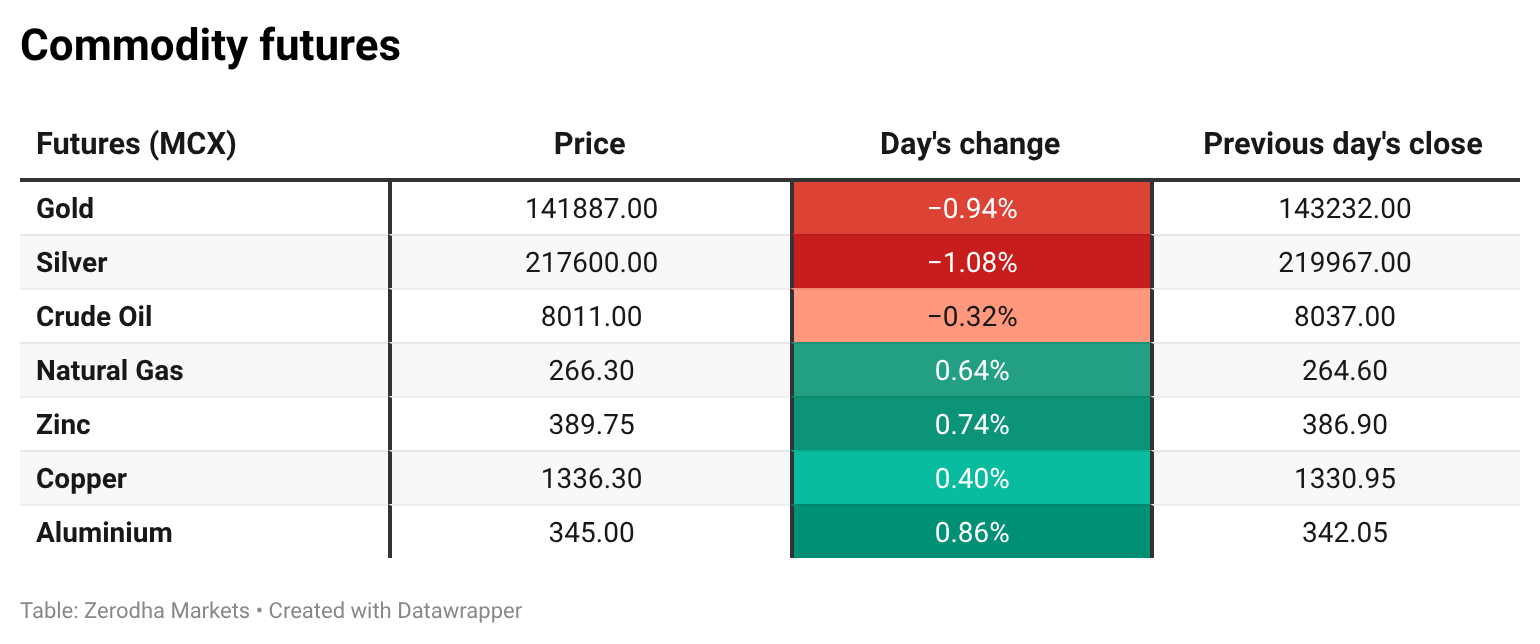
Commodities
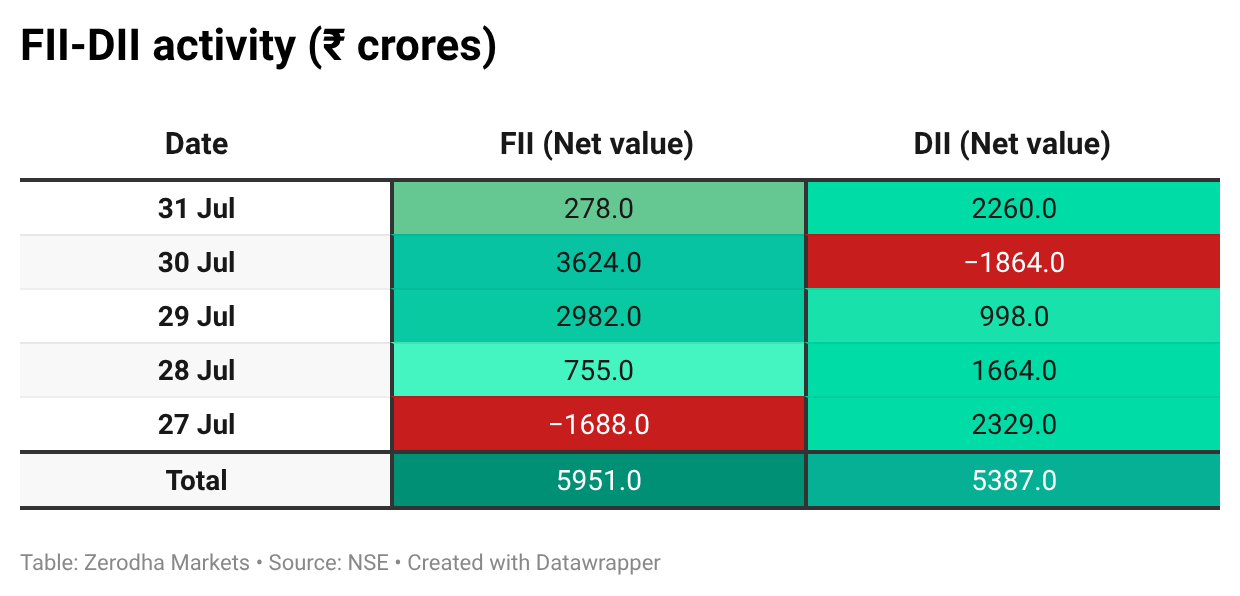
FII / DII Flows
Here’s the trend of FII-DII activity from the last 5 days:
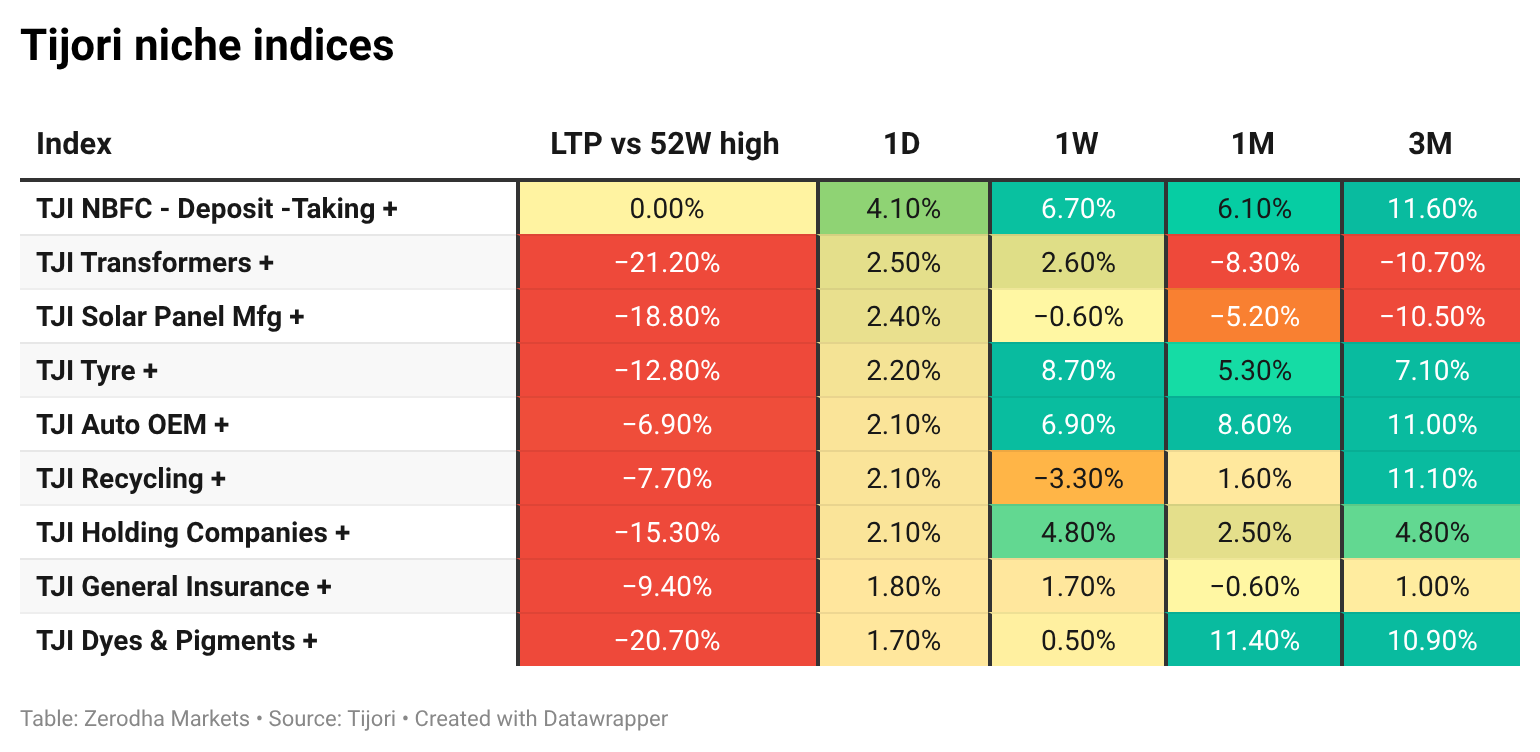
Thematic Indices
Tijori’s niche indices, where today’s move sorts pockets of the market beyond standard sector baskets. You can also track promoter buying and other interesting stuff, like Capex activity by the companies in the Tijori App’s idea dashboard
Change in OI for the day
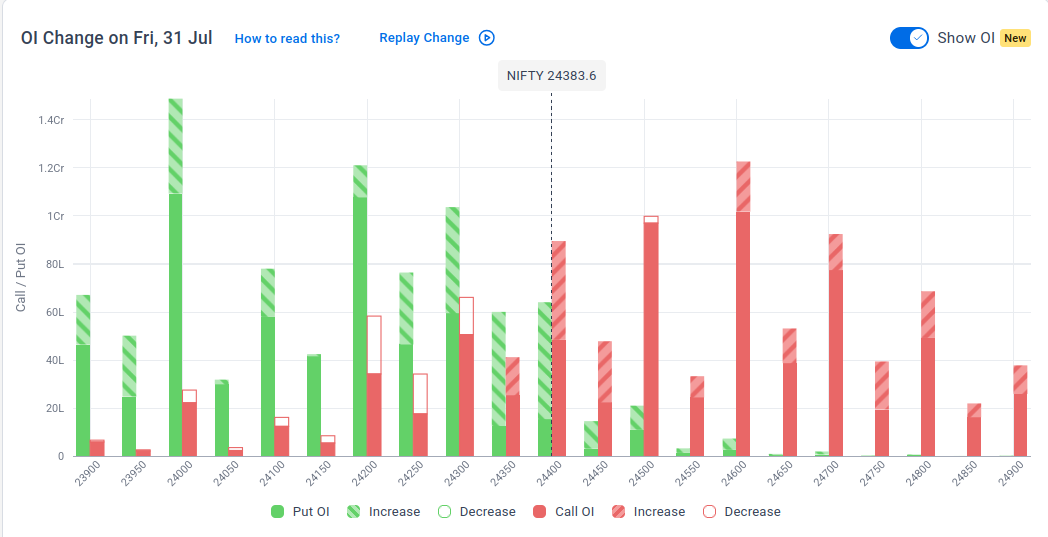
The following is the change in OI for Nifty contracts expiring on 4th August:
The maximum Call Open Interest (OI) is observed at 24,600, followed by 24,500, indicating potential resistance at the 24,500 -24,600 levels.
The maximum Put Open Interest (OI) is observed at 24,000, followed by 24,200, suggesting support at 24,200-24,100.
Note: OI is subject to multiple interpretations; however, generally, an increase in Call OI indicates resistance in a falling market, while an increase in Put OI indicates support in a rising market.
Source: Sensibull

Top Stories in India
India’s fiscal deficit stood at ₹3.08 lakh crore at the end of June, accounting for 18.2% of the FY27 full-year target, slightly higher than 17.9% a year ago. The deficit nearly doubled from May on a month-on-month basis, rising from ₹1.62 lakh crore (9.6% of the annual target). Dive deeper
India’s crude oil import bill surged to a record $49.66 billion in Q1 FY27, up 61% YoY, as the prolonged Middle East conflict drove oil prices sharply higher. Despite importing a similar volume of 60.48 million tonnes, the higher crude prices and a weaker rupee significantly increased the value of imports. Dive deeper
Sun Pharmaceutical Industries reported a 27% YoY increase in Q1FY27 net profit to ₹2,895 crore, while adjusted net profit rose 3.1% to ₹3,089 crore. Revenue increased 10.5% YoY to ₹15,300 crore, and EBITDA grew 2.7% to ₹4,418 crore, supported by steady sales growth. Dive deeper
ITC reported a 27% YoY decline in Q1FY27 net profit to ₹3,579 crore, while revenue fell 14.5% YoY to ₹16,907 crore. The company attributed the weak performance to the West Asia conflict, which led to higher crude-linked input costs and significant trade and supply chain disruptions. Dive deeper
Maruti Suzuki reported a 10.8% YoY decline in Q1FY27 net profit to ₹3,352 crore, despite revenue rising 35.9% YoY to ₹52,456 crore. Profitability came under pressure as EBITDA fell 14.5% and EBITDA margin narrowed to 8.2% from 13.1%, with a 46% surge in material costs offsetting strong sales growth. Dive deeper
The Union Cabinet approved ‘Samudra Manthan’, an ₹84,084-crore National Offshore Exploration Scheme aimed at boosting offshore oil and gas exploration and reducing India’s dependence on energy imports through FY2030-31 to strengthen domestic exploration, expand production, and develop an integrated offshore energy ecosystem. Dive deeper
The Union Cabinet approved the Pradhan Mantri Surya Sarovar Yojana (PM-SSY), a ₹5,070-crore scheme to develop 5,000 MW of floating solar capacity with 10,000 MWh of integrated battery storage. The projects will be sanctioned between FY27 and FY31, with financial assistance continuing until FY33. Dive deeper
Dixon Technologies reported a nearly three-fold jump in Q1FY27 consolidated net profit to ₹663 crore, while revenue rose 21% YoY to ₹15,548 crore, driven by continued strength in its electronics manufacturing business. Dive deeper
Top Stories Globally
Brent crude climbed above $88 per barrel, putting it on track for a more than 20% monthly gain, as escalating U.S.-Iran tensions renewed fears of disruptions to Middle Eastern oil supplies. Prices remained elevated despite an improvement in tanker traffic through the Strait of Hormuz, which allowed millions of barrels of crude to continue flowing through the key shipping route. Dive deeper
Apple shares fell 7% in pre-market trading after the company issued a weaker-than-expected forecast, citing AI-driven data centre demand that has tightened component supplies. If losses hold, Apple could lose more than $360 billion in market value, potentially handing back the title of the world’s most valuable company to Nvidia. Dive deeper
MediaTek approved a $5 billion discretionary financing budget to support its long-term growth strategy, including its expansion into AI chips for data centres. The move underscores the company’s efforts to diversify beyond smartphones and become a key supplier of custom AI chips (ASICs) to major cloud providers. Dive deeper
Linde said it has secured a long-term agreement to supply ultra-high-purity industrial gases to one of the world’s largest semiconductor manufacturers and will invest about $1 billion in Arizona to support the project. Dive deeper
Chevron reported adjusted Q2 earnings of $12 billion ($6.06 per share), surpassing analyst estimates and marking its highest quarterly profit in at least six years, as elevated oil prices driven by the U.S.-Israel-Iran conflict boosted earnings. The company’s shares rose about 2% in pre-market trading. Dive deeper
The South Korean won strengthened to around 1,435 per U.S. dollar, gaining more than 8% in July, its strongest monthly performance since March 2009. Reports of official dollar-selling intervention drove the rally. Dive deeper
Management Chatter
In this section, we highlight interesting comments from management at major companies and from policymakers in the Indian and Global Economies.
Brajesh Kumar Singh, MD & CEO of Canara Bank on sectors driving fresh corporate credit demand:
Our sanctioned and sanctionable pipeline is close to ₹50,000 crore across around 100 accounts. We are seeing encouraging demand from battery energy storage, power evacuation infrastructure, green energy projects and data centres. These are largely new-age investment opportunities where companies are investing equity and seeking debt funding for expansion. - Link
Rohit Jain, Deputy Governor, RBI believes that robust financial infrastructure must be established in advance of economic growth rather than as a reaction to it:
“In sum, the financial markets required by a developed economy must be built before the economy reaches developed status—not afterwards. This will require more than an increase in issuance or trading volumes. It brings me to my second proposition: moving from scale to depth.” - Link
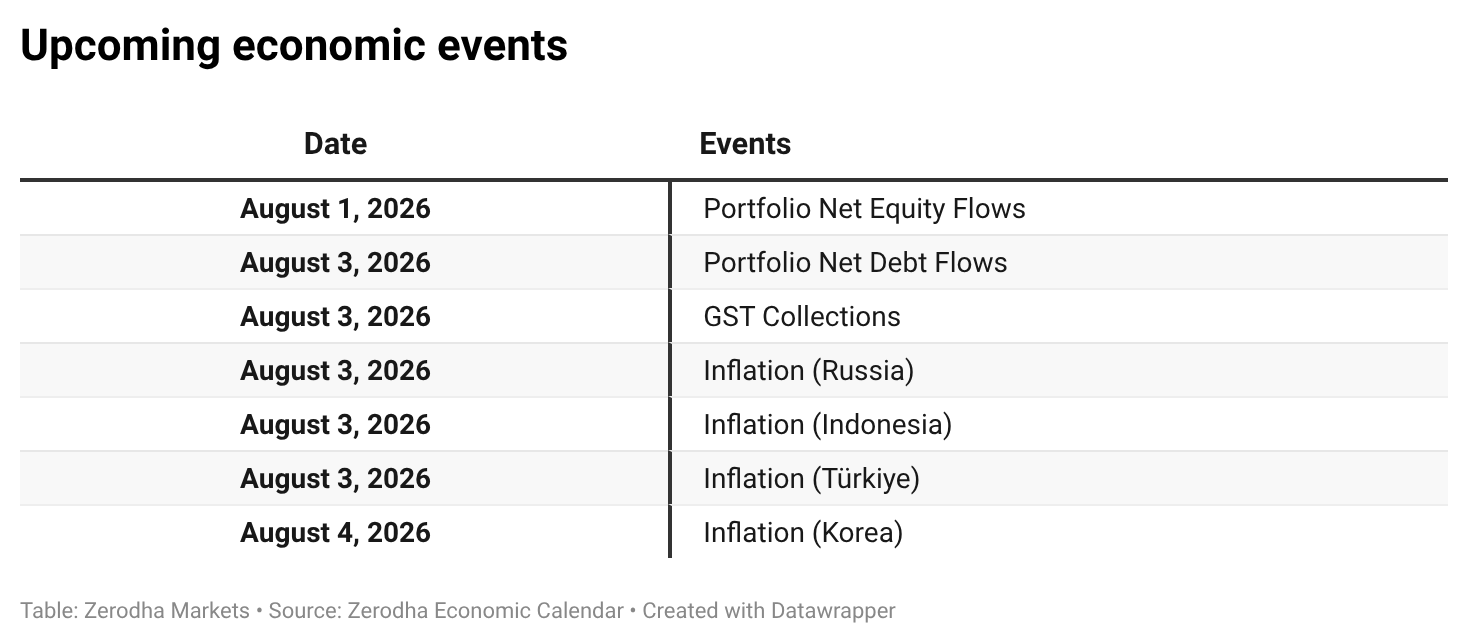
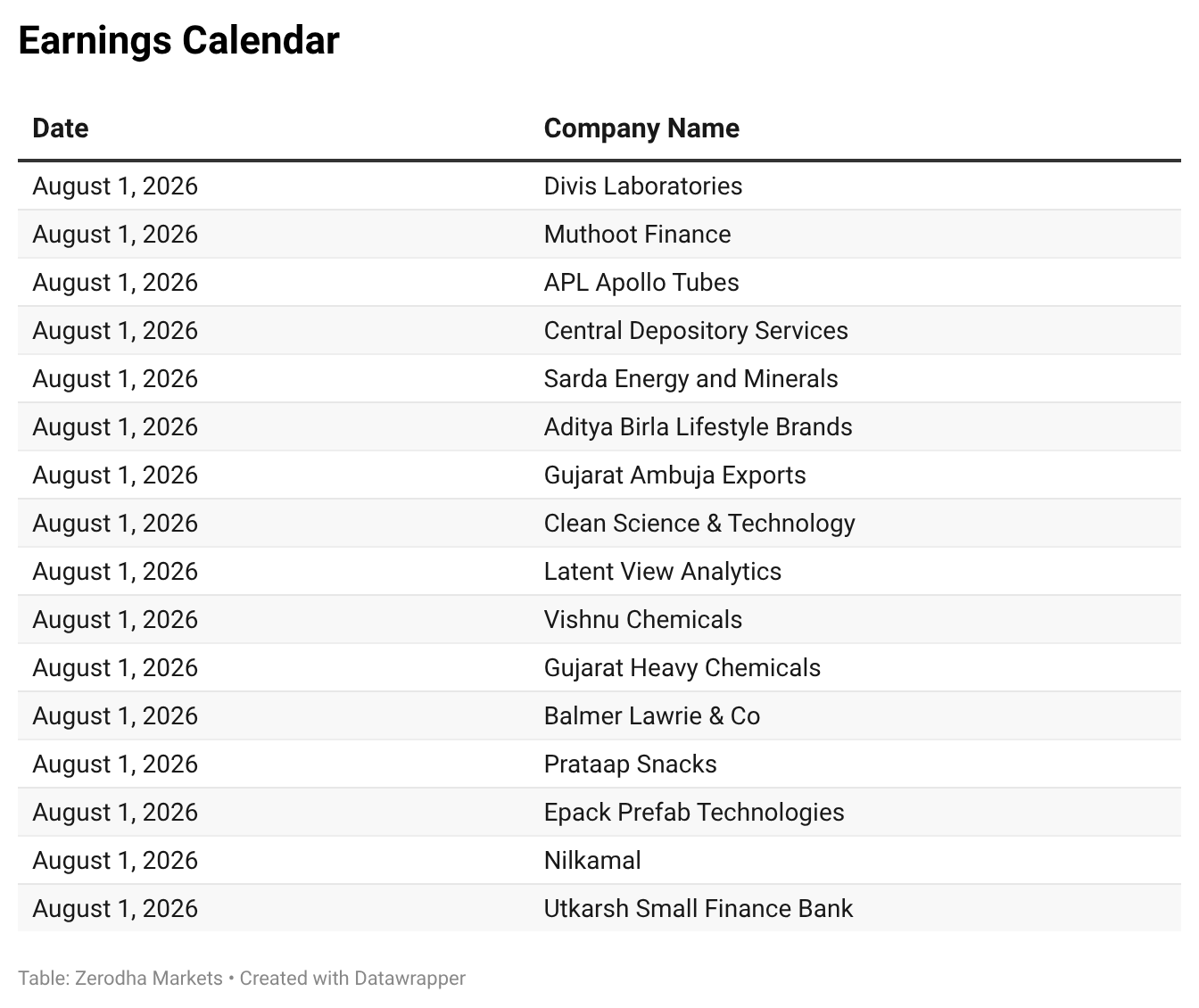
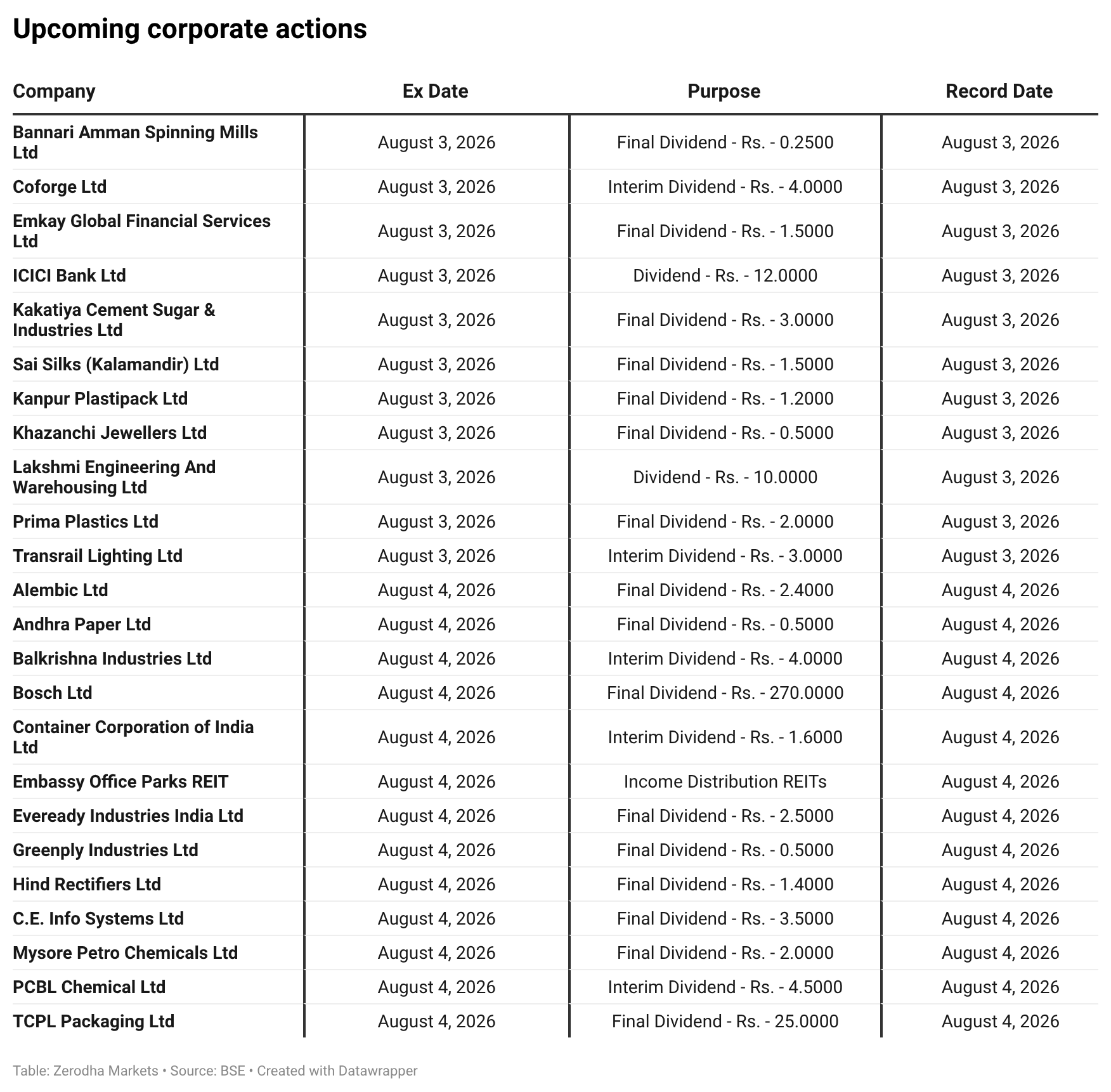
Corporate Actions & Events
Corporate Actions
Published by Zerodha. Not investment advice. Data from NSE, BSE, and MCX.
That’s it from us for today. We’d love to hear your feedback in the comments, and feel free to share this with your friends to spread the word!