

Welcome to Aftermarket Report, a newsletter where we do a quick daily wrap-up of what happened in the markets, both in India and globally.
In our latest episode of In The Money by Zerodha, we go back to basics — but not the way most people mean it. What is swing trading, really? Where did the term come from? And why does nobody agree on a definition?
We trace the idea across a hundred years of market history and lay out seven distinct methods traders have used to identify a swing. There’s also something most guides skip: the toolkit changes depending on what you’re trading. Stocks let you compare. Commodities and indexes don’t. That distinction matters more than the method you pick.
Markets Today
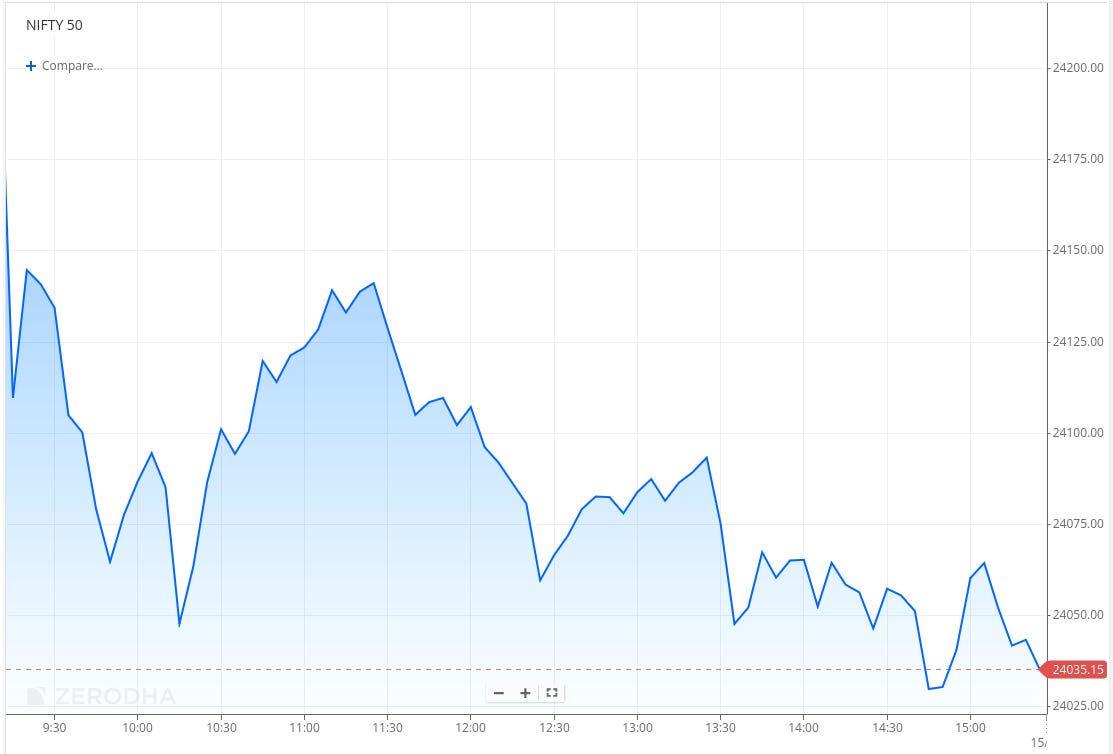
Nifty opened with a 143-point gap-down at 24,068, following rising tensions in the Middle East, pushing oil prices back above $80 per barrel. The index witnessed volatile trading in the opening hour, briefly slipping below 24,050 before recovering to the 24,140–24,145 zone by late morning. However, the rebound proved short-lived as selling pressure resurfaced, dragging Nifty back toward 24,100 by noon.
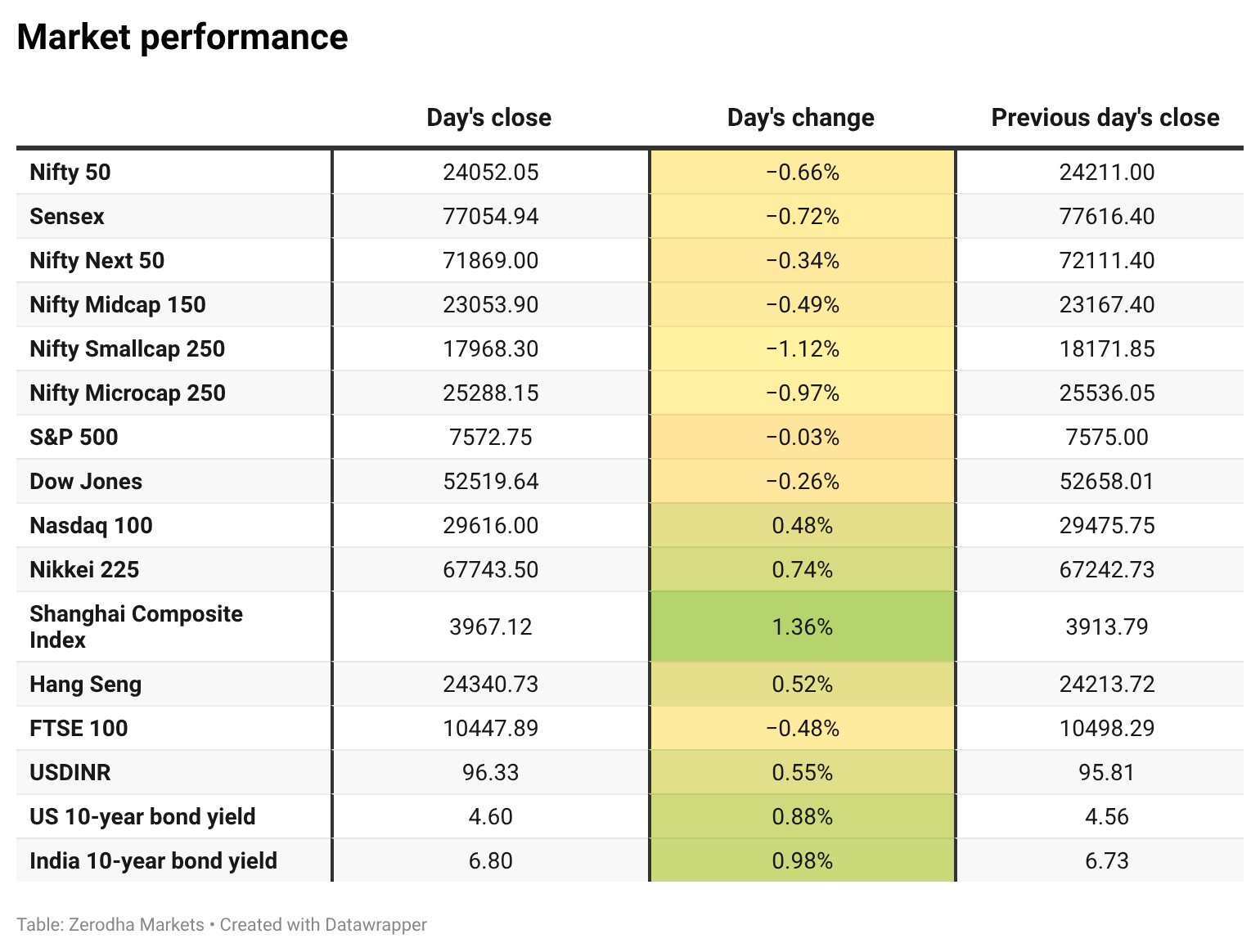
In the second half, the weakness persisted. After a brief consolidation around 24,060–24,080, the index saw another bout of selling post 1:30 PM, slipping below 24,050 and remaining under pressure for most of the afternoon. Although there were a few intraday recovery attempts, they failed to sustain as sellers remained in control. Nifty eventually closed at 24,052.05, near the lower end of the day’s range, as geopolitical concerns and rising crude prices kept sentiment subdued.
Sectoral Indices Performance
Winners & Losers
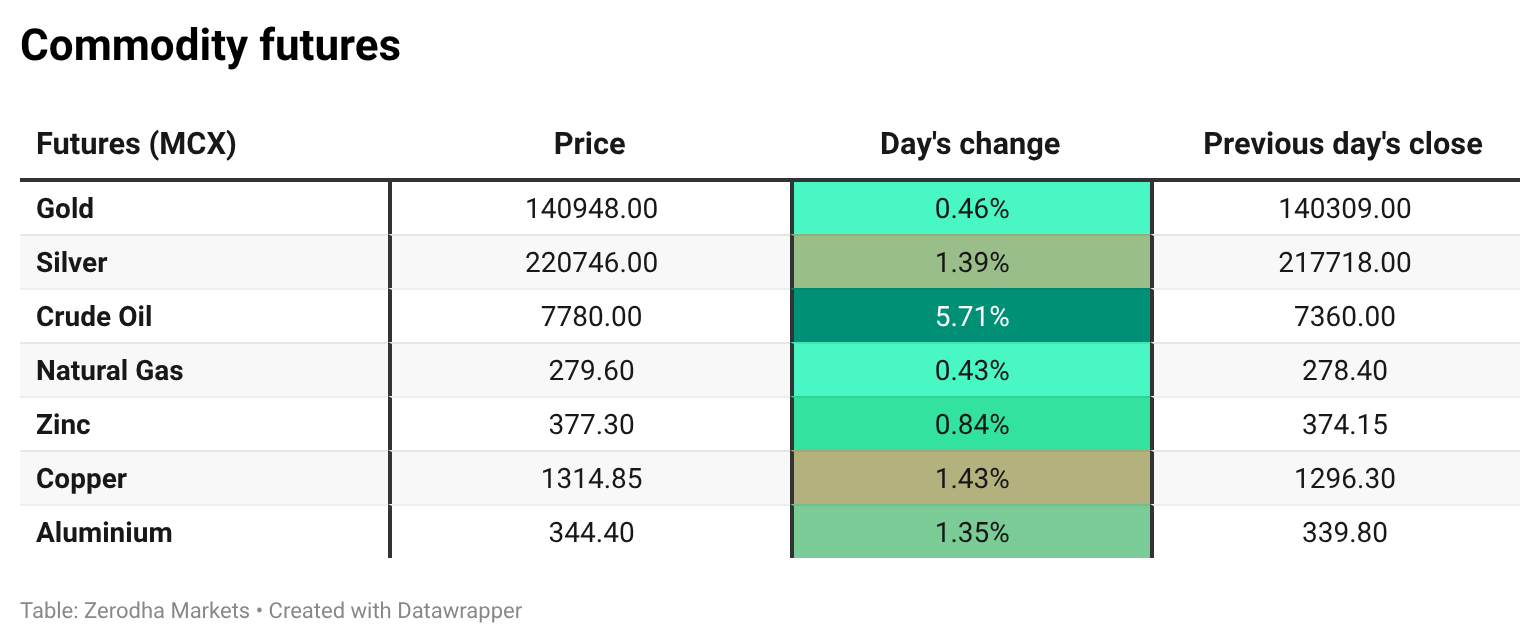
Commodities
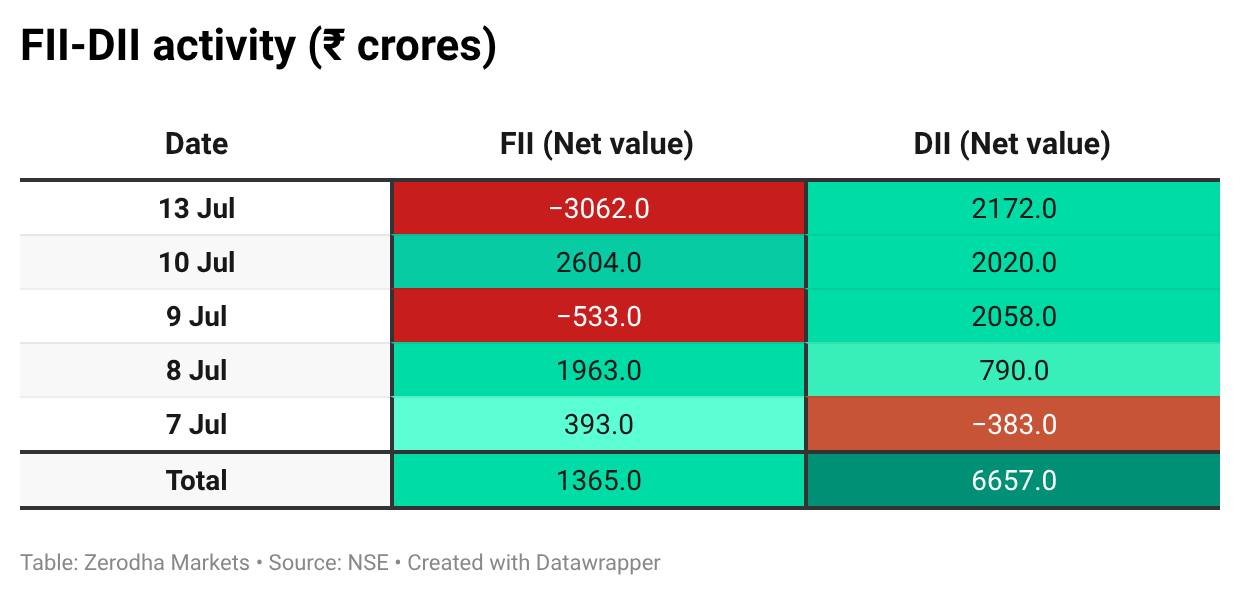
FII / DII Flows
Here’s the trend of FII-DII activity from the last 5 days:
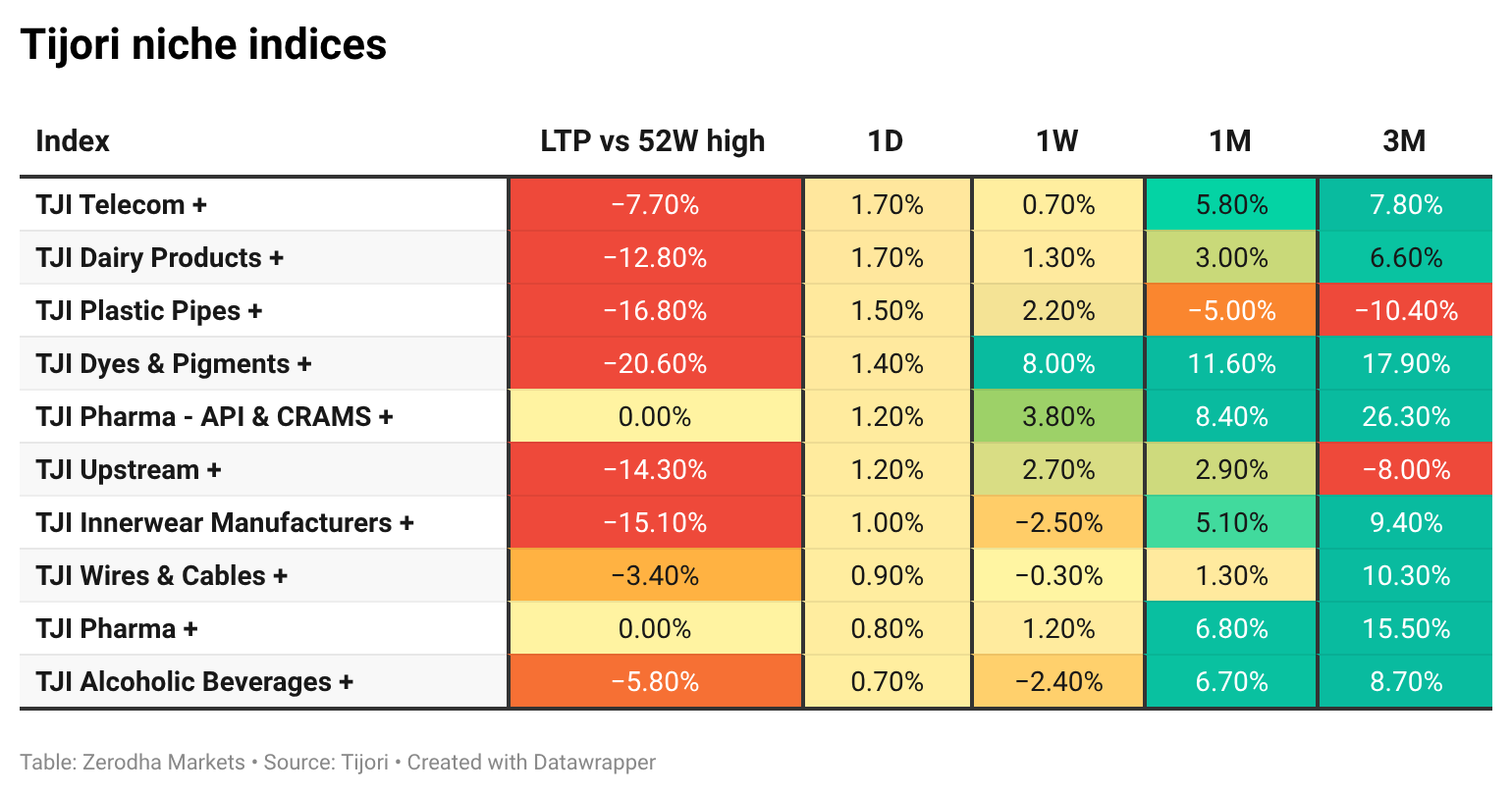
Thematic Indices
Tijori’s niche indices, where today’s move sorts pockets of the market beyond standard sector baskets. You can also track promoter buying and other interesting stuff, like Capex activity by the companies in the Tijori App’s idea dashboard
Change in OI for the day
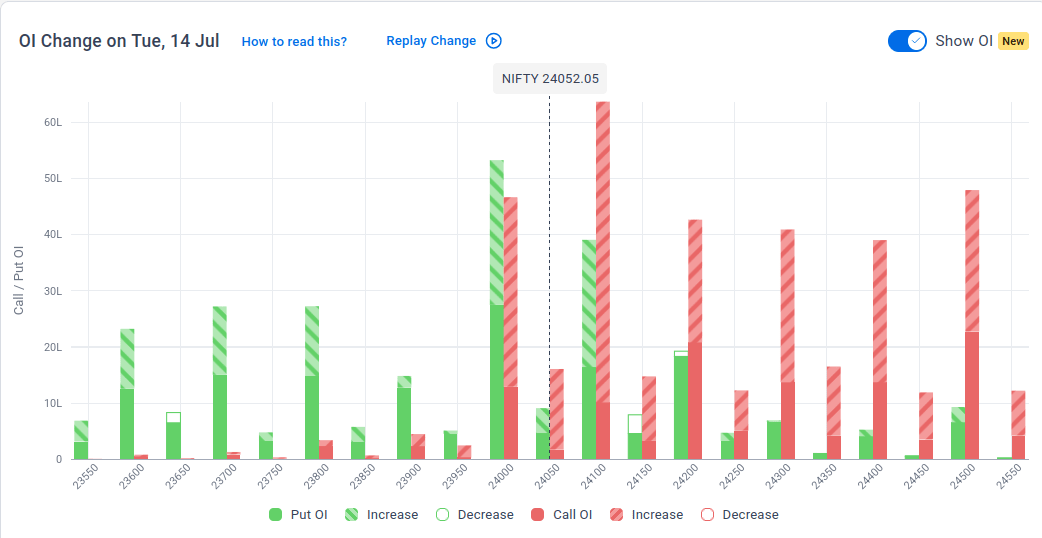
The following is the change in OI for Nifty contracts expiring on 14th July:
The maximum Call Open Interest (OI) is observed at 24,100, followed by 24,500, indicating potential resistance at the 24,200 -24,300 levels.
The maximum Put Open Interest (OI) is observed at 24,000, followed by 24,100, suggesting support at 23,900-23,800.
Note: OI is subject to multiple interpretations; however, generally, an increase in Call OI indicates resistance in a falling market, while an increase in Put OI indicates support in a rising market.
Source: Sensibull

Top Stories in India
The Indian rupee weakened by 62 paise to close at 96.30 against the U.S. dollar on Tuesday, pressured by a sharp rise in crude oil prices and renewed geopolitical tensions. Dive deeper
India's wholesale price inflation (WPI) rose to a record high of 9.87% in June from 9.68% in May under the new series, as higher food and primary article prices outweighed easing energy costs. The Producer Price Index (PPI) also increased to 9.57% from 9.38%, reflecting sustained inflationary pressures in goods production. Dive deeper
Net direct tax collections rose 16.4% year-on-year to over ₹6.51 lakh crore as of July 13, driven by robust corporate tax receipts, according to government data. Net corporate tax collections increased 22% to ₹2.40 lakh crore, while net non-corporate tax collections, including taxes paid by individuals, HUFs and firms, grew nearly 12% to over ₹3.84 lakh crore. Dive deeper
TCS has partnered with the New Terminal One at New York's John F. Kennedy International Airport to deliver an AI-powered, digitally enabled passenger experience. As the terminal's strategic technology and innovation partner, TCS will help improve operational efficiency for airlines and support the $19 billion transformation of JFK Airport into a modern global aviation hub. Dive deeper
The government released the first trial Index of Services Production (ISP), showing that 14 of 19 formal services sub-sectors recorded double-digit year-on-year growth in April 2026. The index covers key segments such as wholesale and retail trade, hospitality, road transport, telecommunications and banking, representing about 60% of the services sector, with all categories except railways and air transport posting positive annual growth. Dive deeper
Jindal Saw reported a 75.5% year-on-year decline in consolidated net profit to ₹104 crore in Q1FY27, as weak export operations and challenges in its water pipe business weighed on earnings. Revenue from operations rose 9% to ₹4,452 crore, while the company said persistent geopolitical instability in the MENA region continued to impact its export business. Dive deeper
Top Stories Globally
IBM shares plunged 23% in pre-market trading after the company reported weaker-than-expected earnings, citing weakness in its software and infrastructure businesses. The selloff spread across the software sector, with Oracle, ServiceNow, Accenture, Adobe and Cognizant declining in pre-market trade, while the ADRs of Infosys and Wipro fell nearly 9% and 3%, respectively. Dive deeper
Crude oil surged more than 3% to nearly $81 per barrel, its highest level in almost a month, as the collapse of the U.S.-Iran truce reignited fears of supply disruptions in the Middle East. The rally followed a 9.4% jump in the previous session after fresh attacks on shipping in the Strait of Hormuz, including strikes on two UAE tankers, alongside renewed U.S. sanctions and military action against Iran. Dive deeper
Transit through the Strait of Hormuz remained severely disrupted during July 10–12, averaging fewer than 25 vessel crossings per day, according to an S&P Global report. Traffic fell to just 11 transits on July 12 after Iran declared the waterway closed, marking the lowest daily level since June 14 and the first day since June 12 with no inbound vessel crossings. Dive deeper
U.S. consumer prices fell 0.4% month-on-month in June, reversing May's 0.5% increase and marking the first monthly decline since May 2020. The larger-than-expected drop was driven mainly by a 5.7% fall in energy prices as crude oil retreated from multi-year highs. Dive deeper
Anthropic has introduced rupee-denominated pricing for its Claude AI assistant in India, making subscriptions easier for local customers. The Claude Pro plan is priced at ₹2,000 per month, while the Claude Max plan starts at ₹11,999 per month, reflecting the company's focus on one of its largest user markets. Dive deeper
Management Chatter
In this section, we highlight interesting comments from management at major companies and from policymakers in the Indian and Global Economies.
Federal Reserve Chair Kevin Warsh on Inflation and the impact of AI on the US economy:
"If we get policy right — and we will — the inflation surge of the last five years will be a thing of the past,"
While monthly price fluctuations are inevitable — especially in an unsettled world — underlying inflation over longer time horizons is determined largely by monetary policy."
"We don't know the extent to which the economy will benefit from the AI buildout." - Link
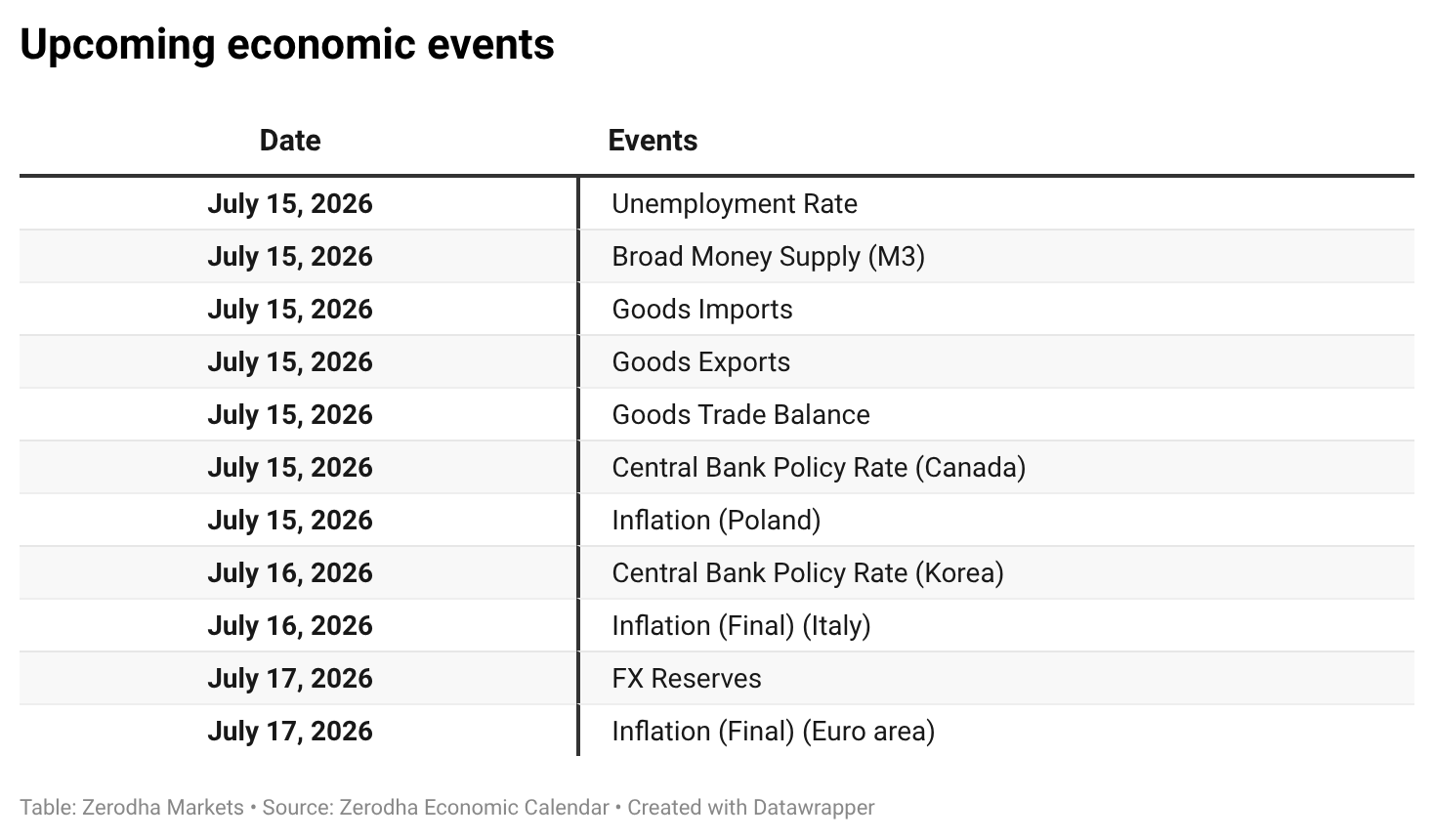
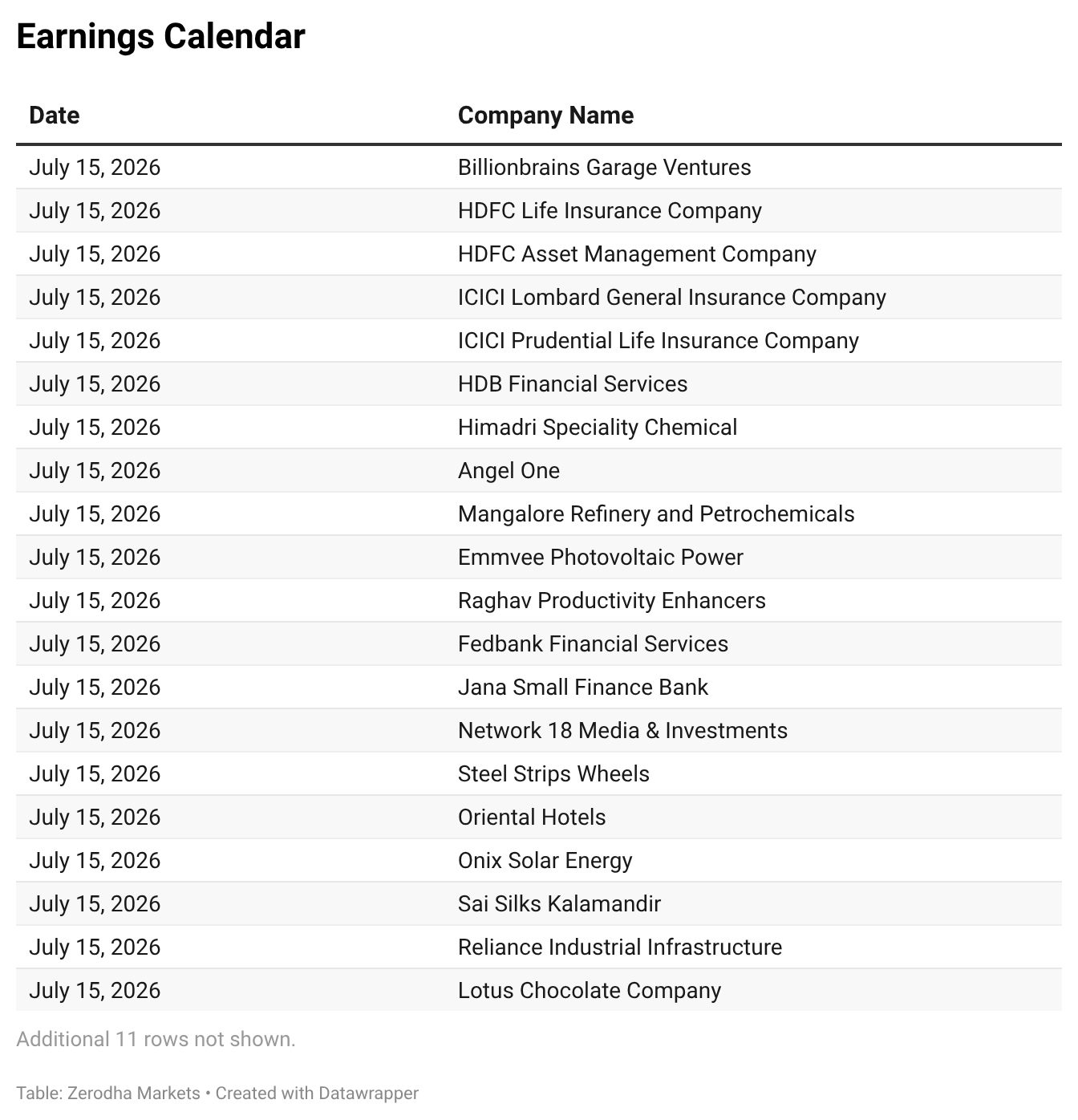
Corporate Actions & Events
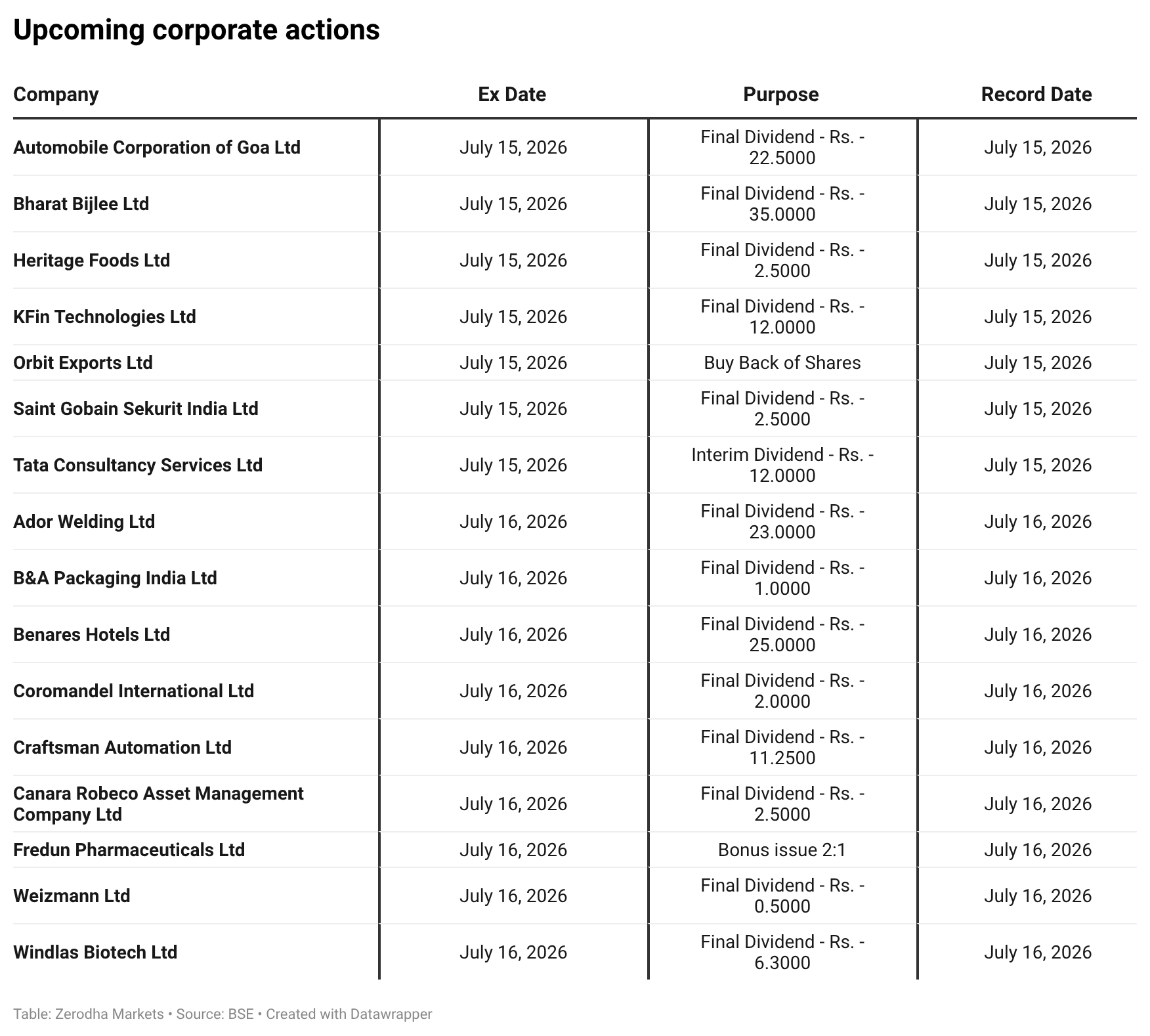
Corporate Actions
Published by Zerodha. Not investment advice. Data from NSE, BSE, and MCX.
That’s it from us for today. We’d love to hear your feedback in the comments, and feel free to share this with your friends to spread the word!