

Welcome to Aftermarket Report, a newsletter where we do a quick daily wrap-up of what happened in the markets, both in India and globally.
Markets Today
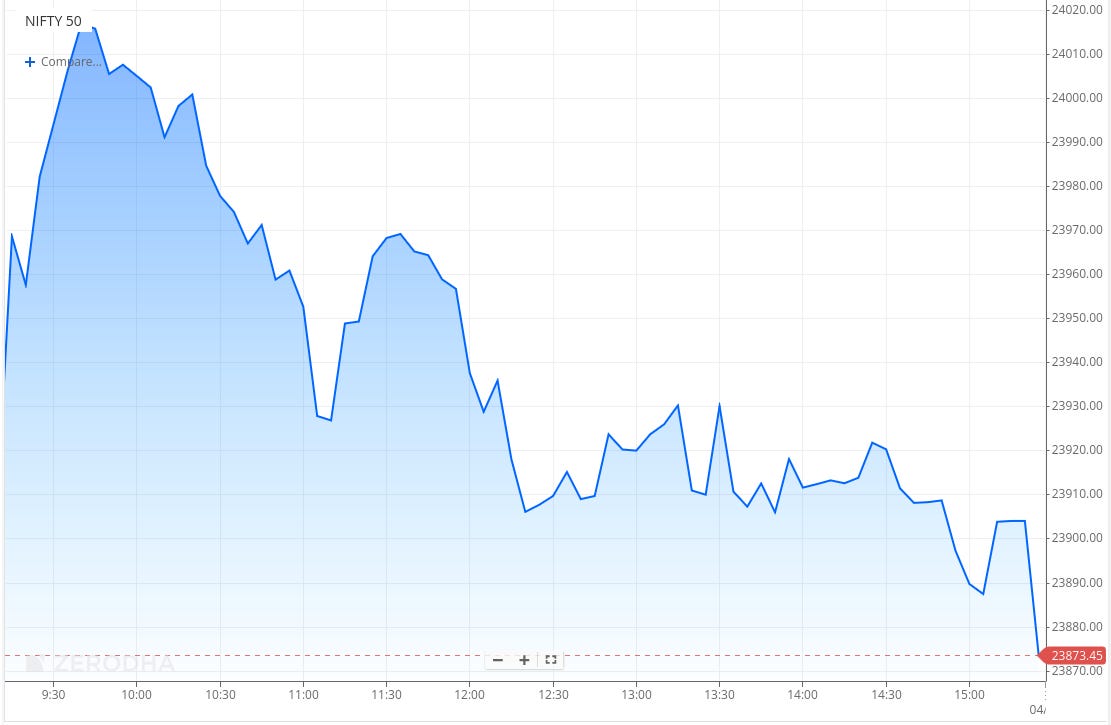
Nifty opened with an 84-point gap up at 23,998, tracking positive global cues as global markets saw some relief despite elevated bond yields and oil prices. Positive sentiment in banking stocks, following record FCNR flows and a strong recovery in the rupee towards 94.5 against the dollar, also supported the opening. The index extended its gains immediately after the open, moving above 24,000 and touching the day’s high near 24,025 within the first hour.
However, the early strength faded quickly, with Nifty slipping back below 24,000 and gradually declining towards 23,930 by around 11 AM. A recovery attempt thereafter took the index back towards 23,970, but it failed to sustain, and Nifty ended the first half around the 23,930-23,940 zone.
The weakness persisted in the second half, with Nifty slipping towards 23,905–23,910 shortly after noon. The index attempted multiple recoveries through the afternoon, briefly moving towards 23,930, but each bounce was met with selling pressure.
Nifty largely remained confined to the 23,900–23,925 range until around 2:30 PM before weakening further in the final hour. The index slipped below 23,900 after 3 PM and, following another sharp fall during the closing auction session, eventually closed at 23,873.45, near the day’s low and around 125 points below its opening level.
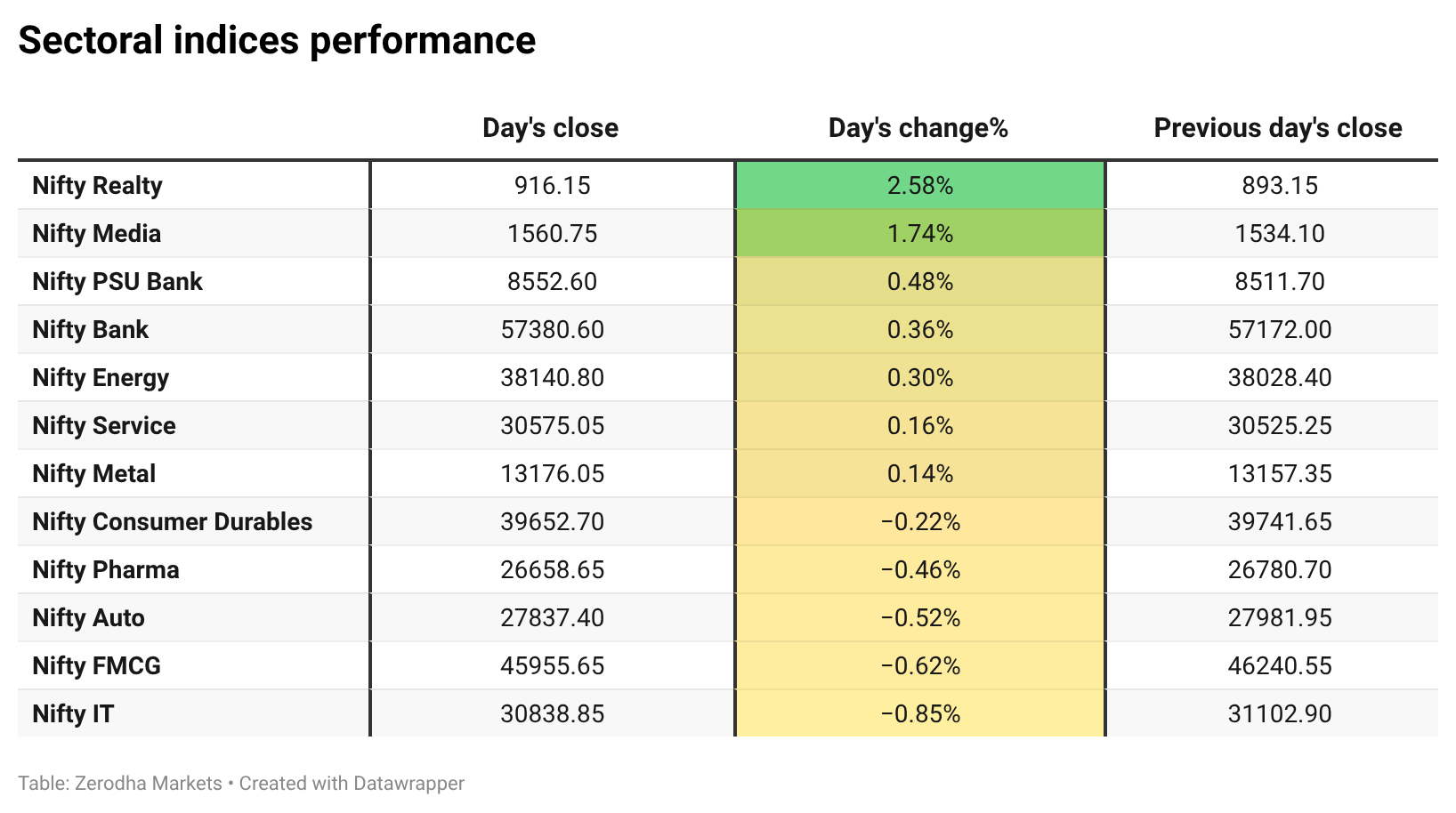
Sectoral Indices Performance
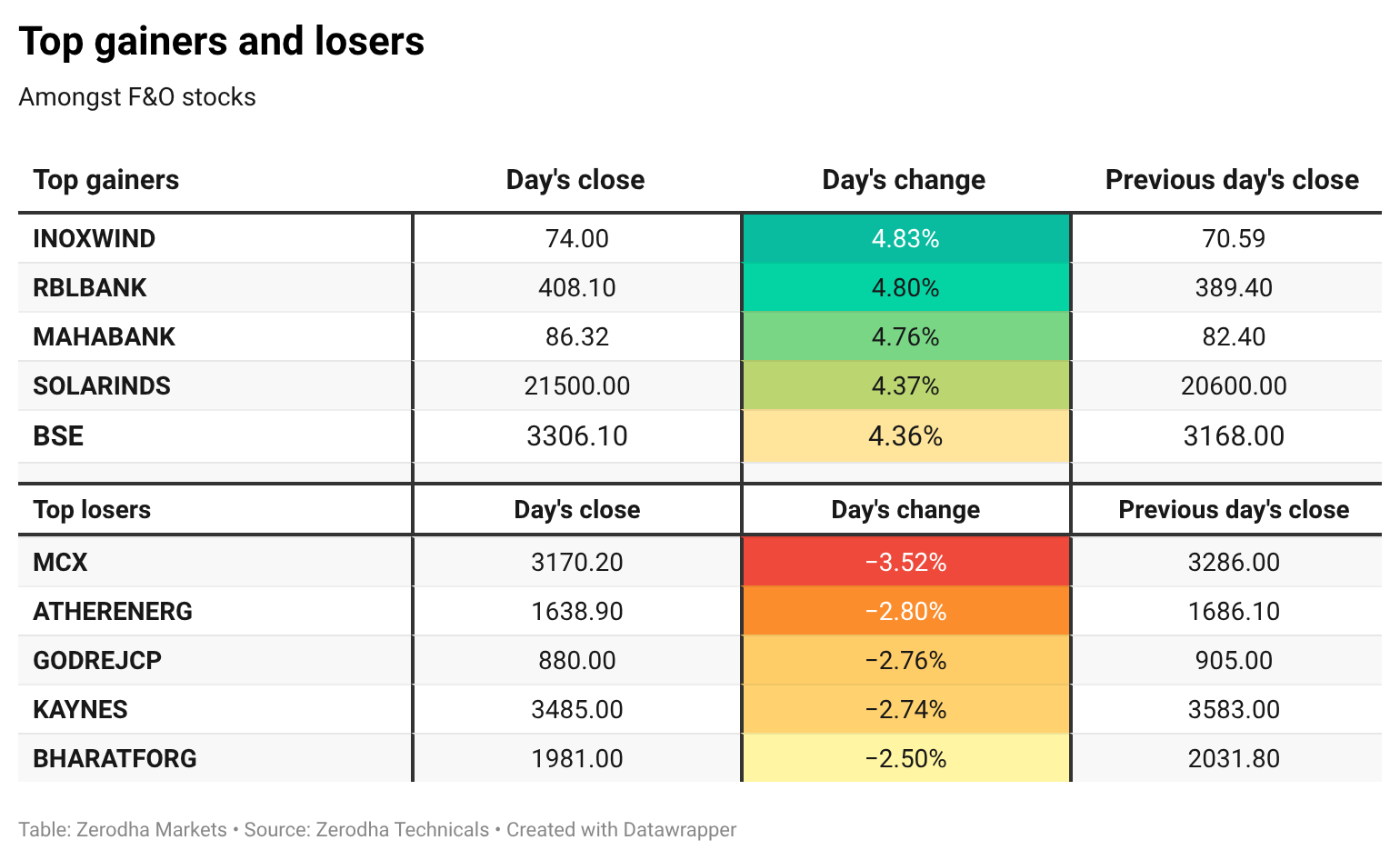
Winners & Losers
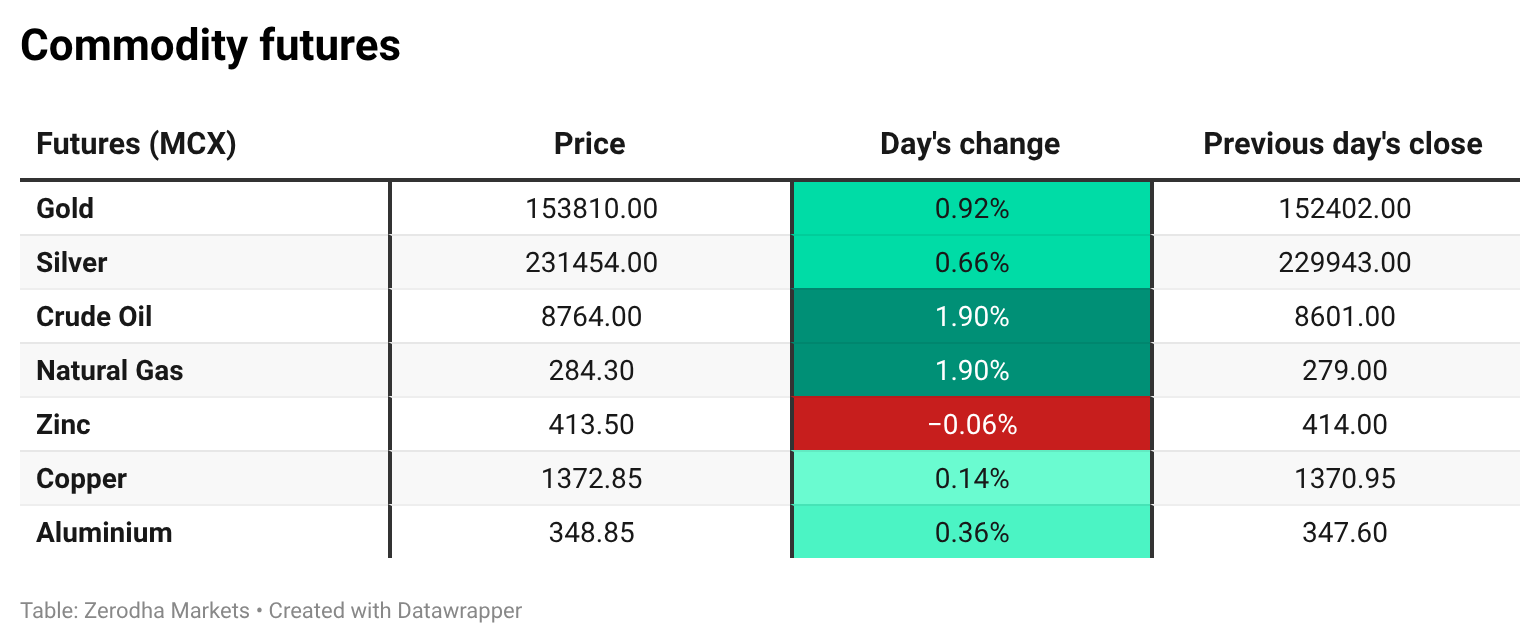
Commodities
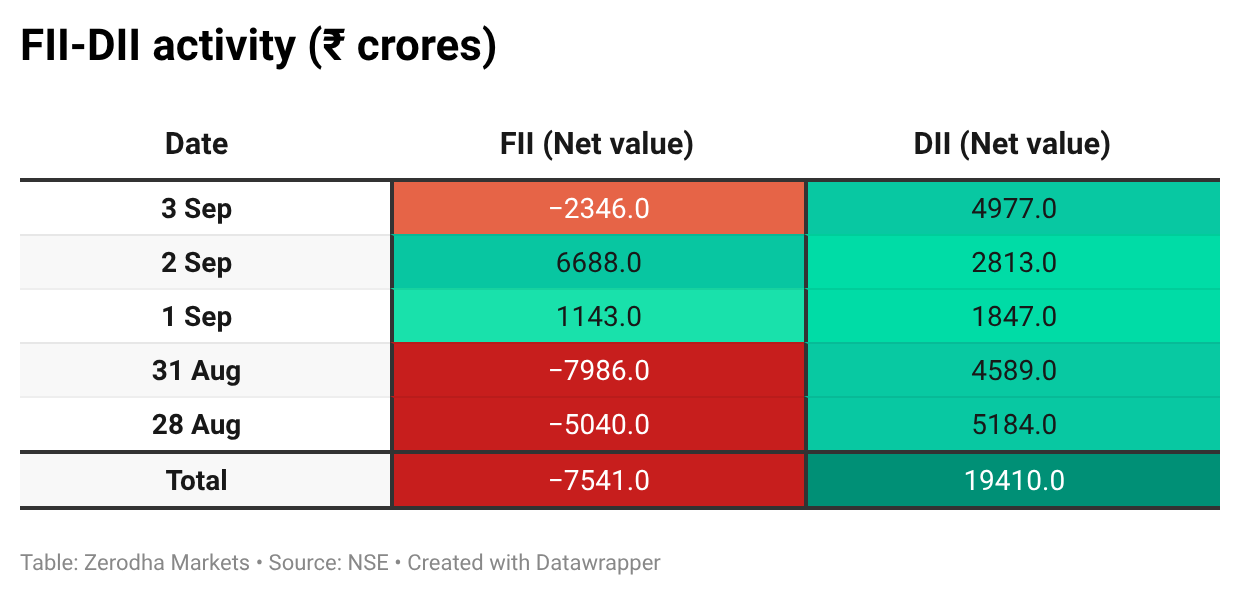
FII / DII Flows
Here’s the trend of FII-DII activity from the last 5 days:
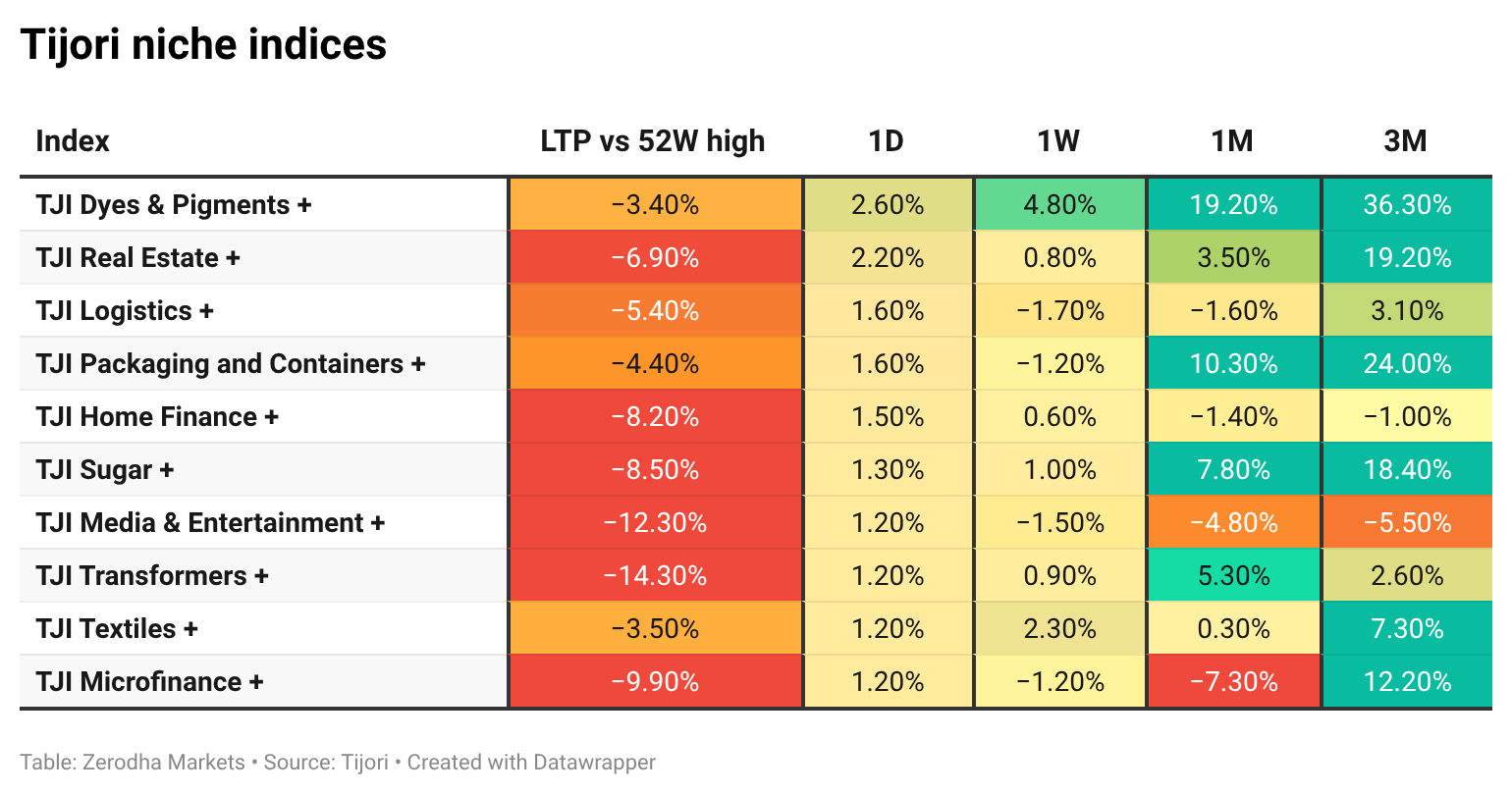
Thematic Indices
Tijori’s niche indices, where today’s move sorts pockets of the market beyond standard sector baskets. You can also track promoter buying and other interesting stuff, like Capex activity by the companies in the Tijori App’s idea dashboard
Change in OI for the day
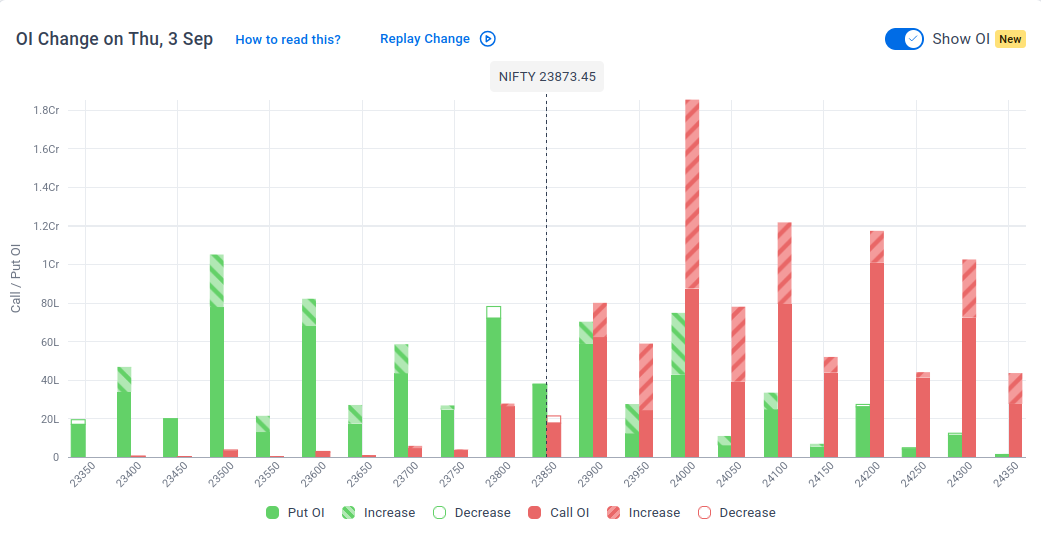
The following is the change in OI for Nifty contracts expiring on 8th September:
The maximum Call Open Interest (OI) is observed at 24,000, followed by 24,100, indicating potential resistance at the 24,100- 24,200 levels.
The maximum Put Open Interest (OI) is observed at 23,500, followed by 23,600, suggesting support at 23,800-23,700.
Note: OI is subject to multiple interpretations; however, generally, an increase in Call OI indicates resistance in a falling market, while an increase in Put OI indicates support in a rising market.
Source: Sensibull

Top Stories in India
The RBI’s special USD-INR forex swap facility attracted $136.37 billion in inflows by August 31, with FCNR(B) deposits contributing $127.22 billion, or nearly 90% of the total. OFCBs and ECBs contributed $5.26 billion and $3.89 billion, respectively. Dive deeper
The Indian rupee strengthened 0.5% to close at ₹94.485 per dollar, its highest level in 10 weeks, supported by stronger-than-expected dollar inflows under the RBI’s special scheme. It also marked the rupee’s biggest single-day gain since July 27. Dive deeper
SEBI proposed allowing mutual fund schemes to settle cash-market trades on a net basis, a facility already available to FPIs. The move is aimed at reducing temporary funding requirements and improving settlement efficiency for mutual funds. Dive deeper
India’s banking system liquidity surged to a four-year high of ₹7.7 lakh crore, largely driven by FCNR(B) inflows, prompting the RBI to step up liquidity absorption. Average surplus liquidity rose to ₹3.67 lakh crore in August from ₹1.07 lakh crore in July, potentially lowering banks’ funding costs. Dive deeper
Lumino Industries made a strong market debut, listing at ₹110 on the NSE, a 34.15% premium to its ₹82 issue price. The stock closed around the same price, up 34.5% from the issue price. Dive deeper
India’s average retail sugar price fell 3.85% in a week to ₹62.57/kg, following government measures including imports and tighter stockholding norms. However, prices remain 27% higher than a month ago, while wholesale prices also eased to ₹57.62/kg. Dive deeper
India and Belgium signed a Letter of Intent to deepen defence cooperation, covering military exchanges, training, research and defence-industry partnerships. The framework also opens the door for joint development and production of defence equipment. Dive deeper
Top Stories Globally
Oil prices hit fresh six-week highs, as new U.S. strikes on Iran and renewed Israeli threats against Tehran heightened concerns over Middle East supply disruptions. Brent rose 1.7% to $97.29 per barrel, while WTI gained 2.2% to $93.04, with both headed for a fourth consecutive session of gains. Dive deeper
The Japanese yen strengthened around 1.5% to a one-month high near 156.17 per dollar, as traders increased bets on further Bank of Japan rate hikes. The sharp move also revived speculation over possible currency intervention, though market participants largely attributed the gains to expectations of tighter monetary policy. Dive deeper
The U.S. trade deficit widened to $88.6 billion in July from $71.1 billion in June, marking its largest gap since March 2025. Exports fell 2.1% to $310.7 billion, led by lower crude oil and nonmonetary gold shipments. Dive deeper
Nvidia will acquire AI developer platform Hugging Face for $12.93 billion, strengthening its push into open AI models. The deal gives Nvidia access to a widely used platform where developers build, test, and share AI models and tools. Dive deeper
PayPal is reportedly laying off nearly a quarter of its roughly 6,700 employees in India, as part of its multi-year restructuring. The company said the cuts are aimed at simplifying global operations, improving execution, and supporting long-term growth. Dive deeper
Management Chatter
In this section, we highlight interesting comments from management at major companies and from policymakers in the Indian and Global Economies.
RBI Deputy Governor Shirish Chandra Murmu asked NBFCs and HFCs to diversify their funding sources:
“NBFCs and HFCs are no longer on the sidelines of this story. They extend credit to the last mile, reach the underserved, and bring innovation to lending across the country.”
“Entities must diversify their funding sources. A deep, liquid corporate bond market will help, and we will keep working with market participants to build one.”
“Securitisation should also grow beyond a liquidity tool into a genuine way to transfer risk and free up capital, with proper skin-in-the-game and transparency rules.” - Link
Society of Indian Automobile Manufacturers President Shailesh Chandra on Automobile sector’s contribution to the economy:
‘‘The sector’s overall contribution to the Indian economy exceeded Rs 22.75 lakh crore, contributing to about 15 per cent of the country’s GST collections.’’
“The industry provides direct and indirect employment to more than 30 million people and has a significant multiplier effect across related sectors and supports a vast supply chain network.” - Link
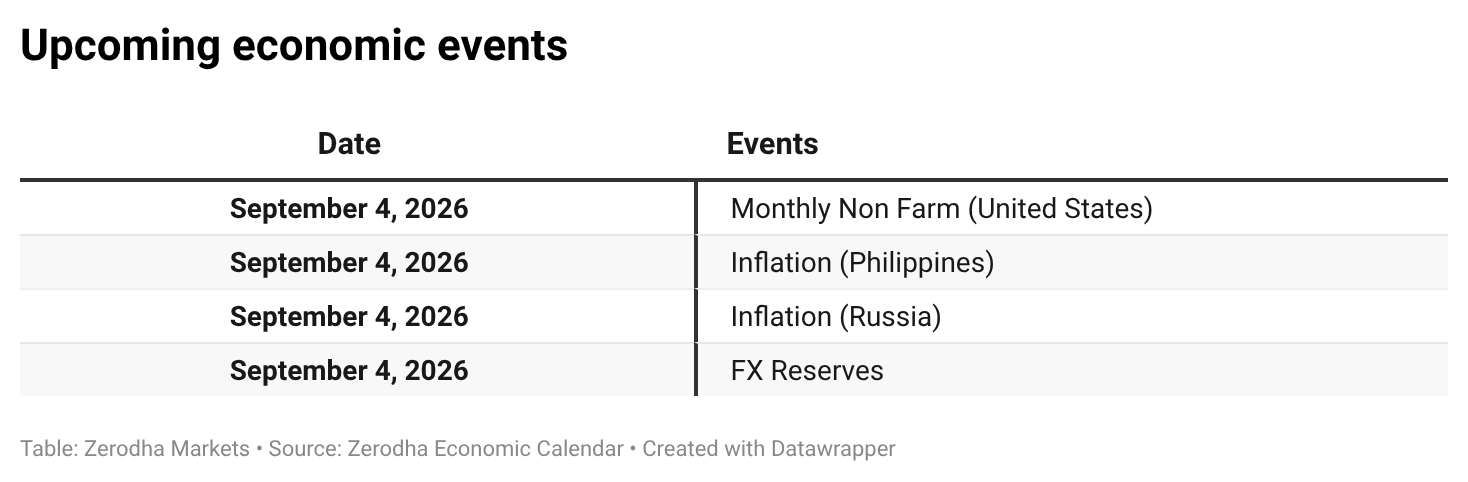
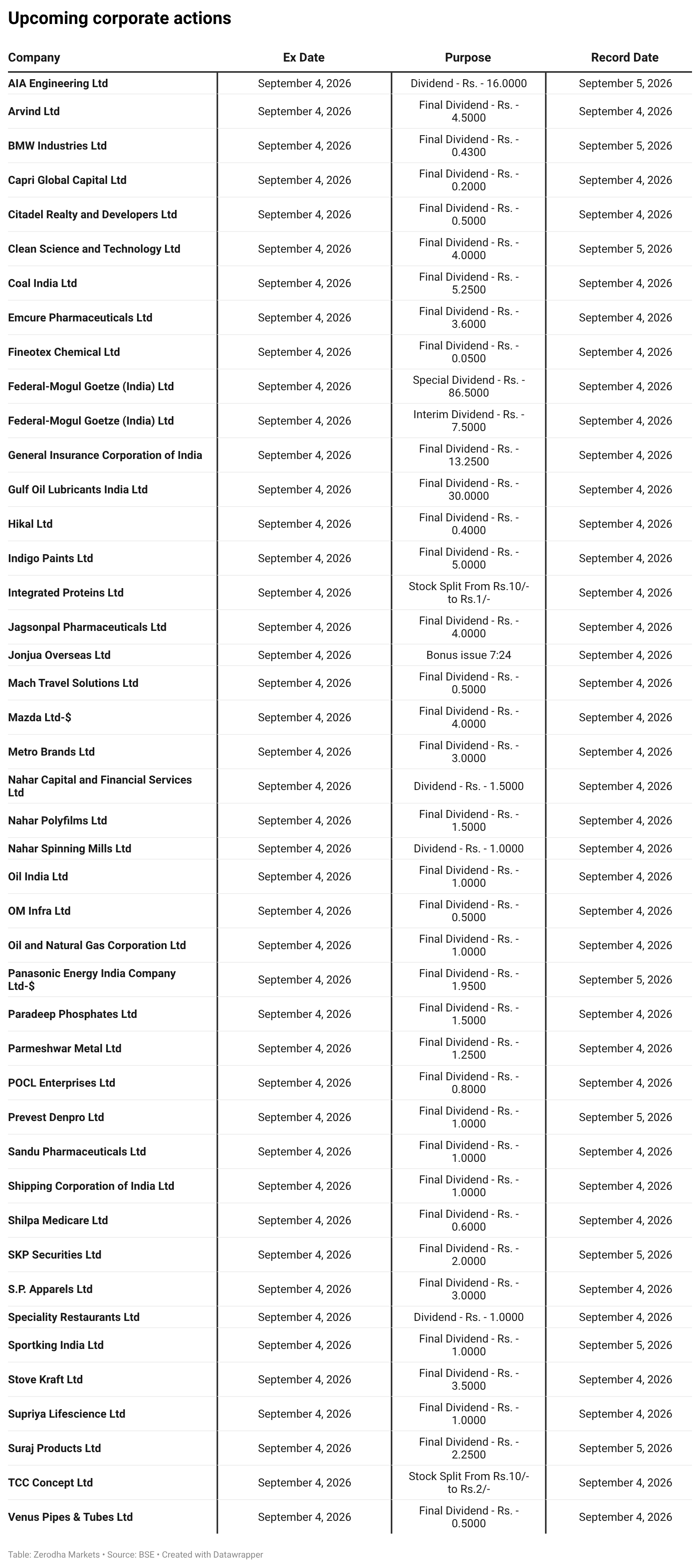
Corporate Actions & Events
Corporate Actions
Published by Zerodha. Not investment advice. Data from NSE, BSE, and MCX.
In our latest episode of In The Money by Zerodha, we look at what an average really is, the three kinds of mean — arithmetic, geometric, and harmonic — and why each is useful in a different context.
We also trace how averaging evolved from ancient mathematics to statistics and eventually into financial markets. Finally, we get into the modern indicators: SMA, EMA, volume-weighted and adaptive moving averages, VWAP, and anchored VWAP, and how moving averages are actually used to identify trends. We also look at when they fail — and what you can use instead.
That’s it from us for today. We’d love to hear your feedback in the comments, and feel free to share this with your friends to spread the word!