

Welcome to Aftermarket Report, a newsletter where we do a quick daily wrap-up of what happened in the markets, both in India and globally.
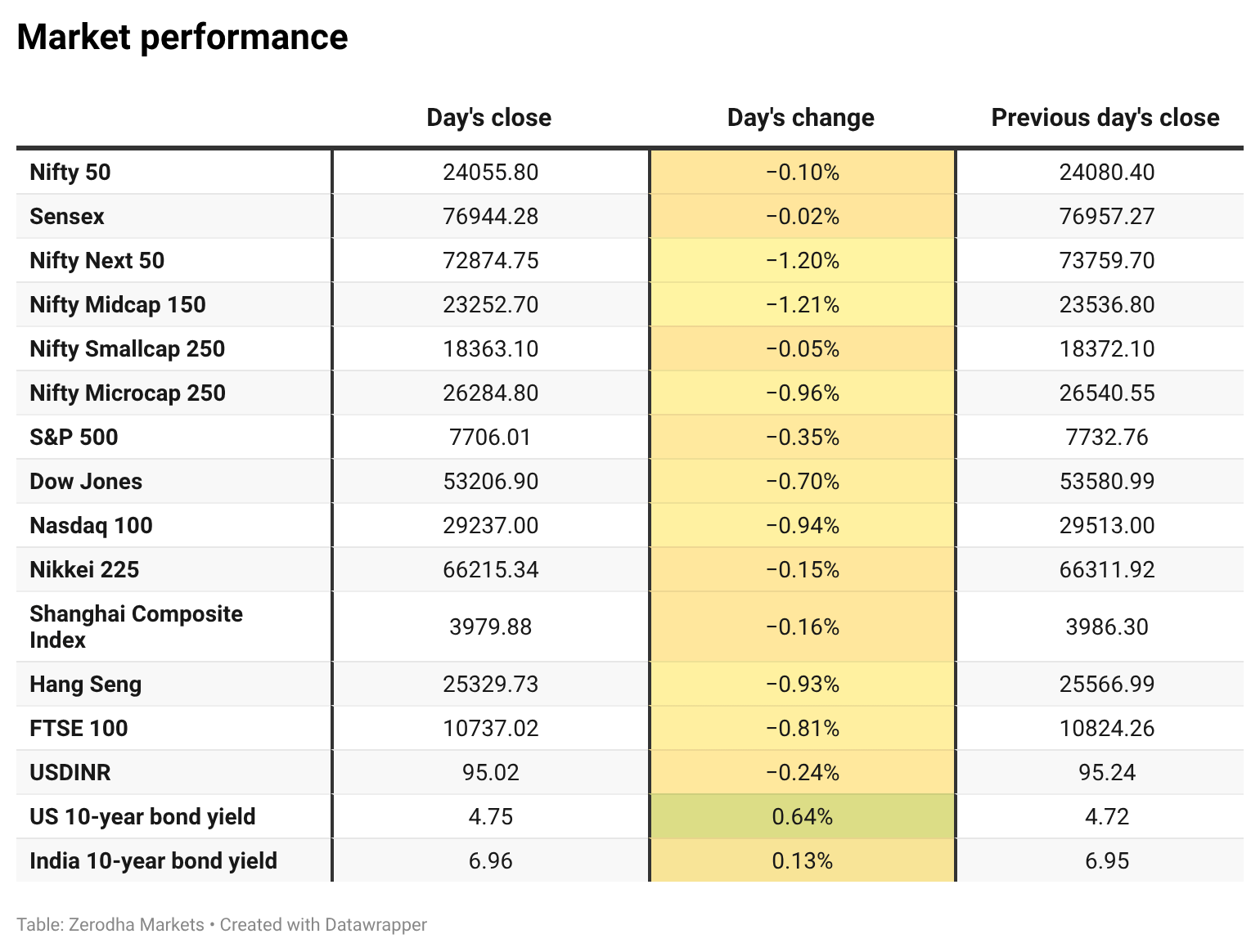
Markets Today
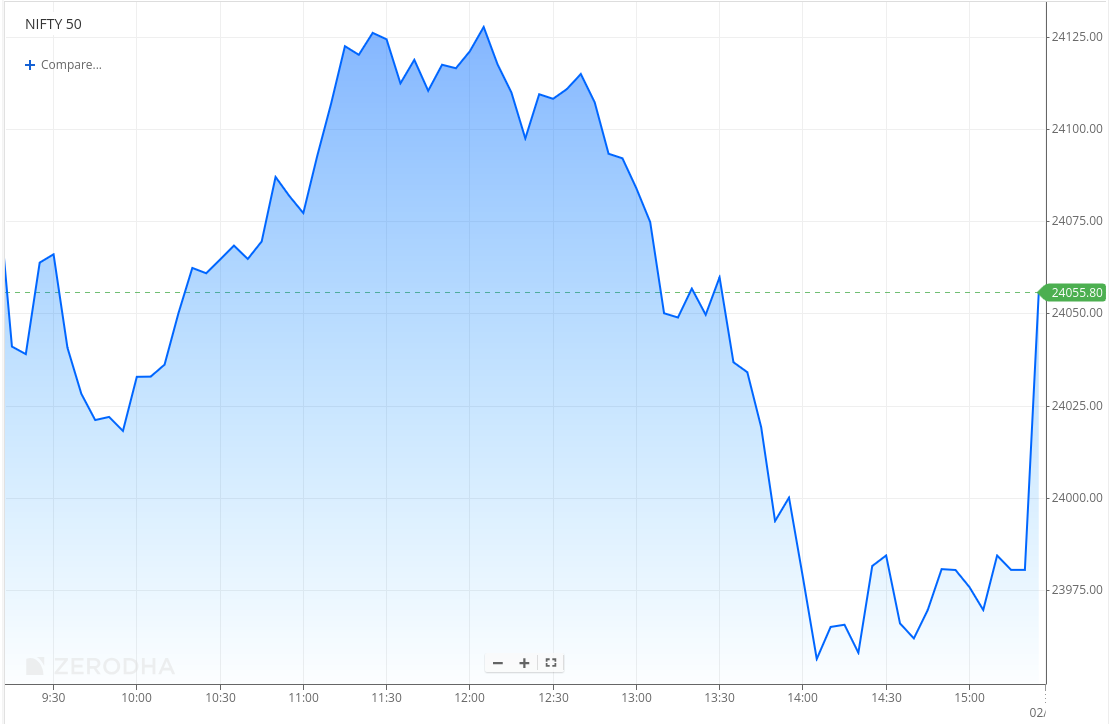
Nifty opened flat at 24,078, tracking weak global markets amid surging bond yields worldwide and rising oil prices. The index came under pressure immediately after the open, slipping towards the 24,020- 24,025 zone within the first hour. However, buying emerged from the lows, triggering a steady recovery that took Nifty back above 24,050 by around 10:15 AM.
The rebound gathered momentum thereafter, with the index climbing above 24,100 and eventually touching the day’s high near 24,130–24,140 around 11:30 AM. The recovery began losing steam towards the end of the first half, though Nifty continued to hold above 24,100.
The second half saw a complete reversal of the morning recovery. Nifty slipped below 24,100 shortly after 12:30 PM, with selling pressure intensifying thereafter. The index fell below 24,050 around 1:30 PM and subsequently broke the 24,000 mark, eventually touching the day’s low near 23,950- 23,960 shortly after 2 PM.
Nifty remained under pressure for most of the final hour, oscillating largely between 23,960 and 23,980. However, a sharp move during the closing auction session lifted the index back above 24,050, with Nifty eventually closing at 24,055.80, around 22 points below its opening level.
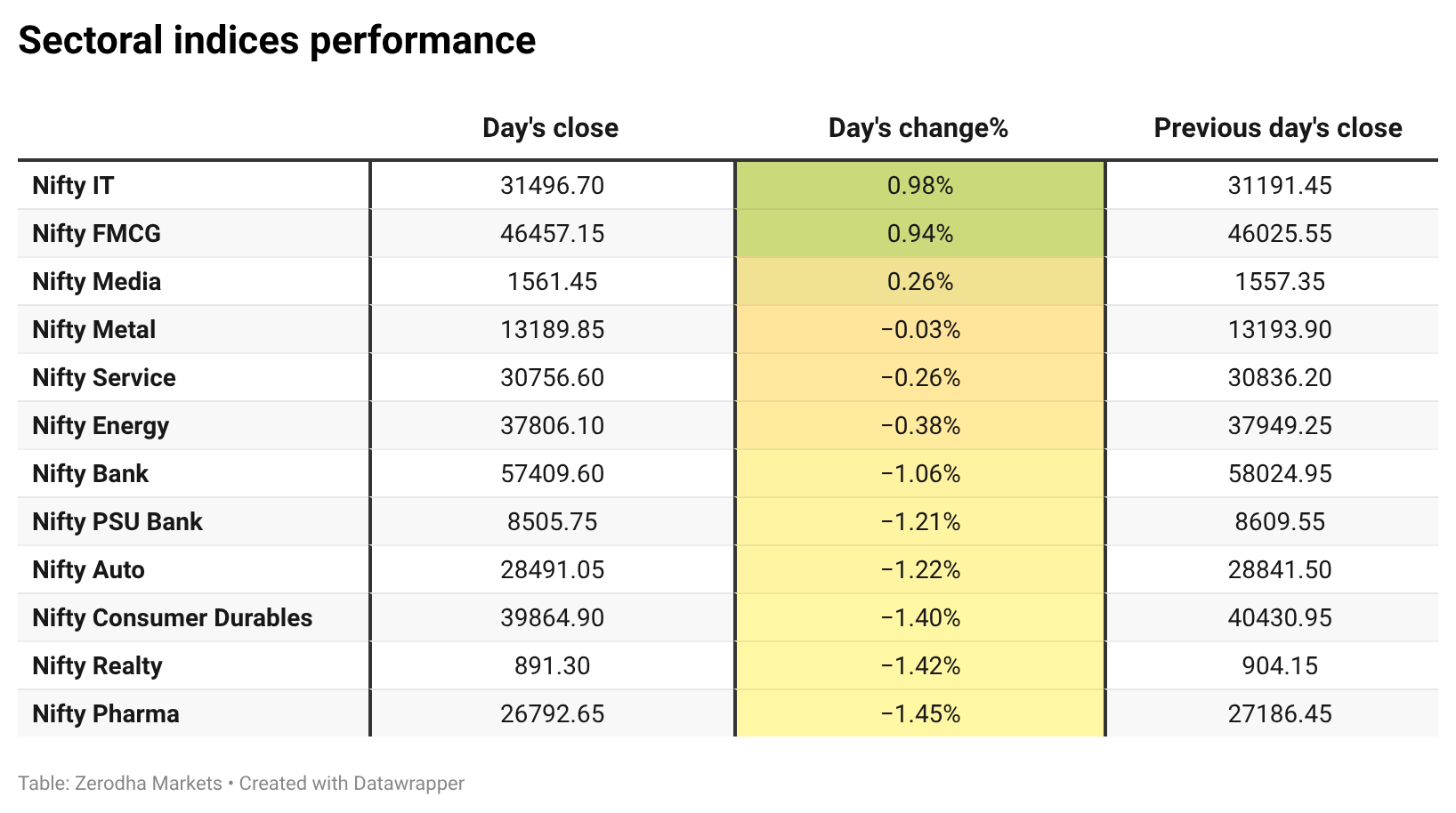
Sectoral Indices Performance
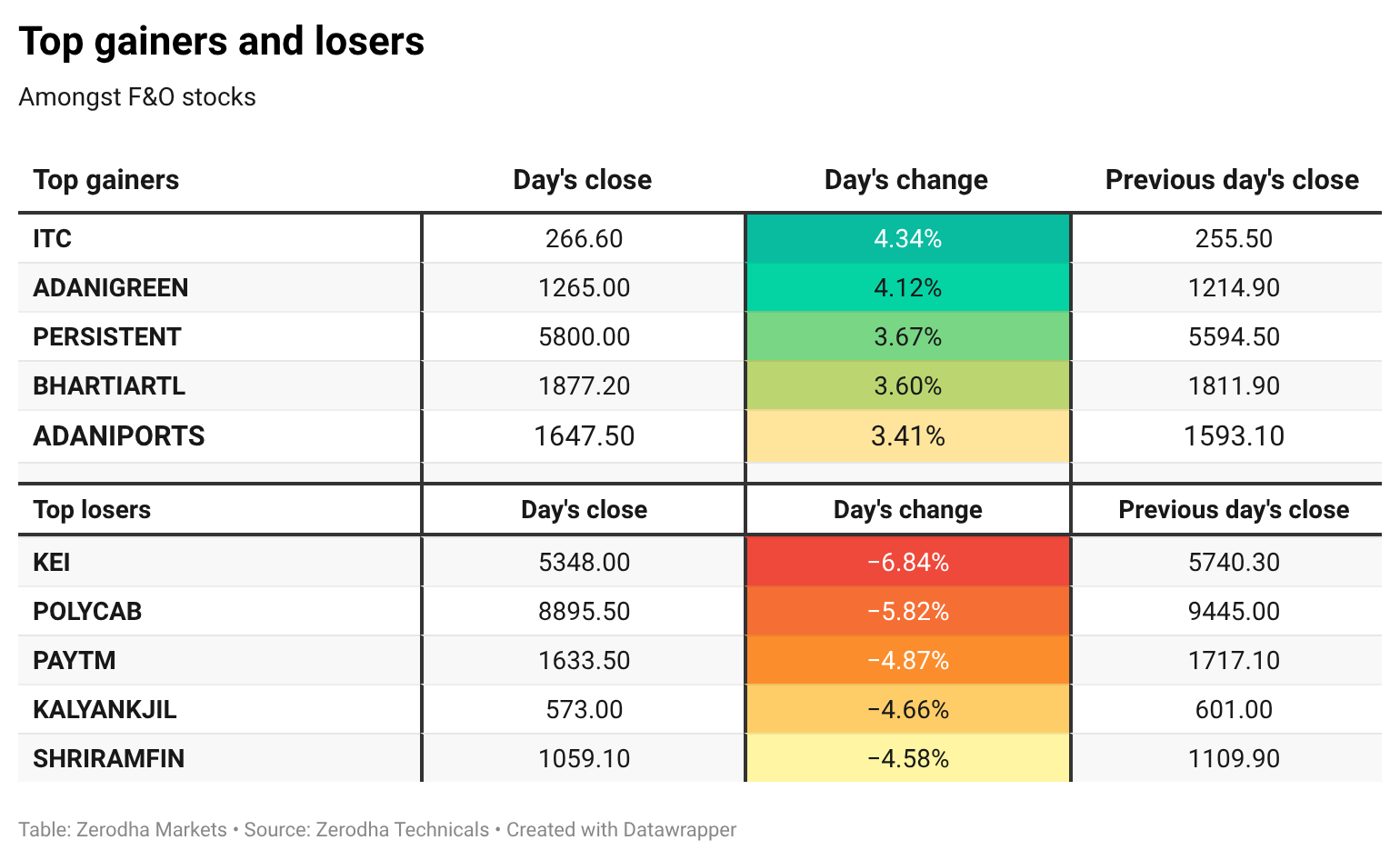
Winners & Losers
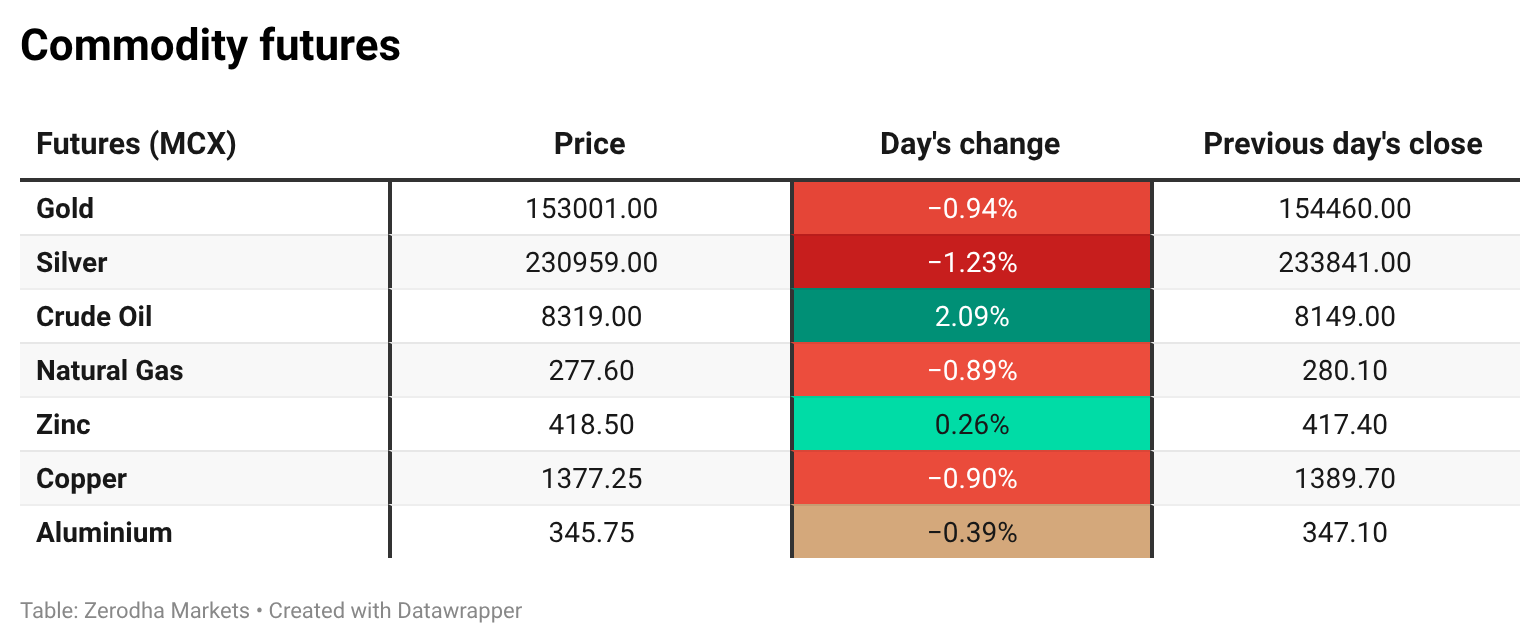
Commodities
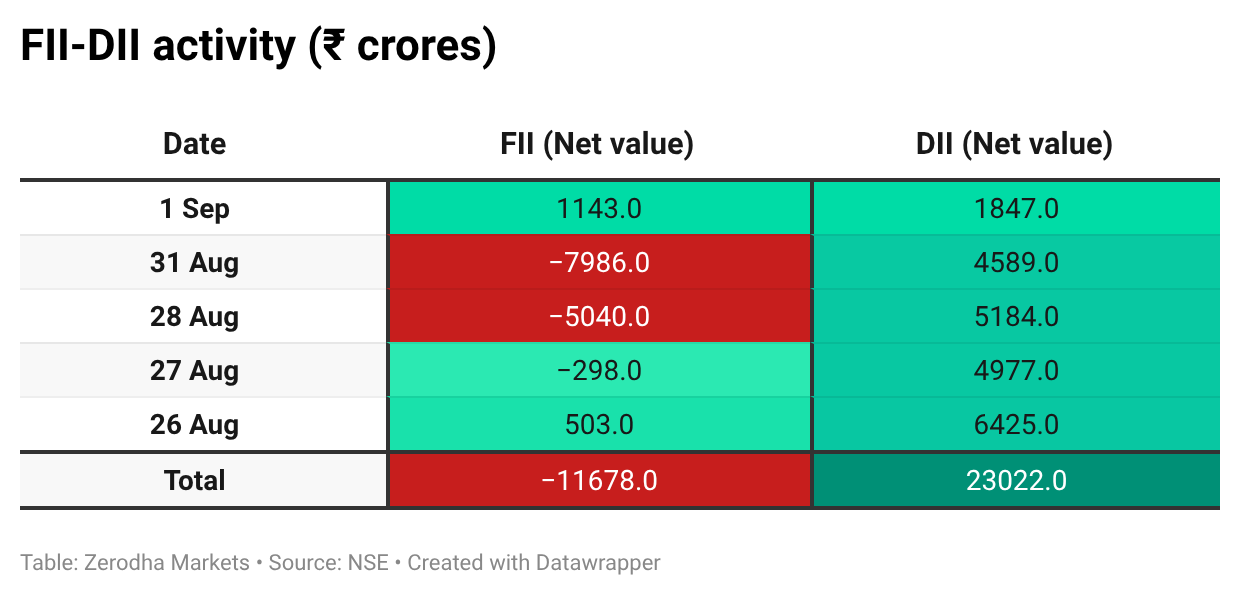
FII / DII Flows
Here’s the trend of FII-DII activity from the last 5 days:
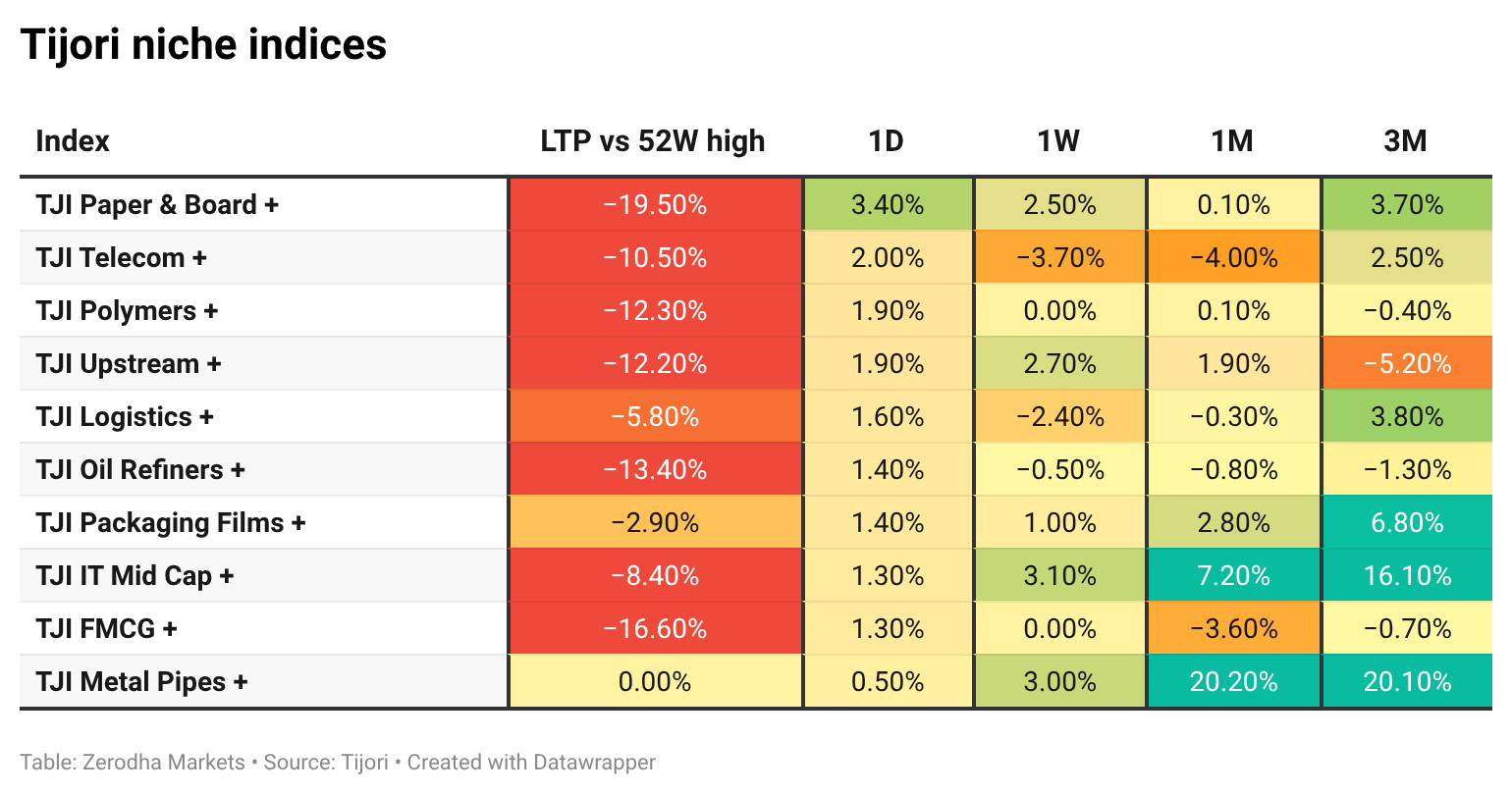
Thematic Indices
Tijori’s niche indices, where today’s move sorts pockets of the market beyond standard sector baskets. You can also track promoter buying and other interesting stuff, like Capex activity by the companies in the Tijori App’s idea dashboard
Change in OI for the day
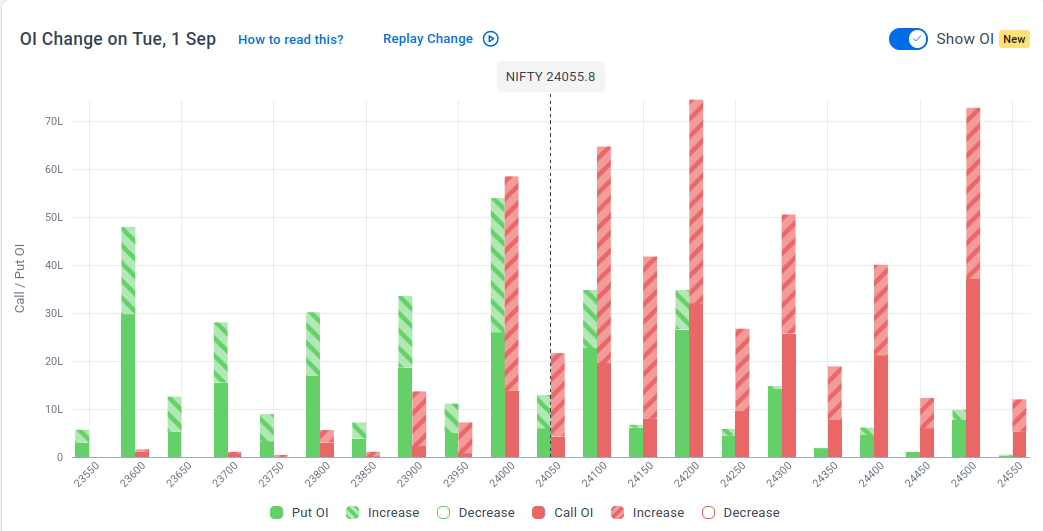
The following is the change in OI for Nifty contracts expiring on 8th September:
The maximum Call Open Interest (OI) is observed at 24,200, followed by 24,500, indicating potential resistance at the 24,200- 24,300 levels.
The maximum Put Open Interest (OI) is observed at 24,000, followed by 23,600, suggesting support at 24,000-23,900.
Note: OI is subject to multiple interpretations; however, generally, an increase in Call OI indicates resistance in a falling market, while an increase in Put OI indicates support in a rising market.
Source: Sensibull

Top Stories in India
India’s gross GST collections rose 14.8% YoY to nearly ₹2 lakh crore in August, though lower than ₹2.11 lakh crore in July. Import-related GST surged 29% to ₹62,604 crore, while domestic collections grew 9% to ₹1.37 lakh crore. Dive deeper
India’s manufacturing PMI fell to 52.8 in August from 53.5 in July, marking its third consecutive monthly decline and the weakest expansion in five years. Output growth slowed to its weakest since August 2021, while employment contracted for the first time in over two years amid softer demand. Dive deeper
Tata Motors reported a 49% YoY jump in total commercial vehicle sales to 44,411 units in August, while domestic CV sales rose 33% to 36,619 units. Dive deeper
India’s power consumption jumped 12.85% YoY to 169.01 billion units in August, as humid conditions drove higher use of cooling appliances. Peak power demand also rose to 258.27 GW from 229.72 GW a year earlier. Dive deeper
Coal India’s coal production fell 5.7% YoY to 47.5 MT in August, while offtake rose 5.5% to 60.6 MT. Cumulative production during April- August declined 4.5% YoY to 267.5 MT. Dive deeper
India’s UPI transaction value stood at ₹29.8 lakh crore in August, close to the record ₹29.9 lakh crore, while transaction volumes hit a new high of 24.51 billion, up from 23.66 billion in July. Dive deeper
Royal Enfield sold 1.26 lakh motorcycles in August, up 11% YoY, with domestic sales rising 11% and exports 10%. YTD sales grew 23% to 5.75 lakh units, driven by a 28% rise in domestic sales, while exports declined 9%. Dive deeper
Top Stories Globally
WTI crude rose to around $88 per barrel after gaining 2.8% on Monday, as renewed U.S.-Iran hostilities raised concerns over prolonged disruptions to energy shipments through the Strait of Hormuz. Dive deeper
Japan’s 10-year government bond yield hit 3% for the first time since 1996, joining a broader global bond selloff. Higher oil-driven inflation, expectations of further monetary tightening, and concerns over worsening fiscal conditions pushed yields higher across major markets. Dive deeper
The U.S. dollar strengthened while the Japanese yen weakened past 160 per dollar, as renewed U.S.-Iran tensions pushed Brent above $91 and triggered a global bond selloff on inflation concerns. The yen has now given back most of the gains following the rare U.S.-Japan joint intervention in July. Dive deeper
BYD delivered 440,293 vehicles in August, up 17.8% YoY, marking its fourth consecutive month of sales growth. Stronger overseas sales helped offset competitive pressures in China’s EV market. Dive deeper
Gold prices fell more than 1% to around $4,375 per ounce, their lowest since August 19, as U.S. Treasury yields climbed to their highest since January 2025. Middle East-driven inflation concerns and expectations of a near-term Fed rate hike weighed on the non-yielding metal. Dive deeper
Management Chatter
In this section, we highlight interesting comments from management at major companies and from policymakers in the Indian and Global Economies.
Excerpts from Nasscom’s report & Nasscom President Rajesh Nambiar’s views on India’s ER&D:
“Global ER&D spending is projected to reach $2.48–2.50 trillion by 2030, growing at a CAGR of 8–9 per cent between CY24 and CY30. With an estimated revenue of $63 billion in FY26, India’s ER&D services revenue is projected to cross $100 billion by 2030. Technological disruption and a sharper focus on innovation and value are creating new areas of demand.”
“India’s ER&D growth will be shaped by how effectively we combine our engineering depth with AI to take on greater ownership of global product development.”
“Physical AI adds an important new dimension to this opportunity. India has the engineering talent, domain expertise and scale to play a much larger role across this lifecycle. The opportunity now is to move further towards systems-led engineering and co-creation of intelligent products and platforms.” - Link
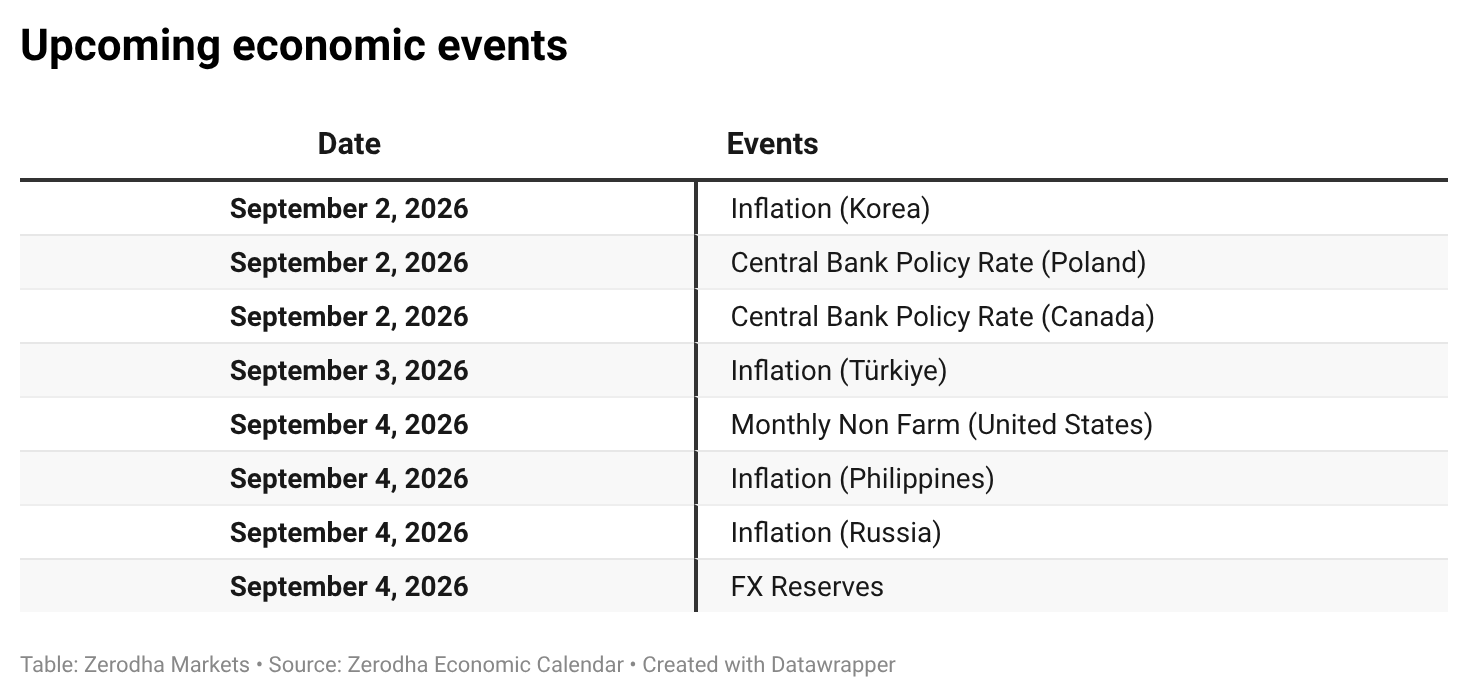
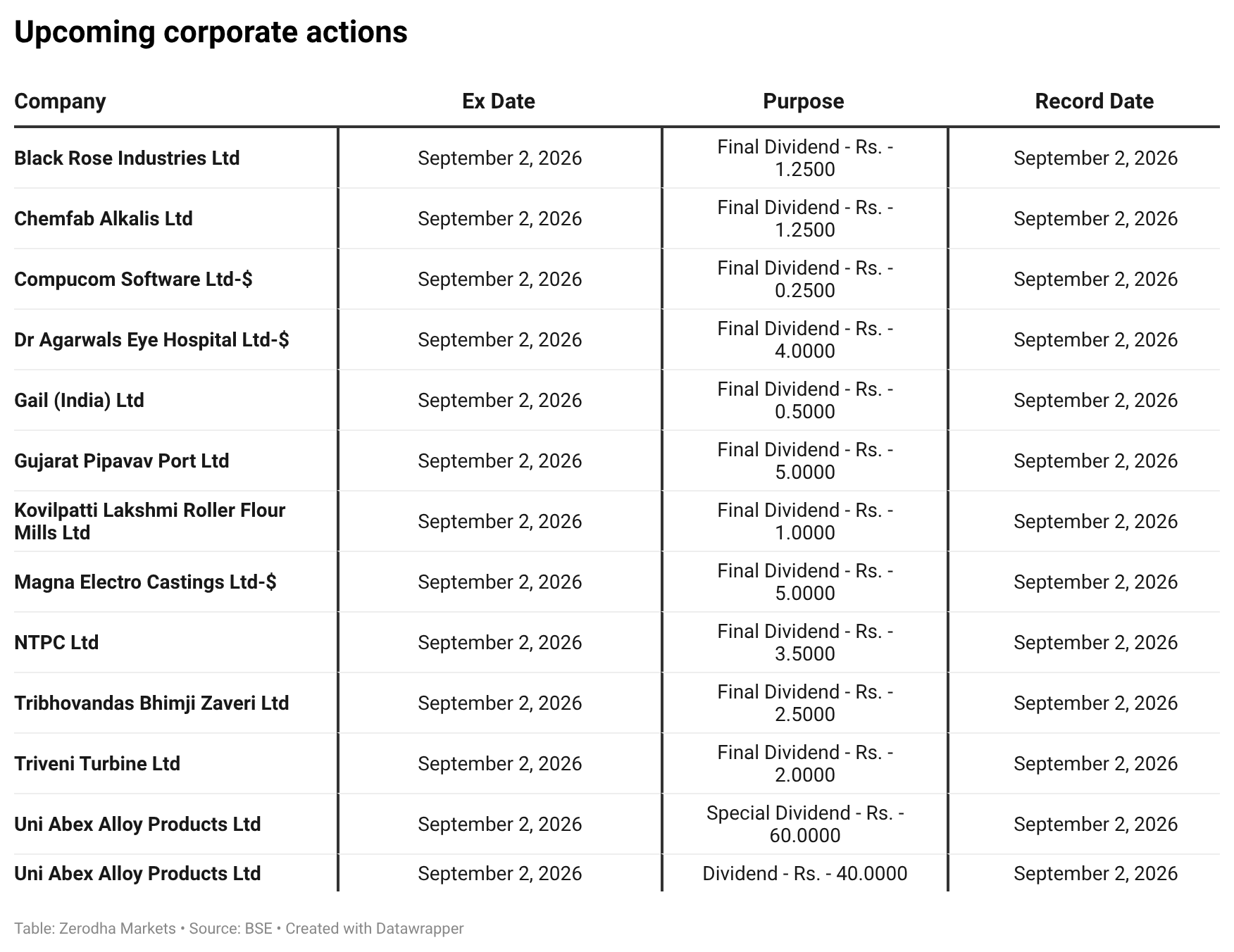
Corporate Actions & Events
Corporate Actions
Published by Zerodha. Not investment advice. Data from NSE, BSE, and MCX.
In our latest episode of In The Money by Zerodha, we look at what an average really is, the three kinds of mean — arithmetic, geometric, and harmonic — and why each is useful in a different context.
We also trace how averaging evolved from ancient mathematics to statistics and eventually into financial markets. Finally, we get into the modern indicators: SMA, EMA, volume-weighted and adaptive moving averages, VWAP, and anchored VWAP, and how moving averages are actually used to identify trends. We also look at when they fail — and what you can use instead.
That’s it from us for today. We’d love to hear your feedback in the comments, and feel free to share this with your friends to spread the word!