

Welcome to Aftermarket Report, a newsletter where we do a quick daily wrap-up of what happened in the markets, both in India and globally.
Markets Today
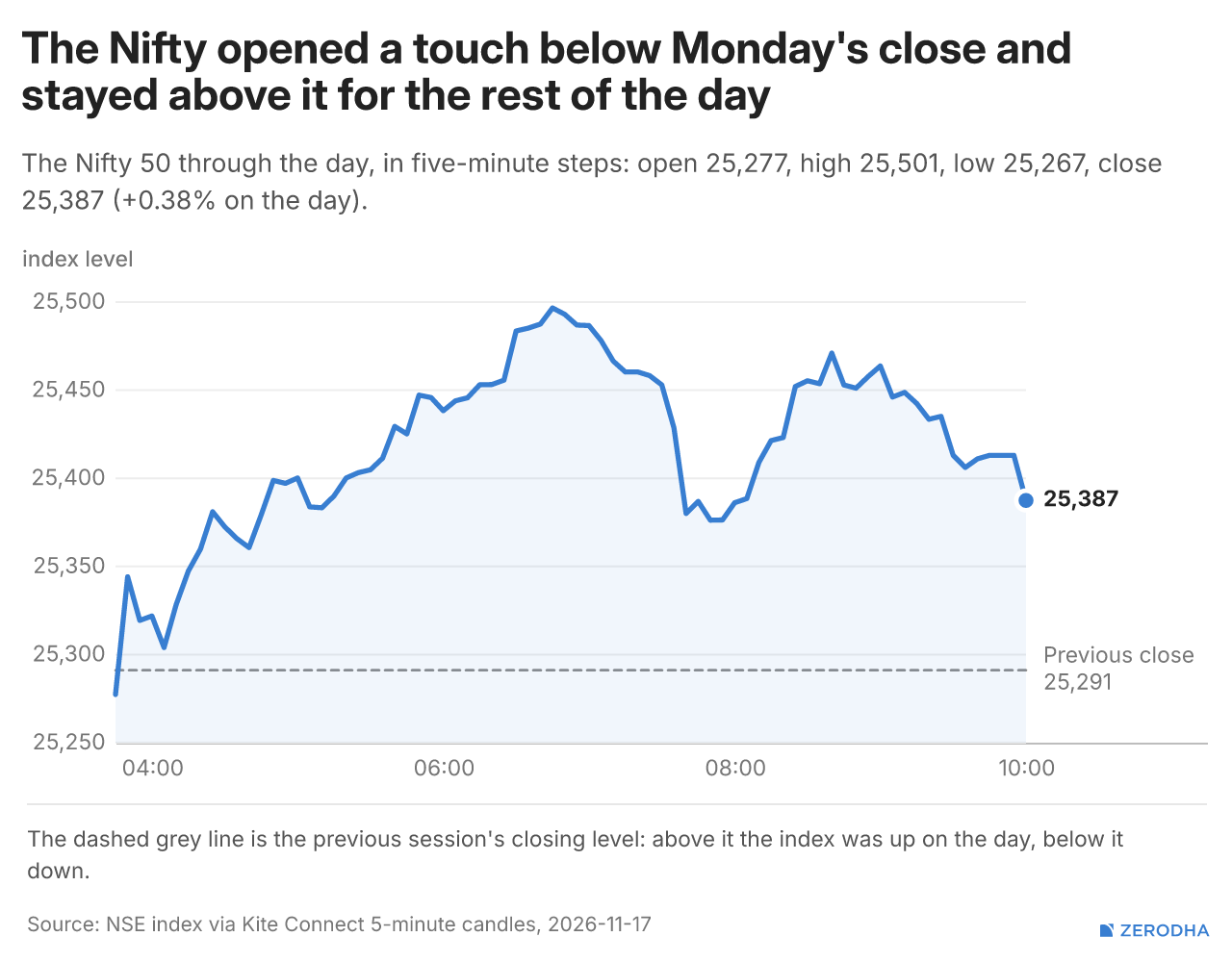
Nifty opened flat at 25,277 but spiked to 25,350 in the opening tick, tracking weak global cues amid the ongoing AI-linked sell-off, but continued to show resilience on the back of falling oil prices and a stronger rupee. The index initially witnessed some volatility, slipping towards 25,300 before buying momentum picked up, pushing it steadily towards 25,400 by 10:15 AM.
After a brief period of consolidation, the rally gathered further momentum around 11 AM, with Nifty crossing 25,450 and eventually touching an intraday high near 25,500 shortly after noon. However, selling pressure emerged at higher levels, dragging the index back towards 25,450 by the end of the first half.
The second half began on a weak note, with Nifty extending its decline before a sharp bout of selling around 1 PM dragged it towards 25,375. Buying interest returned shortly after, helping the index recover towards 25,450 by 1:45 PM. The recovery continued into the early afternoon, with Nifty approaching 25,475 around 2 PM, but the momentum failed to sustain as selling pressure resurfaced at higher levels.
The index gradually slipped below 25,425 and moved towards 25,400 in the final hour. Despite a brief recovery attempt, Nifty eventually closed at 25,387.40, around 110 points above its opening level, as profit-booking at higher levels erased a significant portion of the day’s gains.
Fear & Greed Index
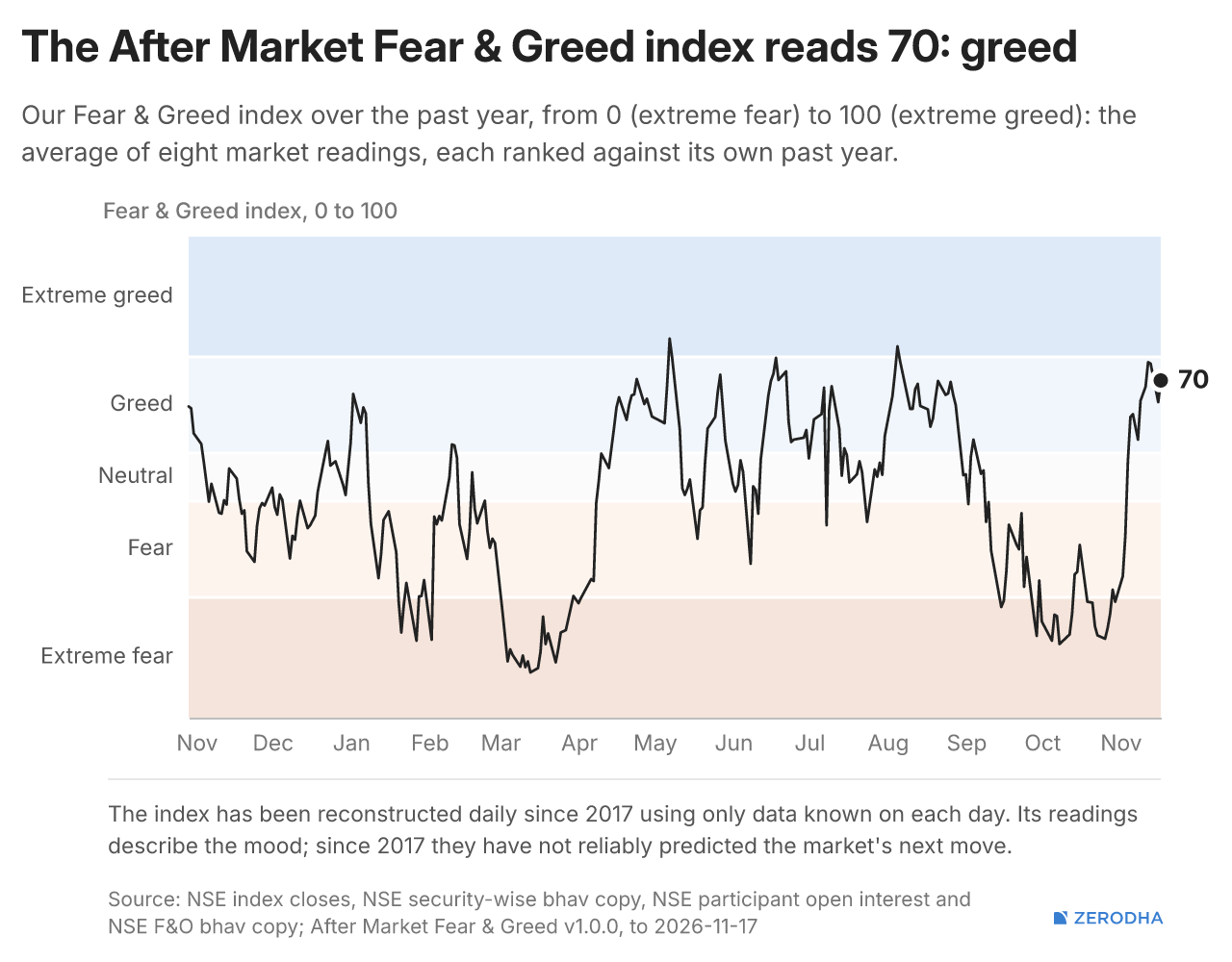
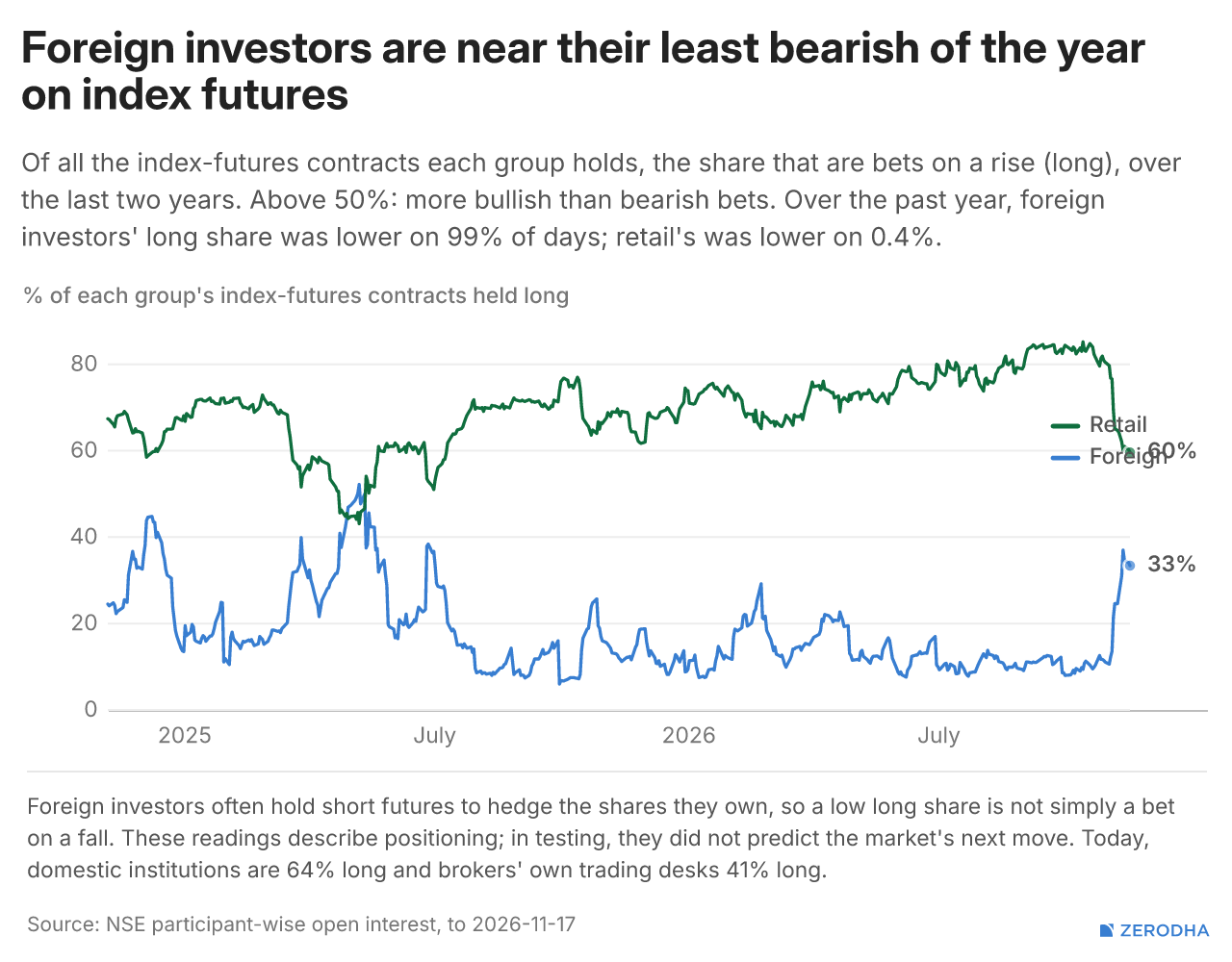
The Fear & Greed Index climbed from 66 to 70, remaining firmly in the greed zone as demand for downside protection eased. Foreign investors’ relatively bullish futures positioning and strong market momentum supported sentiment, although defensive stocks continued to outperform high-beta stocks.
Market Breadth
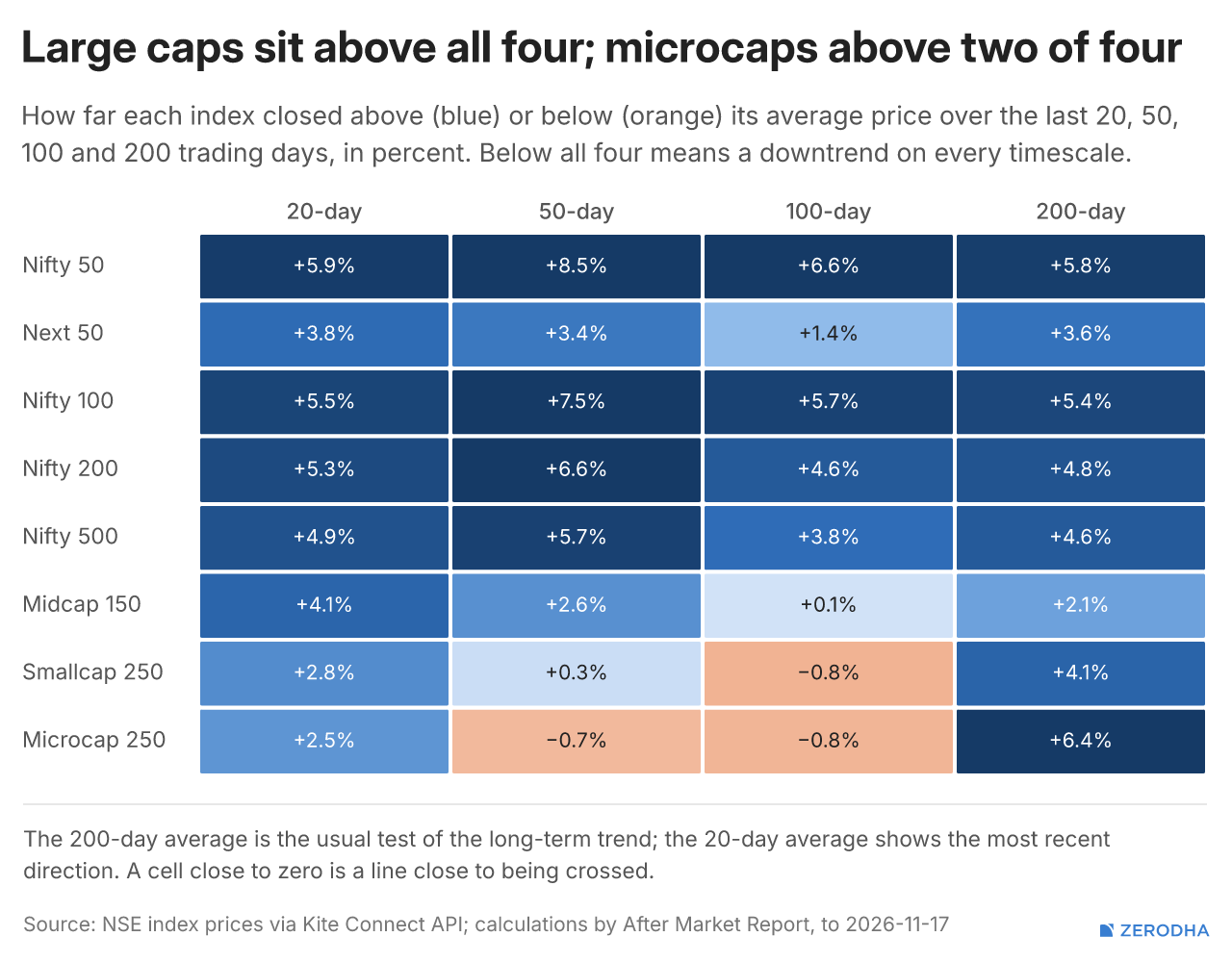
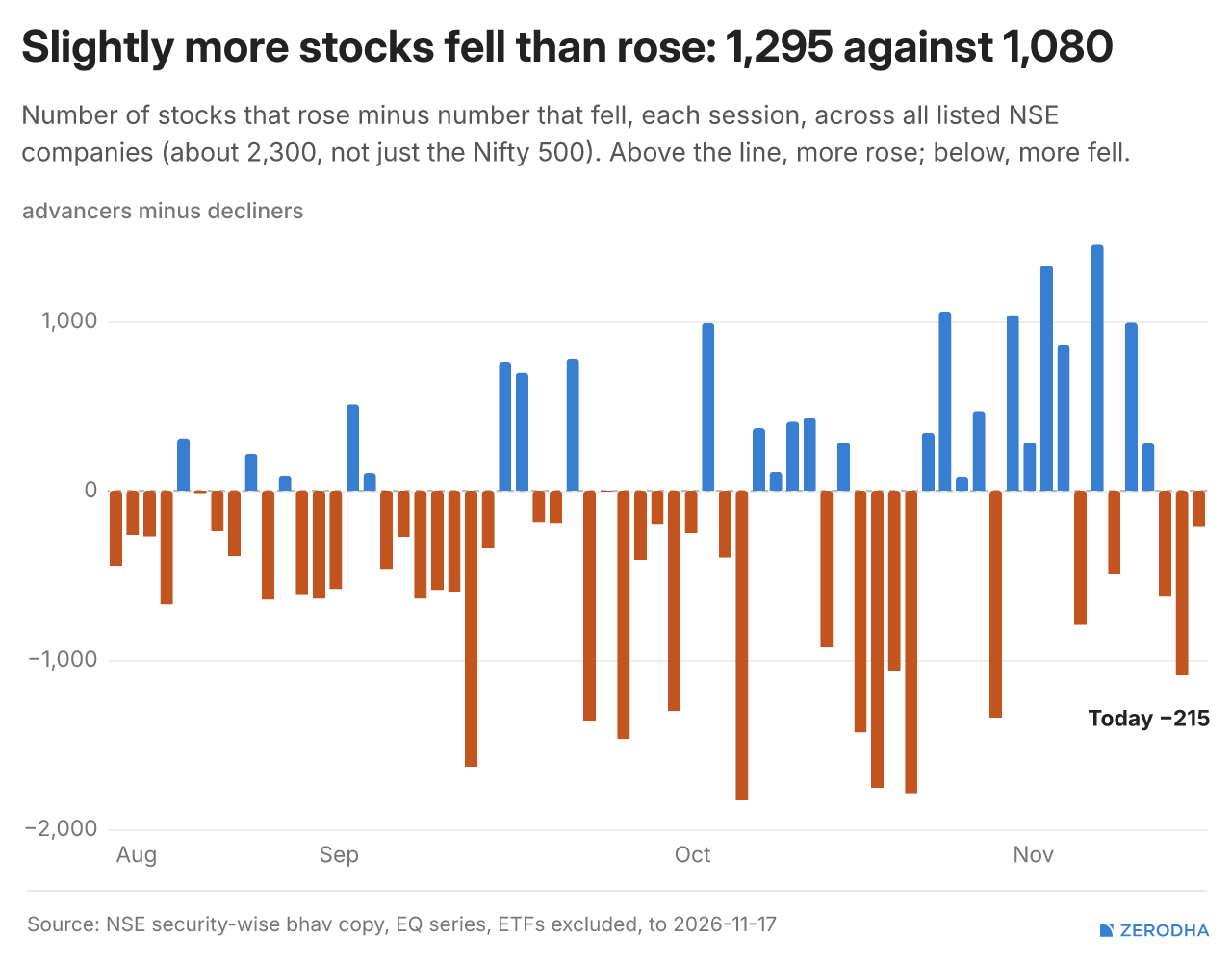
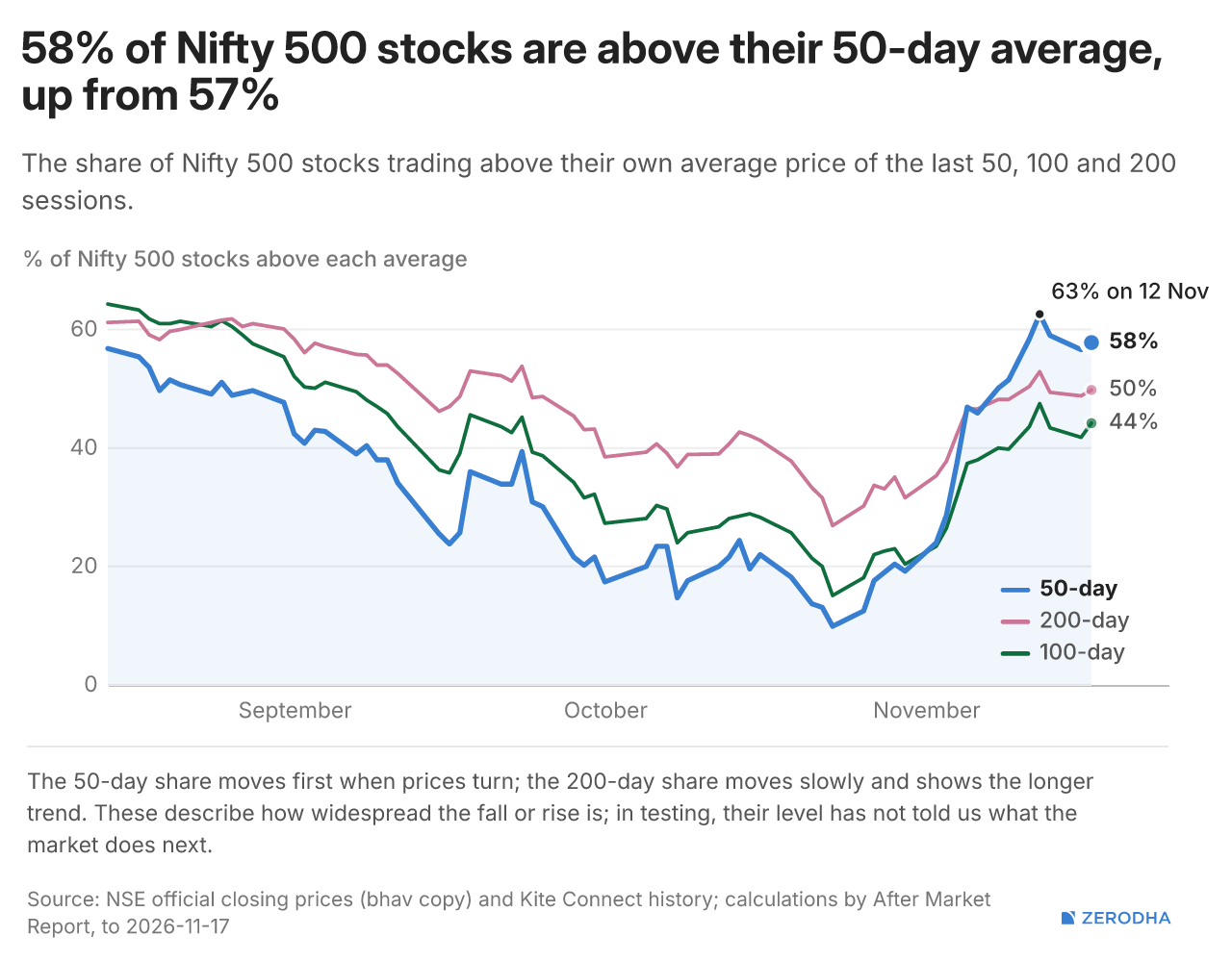
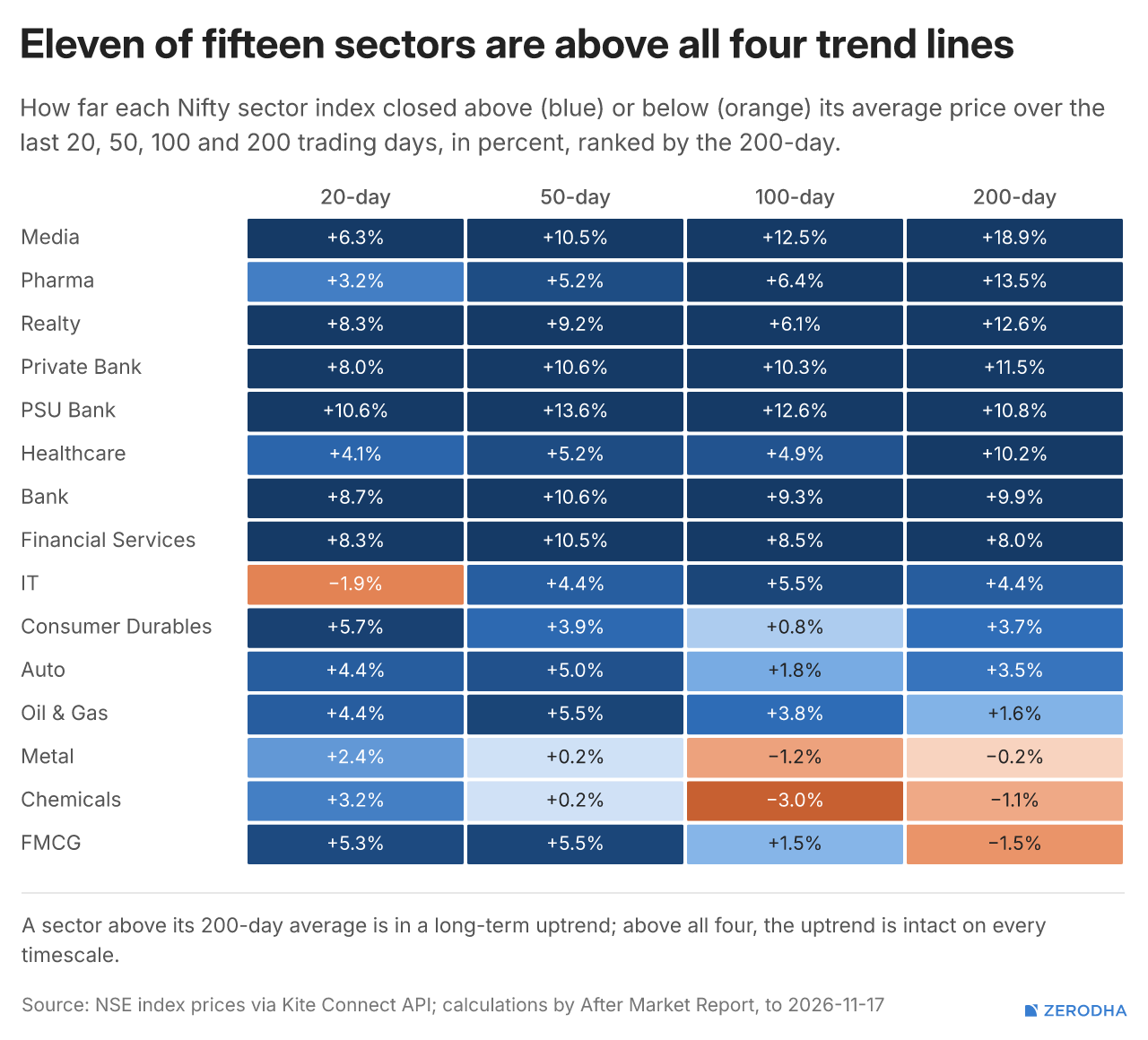
Market breadth remained slightly negative, with 1,295 declining stocks against 1,080 advancing, despite Nifty’s positive close. The share of Nifty 500 stocks above their 50-day moving average improved to 57.8%, although only 41.9% of NSE stocks trade above their 200-day averages, highlighting the uneven recovery.
52 Week Highs & Lows
Valuation Check
Sectoral Indices Performance
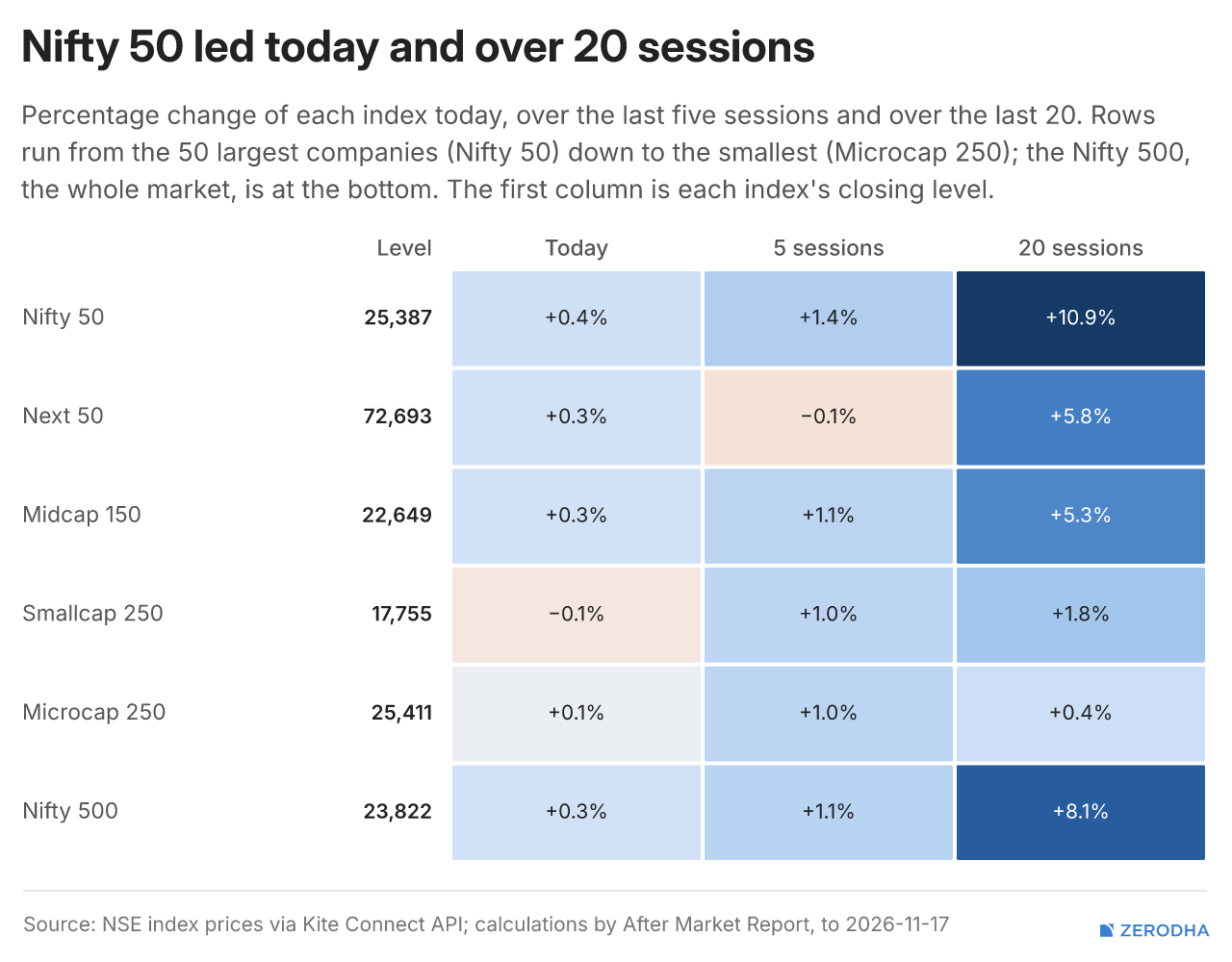
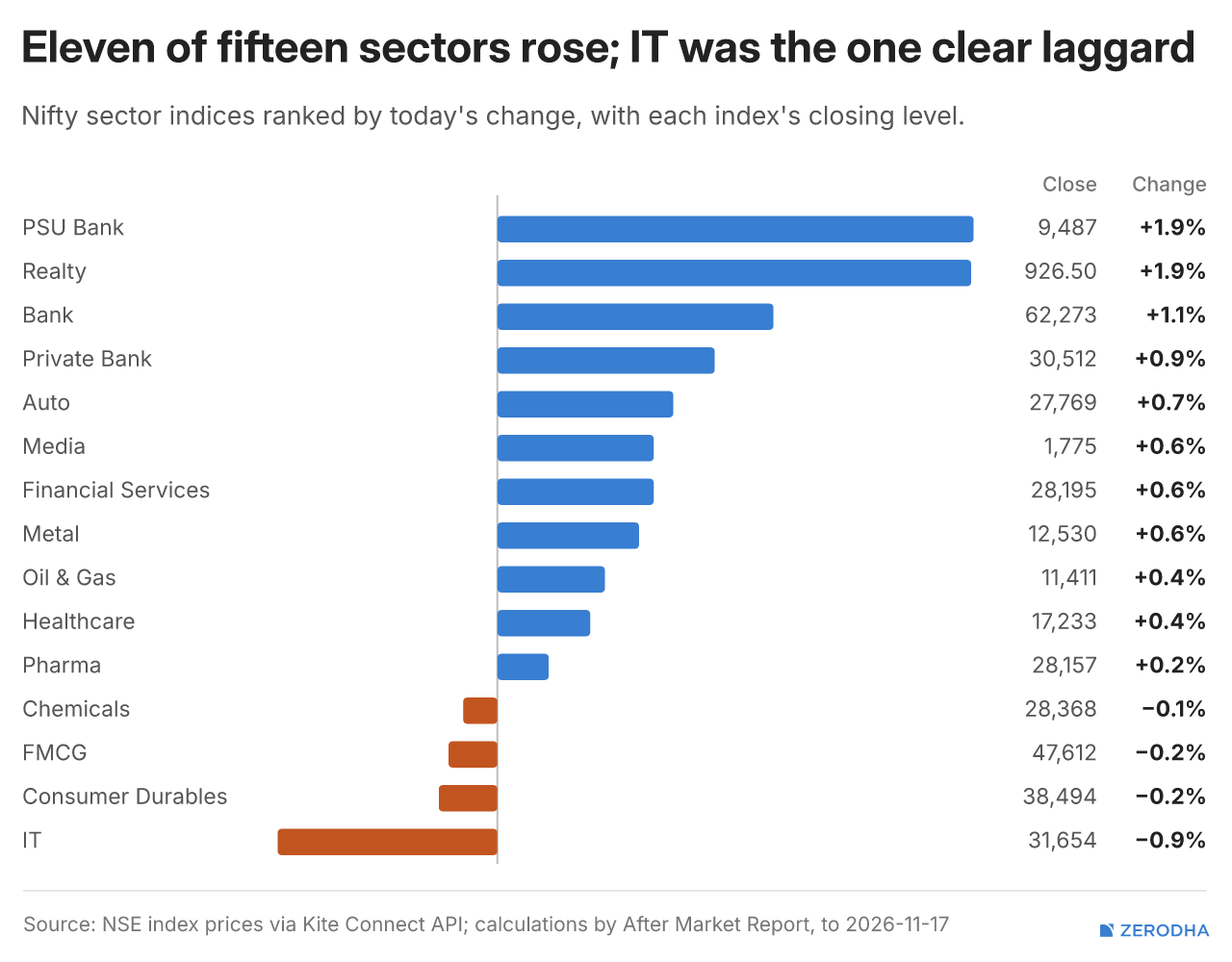
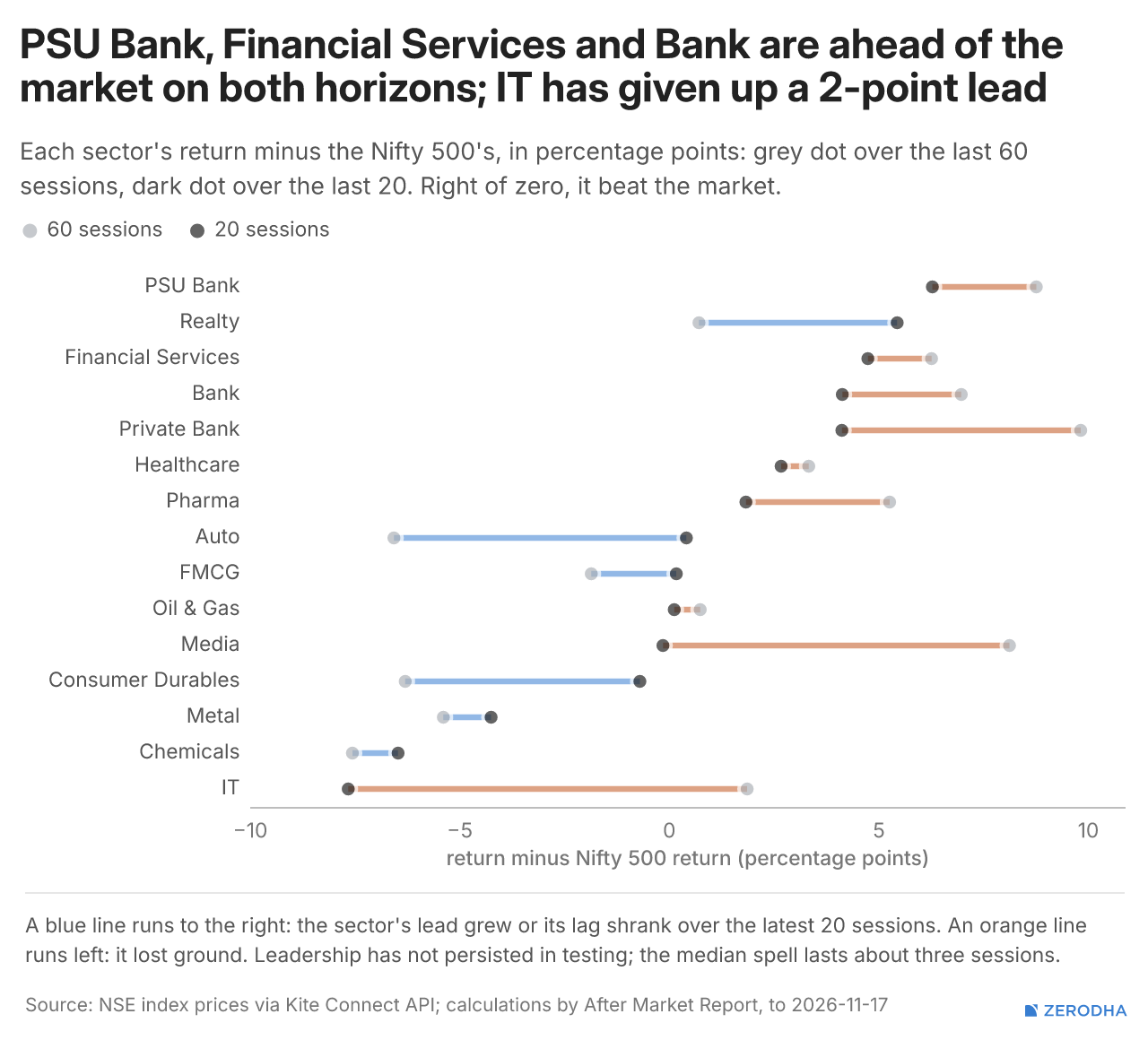
PSU Banks led the gains, rising 1.95%, while IT declined 0.90%, with 11 of the 15 sectoral indices ending higher. PSU Banks, Financial Services and Banks continue to outperform over 20 and 60 sessions, while IT has underperformed the Nifty 500 by 7.6 percentage points over the past 20 sessions.
Winners & Losers
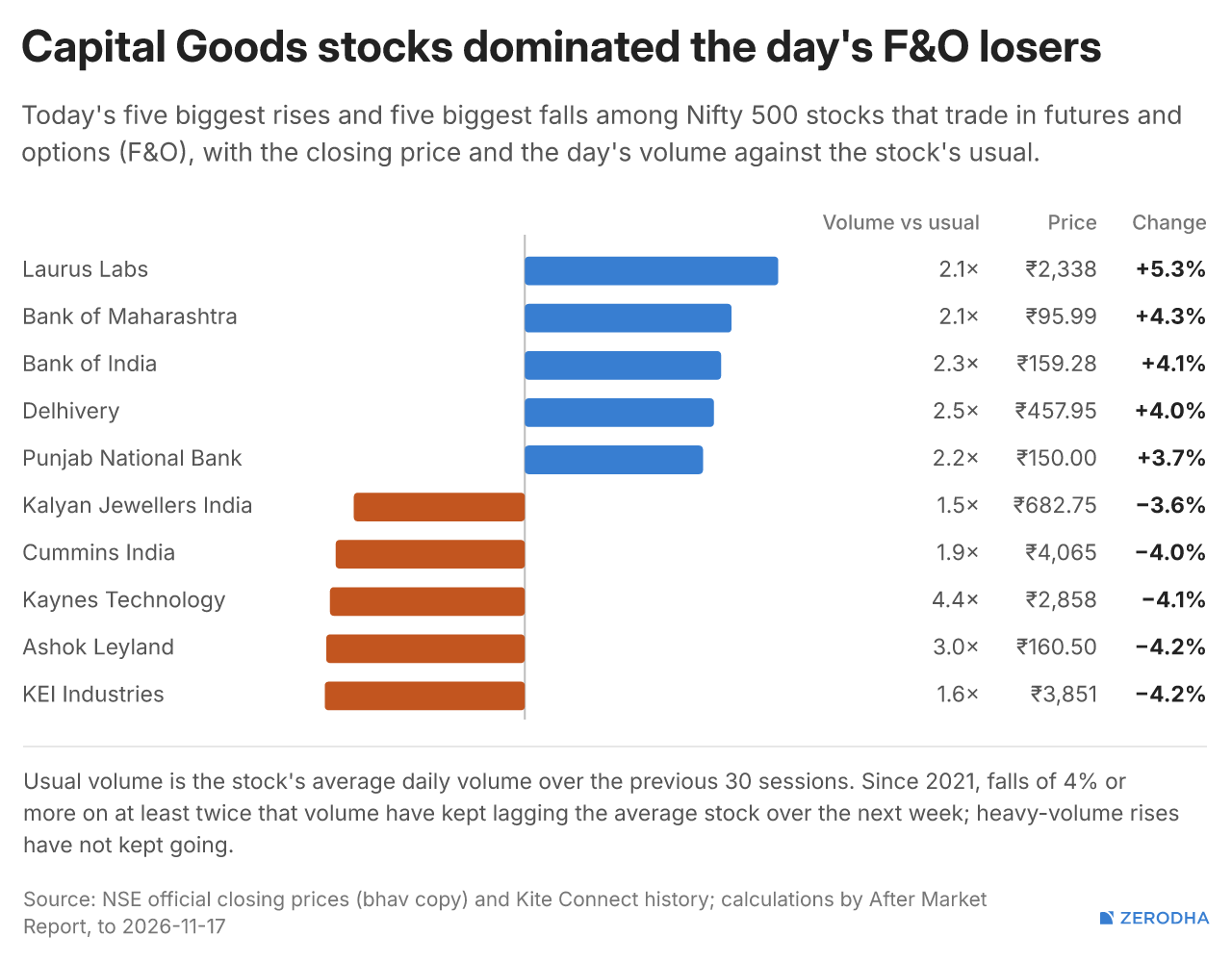
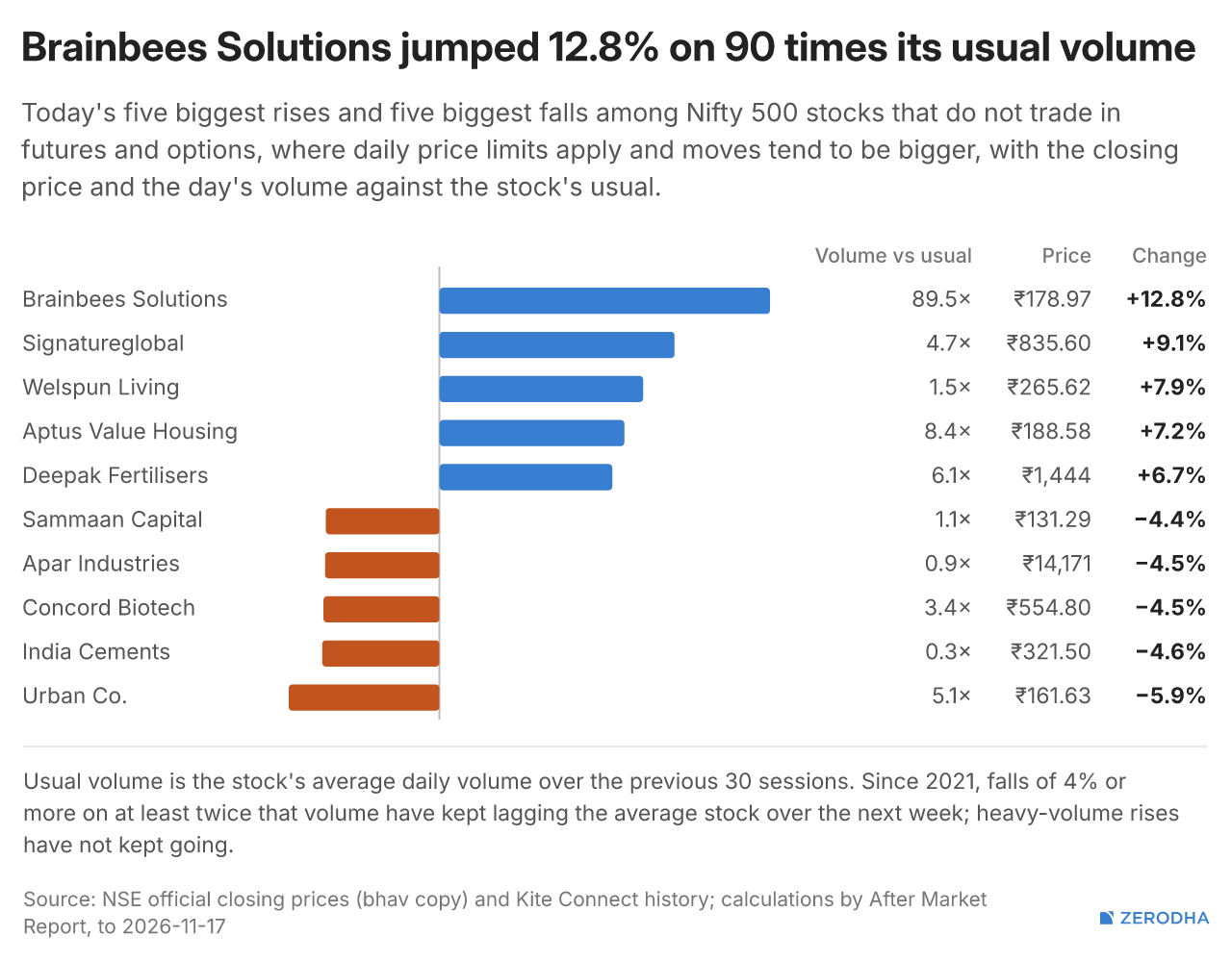
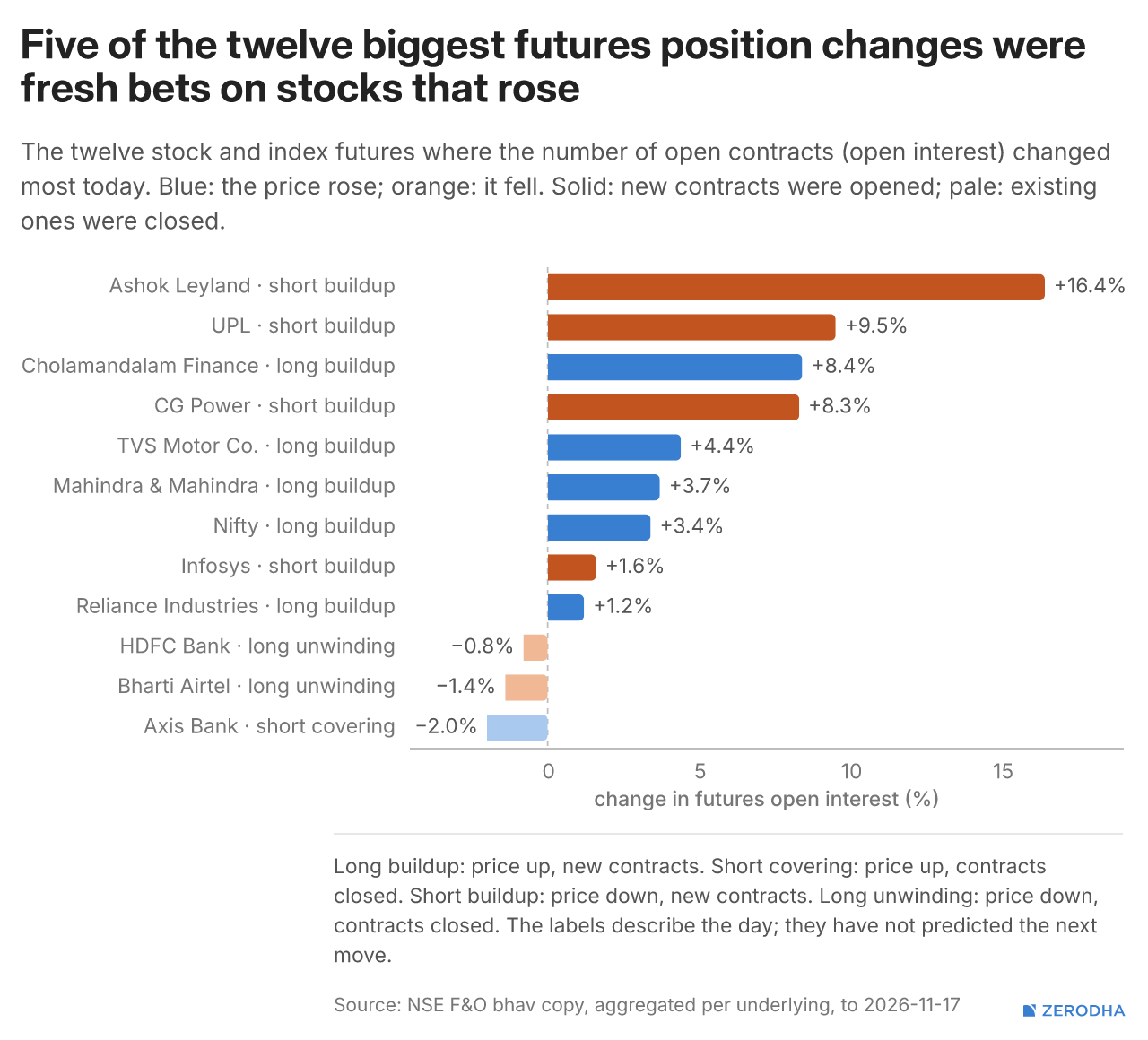
Brainbees Solutions surged 12.85% on nearly 90× its usual volume, while Signatureglobal gained 9.14% and Aptus Value Housing Finance rose 7.19%. On the downside, KEI Industries declined 4.20%, while Ashok Leyland and Kaynes Technology fell more than 4% each.
Delivery Data
Global Markets
Commodities
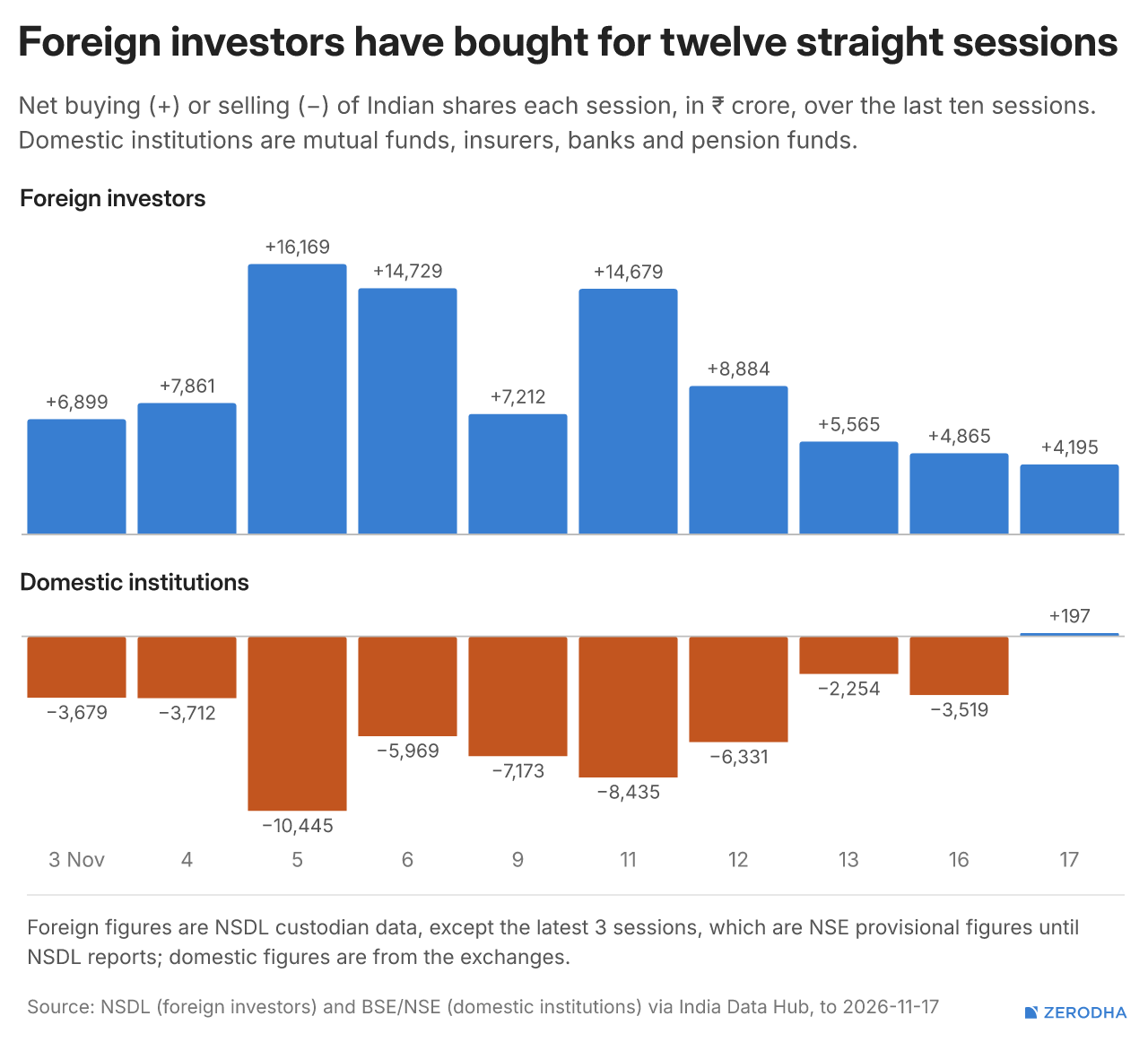
Institutional Flows & Participant Positioning
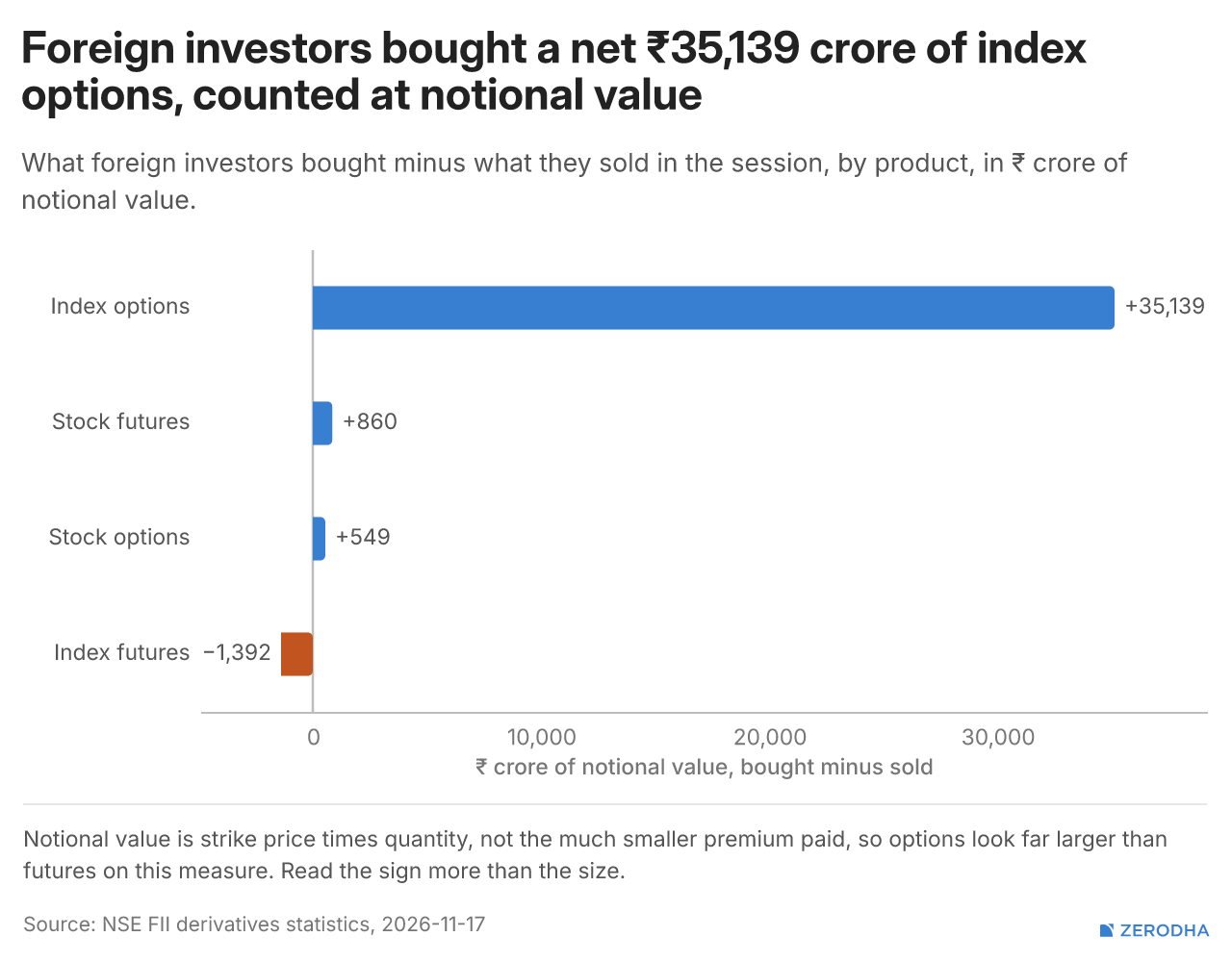
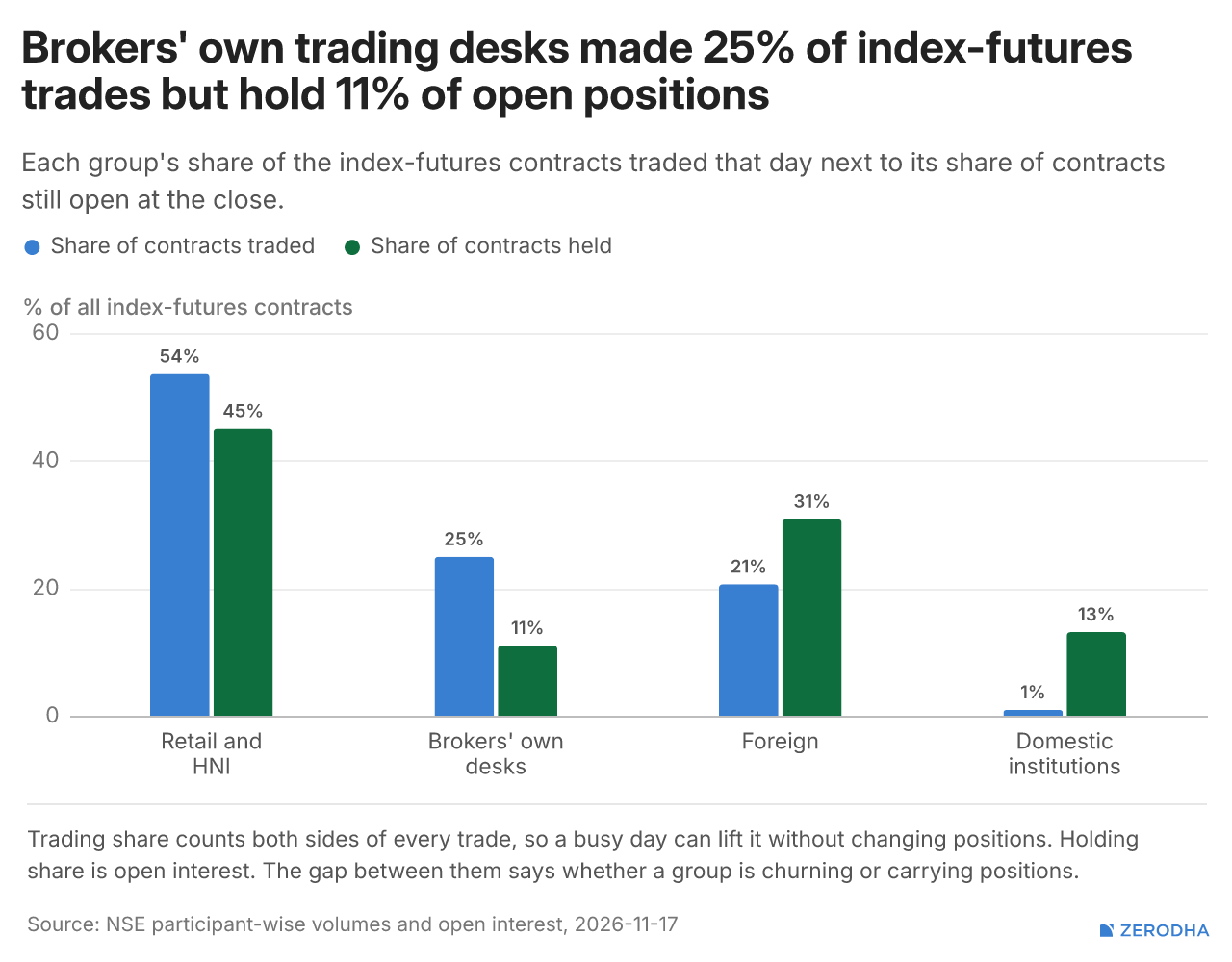
Put writing strengthened, with put open interest rising 12.4% against an 8.6% increase in calls, pushing the put-call ratio from 1.03 to 1.07. However, FIIs sold 8,436 index-futures contracts worth ₹1,392 crore, reducing their long positioning to 33.4%, while retail and HNI participants remained 60% long.
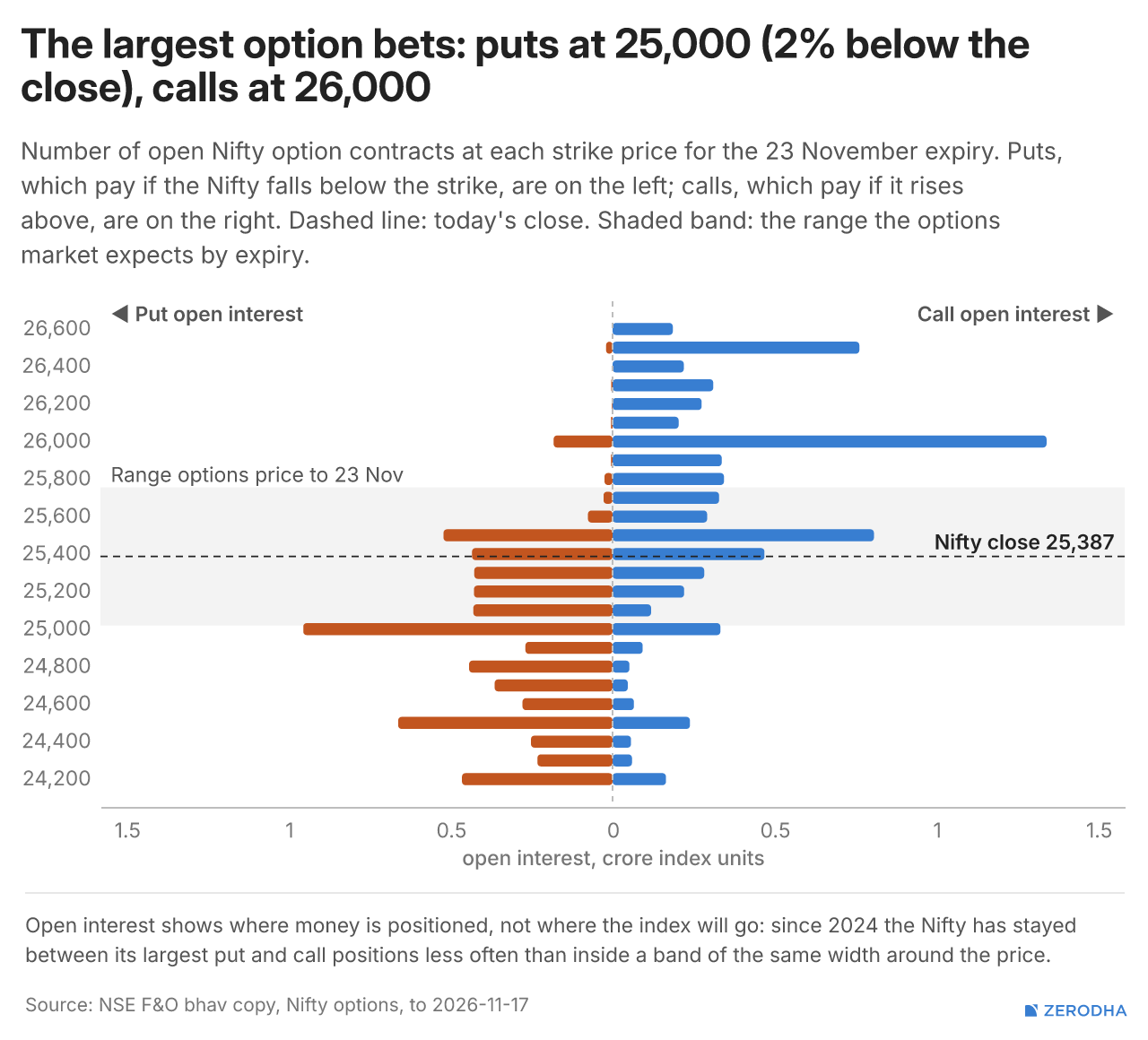
Options imply a 25,040–25,778 range into the November 23 expiry, with the heaviest put open interest at 25,000 and call open interest at 26,000. Nifty's 200-day moving average near 23,991 remains an important longer-term technical support level.
Thematic Indices
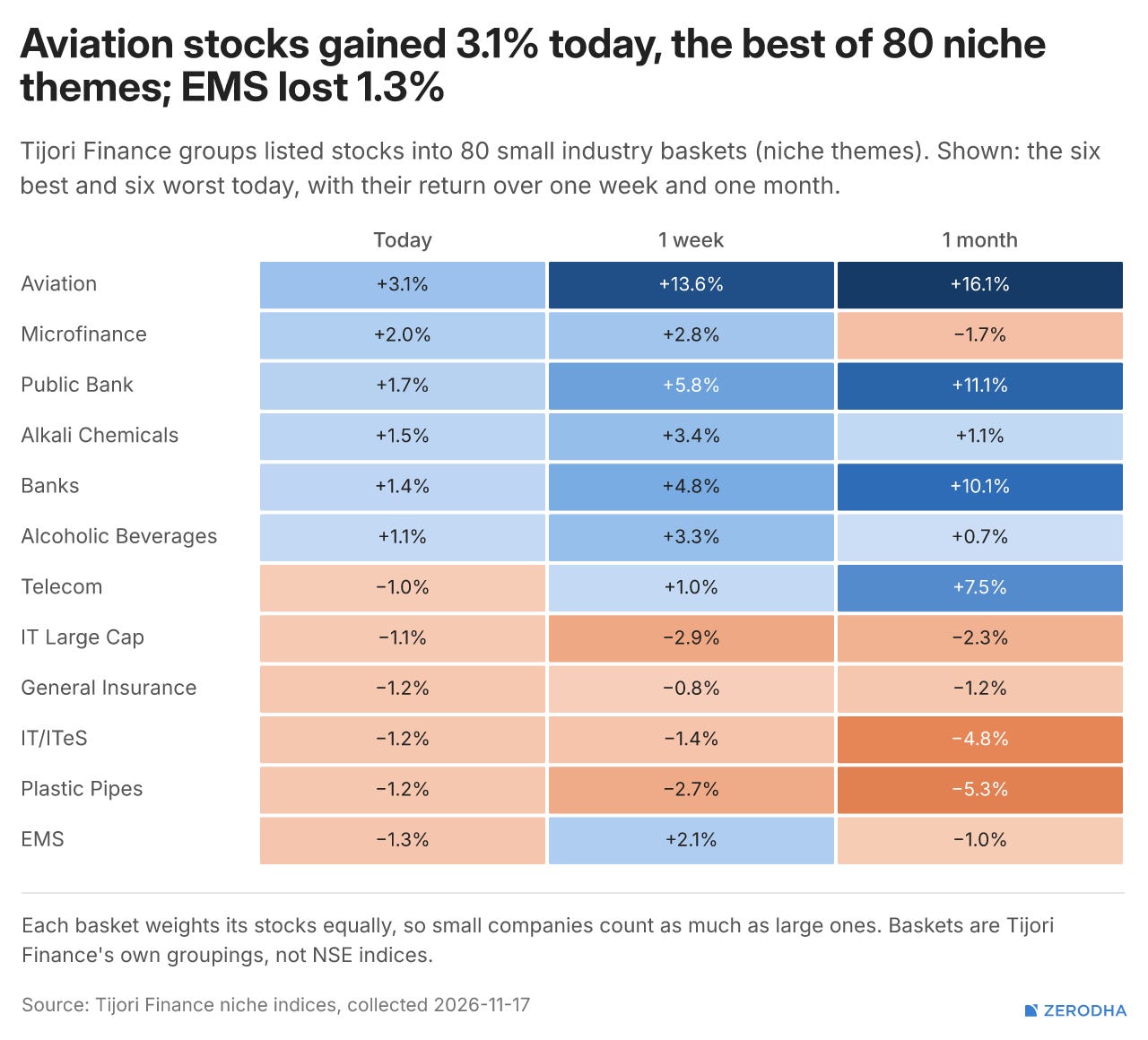
Tijori’s niche indices, where today’s move sorts pockets of the market beyond standard sector baskets. You can also track promoter buying and other interesting stuff, like Capex activity by the companies in the Tijori App’s idea dashboard
F&O Corner

Top Stories in India
The Indian rupee appreciated 43 paise to close at 93.51 against the US dollar, supported by softer crude oil prices, positive domestic equity markets and foreign fund inflows. However, a stronger dollar and elevated US Treasury yields limited further gains. Dive deeper
Vedanta chairman Anil Agarwal criticised the transfer of the company’s producing Cambay offshore oilfield to ONGC, warning that such decisions could undermine regulatory stability and investor confidence. He also highlighted Vedanta Oil and Gas’s planned $5 billion investment to increase production to 300,000–500,000 barrels per day, without specifying a timeline. Dive deeper
The Nifty Bank index touched a fresh all-time high of 62,015 on Tuesday, supported by broad-based buying across public and private sector banks. PNB has gained 20% so far this month, followed by Yes Bank at 18% and HDFC Bank at 17.6%, amid strong earnings, foreign investor inflows and improving liquidity conditions. Dive deeper
Amazon plans to invest $7 billion in renewable energy projects across India by 2030, in addition to the $4 billion already contracted. The company also announced four new wind and solar projects with a combined capacity of 934 MW, including a 234 MW wind farm in Karnataka. Dive deeper
Reliance Industries plans to invest approximately ₹15,000 crore to establish around 100 compressed biogas plants by 2030. The company aims to produce nearly 5 million cubic metres of gas daily using agricultural residue, expanding its presence in renewable energy and waste-to-energy solutions. Dive deeper
Hindustan Zinc approved an ₹80,000 crore investment plan to double its zinc and silver production capacity over the next three to five years. The expansion aims to increase refined zinc capacity to 2 million tonnes annually and silver refining capacity to 1,500 tonnes, potentially making the company the world’s largest producer of both metals. Dive deeper
Top Stories Globally
Brent crude hovered near $93 per barrel as investors weighed escalating geopolitical tensions against expectations of a growing global oil surplus. Fresh attacks on shipping vessels, including a second strike on a tanker near Oman’s Khasab, raised concerns about disruptions to Middle Eastern oil supplies. Dive deeper
Google reported what it described as the first observed cyberattack in which an AI-powered system independently discovered and exploited software vulnerabilities without human intervention. The framework could analyse software updates, identify weaknesses, develop exploits and conduct network reconnaissance, highlighting the growing cybersecurity risks posed by autonomous AI systems. Dive deeper
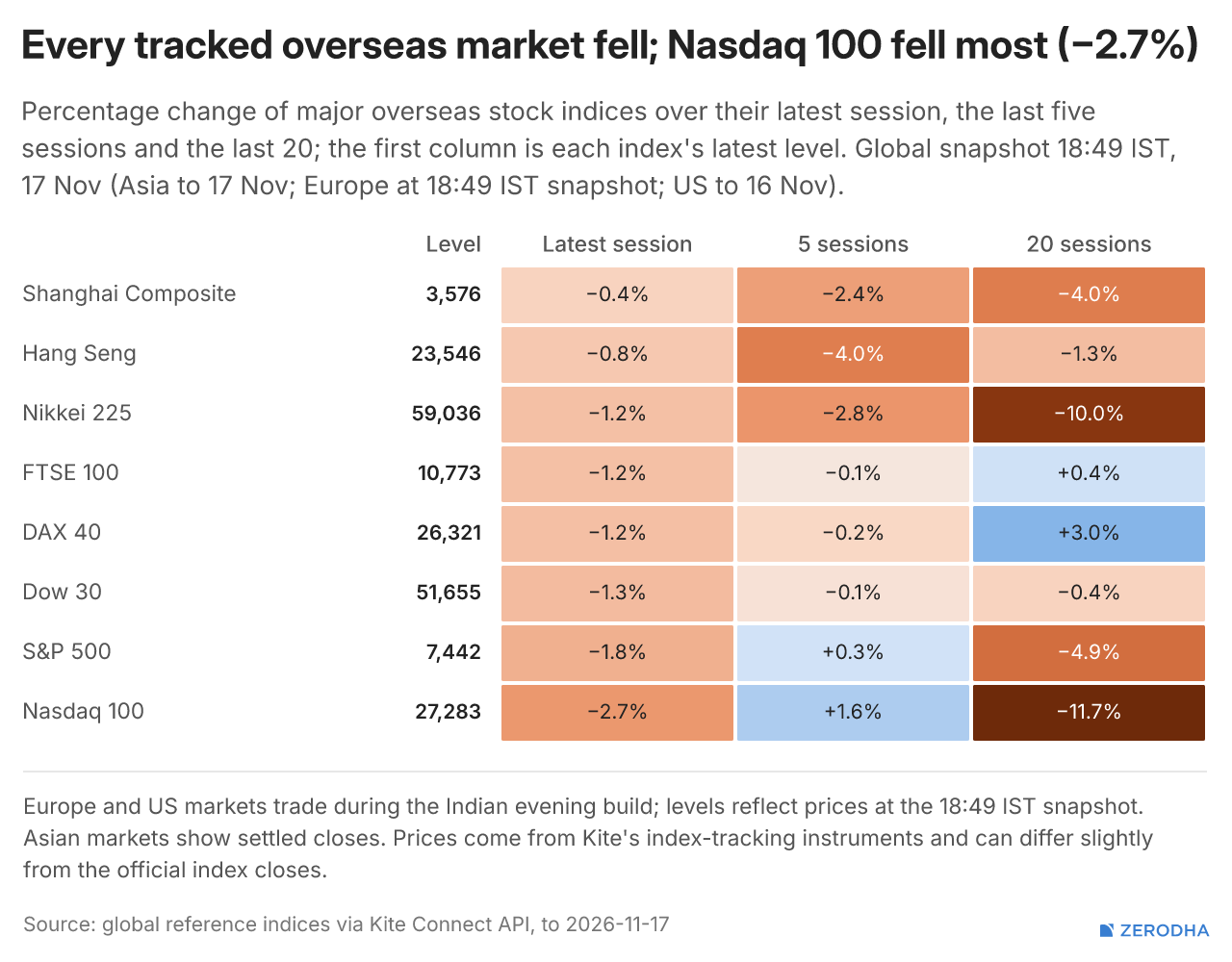
South Korea’s benchmark KOSPI index declined 2.59% to close at 4,968, its lowest level since February, extending losses for a fourth consecutive session. Semiconductor stocks led the decline as investors reacted to tighter US restrictions on China’s access to advanced chips and remained cautious ahead of Nvidia’s earnings. Dive deeper
Chinese e-commerce giant JD.com reported third-quarter revenue and adjusted profit below Wall Street expectations, reflecting continued weakness in consumer spending. China’s economic slowdown and cautious household expenditure weighed on demand, highlighting persistent challenges facing the country’s retail sector. Dive deeper
Shares of Samsung Electronics and TSMC declined after the Trump administration announced additional restrictions on China’s access to advanced AI semiconductors. The new rules tighten requirements for foundries manufacturing advanced chips for Chinese chip-design companies, raising concerns about potential disruptions to the semiconductor industry. Dive deeper
Management Chatter
In this section, we highlight interesting comments from management at major companies and from policymakers in the Indian and Global Economies.
Sukumar Hebbar, MD & CEO of Tata Projects, outlined the company’s five-year ambition:
“We want to become the undisputed number two player — far ahead of the other competitors in terms of all parameters, including order book, revenue and profitability.”
“With the support of the ecosystem, we should be able to take the company towards much faster growth. I see that over a period of time, Tata Projects should become the second-largest EPC construction company in India.” - Link
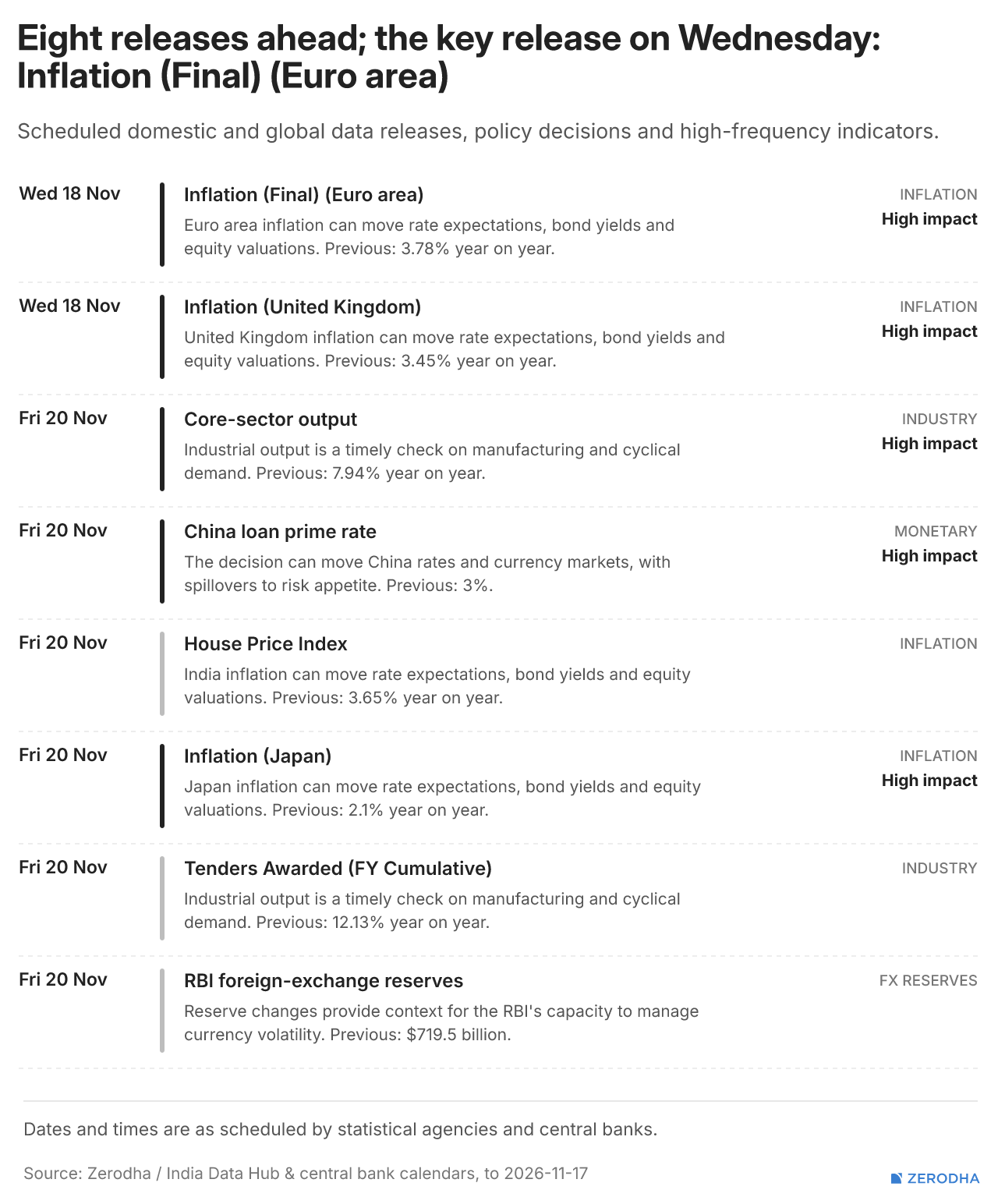
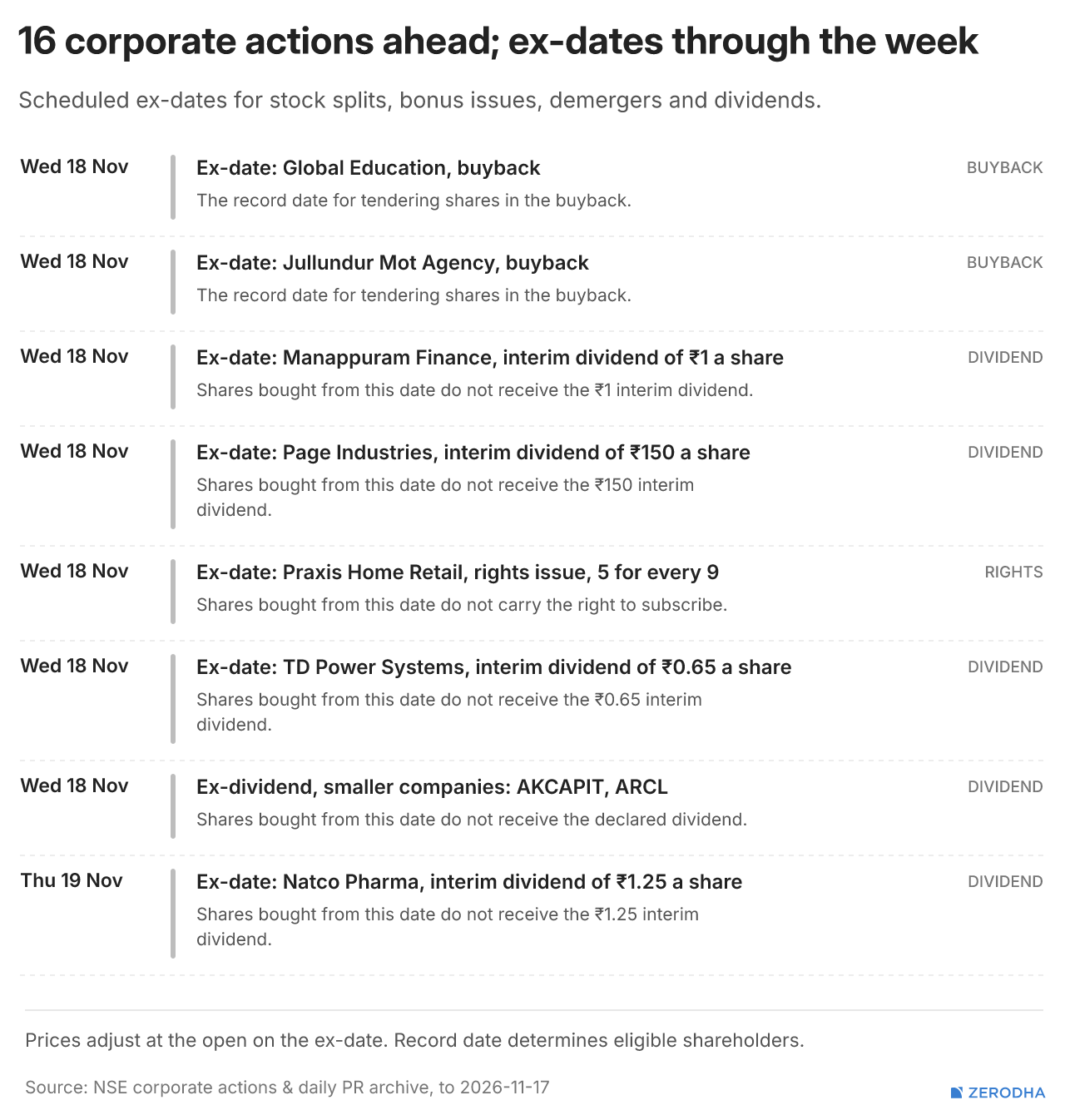
The week ahead & Corporate Actions
Corporate Actions
Published by Zerodha. Not investment advice. Data from NSE, BSE, and MCX.
In our latest special episode of In The Money by Zerodha, Sandeep answers your questions about building and managing trading strategies and portfolios. How should you allocate capital across different options strategies? When should you stop trading a strategy, and is twice its backtested maximum drawdown a reasonable threshold?
He also discusses how to build a diversified options portfolio in the Indian market, whether a covered call strategy can be traded using futures, and how to take short positions in stocks that are not part of the F&O segment.
The episode also looks at the barbell strategy on Nifty, which combines a relatively safe portfolio allocation with deep out-of-the-money puts for protection against market crashes. Sandeep explains the practical challenges and trade-offs involved, and responds to a request for more content on algo trading.
That’s it from us for today. We’d love to hear your feedback in the comments, and feel free to share this with your friends to spread the word!